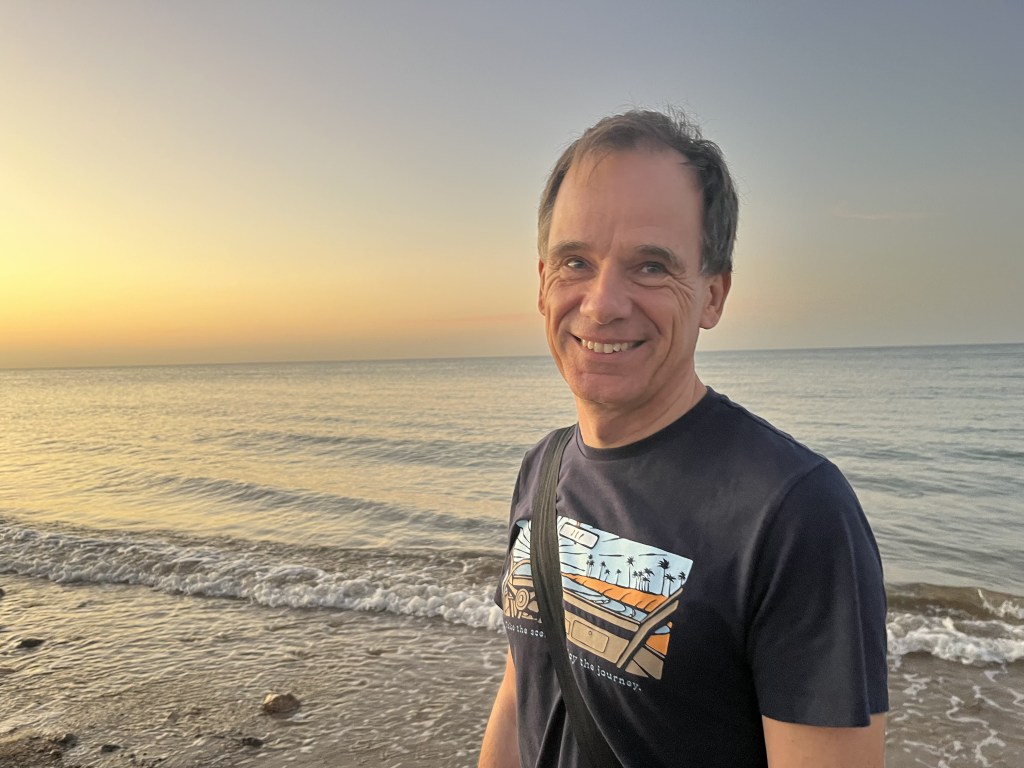
Tag 6 – Morgens beim Spaziergang zum Strand wurde es uns klar: so warm wird es jetzt die nächsten 4 Monate bleiben. Und vermutlich scheint auch meistens die Sonne. Früh aufstehen ist angesagt, wo doch die Sonne gegen 6 aufgeht und abends um die gleiche Zeit untergeht. Als um 7:45 Uhr der Wecker klingelt, fühlt es sich aber immer noch sehr früh an, obwohl es draußen schon strahlend hell ist.
Nach unserem morgendlichen Sportprogramm gibt es Frühstück. Tara liest die fünf Grundregeln des Islam vor – und danach wird Mathe gemacht. Wir versuchen neue Routinen einzuführen. Gegen 13:00 Uhr dann Reste von Gestern Essen und einen Salat, den wir in unserer kleinen Küche im Apartment bereiten, danach geht es los zum National Museum of Oman. Wir sind erstaunt, dass es 20 km weg ist, und ich verfahre mich in dem Labyrinth der Schnellstraßen gleich mehrfach.
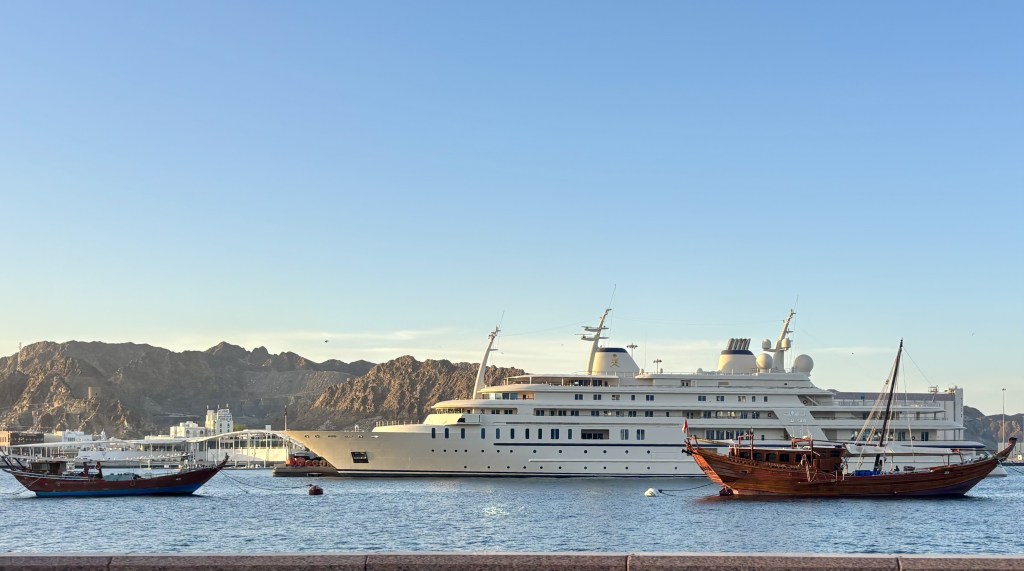
Oman ist ein Auto-Land, das wird uns schnell klar. Vieles erinnert an die USA; an Los Angeles oder Las Vegas. Draußen die heiße Wüste, ewig viel Platz und riesige Parkplätze, dahinter Shopping-Malls, Hotels oder Hafenanlagen. Wir passieren einen Kreuzfahrt-Riesen und die Yacht des Sultans, die Al Said. Nummer 7 in der Welt der Mega-Yachten, mit 155 Meter Länge, ein Prachtexemplar der Lürssen-Werft aus Bremen.
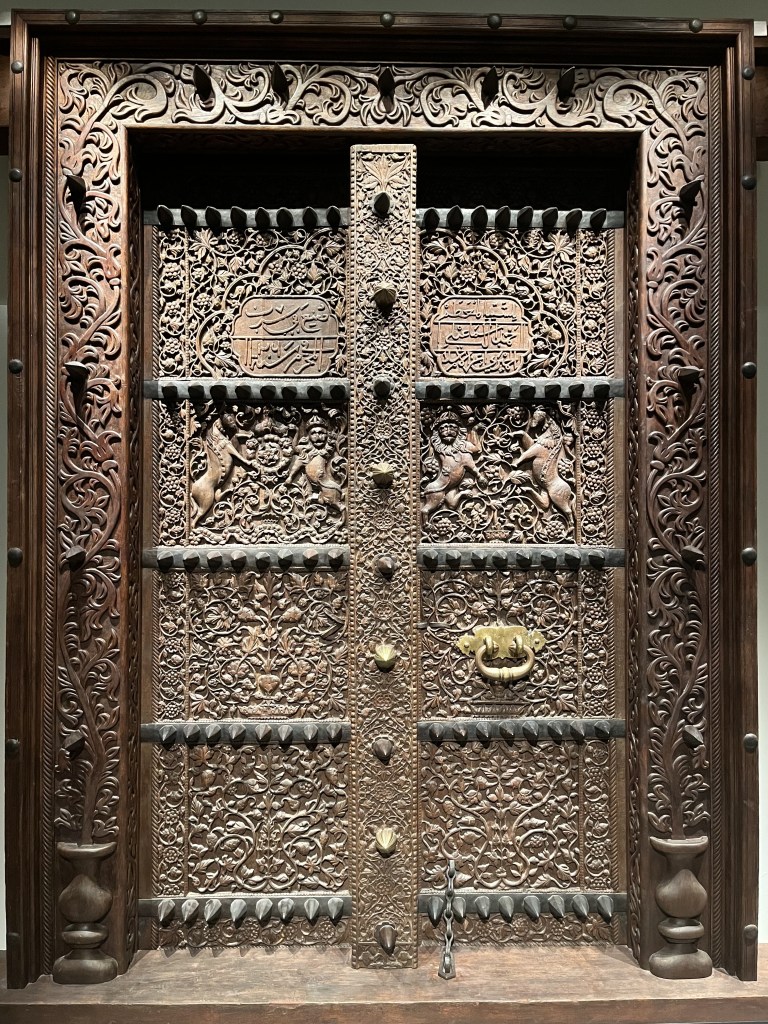
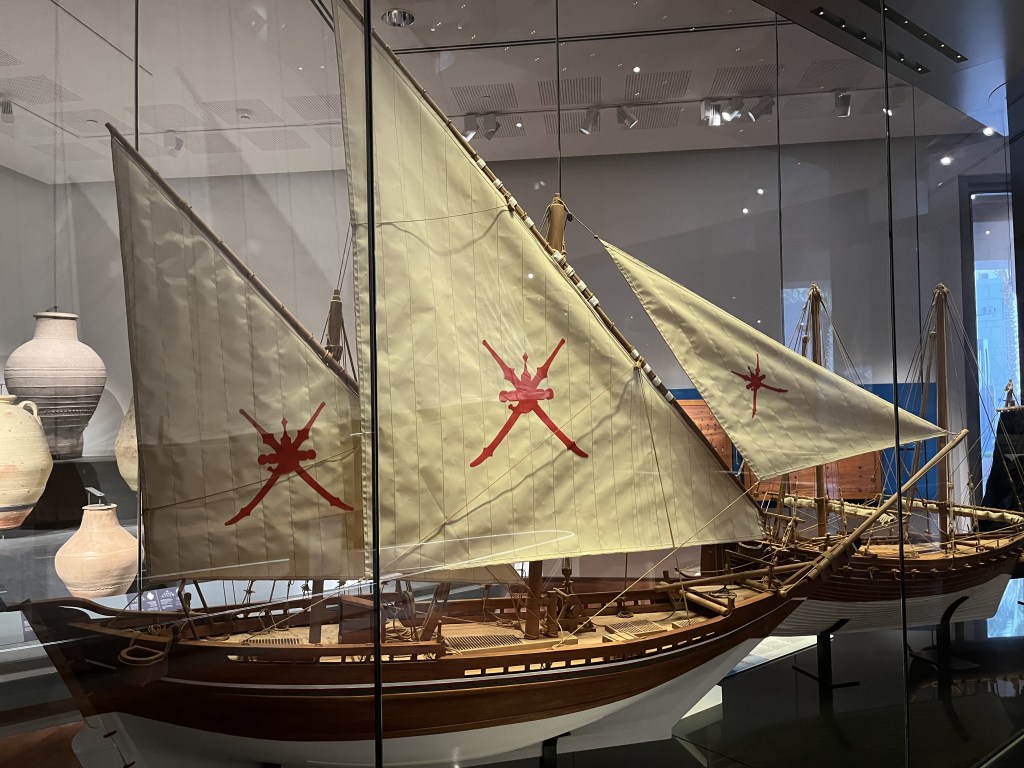
Im National Museum sehen wir – Schiffe spielen eine zentrale Rolle in der Geschichte des Omans. Als Zwischenstop auf dem Weg nach Indien war der Oman eine wichtige Anlaufstation, und über die Jahrhunderte waren Schiffe aus aller Welt hier mit Gütern aus China, Indien, Afrika und Europa unterwegs.
Das Museum beeindruckt die Kinder mit einem eigenen Kinosaal, in dem die ersten menschlichen Funde 2 Millionen Jahren zurücklagen, mit einem Faustkeil des Australopithecus, der damals von Afrika sich nach Europa und Asien ausbreitete.
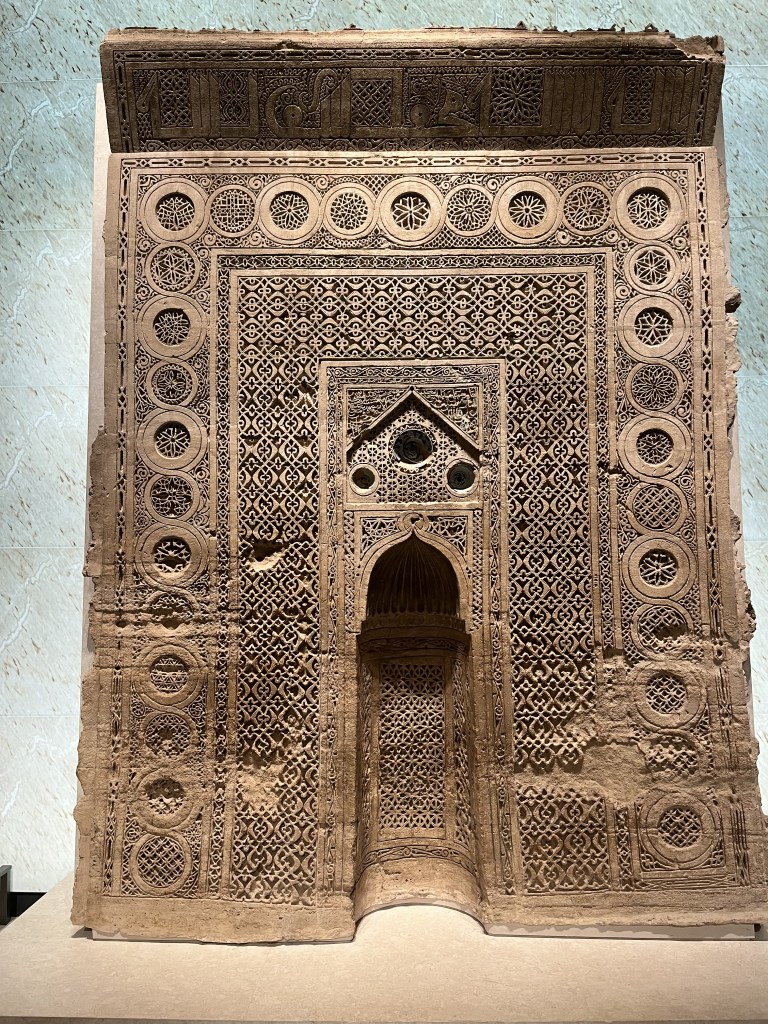
Die größte Veränderung fand durch kriegerische Araber aus dem Süden statt, als sich die Botschaft des Propheten verbreitete. Mohammed (Friede sei mit ihm) lobte die Stämme des Oman, sie hätten den neuen Glauben ohne Kampf und mit viel Verständnis angenommen.
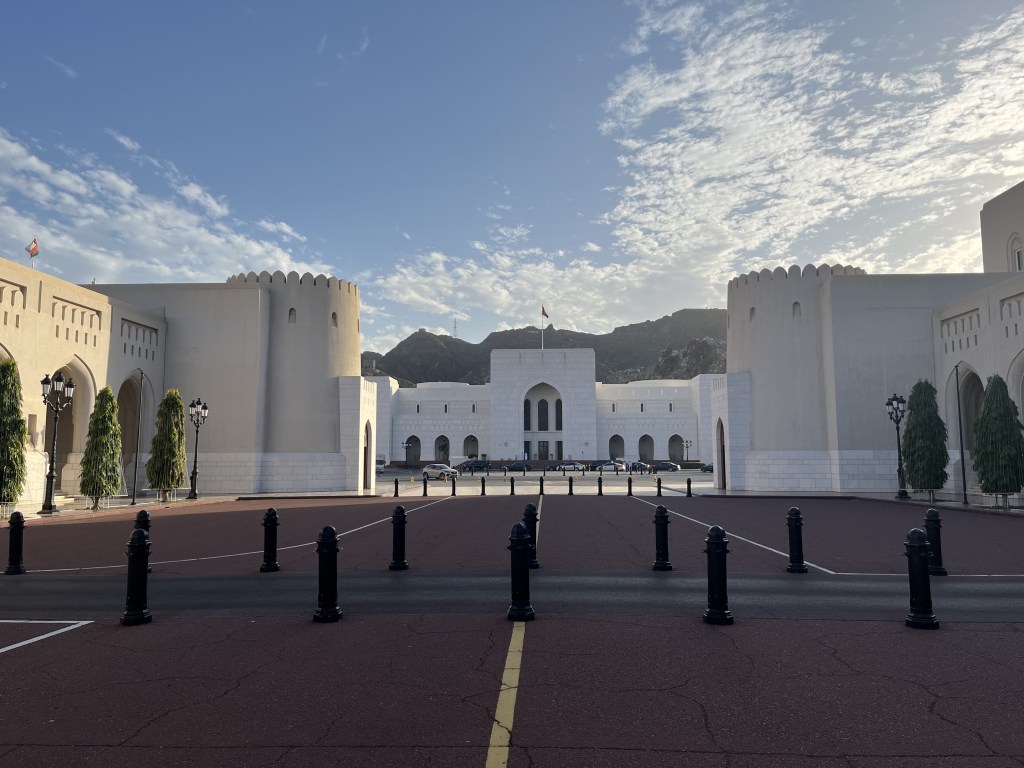
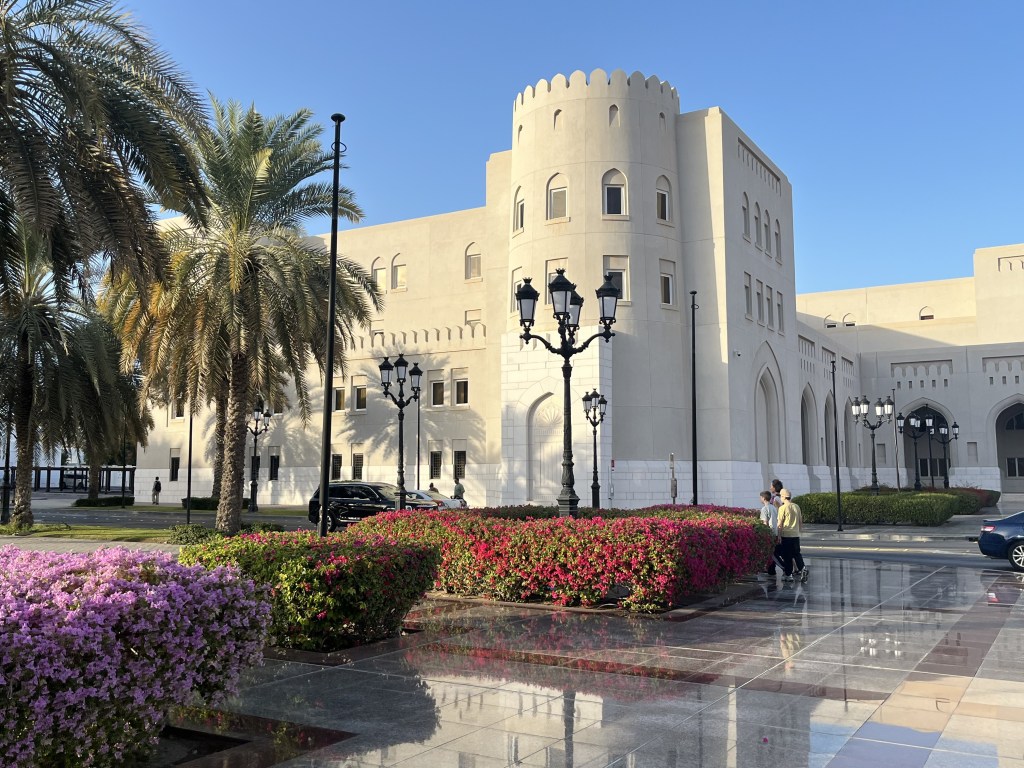
Doch alles anders wurde 1970. Die ersten Ölvorkommen wurden entdeckt, und die folgen dieses Booms kann man besonders deutlich rund um das Nationalmuseum beobachten. Teilweise sieht die Architektur aus wie bei Star Wars, auf einem fremden Planeten. Alles glänzt und scheint und sieht nagelneu aus, unwirklich groß und repräsentativ, so dass die wenigen Touristen darin völlig untergehen.
Den Kindern gefällt es, vor allem das Kino und dass es eine Malecke gibt, wo man Krummdolche und andere Waffen zeichnen kann. Das Museum ist eindrucksvoll und imposant gebaut, bis 25 Jahre ist der Eintritt frei und man hat viel Platz – bis eine Diplomaten-Mission mit 10 Mercedes S-Klasse ankommen und durch die Hallen geführt werden. Dann und wann haben die Kinder Erschöpfungszustände, die mit Keksen und Cola bekämpft werden.
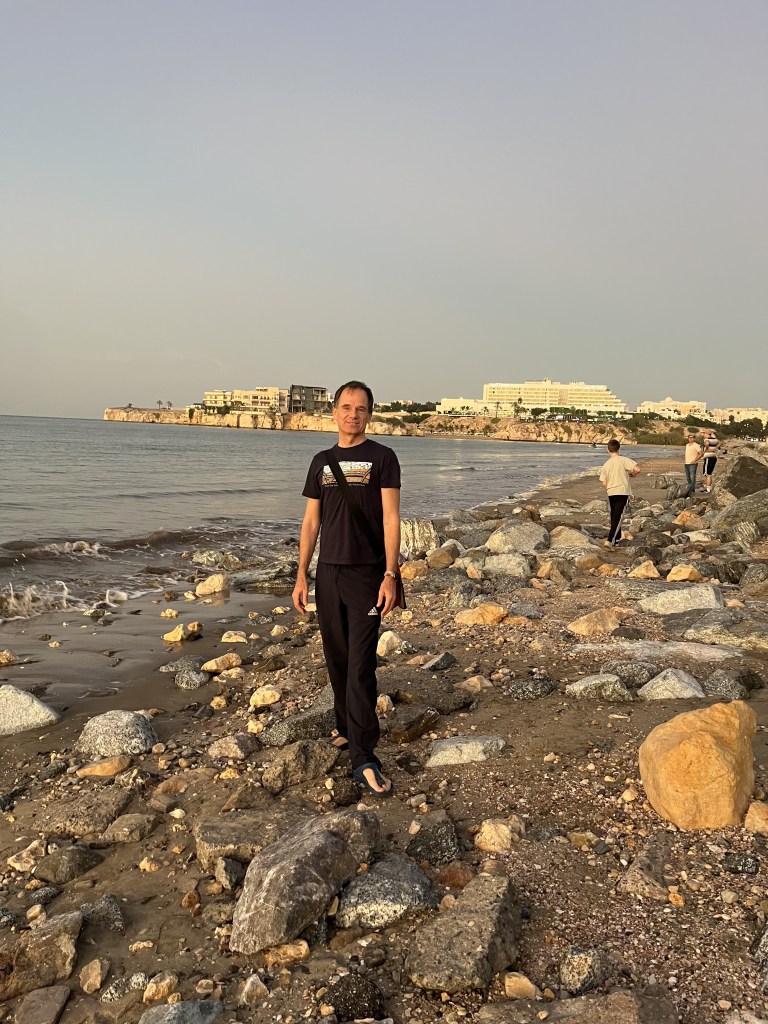
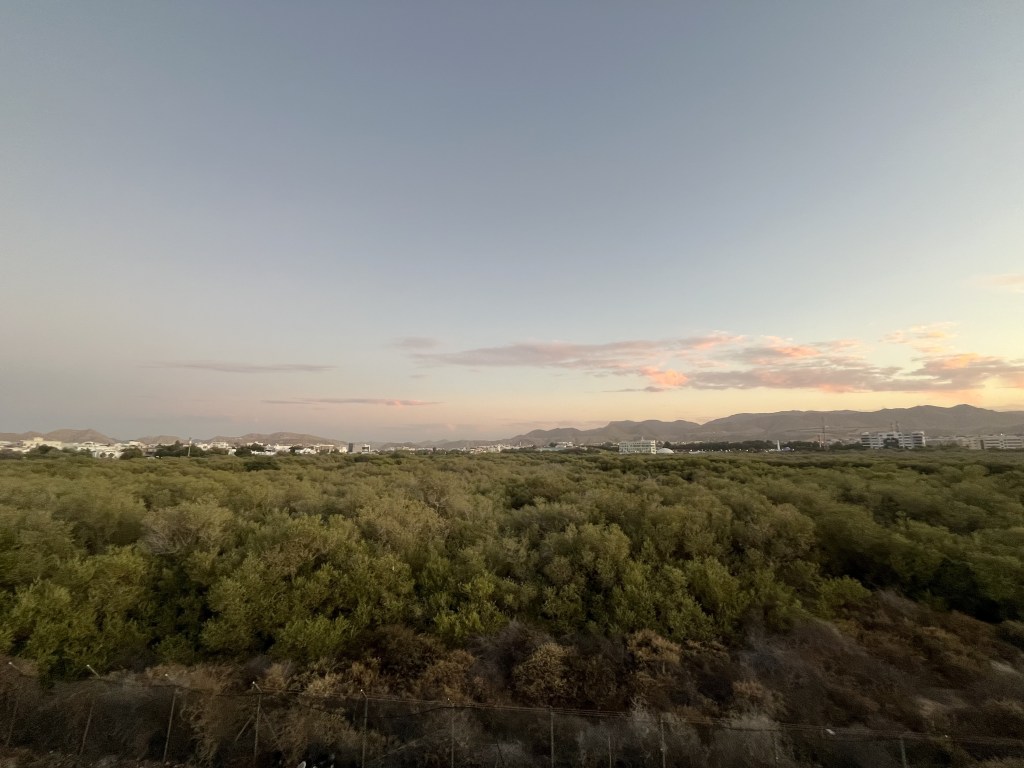
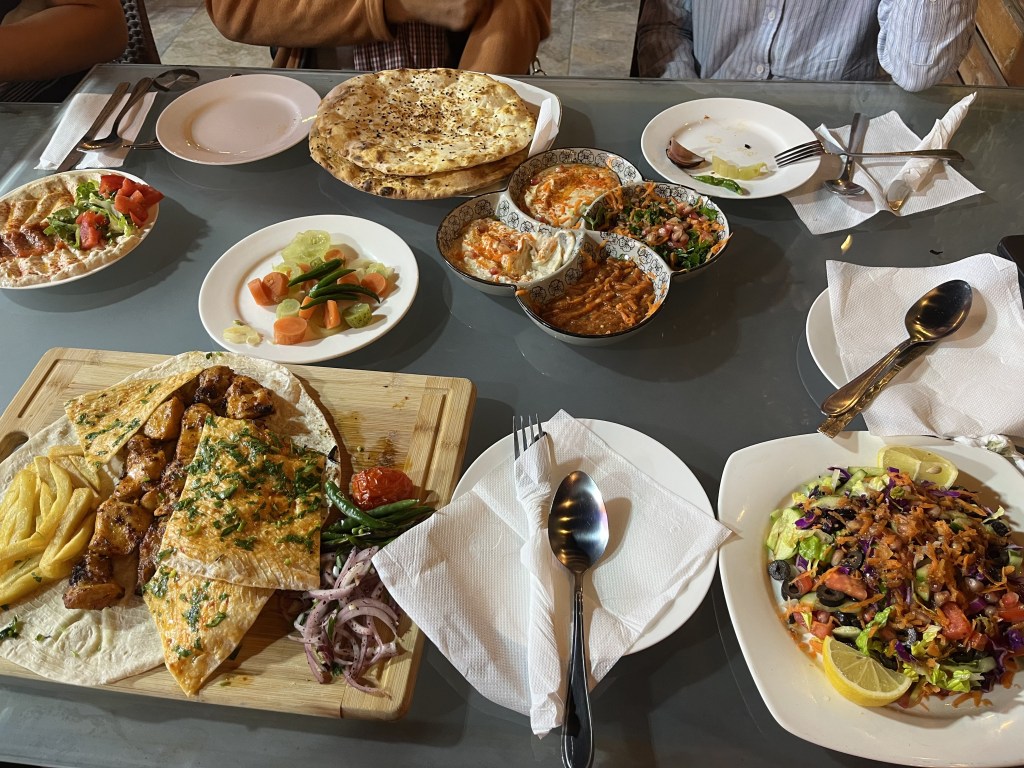
Auf der Fahrt zurück an der Küste überrascht uns eine grüne Sumpflandschaft, die einen starken Kontrast zu den felsigen Bergen des Hintergrunds bildet. Dort wollen wir morgen hinfahren. Und um die Badesachen auszupacken ist es schon zu spät, so begnügen wir uns mit einem Spaziergang zum Sonnenuntergang. Als wir eine Street-Food-Ecke bei Google Maps ausfindig gemacht haben, stellen wir fest, dass dies eher amerikanische Größenordnungen mit Parkplätzen und Restaurants sind, die Essen aus allen Ländern kredenzen – wir sind bei einem türkischen Restaurant gelandet und erstaunt, was wir für 40 Euro zu siebt alles geboten bekommen, von den frisch gepressten Fruchtsäften in XL über die Salate, Vorspeisen und Grillgerichte. Alle sind begeistert, es ist günstiger und mindestens so lecker wie in Istanbul.
Morgen geht es in die Berge, zur zweigrößten Stadt des Landes nach Nizwa und in ein Gebirgstal. Wir sind gespannt.

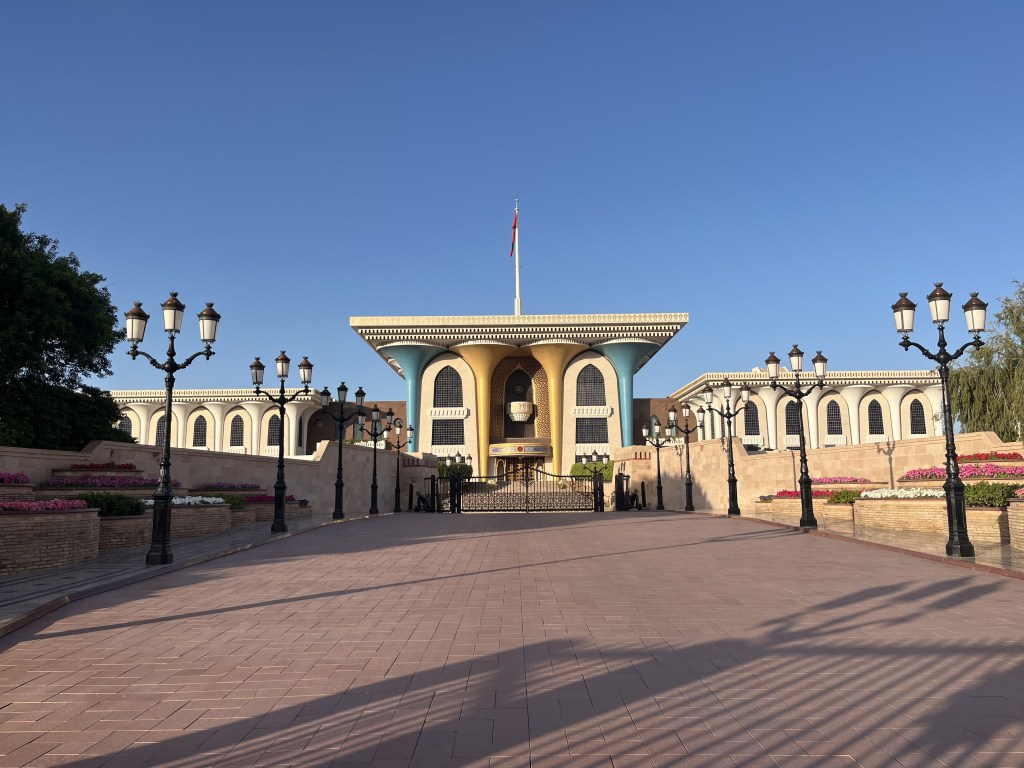
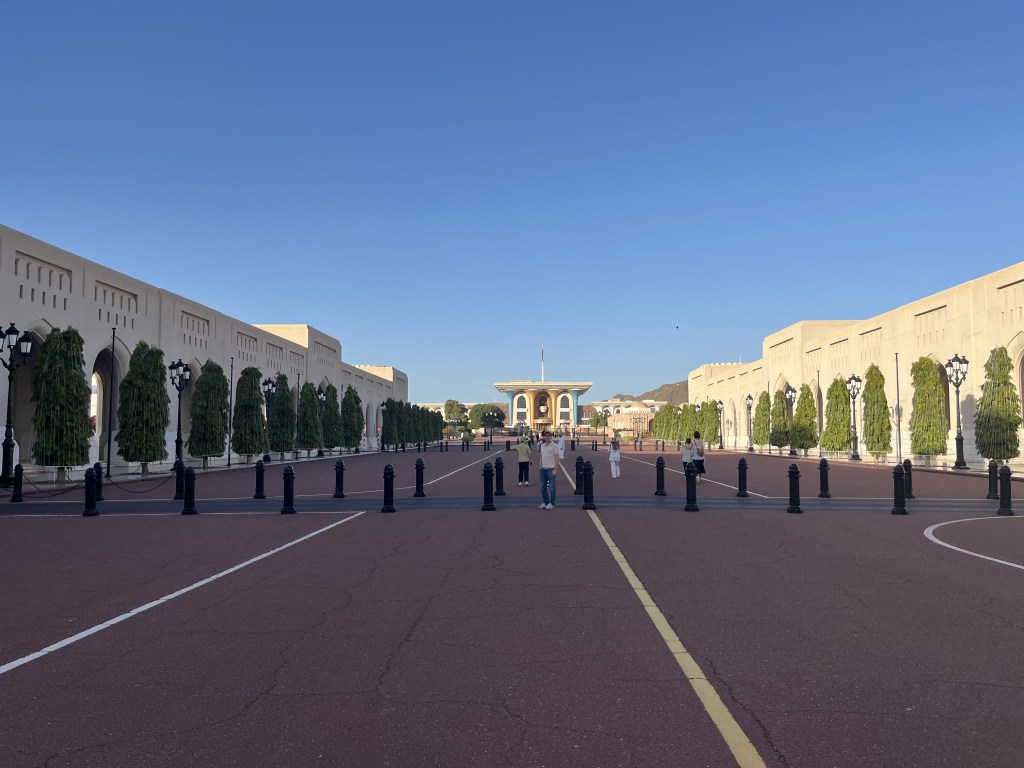
The palace of the sultan
Day 6 – On our morning walk to the beach, we realised: it’s going to stay this warm for the next 4 months. And the sun will probably be shining most of the time. We have to get up early, as the sun rises around 6 a.m. and sets at the same time in the evening. When the alarm clock rings at 7.45, it still feels very early, even though it is already bright outside.
After our morning sports programme, we have breakfast. Tara reads out the five basic rules of Islam. And then comes school, mathematics. We try to introduce new routines. Around 1 p.m., we have leftovers from yesterday’s meal and a salad, which we prepare in our small kitchen in the flat, before heading off to the National Museum of Oman. We are amazed that it is 20 kilometres away and I get lost several times in the labyrinth of motorways.
We quickly realise that Oman is a car country. Much reminds us of the USA; of Los Angeles or Las Vegas. Outside, the hot desert, endless space and huge car parks, with shopping malls, hotels and harbours behind them. We pass a cruise giant and the Sultan’s yacht, the Al Said. Number 7 in the world of mega yachts, at 155 metres long, a magnificent specimen from the Lürssen shipyard in Bremen.
In the National Museum we see that ships play a central role in the history of Oman. As a stopover on the way to India, Oman was an important port of call, and over the centuries ships from all over the world travelled here with goods from China, India, Africa and Europe.
The museum impresses the children with its own cinema room, where the first human finds date back 2 million years, with a hand axe from the Australopithecus, which spread from Africa to Europe and Asia at that time.
The greatest change was brought about by warlike Arabs from the south, when the message of the Prophet spread. Muhammad (peace be upon him) praised the tribes of Oman for accepting the new faith without fighting and with much understanding.
But everything changed in 1970, when the first oil reserves were discovered and the consequences of this boom can be seen particularly clearly around the National Museum. Some of the architecture looks like something out of Star Wars, on an alien planet. Everything is shiny and shiny and looks brand new, unreal in size and prestigious, so that the few tourists are completely lost in it.
The children like it, especially the cinema and the fact that there is a drawing corner where you can draw scimitars and other weapons. The museum is impressive and imposingly built, admission is free up to the age of 25 and there is plenty of space – until a diplomatic mission arrives with 10 Mercedes S-Class cars and is guided through the halls. Every now and then the children are exhausted, which is combated with biscuits and cola.
As we drive back along the coast, we are surprised by a green marshland landscape that forms a stark contrast to the rocky mountains in the background. We want to go there tomorrow. And it’s already too late to unpack our swimming gear, so we make do with a walk to watch the sunset. When we find a street food corner on Google Maps, we realise that these are more American-sized places with car parks and restaurants serving food from all over the world – we end up at a Turkish restaurant and are amazed at what the seven of us can get for 40 euros, from the freshly squeezed XL fruit juices to the salads, starters and grilled dishes. Everyone is delighted, it’s cheaper and at least as tasty as in Istanbul.
Tomorrow we are travelling to the mountains, to Nizwa, the second largest city in the country, and to a mountain valley. We are excited.

 our travel space
Hinterlasse einen Kommentar