Tag 16 und 17 – Mumbai ist in vieler Hinsicht eine Stadt der Superlative, nach vier Tagen sind ja auch alle bereit für den Aufbruch nach Goa morgen früh. Über 20 Millionen Menschen, eine Bevölkerungsdichte von an die 30.000 Menschen pro Quadratkilometer, und die Hälfte der Bevölkerung lebt in Slums. Und zugleich ist es nach London und New York die Stadt mit den meisten Milliardären auf der Welt. Vieles ist offensichtlich noch zu verbessern. Aber Mumbai ist attraktiv, wie Studien zeigen, sehen auch die Bewohner der indischen Großstadt-Slums ihre Lebensbedingungen als überwiegend positiv wahr, und sind optimistisch, deutlich mehr als die Landbevölkerung. Kein Wunder, wo der Mindestlohn auf dem Land bei etwa zwei Euro am Tag liegt. In der Großstadt leben eben Chancen auf ein besseres Leben. Man schätzt, dass sich die Einwohnerzahl der 50 Millionen Städte Indiens bis 2050 verdoppeln werden.
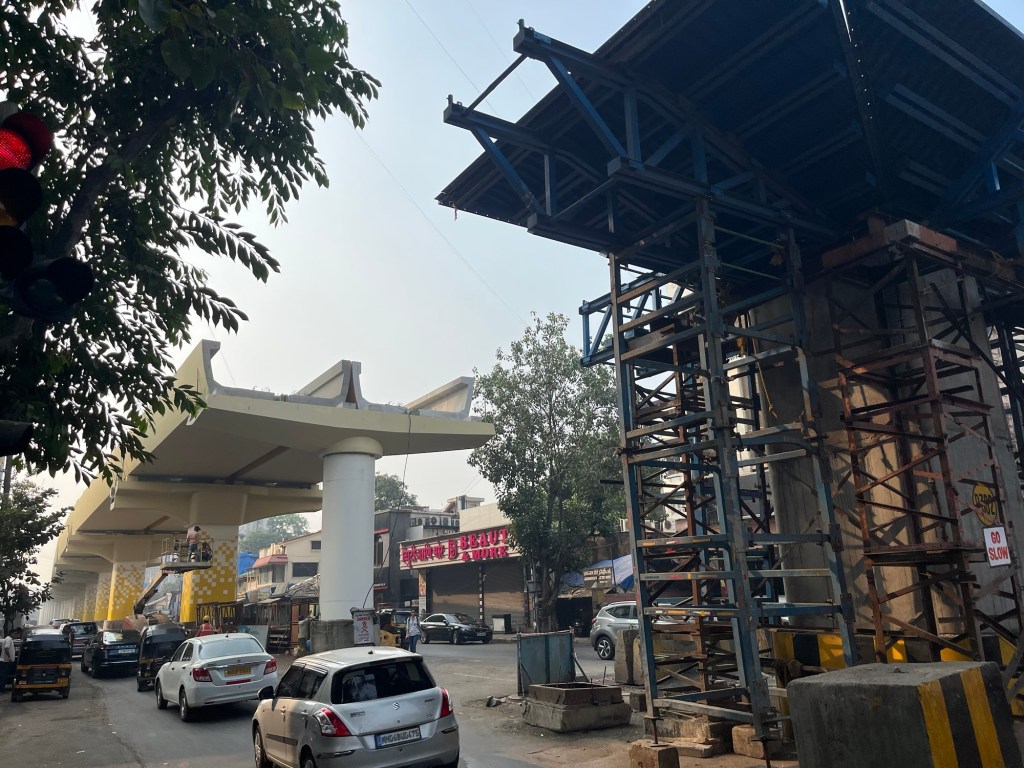
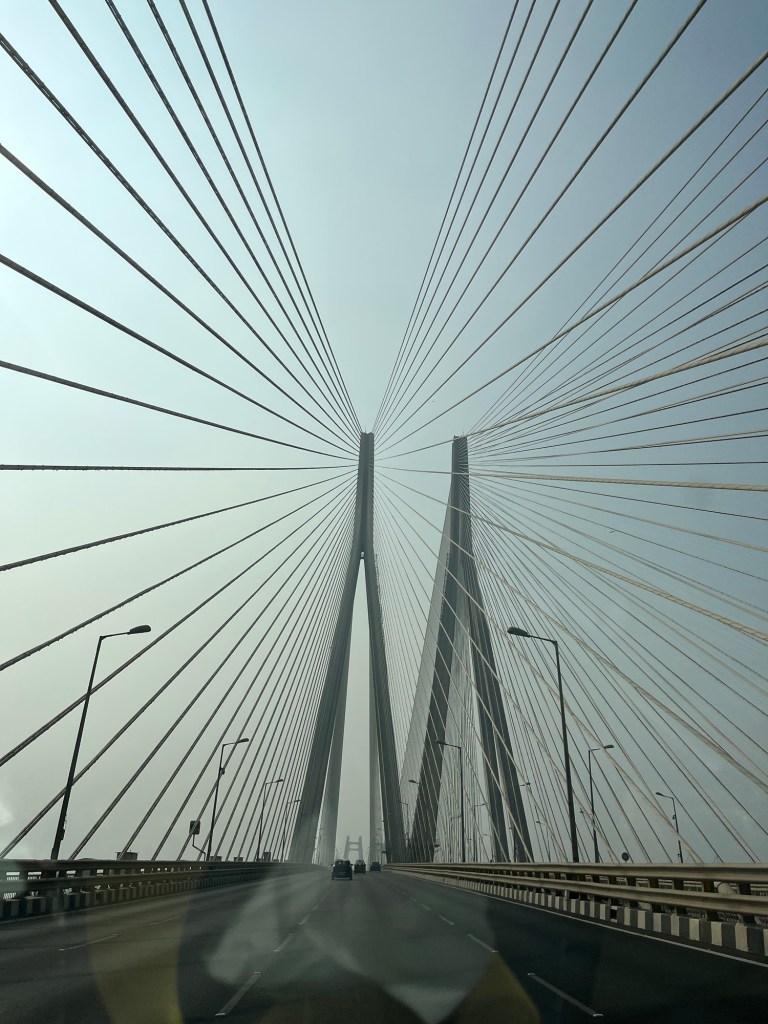
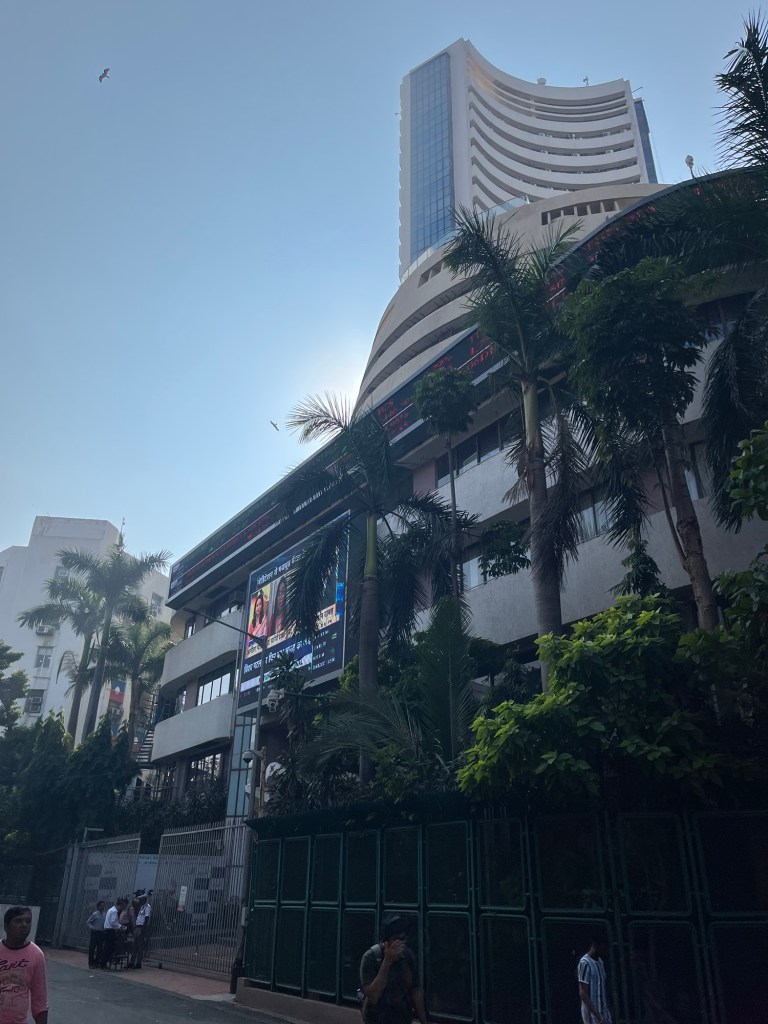
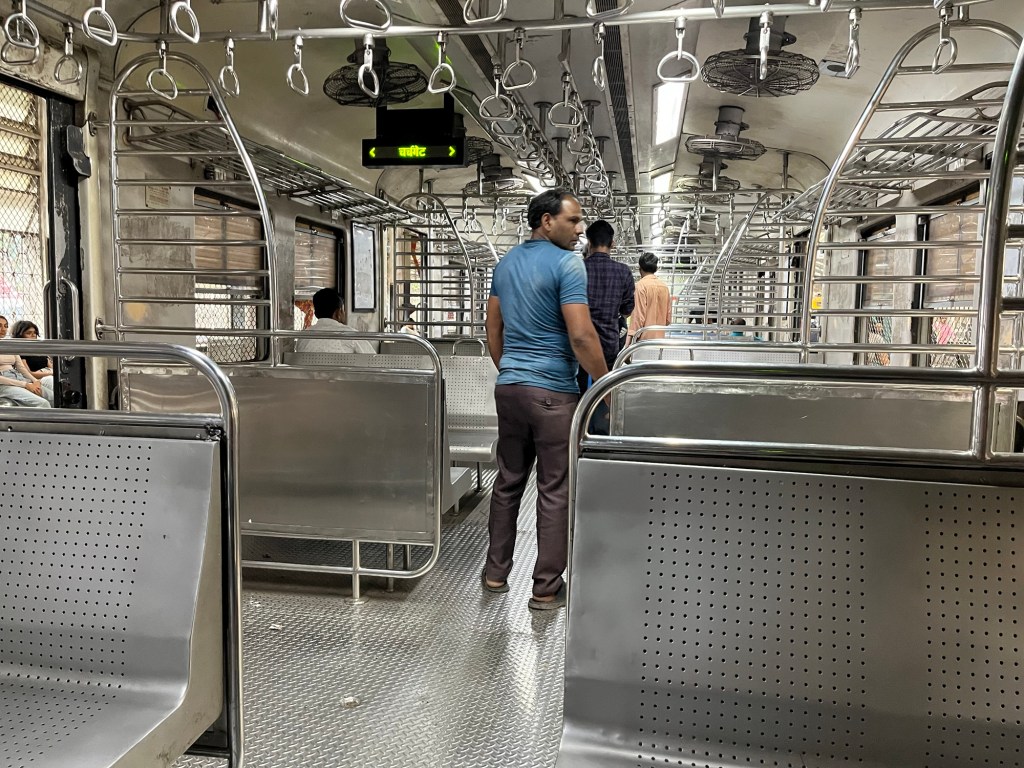
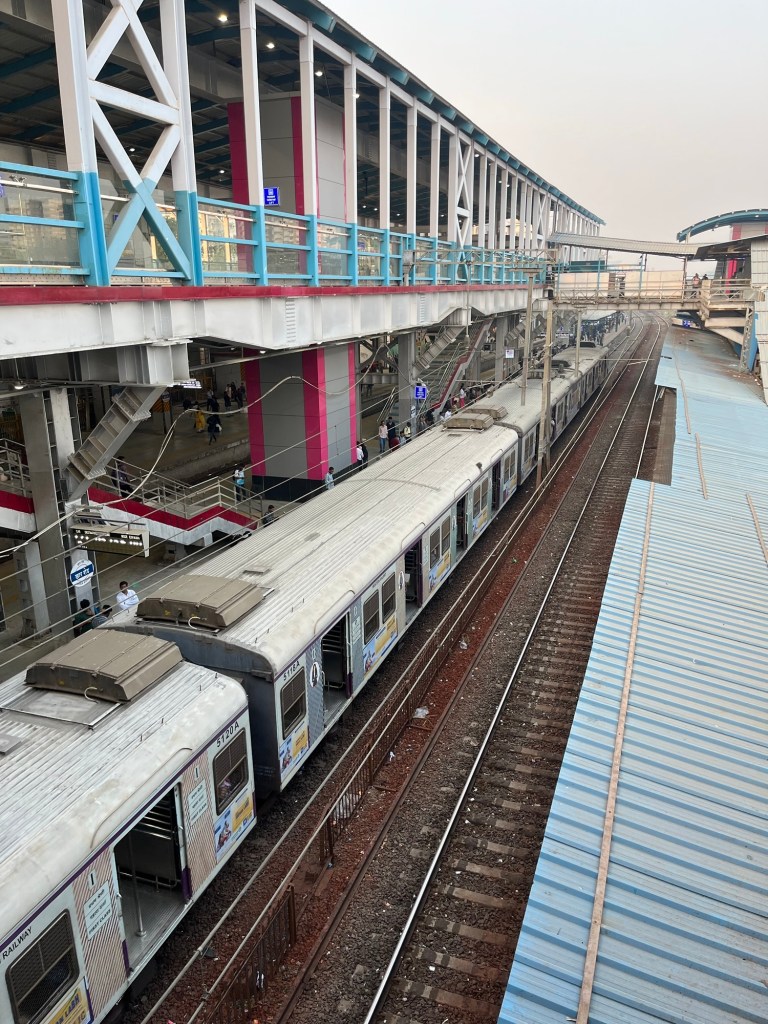
7 Millionen Menschen transportiert der Zug jeden Tag, sieben sterben dabei – was sicher an der Überfüllung und den fehlenden Türen liegt. Und die Metro ist erst im Bau, wir sahen überall angefangene Hochbrückenabschnitte. Mumbai hat auch den größten Hafen Indiens, das Finanzzentrum des Landes und ist der Sitz der Börse.
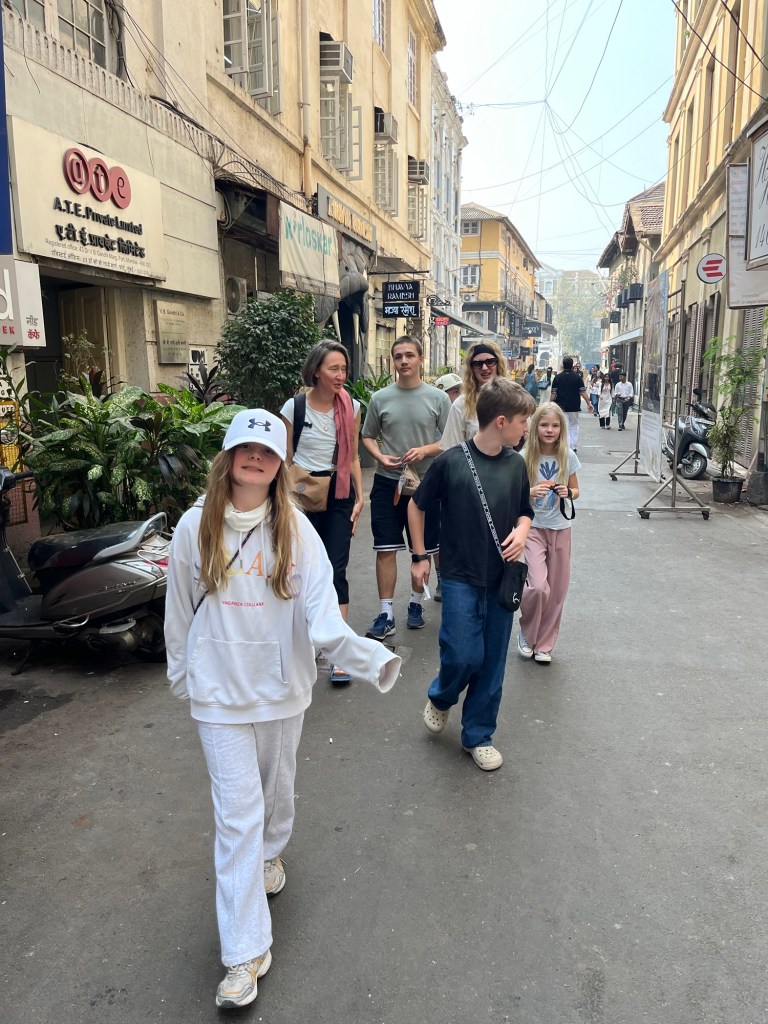
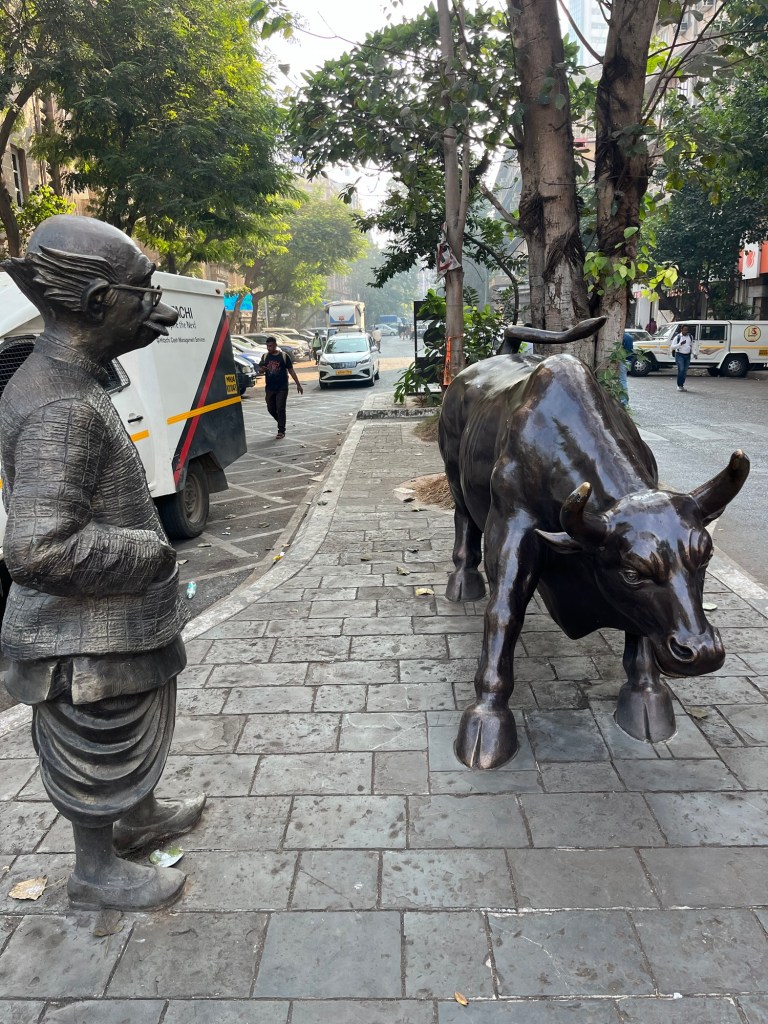
Um diese herum ist auch die einzige Fußgängerzone, die wir gesehen haben, und es gibt in den Gassen der Altstadt, schicke kleine Läden, und renovierte Abschnitte – doch alles immer wieder als kleine Inseln, der Ordnung in mitten von viel Durcheinander. Wir stärken uns mit leckeren Fruchtsäften- Chicco- Banane oder Karotte-Rote Beete.
Morpheus vergisst sein Cappy im Uber-Taxi, als dieses von der Polizei angehalten wird. Der Fahrer klagt über die korrupte Polizei, die von ihm Geld verlangt. Aber weil wir bereits seit gestern indische Telefonkarten haben, können wir den Fahrer erreichen und er bringt uns Morpheus Kopfbedeckung zum Hotel zurück.
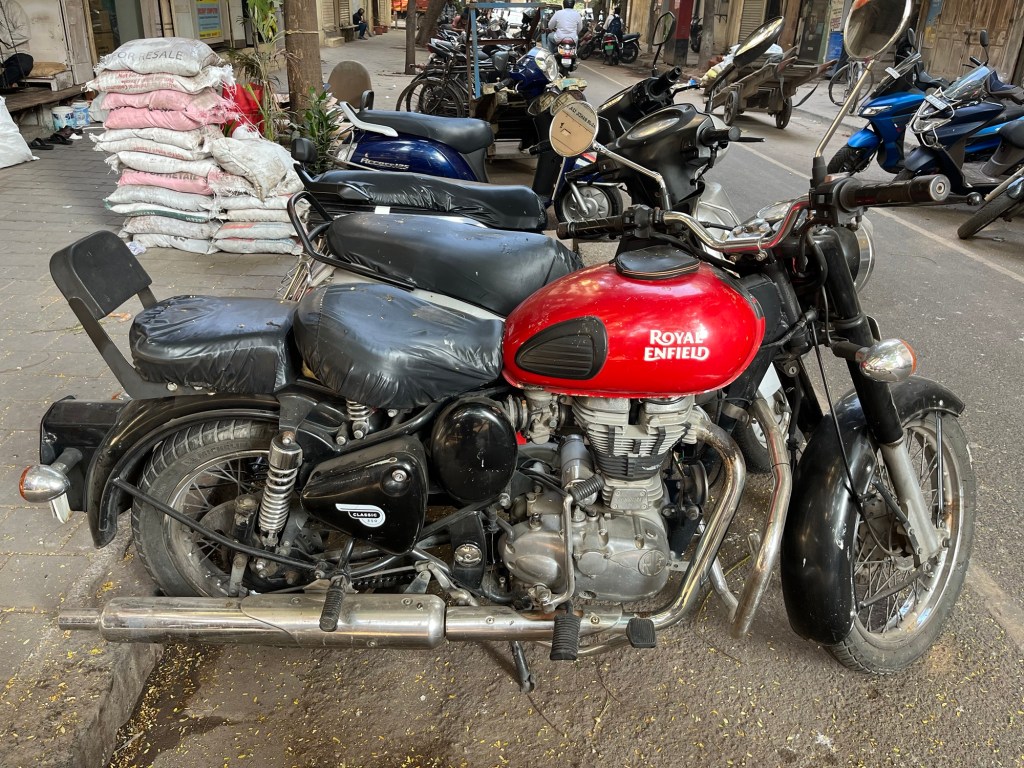
Über der Stadt hängt permanent ein Grauschleier, und dieser Smog lässt die Sonne nie ganz durch scheinen. Leider fahren auch alle Rikschas noch mit Verbrennungsmotoren , und ich habe nur einen Elektrobus ersparen können.
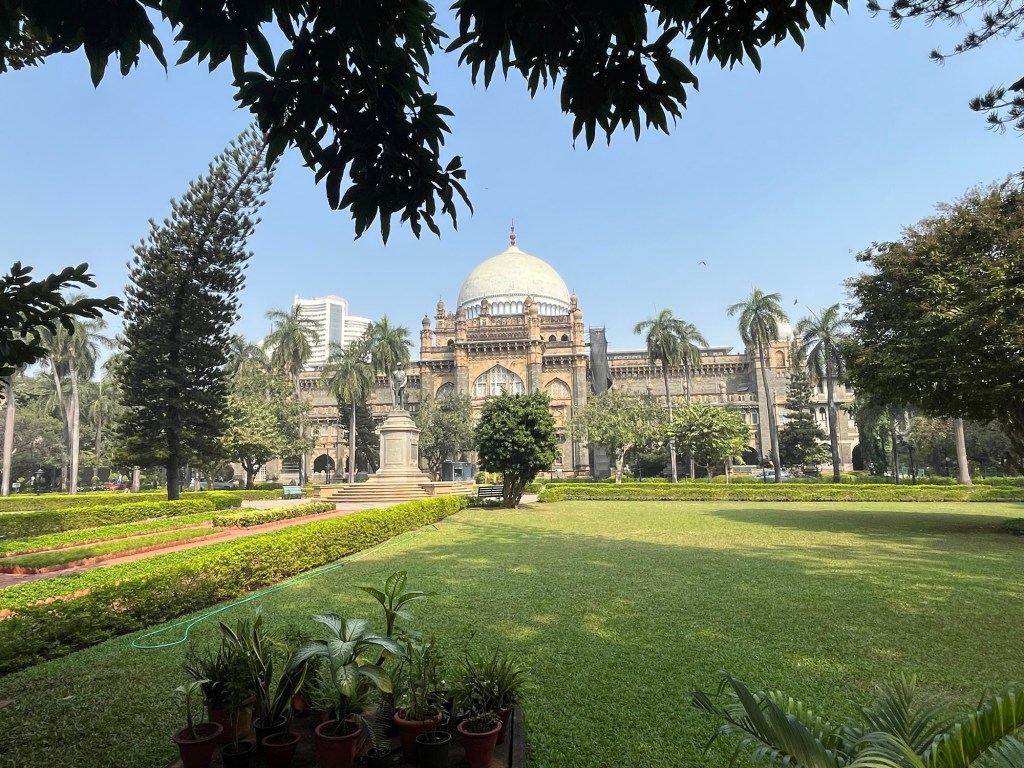
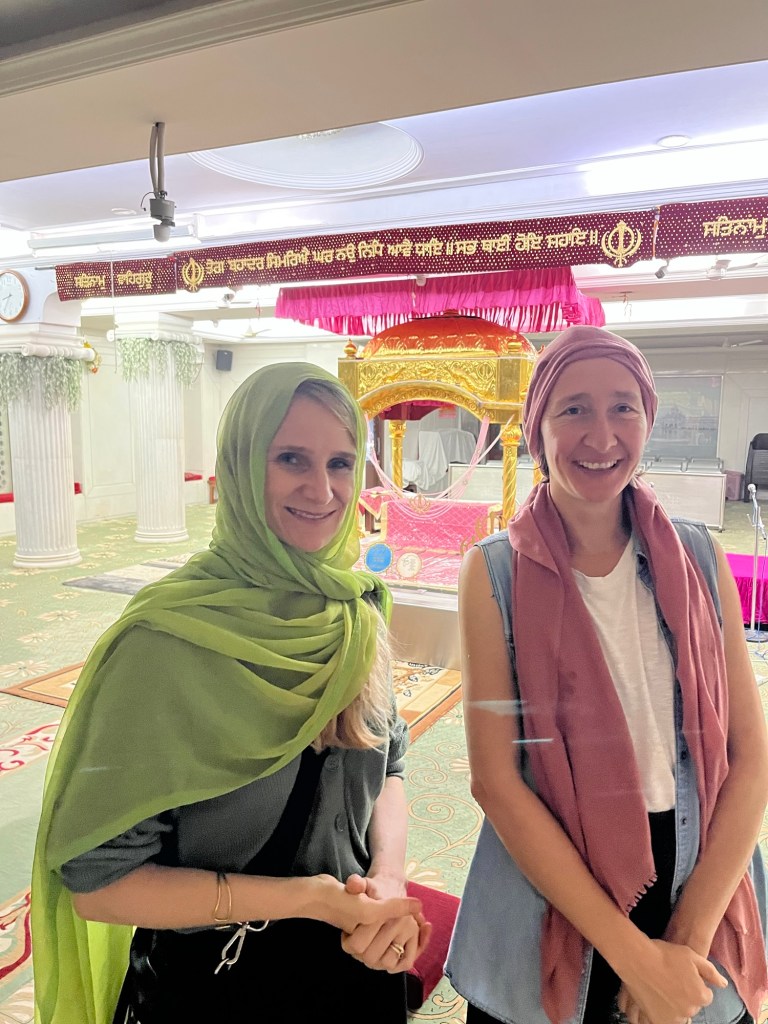
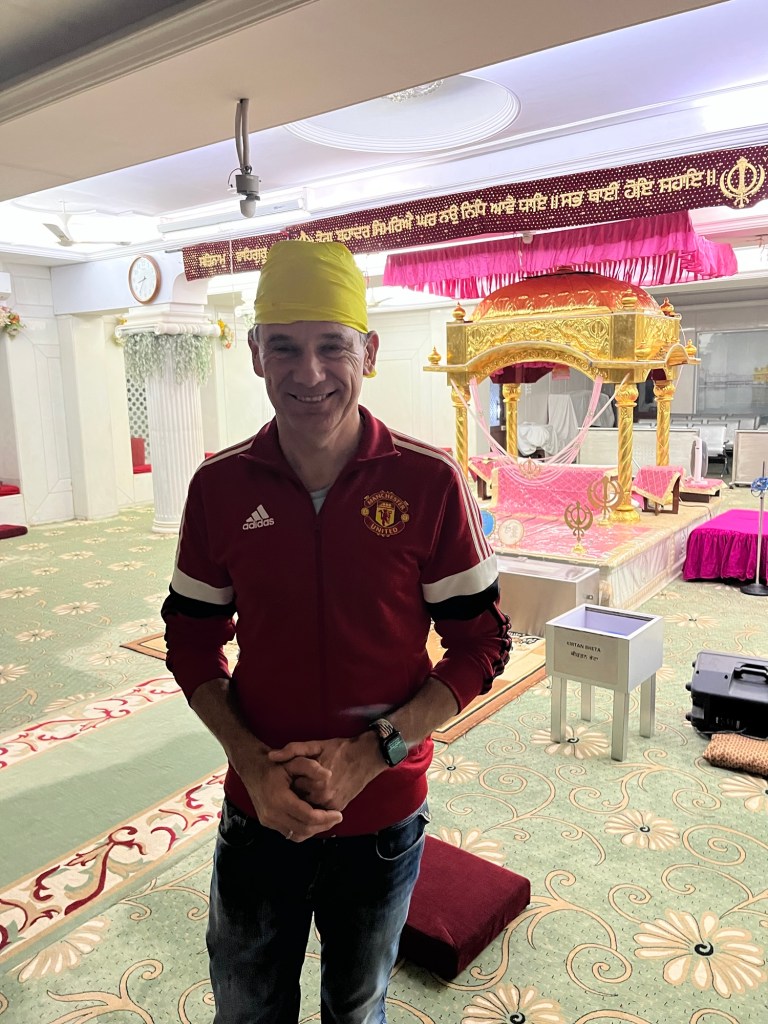
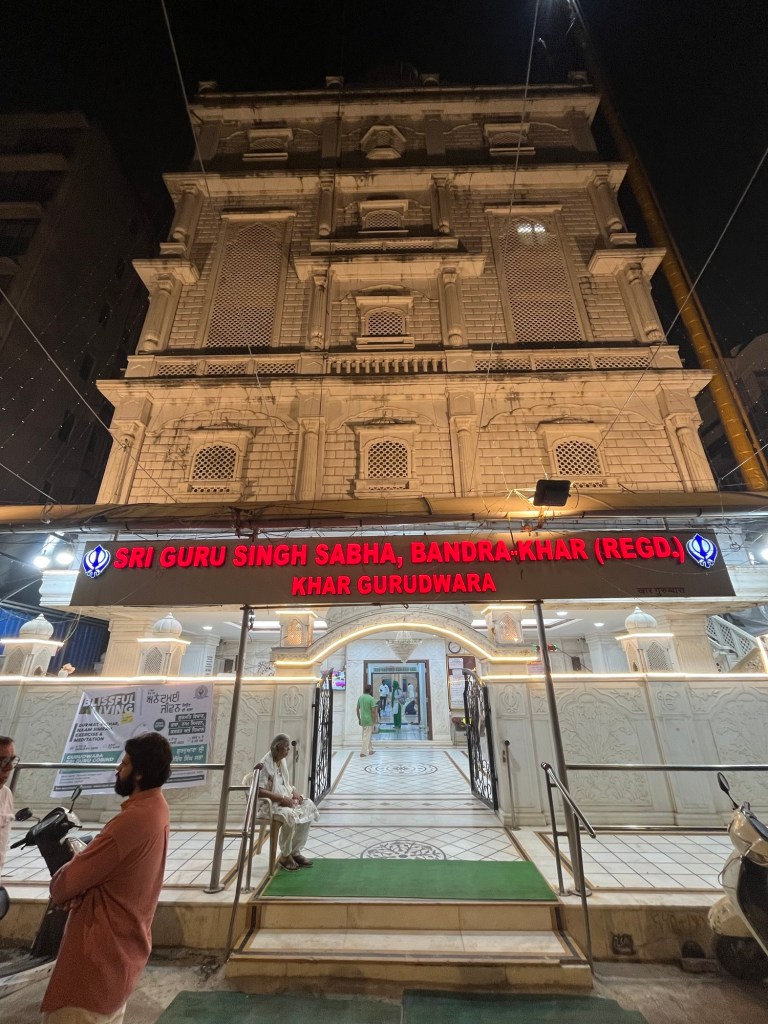
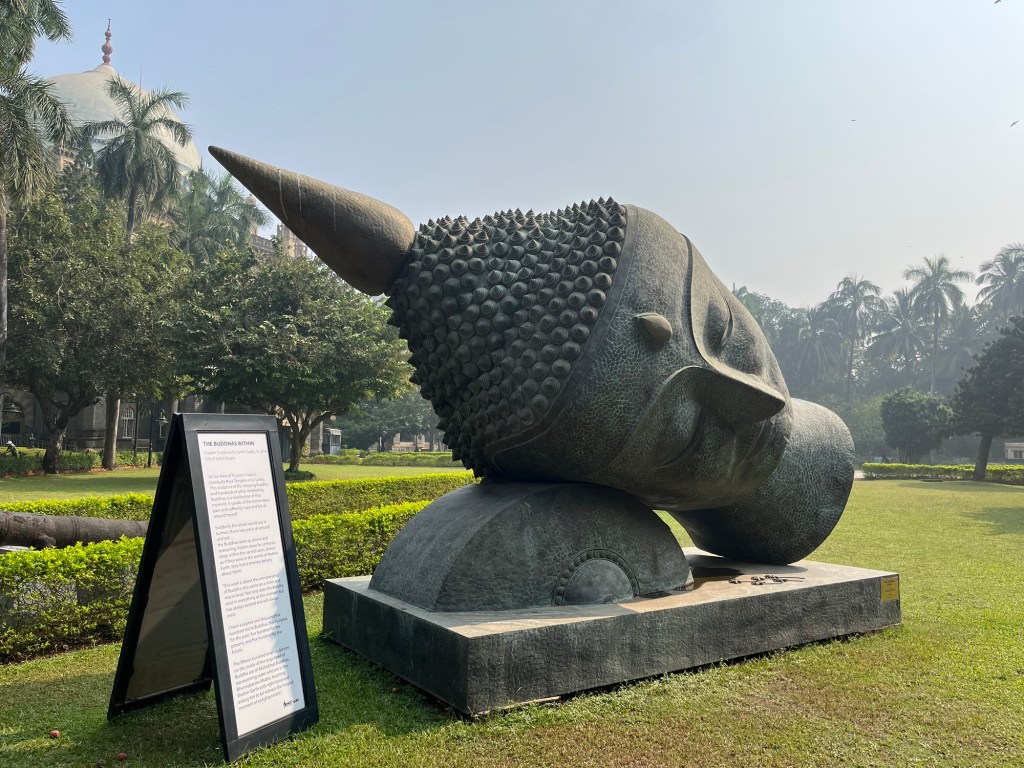
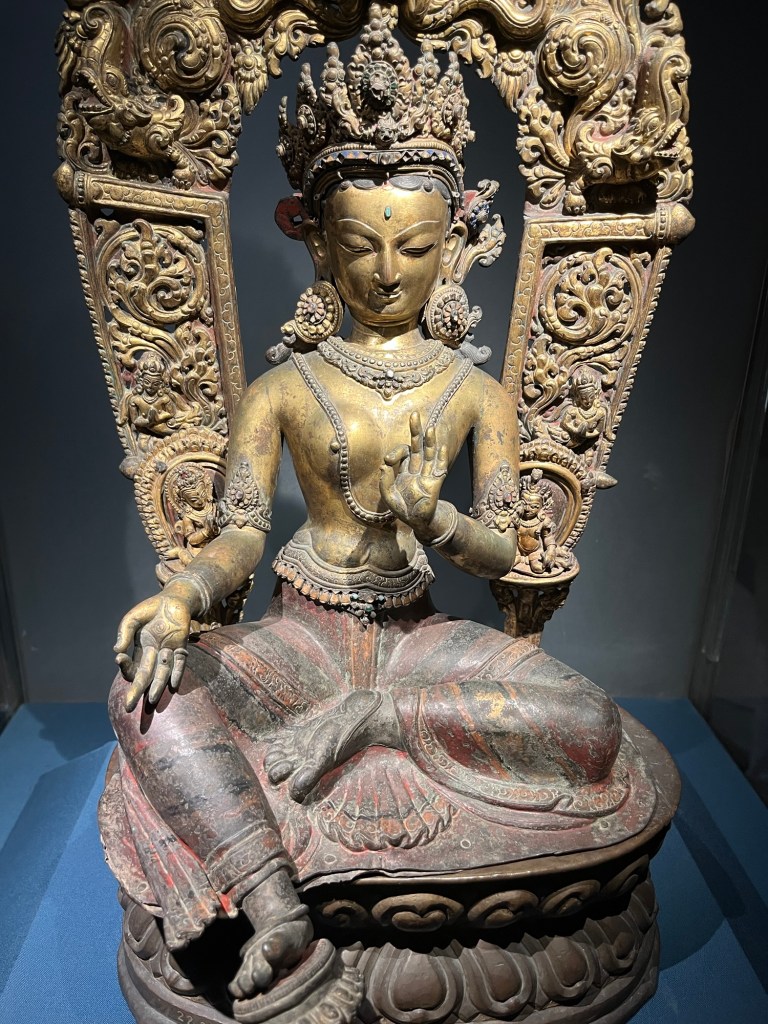
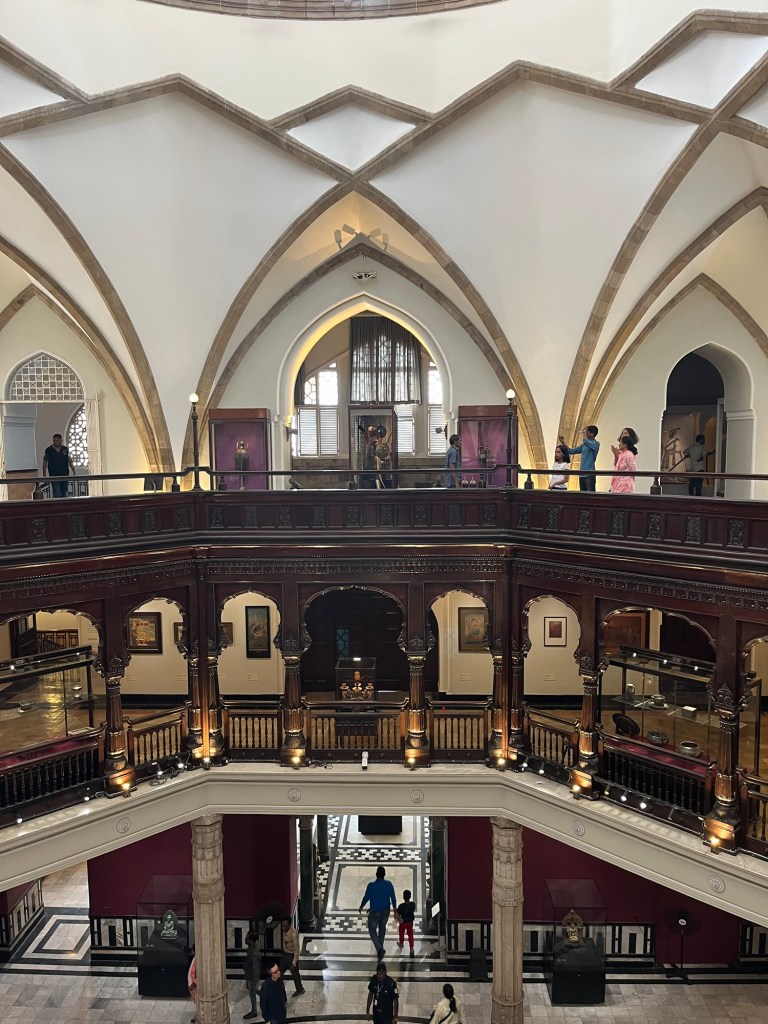
Im Museum lernen wir über die weiße Tara, die als höchste Gottheit im Buddhismus für Mitgefühl und langes Leben steht, und wie Janaismus mit dem Buddhismus im 5. Jahrhundert vor Christus mit einer ähnlichenAusrichtung entstanden. Der Sikh-Tempel den wir besuchen wiederum folgt einer erst 400 Jahre alten monotheistischen Variante des Glaubens.
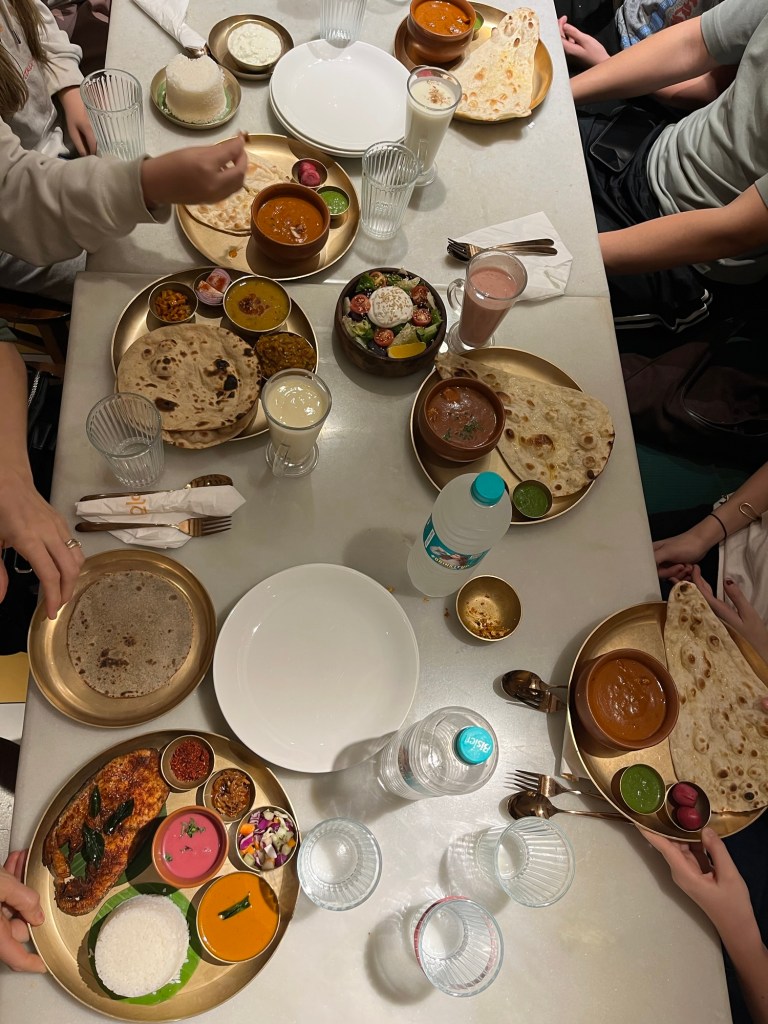
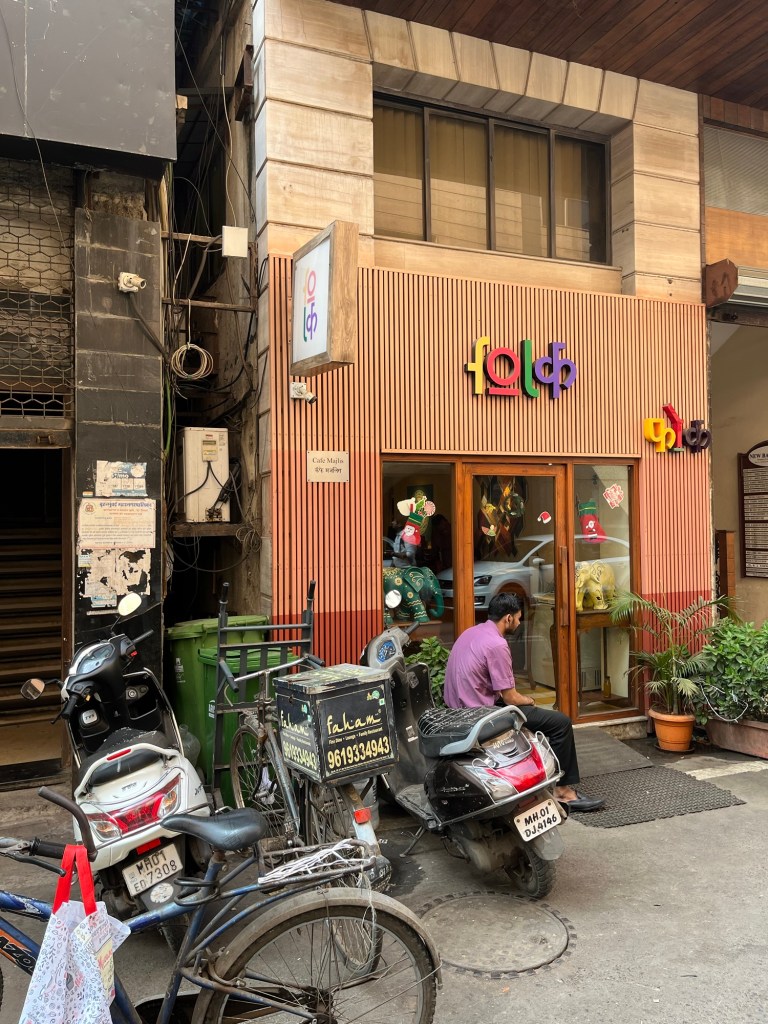
Nach einem leckeren nord indischen Mittagessen im Folk gibt es heute Abend selbst gemachten Papaya Bananen, Salat mit Limon und einen kleinen grünen Salat. Wir haben mit Velis und Lysander, unseren beiden 16 und 18-jährigen Söhnen telefoniert und freuen uns sehr beide in der nächsten Woche in Goa empfangen zu können – nach fast einem Jahr ist dann die Familie wieder vereint.
Morgen um 11:30 Uhr fliegen wir nach Goa, und fahren dann 2 Stunden mit dem Taxi in Richtung Süden nach Agonda, einem kleinen malerischen Strand Ort. Alle freuen sich auf Weihnachten am Strand unter Palmen.
Day 16 and 17 – Mumbai is a city of superlatives in many respects, and after four days everyone is ready to leave for Goa tomorrow morning. Over 20 million people, a population density of around 30,000 people per square kilometer, and half of the population lives in slums. At the same time, it is the city with the most billionaires in the world after London and New York. There is obviously still much to improve. But Mumbai is attractive, as studies show, even the inhabitants of India’s big city slums perceive their living conditions as predominantly positive and are optimistic, much more so than the rural population. No wonder, when the minimum wage in rural areas is around two euros a day. Living in the big city offers opportunities for a better life. It is estimated that the population of India’s 50 million cities will double by 2050.
The train transports 7 million people every day, seven die in the process – which is certainly due to overcrowding and the lack of doors. And the metro is still under construction; we saw sections of elevated bridges under construction everywhere. Mumbai also has India’s largest port, the country’s financial center and is home to the stock exchange.
Around this is also the only pedestrian zone that we saw, and there are chic little stores and renovated sections in the alleyways of the old town – but everything is always a small island of order in the midst of a lot of confusion. We fortify ourselves with delicious fruit juices – Chicco banana or carrot and beet.
Morpheus forgets his cap in the Uber cab when it is stopped by the police. The driver complains about the corrupt police who demand money from him. But because we have had Indian phone cards since yesterday, we are able to reach the driver and he brings Morpheus‘ headgear back to the hotel.
There is a permanent veil of gray hanging over the city, and this smog never lets the sun shine through completely. Unfortunately, all the rickshaws still run on combustion engines and I only managed to save one electric bus.
In the museum, we learn about the white Tara, the highest deity in Buddhism, who stands for compassion and long life, and how Janaism originated with Buddhism in the 5th century BC with a similar orientation. The Sikh temple we visit in turn follows a monotheistic version of the faith that is only 400 years old.
After a delicious northern Indian lunch at Folk, we have homemade papaya bananas, salad with lime and a small green salad tonight. We spoke to Velis and Lysander, our two 16 and 18-year-old sons, on the phone and are very much looking forward to welcoming them both to Goa next week – after almost a year the family will be reunited.
Tomorrow at 11:30 we fly to Goa, and then take a 2 hour cab ride south to Agonda, a small picturesque beach town. Everyone is looking forward to Christmas on the beach under palm trees.
 our travel space
Hinterlasse einen Kommentar