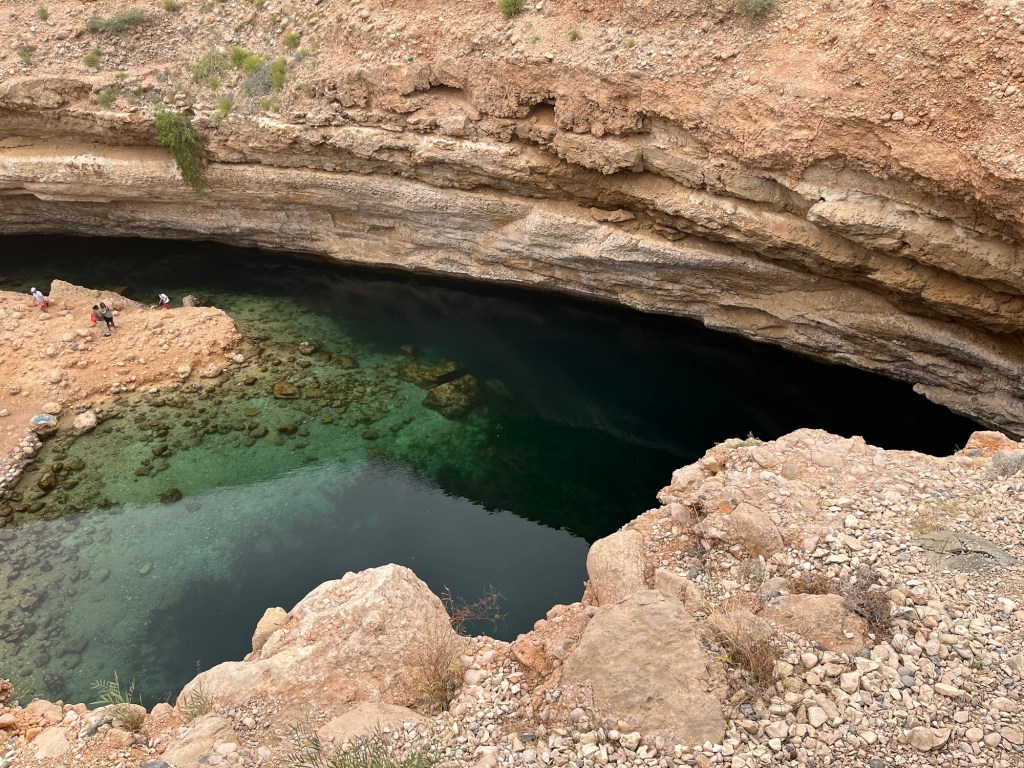
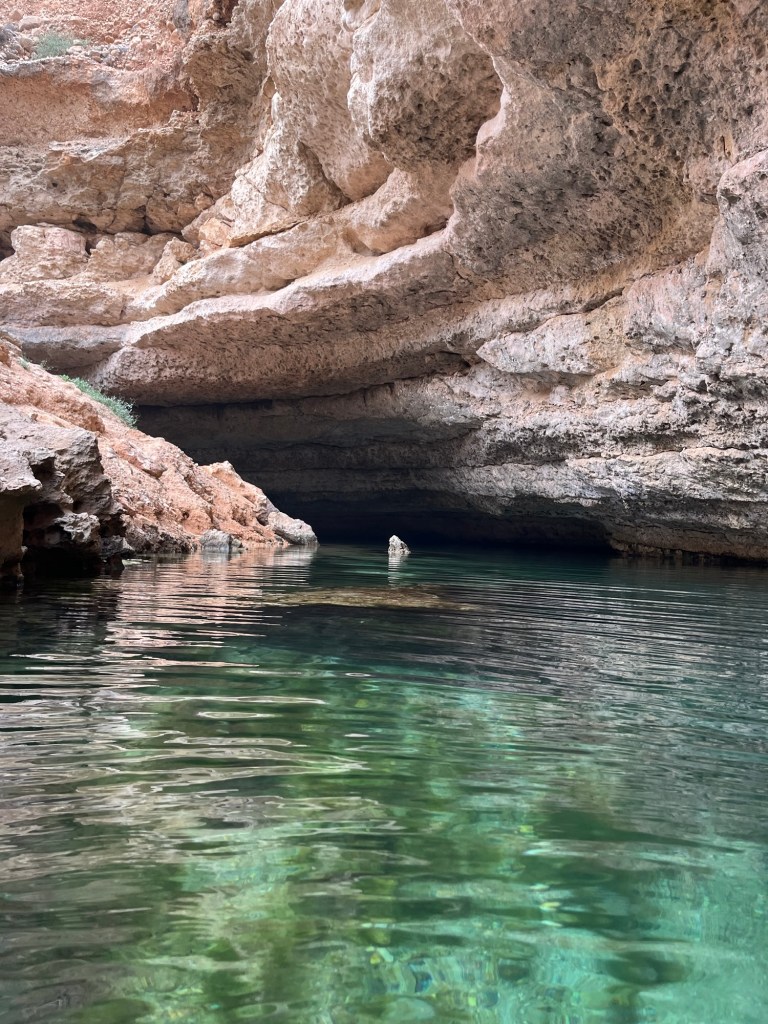
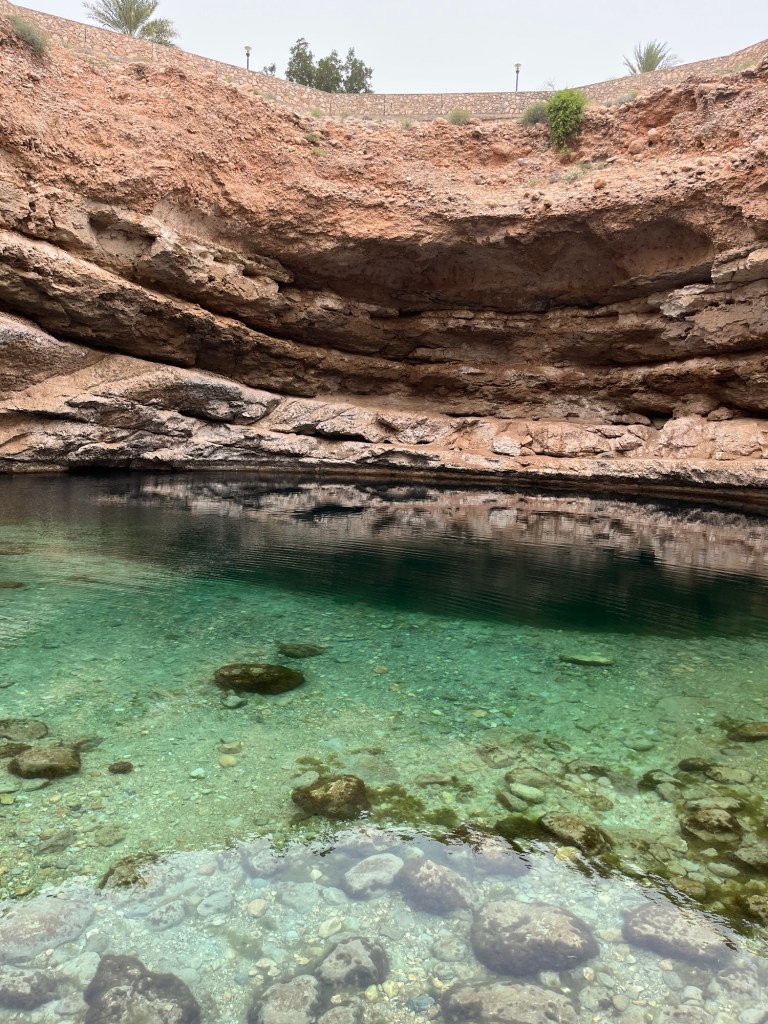
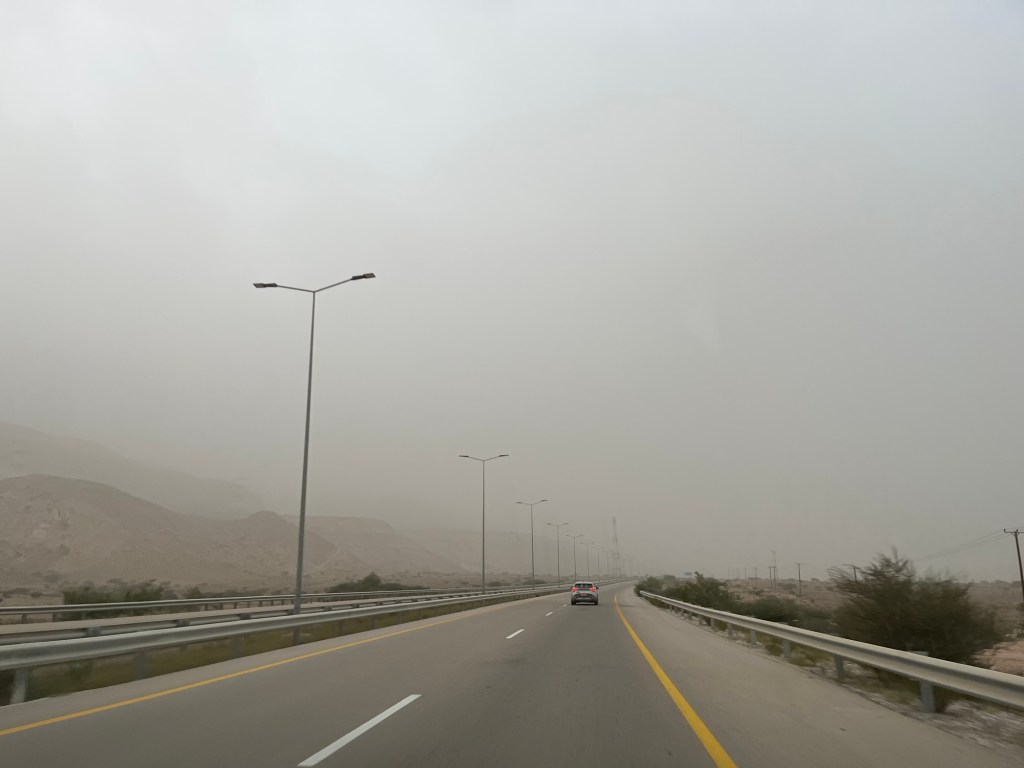
Tag 12- An unserem letzten Tag im Oman war es windig und bedeckt, die Sonne kam nicht heraus. Fast dachte man es würde gleich zu regnen anfangen, und der Wind ließ den Himmel vom Sand gelb erscheinen. Eine in den Fels in Serpentinen aufwärts gehauenen nagelneue Autobahn führte und Richtung Osten aus der Stadt heraus, in Richtung Sur. An der Tankstelle verkaufte ein Laden Campingausrüstung- an den langen Stränden sieht man Zelte und Canper stehen. Ich bekomme Lust beim nächsten Mal die Wüste und den Süden zu erkunden und zu campen. Wir haben ja nur die Umgebung von Maskat dieses mal erkunden können. Die beiden Ziele zum Abschluss waren nur 90 Minuten Fahrt entfernt, aber haben uns alle in Erstaunen und Begeisterung versetzt. Im Bimmah Sinkhole kann man im Salzwasser in einem Felsenloch schwimmen, und wird dabei von kleinen Fischen sanft angeknabbert.
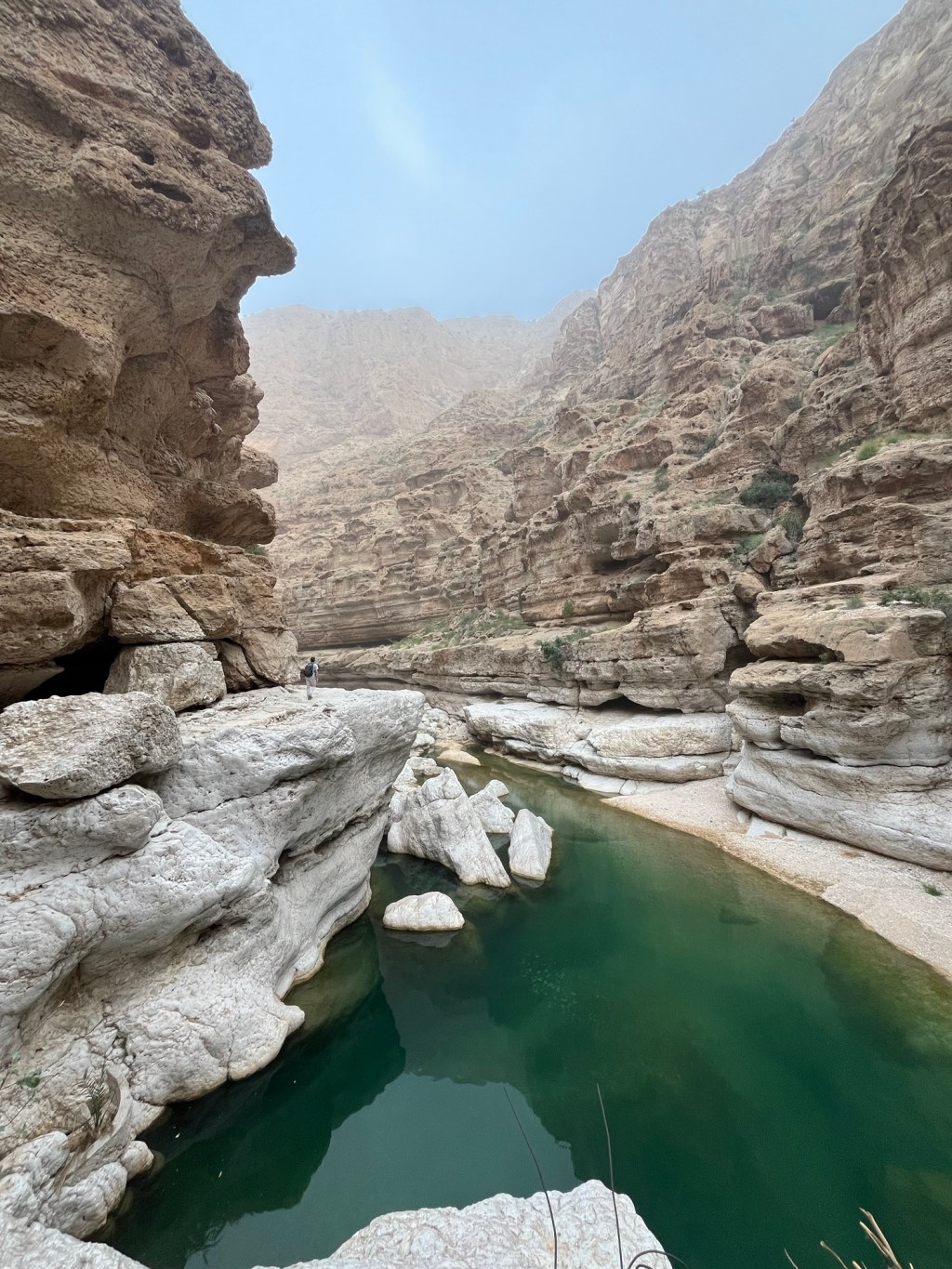
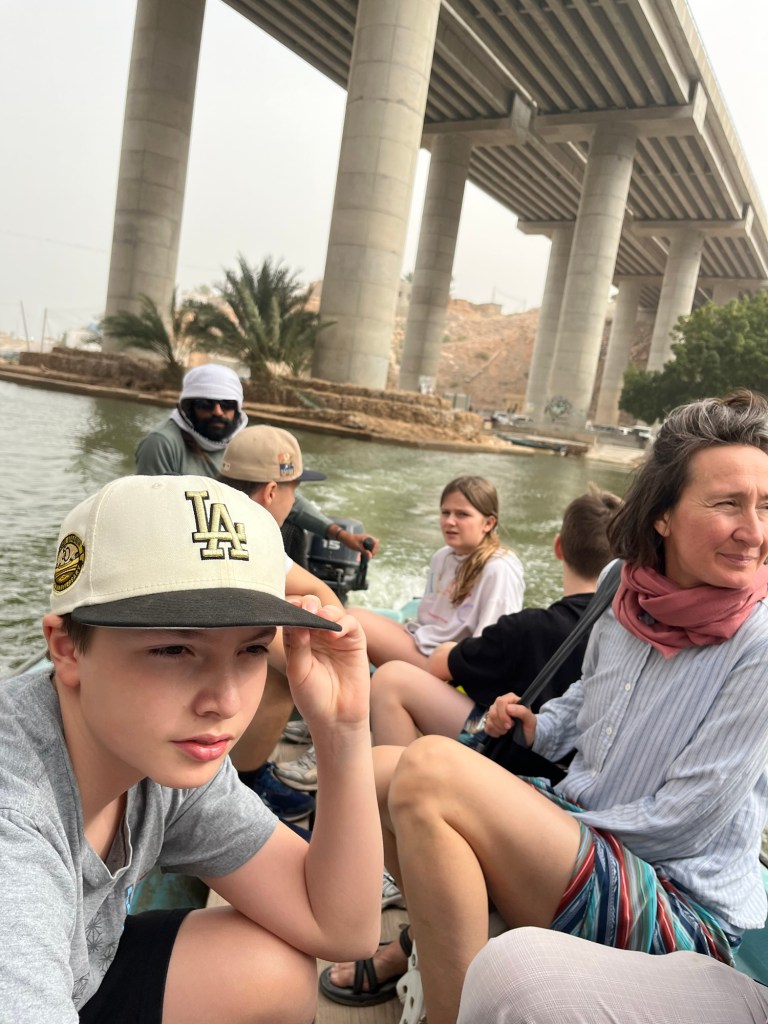
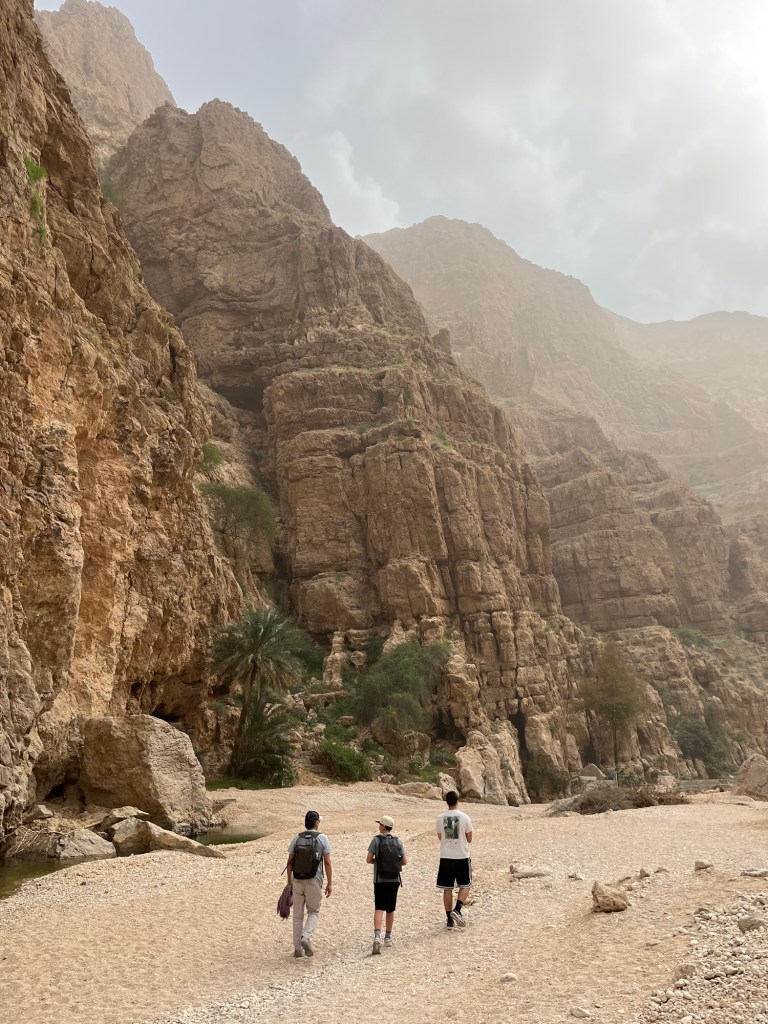
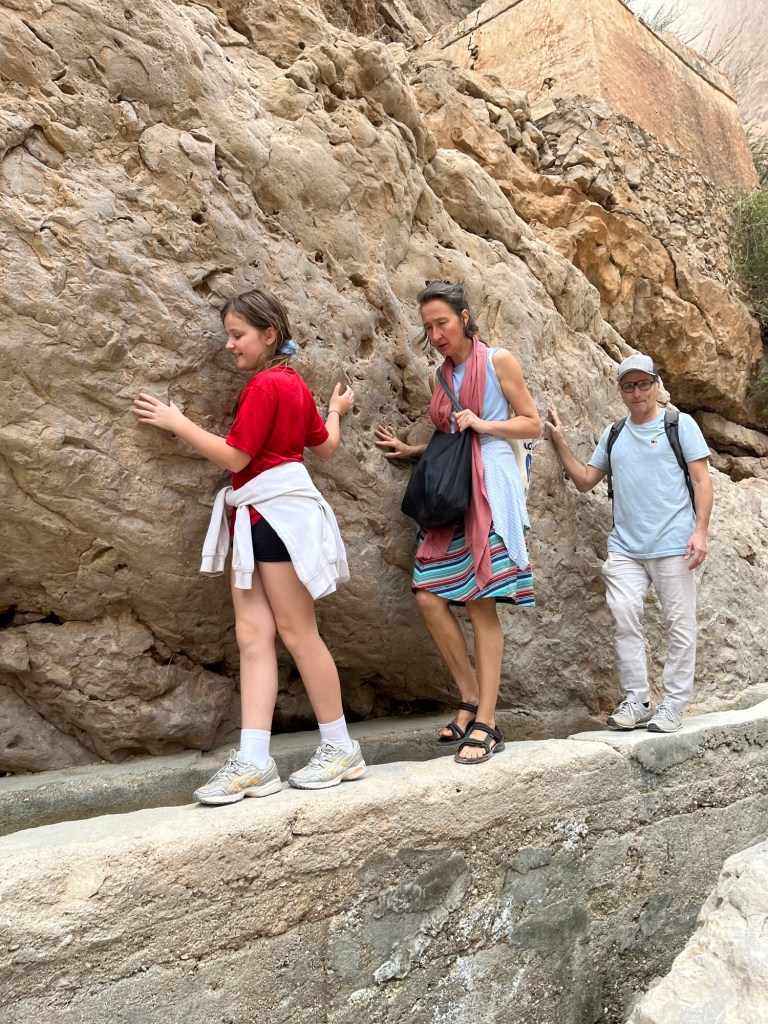
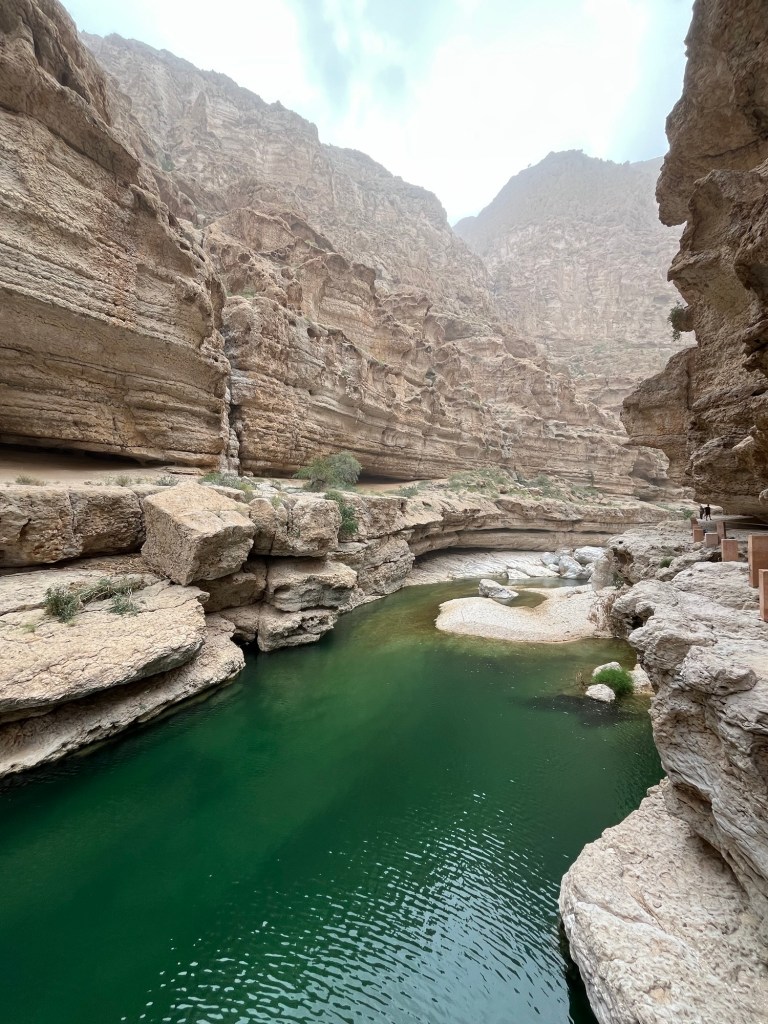
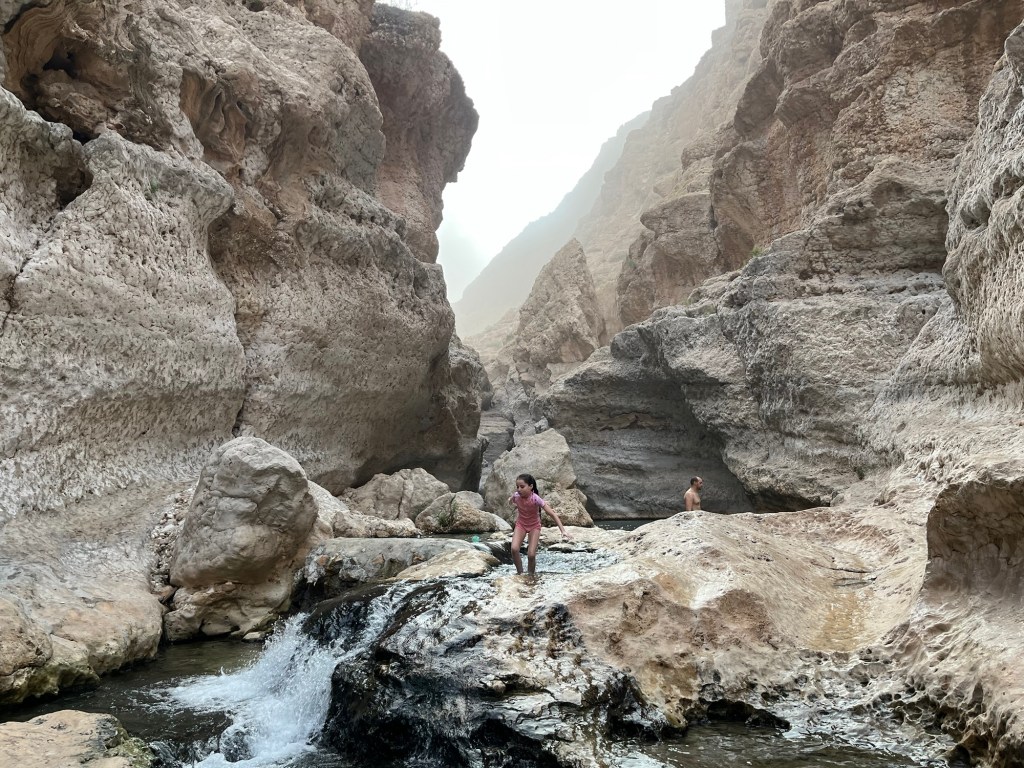
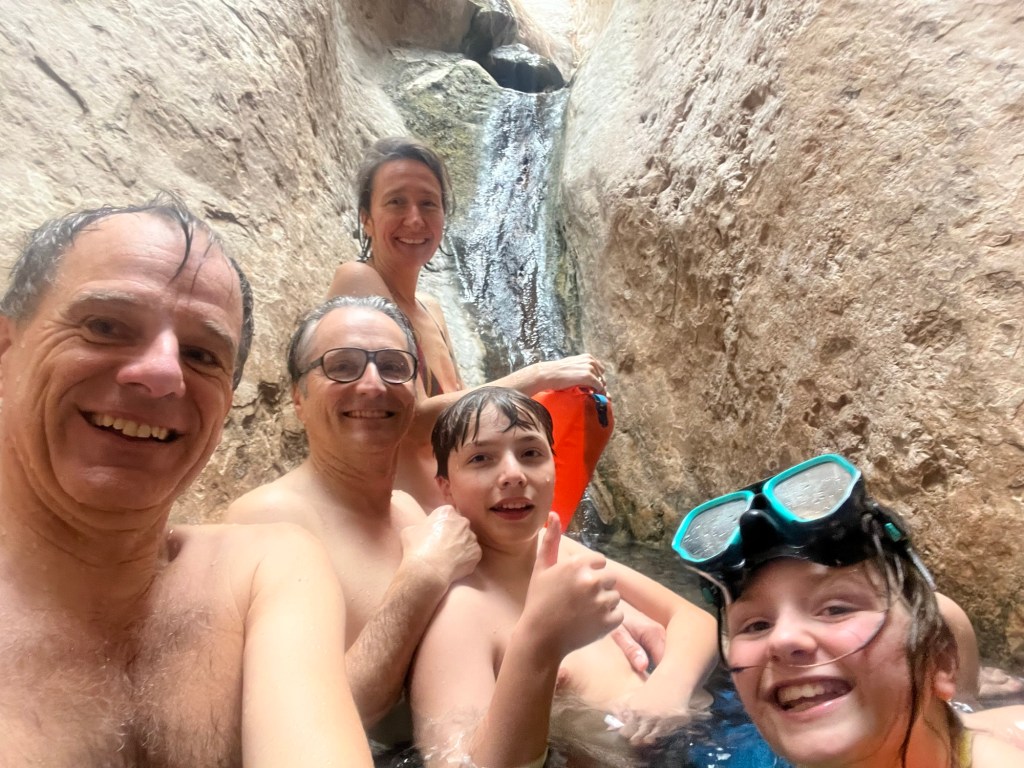
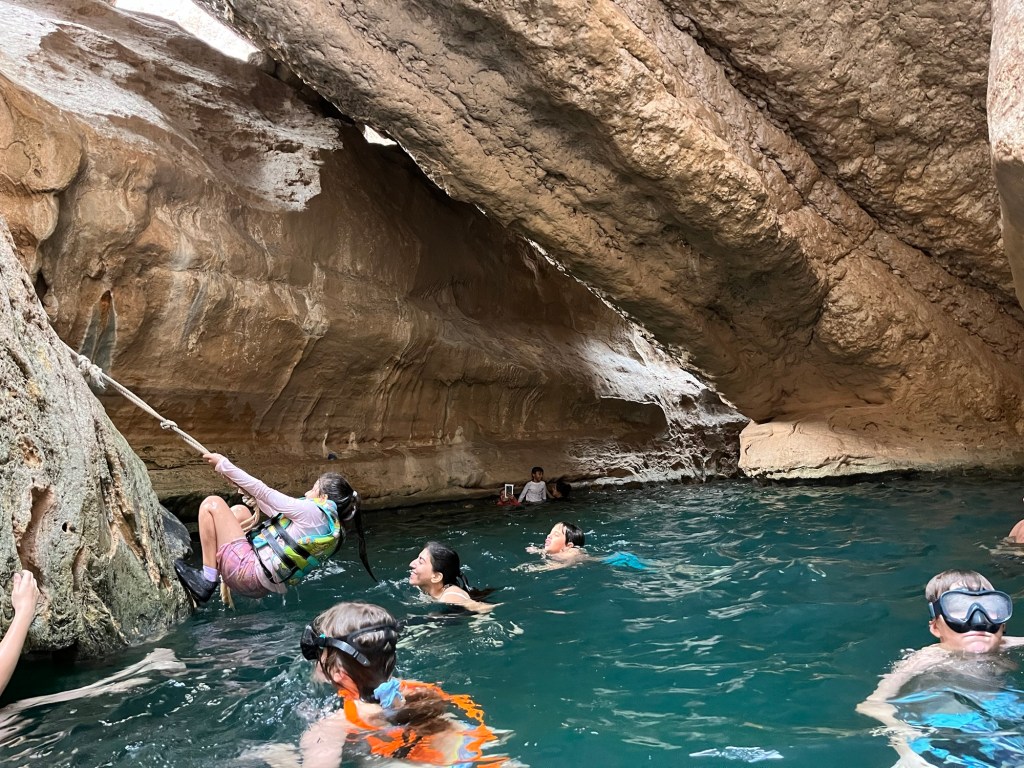
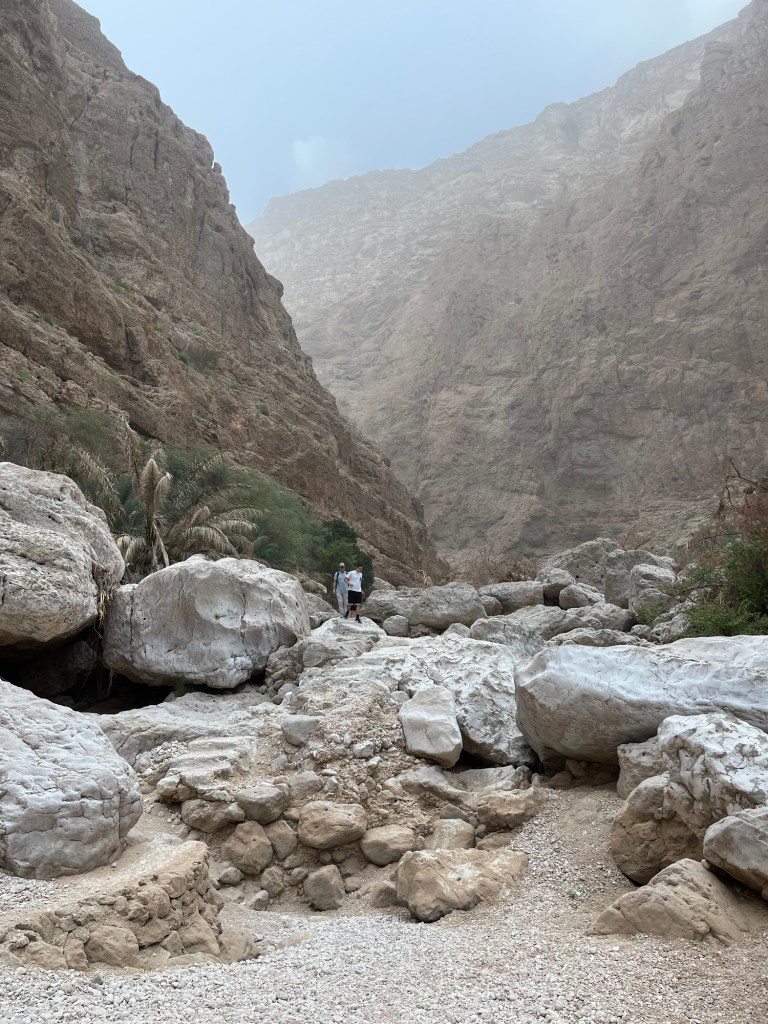
Um in den Wadi Shab zu kommen, beginnt die Reise mit einer kurzen Bootstour unter der Autobahnbrücke. In einer grandiosen Landschaft geht es dann das Flussbett aufwärts eine Stunde bis die Schlucht enger wird und der Fluss die einzige Möglichkeit ist weiter zu kommen- teils schwimmend, teils kletternd oder über Kieselsteine und glitschigen Felsen laufend. Schließlich muss man durch eine Felsenspalte knapp kopfbreit schwimmen und kommt in eine Höhle mit Wasserfall. Meine orange Schwimmboje half Tara, und hielt mein Handy, Geldbeutel und Autoschlüssel trocken- zumindest bis kurz vor Schluss- vielleicht hätte ich doch in der Höhle nicht versuchen sollen, das IPhone herauszuholen. Doch zum Glück ist ja die Technik wasserfest.
In der Dunkelheit fuhren wir zurück, alle erschöpft aber glücklich. Morgen heißt es um 4:30 aufstehen – um 9:00 geht der Flieger nach Mumbai.
Wadi Shab and Bimmah Sinkhole
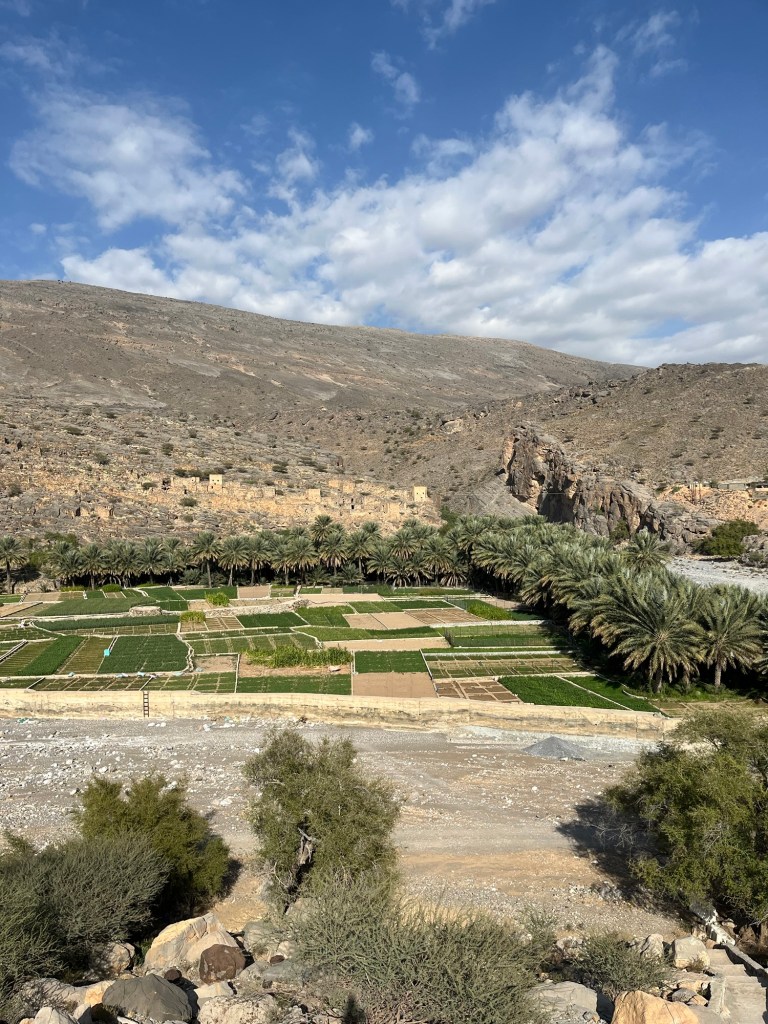
Day 11 – On our last day in Oman, it was windy and overcast and the sun never came out. We almost thought it was going to start raining, and the wind made the sky appear yellow from the sand. A brand new highway carved into the rock in serpentines led east out of the city towards Sur. At the petrol station, a store sold camping equipment – you can see tents and campers on the long beaches. It makes me want to explore the desert and the south and go camping next time. We were only able to explore the area around Muscat this time. The two final destinations were only a 90-minute drive away, but left us all amazed and thrilled. In the Bimmah Sinkhole, you can swim in salt water in a rock hole and be gently nibbled on by small fish.
To get to Wadi Shab, the journey begins with a short boat trip under the highway bridge. We then walk up the riverbed in a magnificent landscape for an hour until the gorge narrows and the river is the only way to continue – partly swimming, partly climbing or walking over pebbles and slippery rocks. Eventually, you have to swim through a crevice almost as wide as your head and enter a cave with a waterfall. My orange buoy helped Tara and kept my cell phone, wallet and car keys dry – at least until just before the end – maybe I shouldn’t have tried to get my iPhone out in the cave. But luckily, technology is waterproof.
We drove back in the dark, all exhausted but happy. Tomorrow we have to get up at 4:30 – the plane leaves for Mumbai at 9:00.
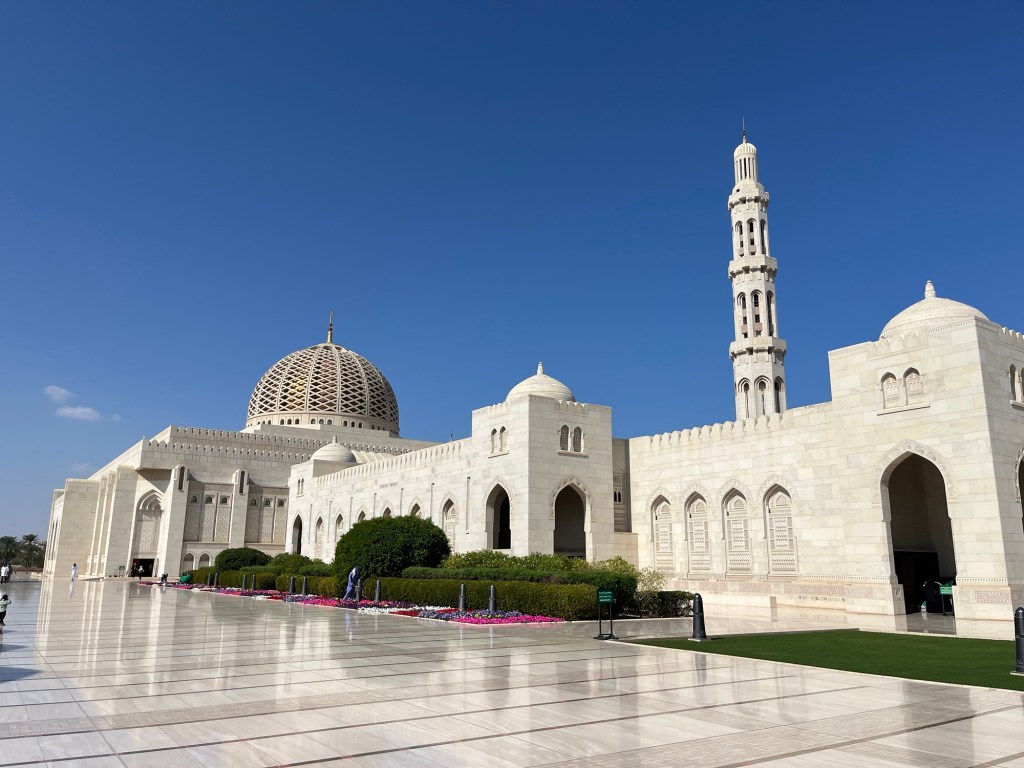
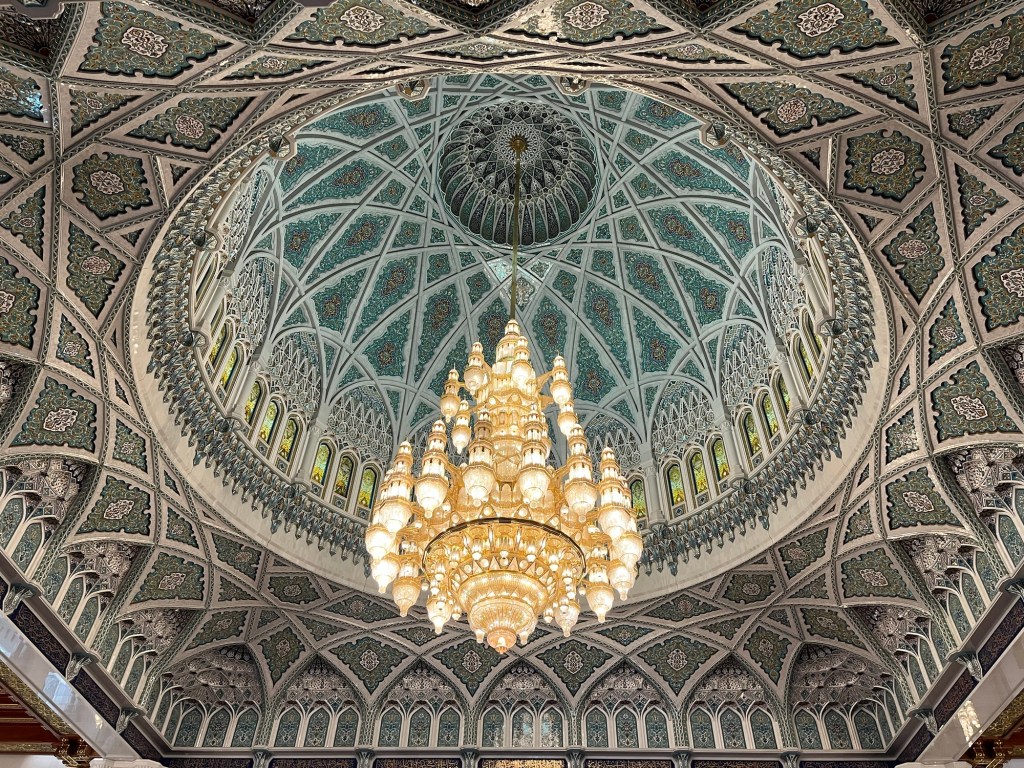
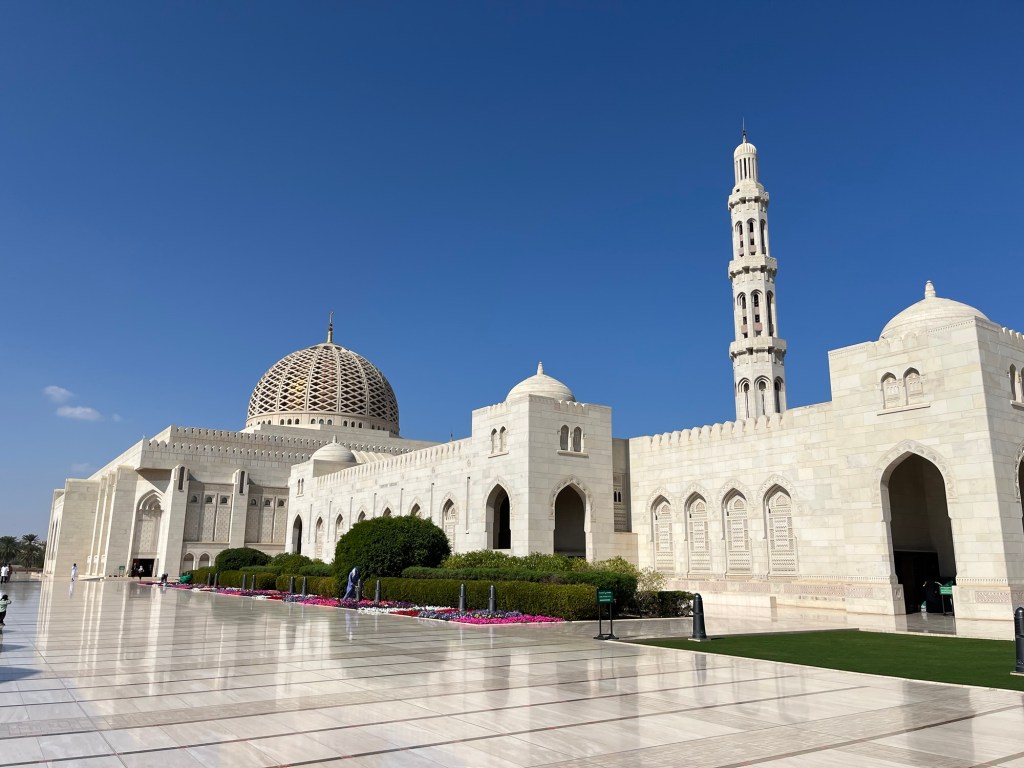
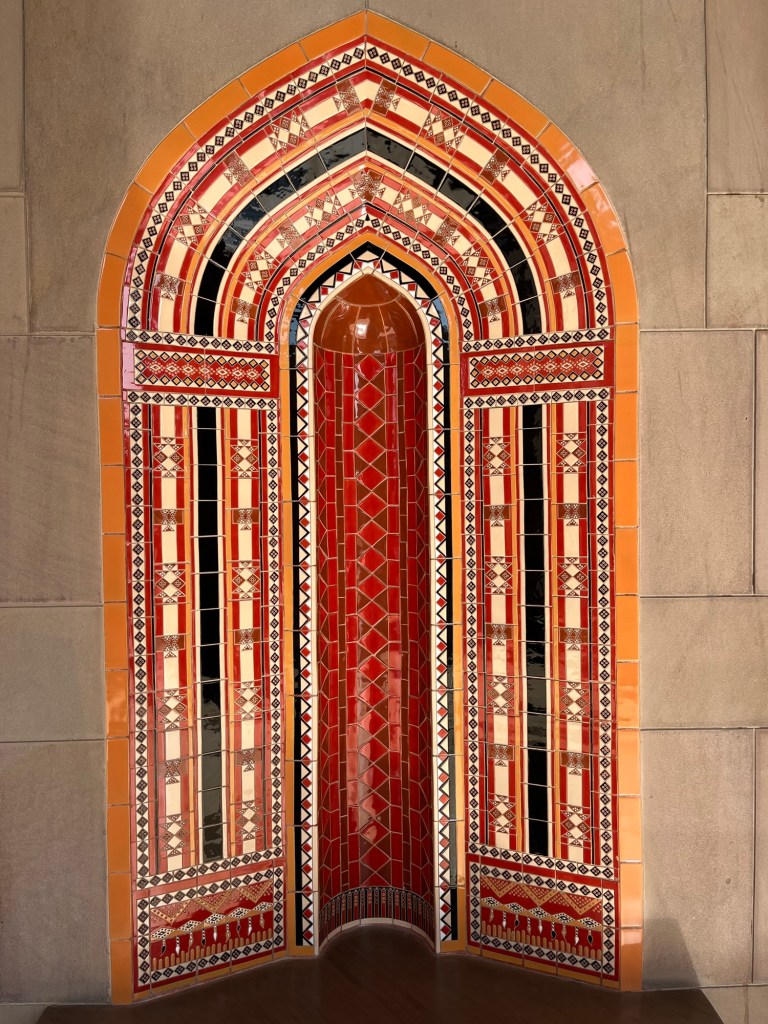
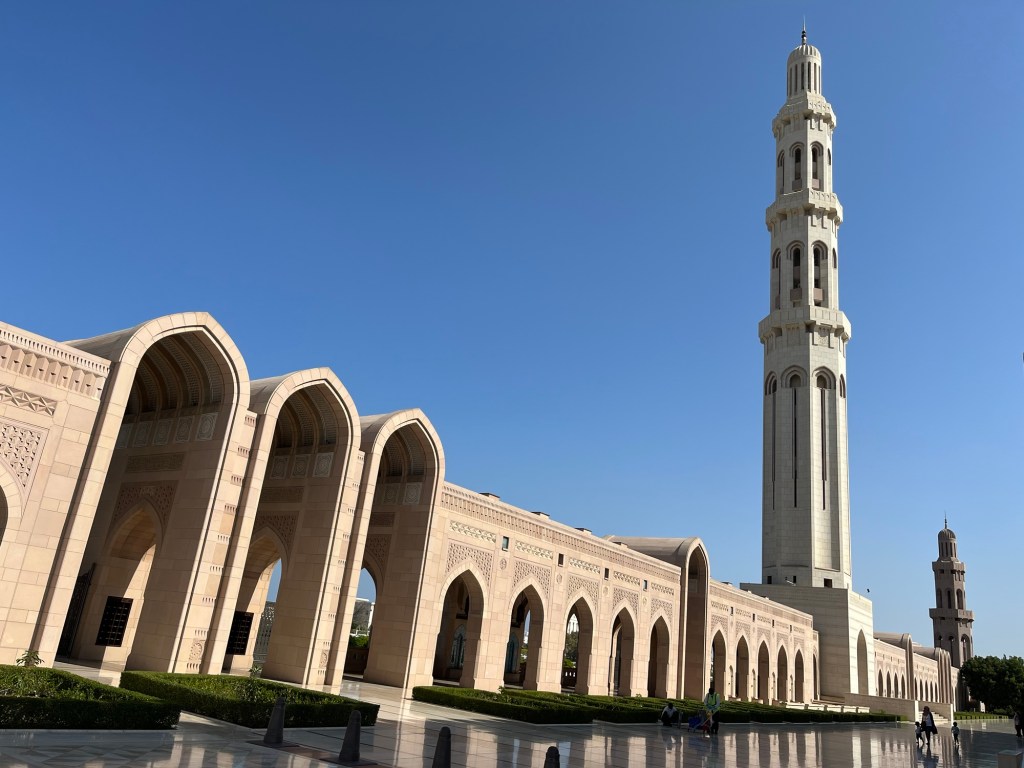
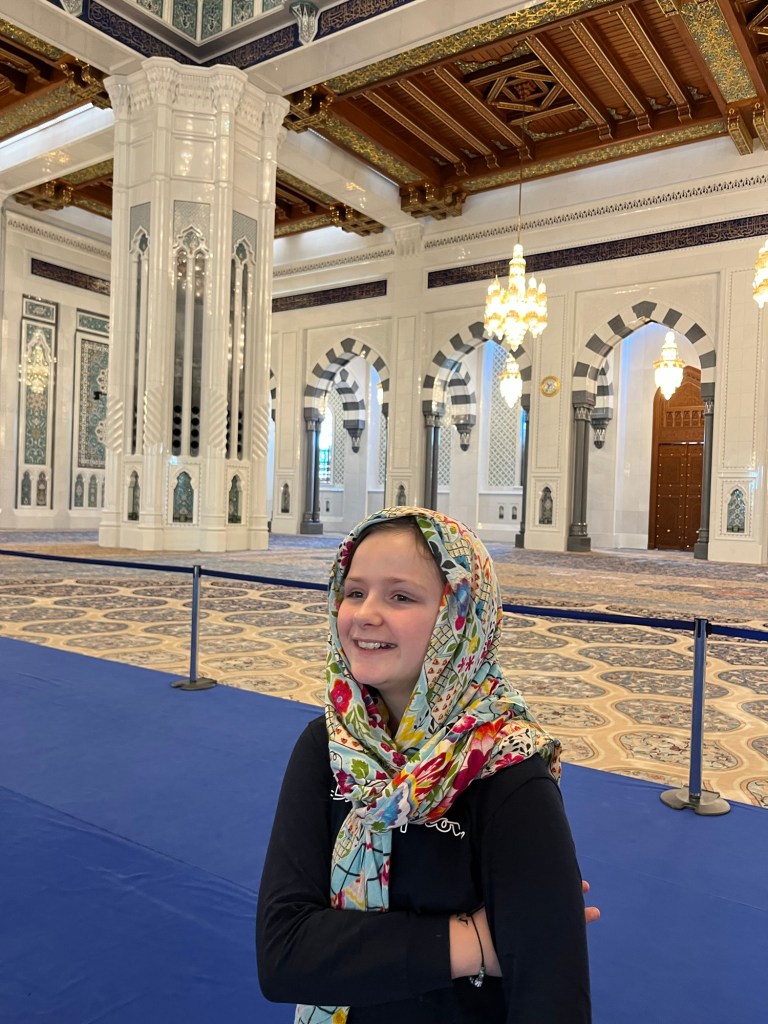
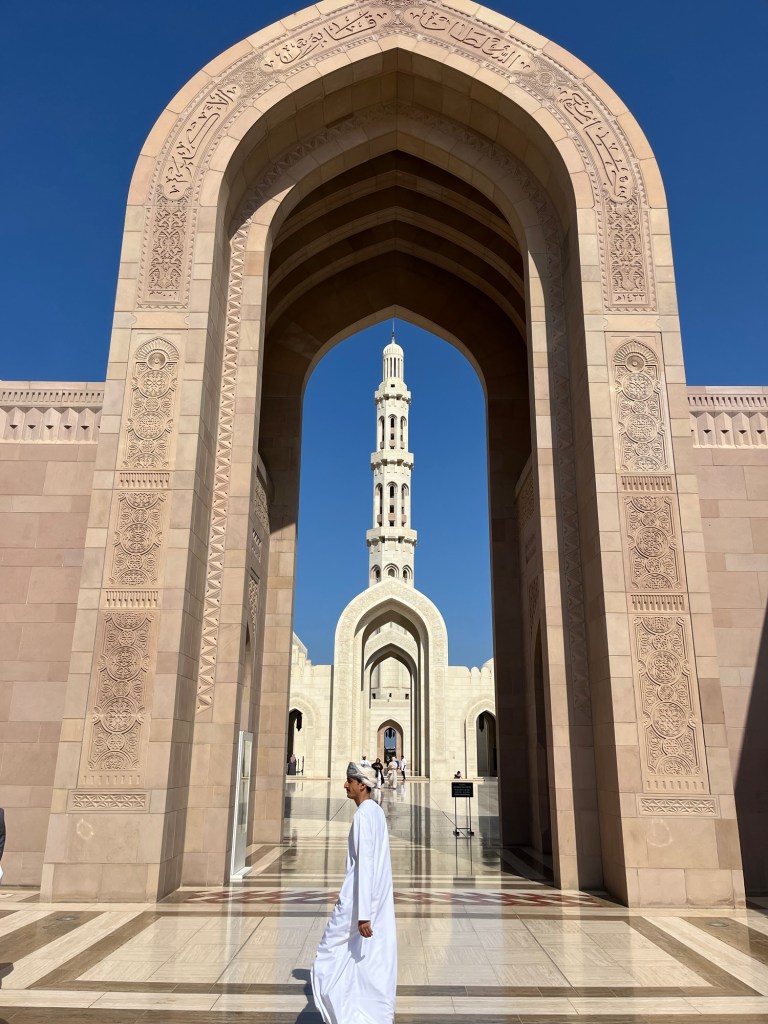
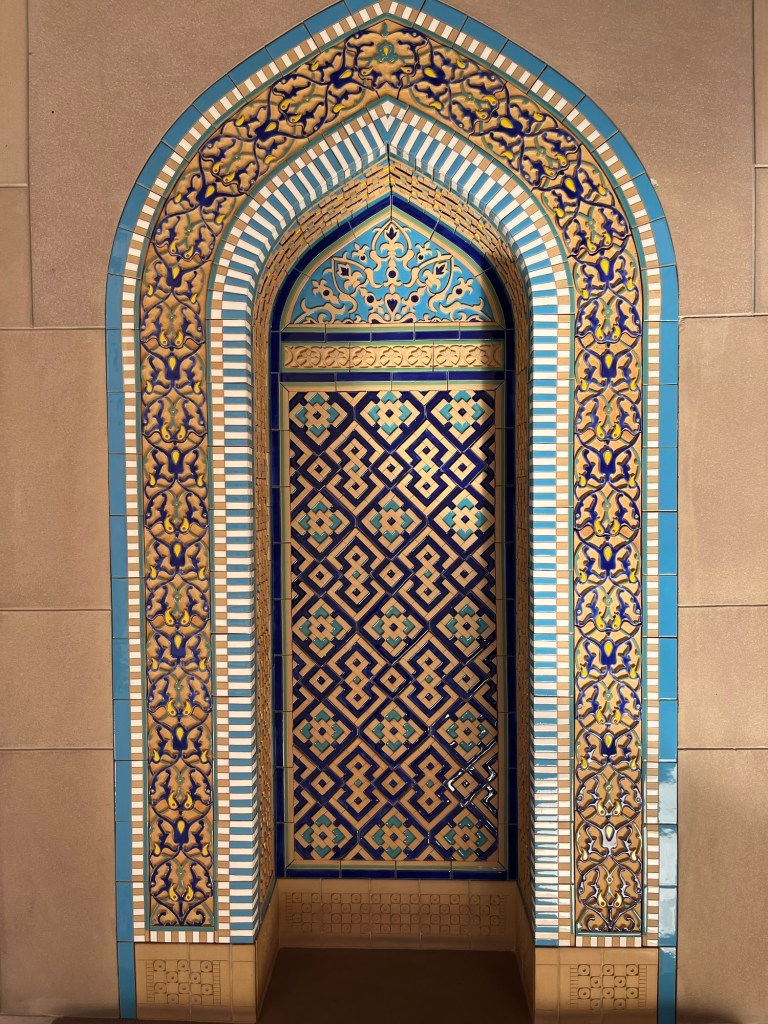
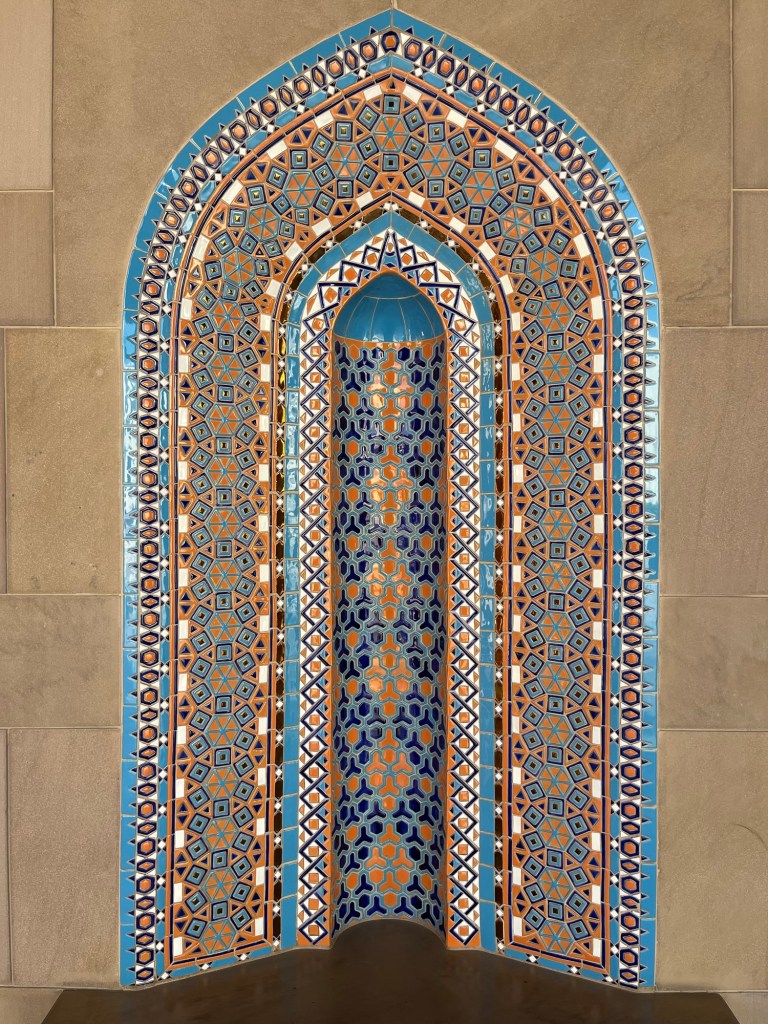
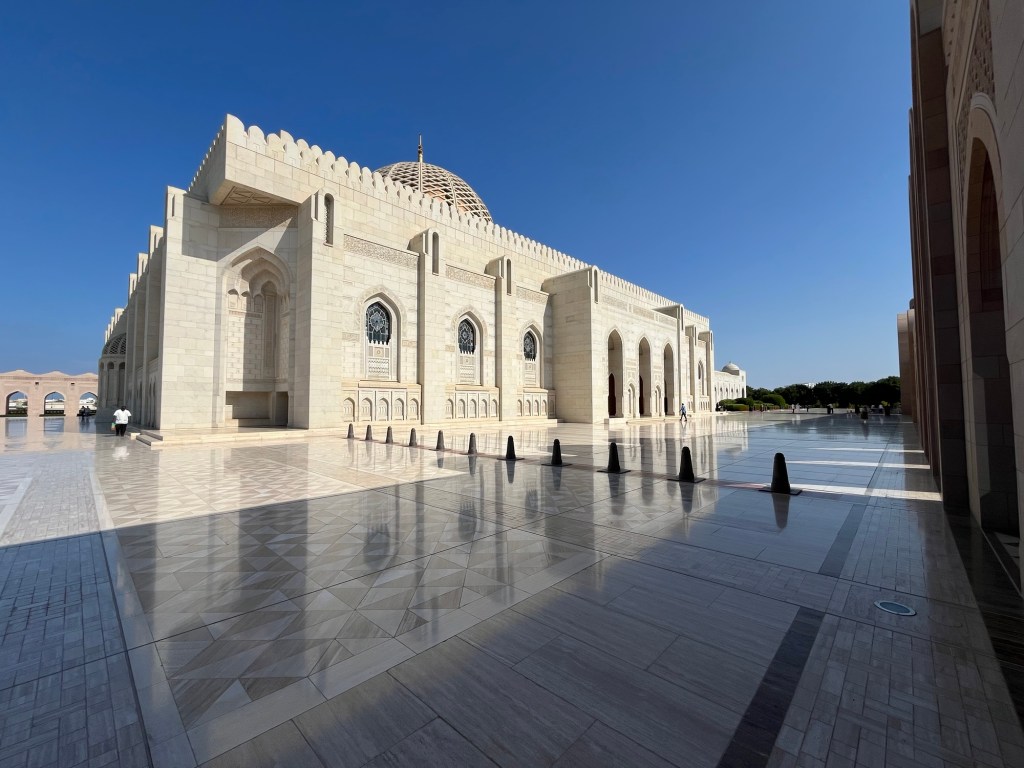
Tag 11 – Wir versprachen den Kindern: erst die Moschee, danach die Mall of Oman. Schließlich nähern sich unsere Tage im Oman dem Ende, morgen ist unser letzter Tag. Und eine Moschee müssen wir uns ja schließlich anschauen. Die große Sultan-Qabus Moschee ist eine der größten der Welt, der Swarovski Kronleuchter wiegt 8 t und die Stimmung ist relativ entspannt.. ganz so ernst wie in den Nachbarländern nimmt man es hier mit der Religion wohl nicht, auch Hindu-Tempel und christliche Kirchen sind im Land erlaubt. Mit seinen 300.000 t aus Indien, importierten Sandstein, dem weitläufigen Park mit englischem Rasen und seiner makellosen Sauberkeit passt diese Anlage zum Land. Ich habe die Schönheit der Anlage sehr genossen.
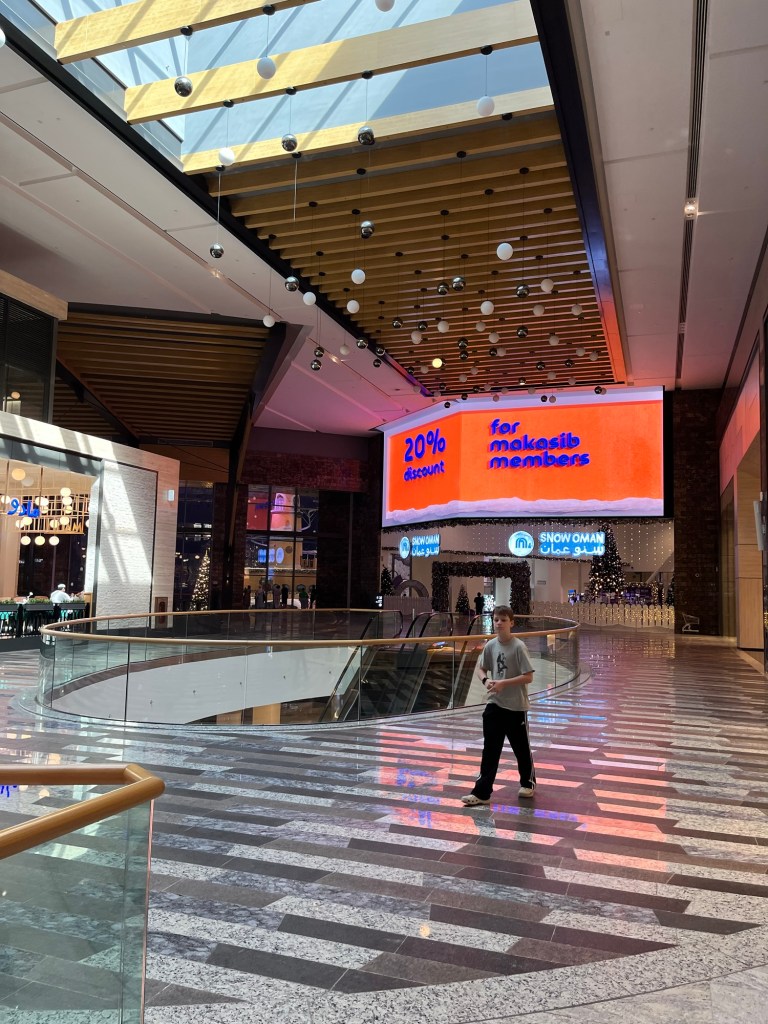
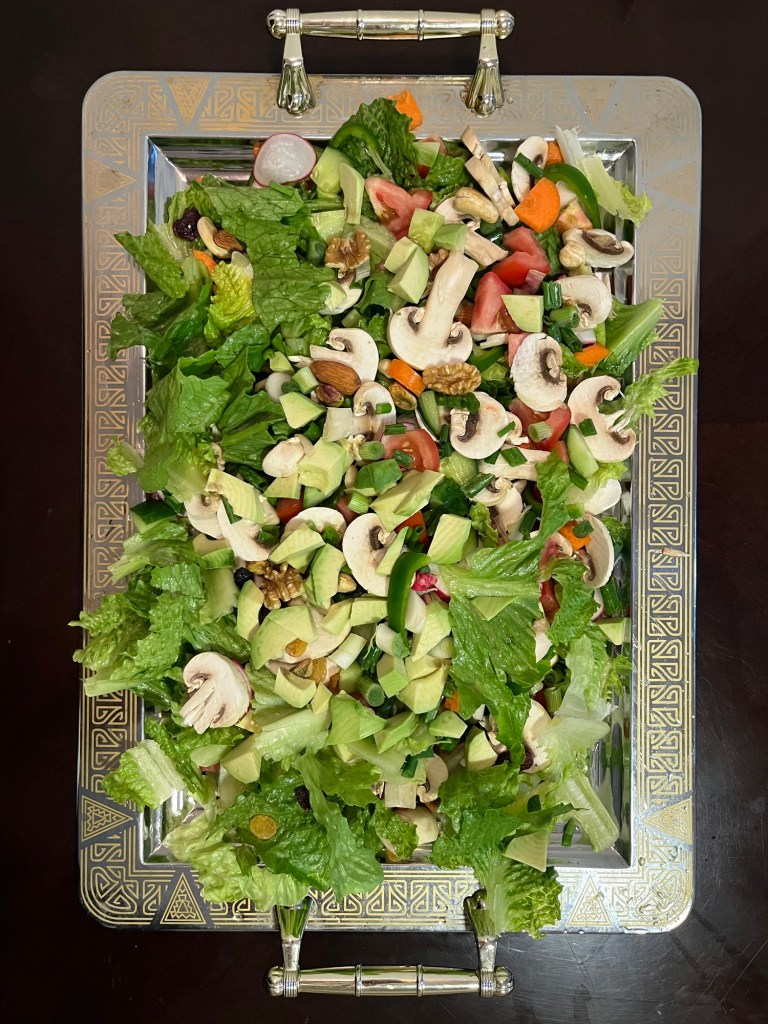
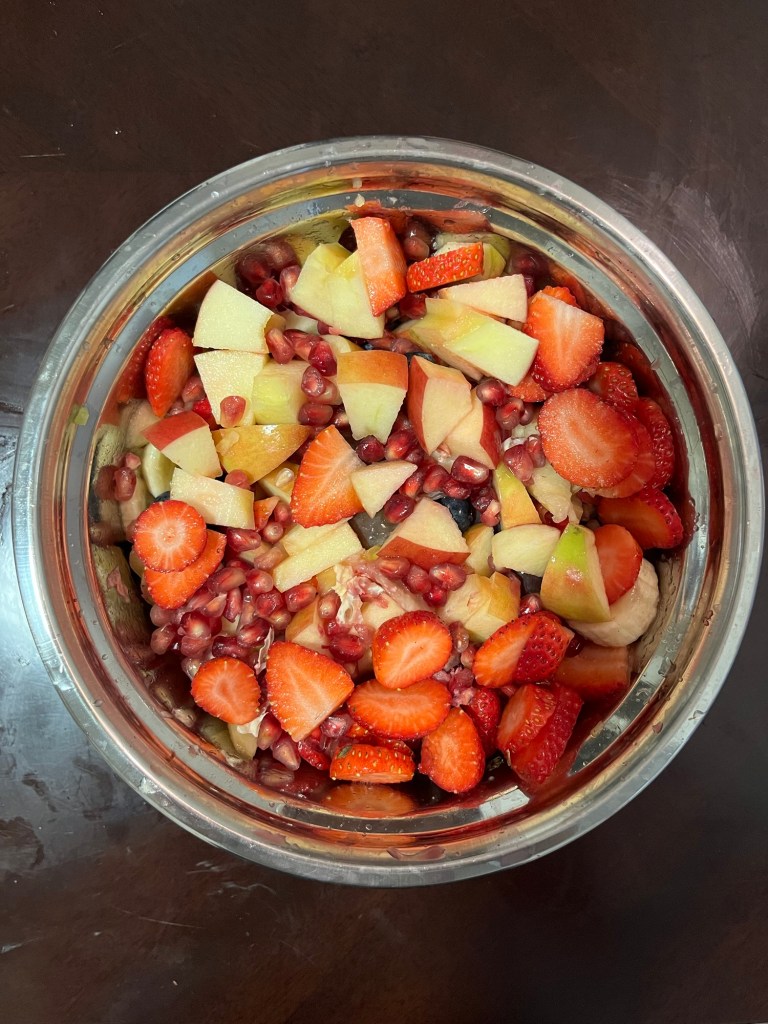
Aber auch die Mall of Oman war entspannt, mit ihren 150.000 m² Verkaufsfläche, vor drei Jahren eröffnet und mit einer erstaunlichen Vielfalt an Marken – man merkt, dass eben Asien der größte Markt der Welt geworden ist. Es gibt Mützen für Tara und Morpheus und Sonnenbrillen für Nadine und mich, und im Carrefour holen wir uns Obst und Gemüse für Salat und Obstsalat zum Abendessen.
Mit seiner Agenda Oman 2040 setzt das Land ja auf Diversifikation, um vom Öl auf nachhaltigere Wirtschaftszweige überzugehen. Tourismus, Dienstleistungen und regenerative Energien stehen hierbei im Mittelpunkt.
Die Schönheit des Landes und die Freundlichkeit der Menschen hat uns auf jeden Fall beeindruckt, wie auch die aus europäischer Perspektive erstaunliche Modernität der Infrastruktur, Bauwerke und die internationale Vielfalt der Angebote.
Morgen wollen wir noch einmal ein Wadi besuchen, wo man in einer Höhle schwimmen kann, bevor es übermorgen früh nach Mumbai, Indien weitergeht.
Wir sind alle selbst etwas erstaunt, wie gut die ersten 11 Tage unserer Reise bisher in allen Dimensionen funktioniert haben.
The great Sultan Qaboos Mosque
Day 11 – We promised the children: first the mosque, then the Mall of Oman. After all, our days in Oman are coming to an end, tomorrow is our last day. And we have to visit a mosque after all. The Great Sultan Qaboos Mosque is one of the largest in the world, the Swarovski chandelier weighs 8 tons and the atmosphere is relatively relaxed… people here probably don’t take religion quite as seriously as in neighbouring countries, Hindu temples and Christian churches are also permitted in the country. With its 300,000 tons of sandstone imported from India, the extensive park with English lawns and its immaculate cleanliness, this complex suits the country. I really enjoyed the beauty of the complex.
But the Mall of Oman was also relaxed, with its 150,000 m² of retail space, opened three years ago and with an amazing variety of brands – you can tell that Asia has become the biggest market in the world. There are hats for Tara and Morpheus and sunglasses for Nadine and me, and at Carrefour we pick up fruit and vegetables for salad and fruit salad for dinner.
With its Agenda Oman 2040, the country is focusing on diversification in order to switch from oil to more sustainable economic sectors. Tourism, services and renewable energies are at the heart of this.
We were definitely impressed by the beauty of the country and the friendliness of the people, as well as the surprisingly modern infrastructure, buildings and international variety of offers from a European perspective.
Tomorrow we want to visit another wadi where you can swim in a cave before continuing on to Mumbai, India, the day after tomorrow morning.
We are all a little amazed at how well the first 11 days of our trip have gone so far in all dimensions.
Tag 10 – Nach Tagen des Reisen, mit jeder Nacht einem anderen Hotel und Fahrt dazwischen waren alle happy, heute einen ruhigen Tag vor sich zu haben. Hotel und Strand war angesagt. Ausschlafen, Schule, Lesen.
Ja. Lesen. Ich ertappe mich schon morgens im Bad den Economist zu lesen und dann mir mal ausnahmsweise die Videos anzuschauen. Schließlich, das habe ich von meinen Kids gelernt sind Reels, YouTube Shorts und TikTok angesagt, lesen weniger. Ich muss zugeben, auch der Economist kommt sehr spaßig herüber, wenn die Buchrezensionen in 2 Minuten über „Infantilized“ mit bunten Bällen und lustigen Bildern vor einer Sprecherin ablaufen. Stimmt es, dass heute niemand mehr erwachsen werden will, wie das Buch behauptet? Dass Kinderfilme die Leitkultur geworden sind, und mit 30 der typische Engländer weder verheiratet ist noch Kinder hat, sprich auf jeden Fall keine Verantwortung übernehmen will?
Ein Reel bei Instagram von mir gestern über die Wanderung durch den Canyon bekomm mehr als 100 Views, meldet mir die App. Mehr als mein Blog darüber, das fiel mir auch auf. Sind also Videos die Zukunft? Und was ist mit dem Lesen und Schreiben?
Ich bin mit ihnen groß geworden und liebe sie immer noch. Der Economist schreibt auch – der Roman war die führende Kunstform des 20. Jahrhunderts. Aber Lesen nimmt weiter ab, 18 Minuten am Tag in den USA, 150 Minuten Filme.
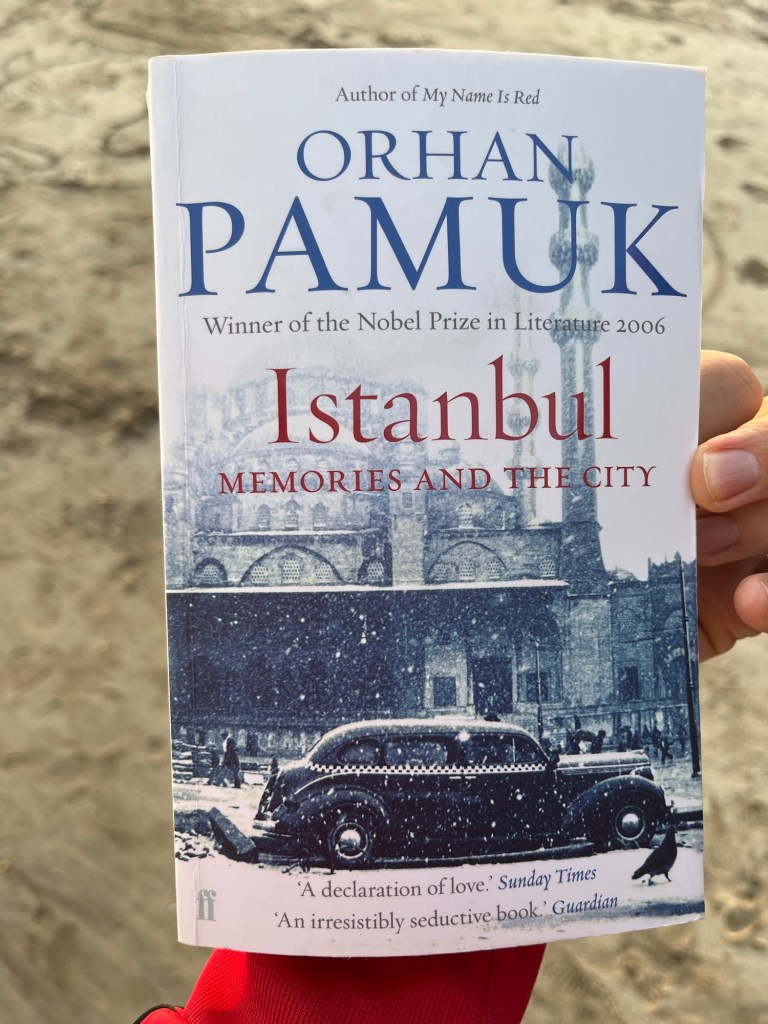
Klar, Romane handeln oft von der Vergangenheit, oft in einer sentimental-verklärten Stimmung. Ich lese gerade Orhan Pamuk, den Nobelpreisträger aus Istanbul, der in seiner Autobiographie über die melancholische Stimmung, „Hüzün“ als prägendes Motiv seiner Bewohner schreibt. Doch es stimmt – als ich mit 17 Jahre 1985 in Istanbul das erste Mal mit dem Zug ankam, 4 anstrengende Tage im vollgepackten Zug, Sitzwagen, da fand ich dort viele Eindrücke einer Welt von gestern, die mich in Faszination versetzt hat. Doch schon 1993, als ich auf dem Landweg nach Indien dort wieder vorbeikam, war Istanbul erstaunlich modern geworden. Heute, 2024 fand ich wenig romantisch verklärte Armut mehr, als eine blühende Stadt voller dynamischer Menschen, von Melancholie war wenig zu spüren. Wolkenkratzer, Touristen-Restaurants, alles renoviert und herausgeputzt, eine moderne Metropole.
Vielleicht passen deshalb die Netflix-Serien, Hollywood-Filme, YouTuber, Influencer und TikTok-Reels besser zum Zeitgeist. Wer weniger leiden muss, findet mehr Spaß an leichter Unterhaltung, braucht weniger traurige Romane. Meine Kinder lieben Mr. Beast. Das ist doch eigentlich ein Erfolg.
Und Bücher? Beim mir daheim im Prenzlauer Berg findet man sie typischerweise auf der Straße, in ordentlichen Kisten gestellt, zu verschenken. Nehmen zu viel Platz in den zu kleinen Wohnungen weg. Auch wir haben wieder kistenweise aussortiert. Liest eh kein Mensch mehr, am wenigstens mal unsere Kinder. Lesen, das ist Schule.
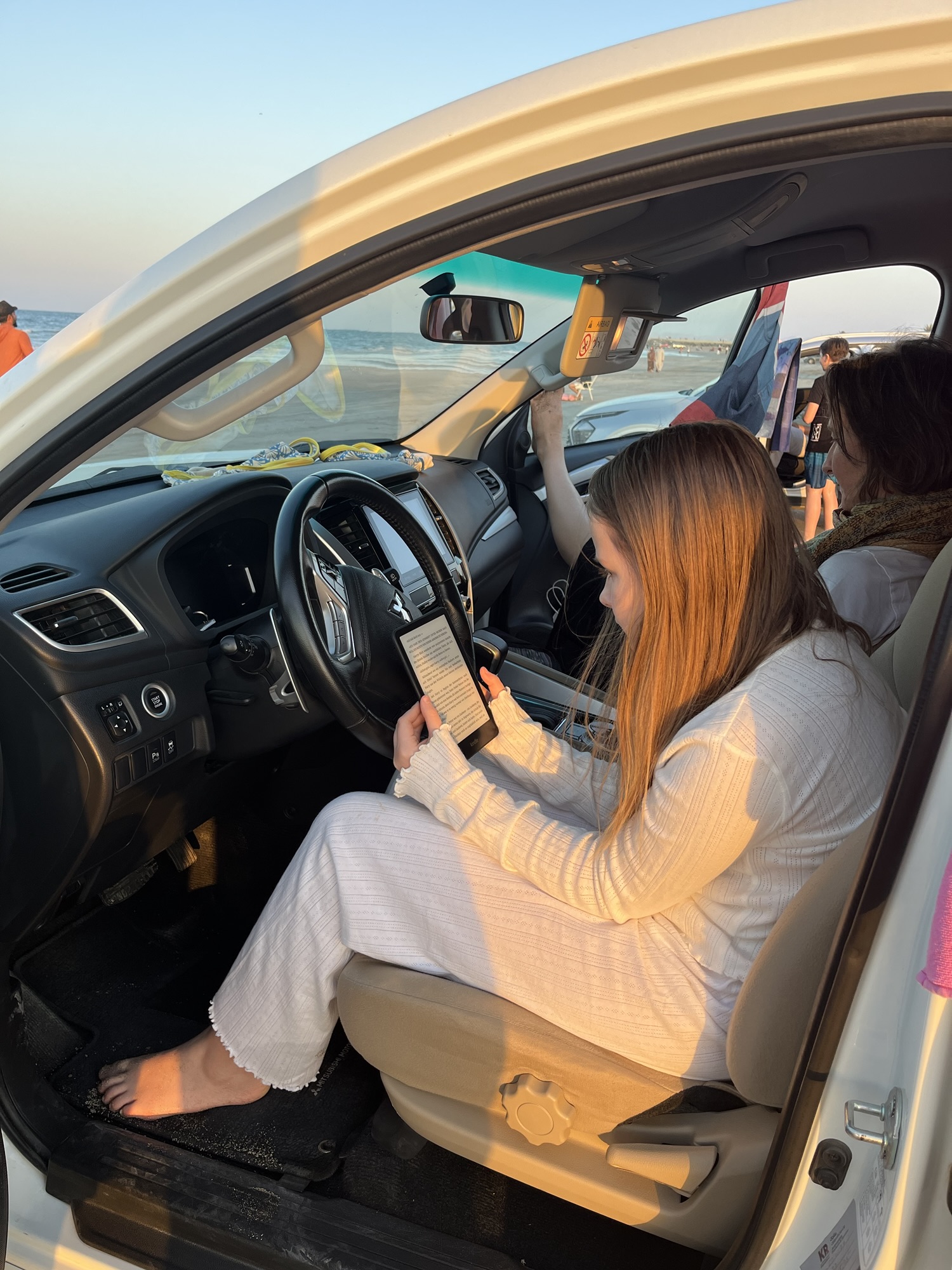
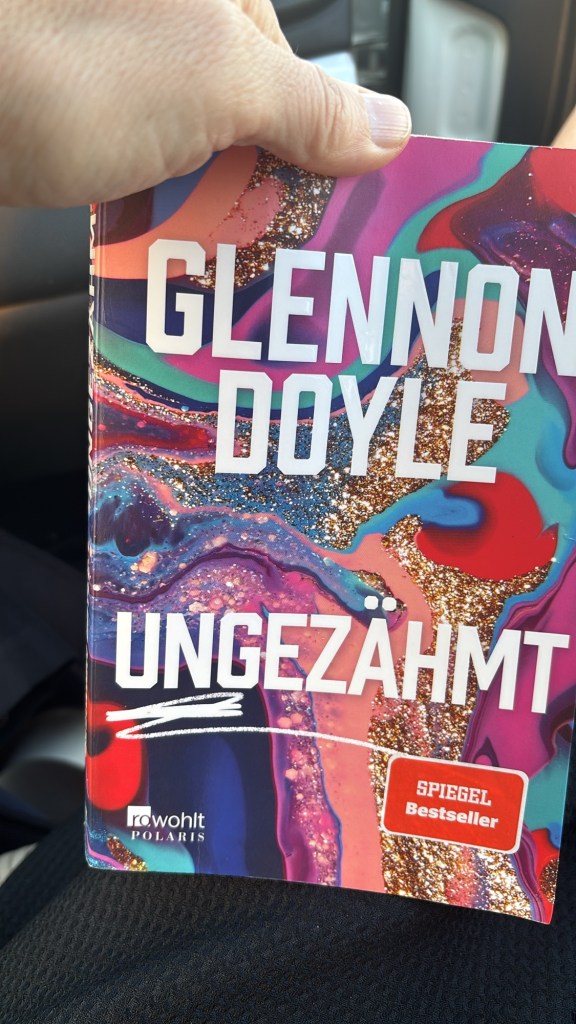
Manchmal findet man aber auch etwas – Nadine ihre aktuelle Lektüre von der Straße. Und natürlich haben wir den Bildungsauftrag. Und es gibt Harry Potter. Deshalb hat jetzt Tara und Morpheus ihren eigenen Kindle, und sie lesen beide Harry Potter, Morpheus Teil 5 und Tara Teil 2. Wenn man ihnen die anderen Geräte wegnimmt.
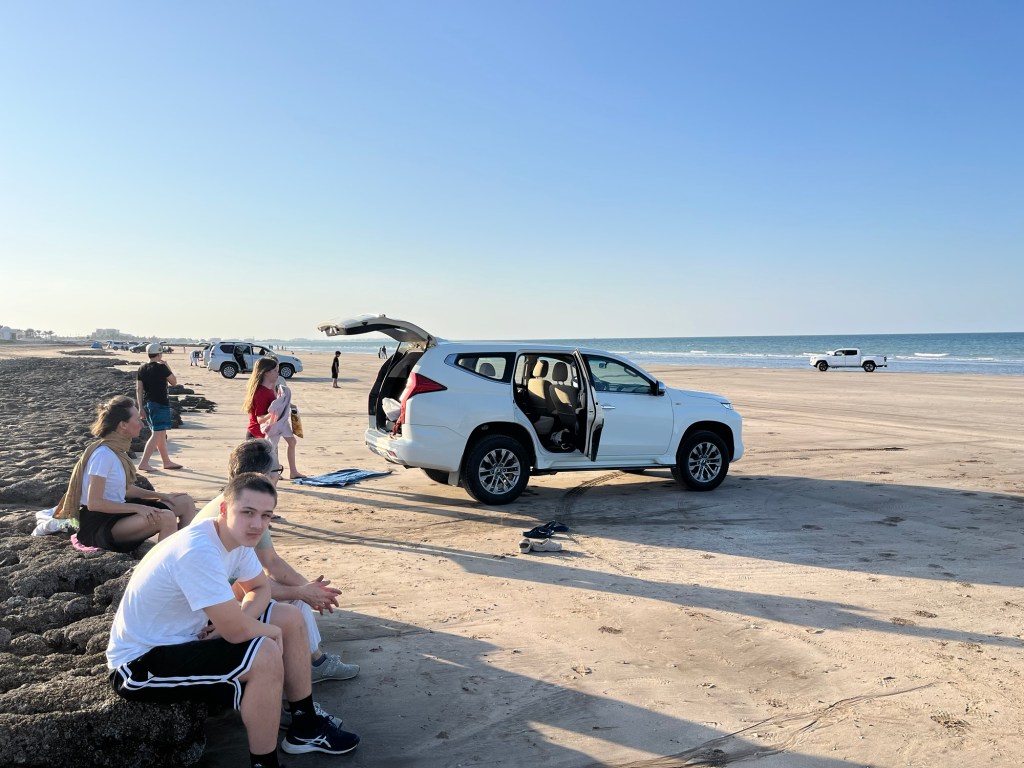
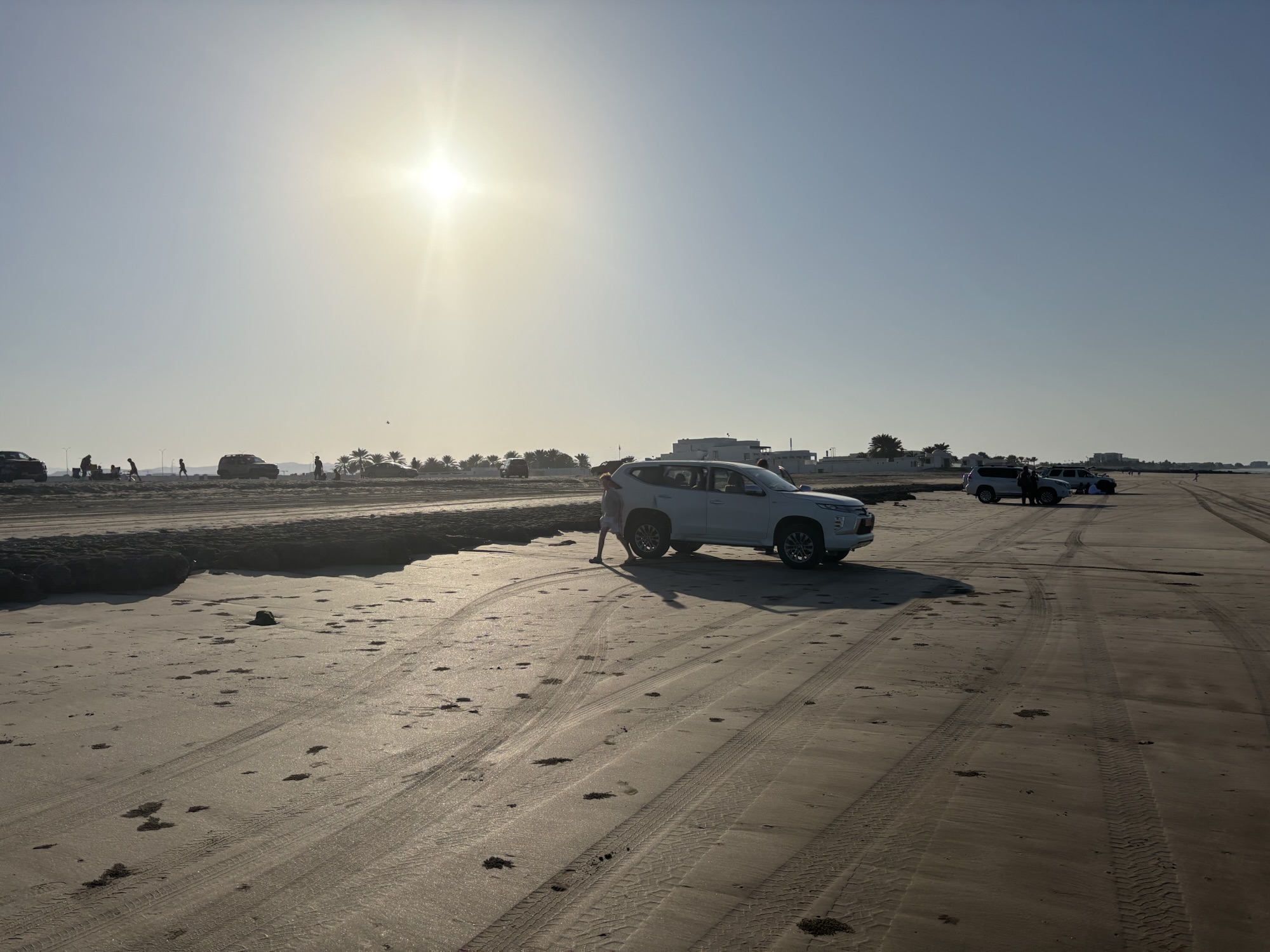
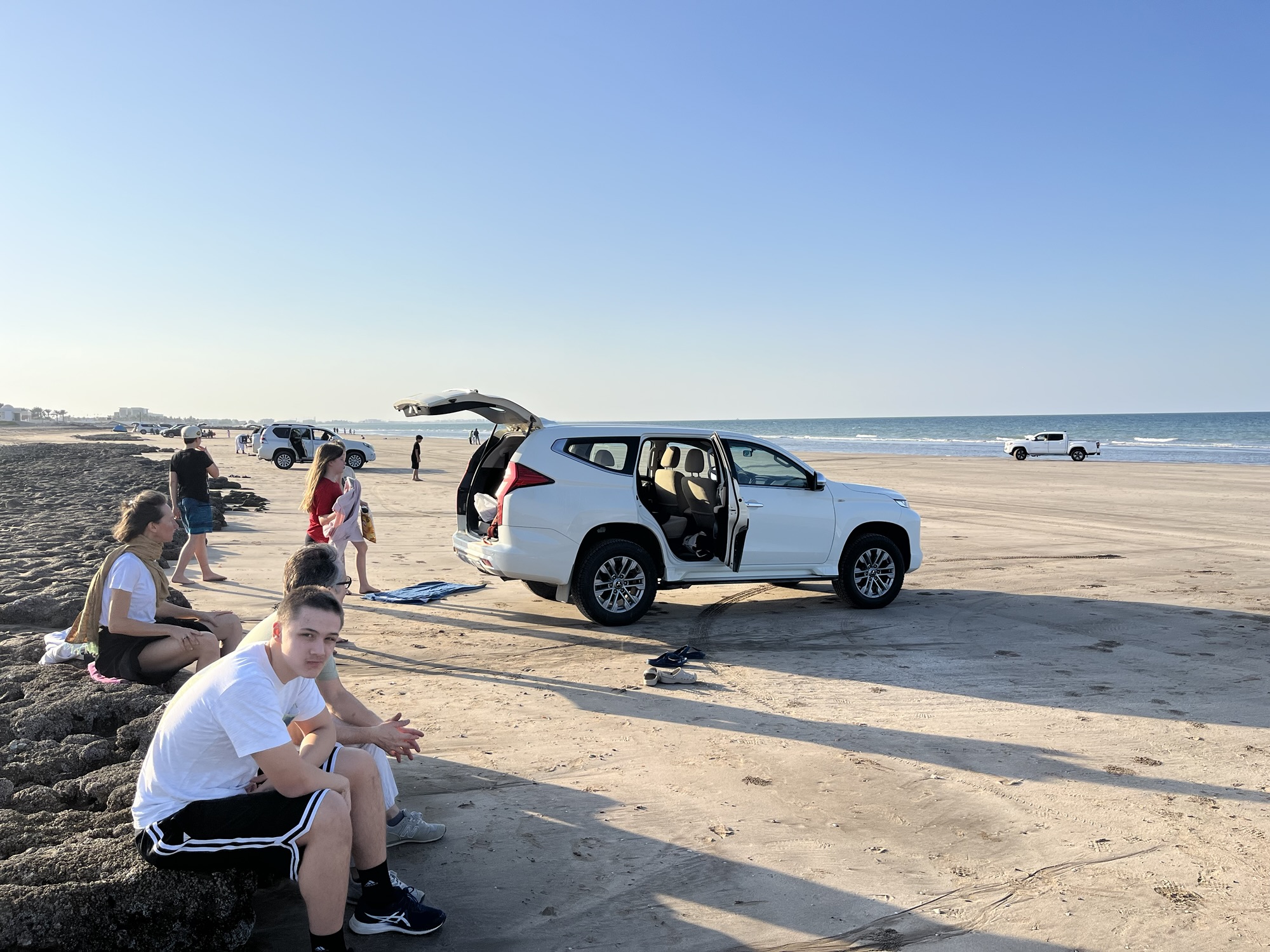
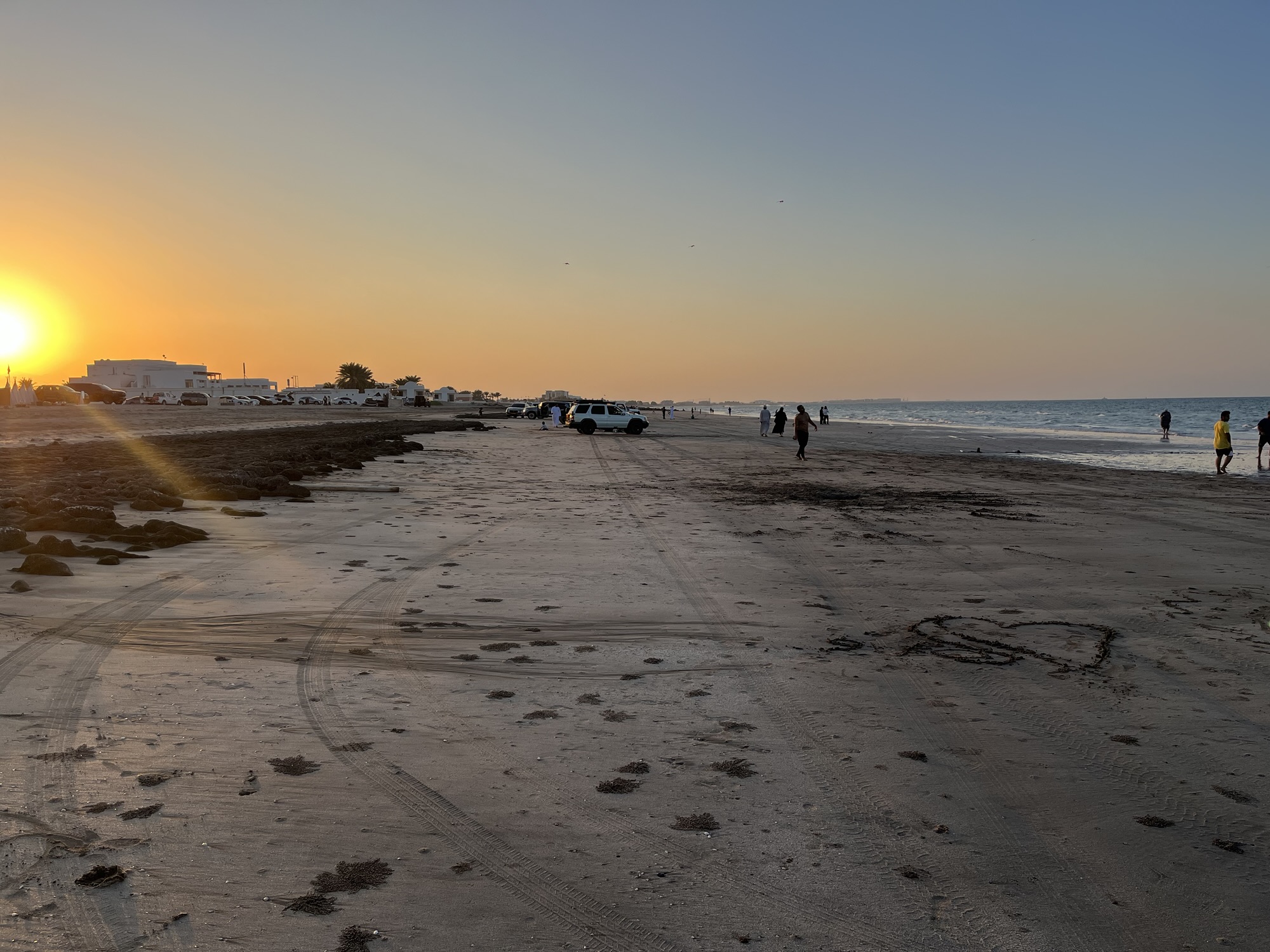
Nach der morgendlichen Schule, Schwimmen im Pool holen wir dann die unter dem Kopfkissen vergessene Zahnspange von Morpheus wieder im alten Hotel ab, fahren an den Strand und genießen ein Wochenend-Tag am Meer. Hier fährt man direkt ans Wasser vor. Es ist sehr schön. Und wir baden und lesen.
Omani Beach Days
Day 10 – After days of traveling, with a different hotel every night and driving in between, everyone was happy to have a quiet day ahead of them today. Hotel and beach was the order of the day. Sleep in, school, reading.
Yes, reading. I find myself reading the Economist in the bathroom in the morning and then, for once, watching the videos. After all, as I’ve learned from my kids, reels, YouTube shorts and TikTok are the order of the day, reading less so. I have to admit, the Economist also comes across as a lot of fun when the book reviews run in 2 minutes about “Infantilized” with colourful balls and funny pictures in front of a narrator. Is it true that nobody wants to grow up today, as the book claims? That children’s films have become the dominant culture and that at 30, the typical Englishman is neither married nor has children, i.e. doesn’t want to take on any responsibility?
A reel I posted on Instagram yesterday about the hike through the canyon got more than 100 views, according to the app. More than my blog about it, I noticed. So are videos the future? And what about reading and writing?
I grew up with them and still love them. The Economist also writes – the novel was the leading art form of the 20th century. But reading continues to decline, 18 minutes a day in the US, 150 minutes of movies.
Sure, novels are often about the past, often in a sentimental, glorified mood. I’m currently reading Orhan Pamuk, the Nobel Prize winner from Istanbul, who writes in his autobiography about the melancholy mood, “Hüzün” as the defining motif of its inhabitants. But it’s true – when I arrived in Istanbul by train for the first time in 1985 at the age of 17, 4 exhausting days in a packed train, sitting carriages, I found many impressions of a world of yesterday that fascinated me. But back in 1993, when I passed through there again on my overland journey to India, Istanbul had become astonishingly modern. Today, in 2024, I found little more romanticized poverty than a thriving city full of dynamic people; there was little sign of melancholy. Skyscrapers, tourist restaurants, everything renovated and spruced up, a modern metropolis.
Perhaps that’s why the Netflix series, Hollywood films, YouTubers, influencers and TikTok reels fit in better with the zeitgeist. People who suffer less enjoy light entertainment and need fewer sad novels. My children love Mr. Beast. That’s actually a success.
And books? At my home in Prenzlauer Berg, you typically find them on the street, placed in neat boxes, to be given away. They take up too much space in apartments that are too small. We’ve also sorted out boxes again. Nobody reads anymore anyway, at least not our children. Reading is school.
But sometimes you do find something – Nadine found her latest read on the street. And of course we have an educational mission. And there’s Harry Potter. So now Tara and Morpheus have their own Kindle, and they both read Harry Potter, Morpheus Part 5 and Tara Part 2. If you take the other devices away from them.
After school in the morning and a swim in the pool, we pick up Morpheus‘ braces, which we forgot under the pillow, at the old hotel, drive to the beach and enjoy a weekend day by the sea. Here you drive right up to the water. It’s very beautiful. And we swim and read.
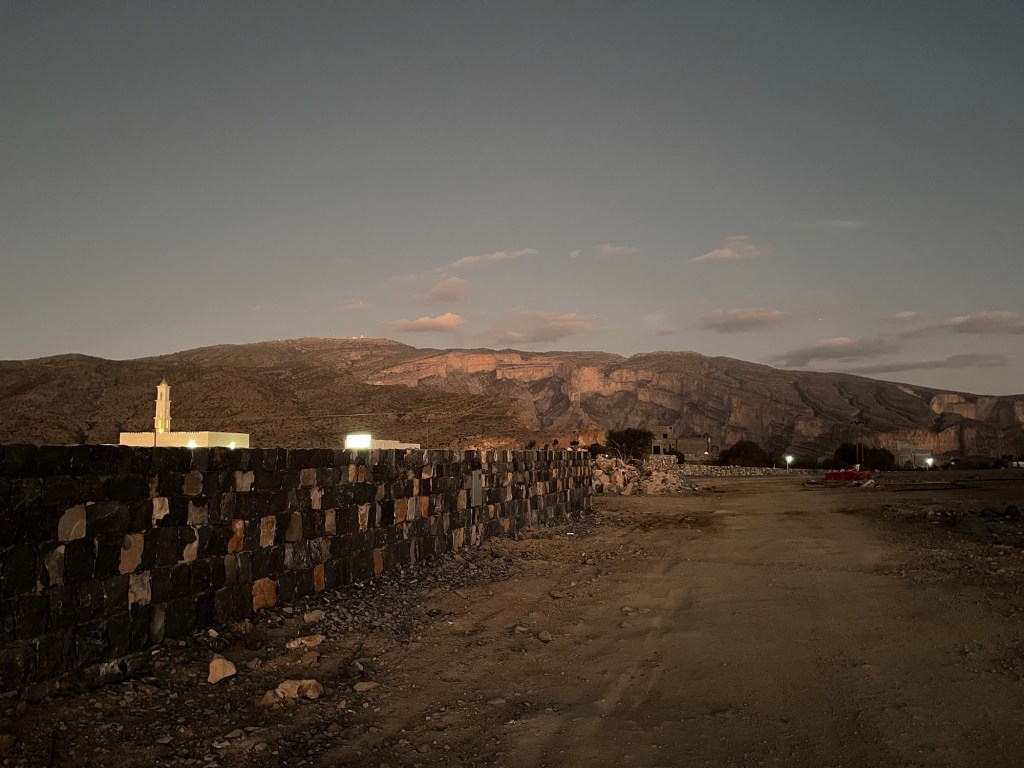
Nach dem Museum geht es weiter, wir haben noch die nächste Unterkunft in den Bergen zu erreichen. Die Serpentinen werden enger, und schließlich endet die asphaltierte Straße, als die Dämmerung einsetzt.
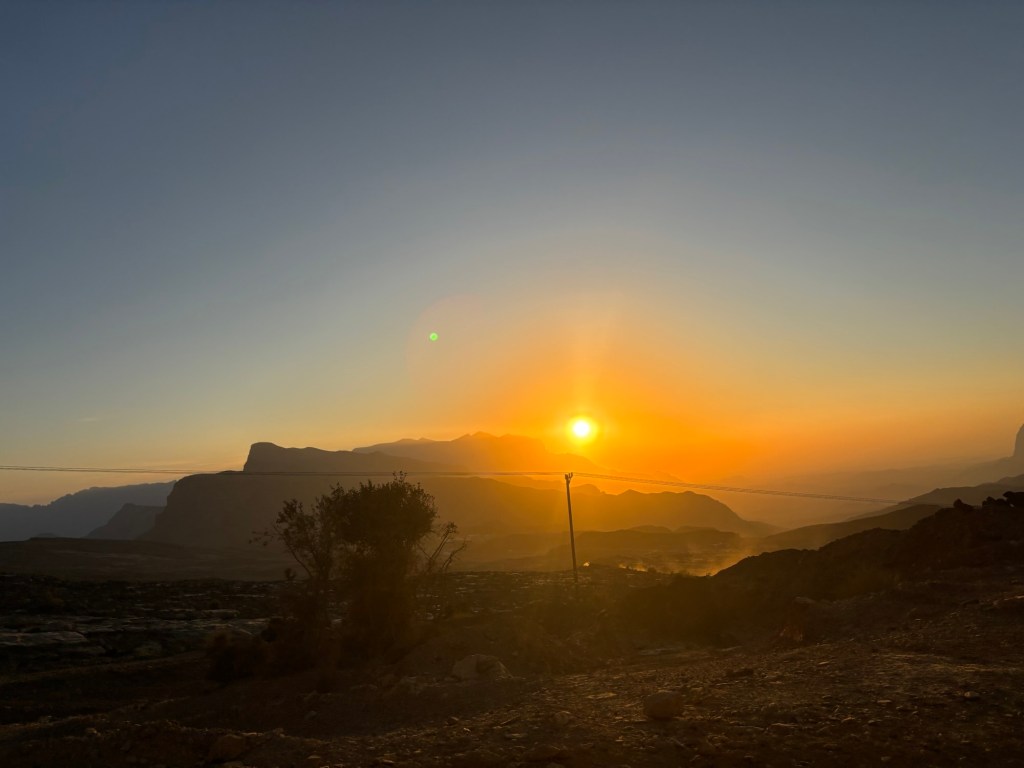
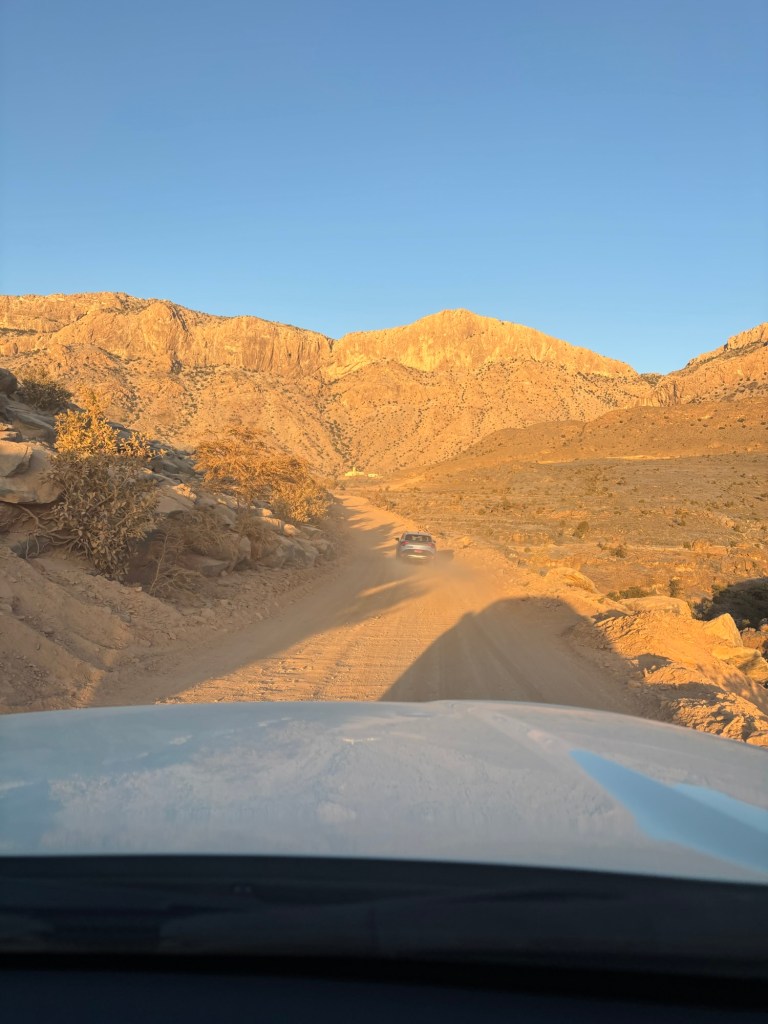
Ich schalte den Vierradantrieb zu, und die Abendsonne wirft ein malerisches Licht auf die Felsenlandschaft. Es staubt, rüttelt und schüttelt und Nadine hält sich fest am Türgriff fest, aber der Mitsubiji Montera arbeitet sich sicher den Berg hinauf.
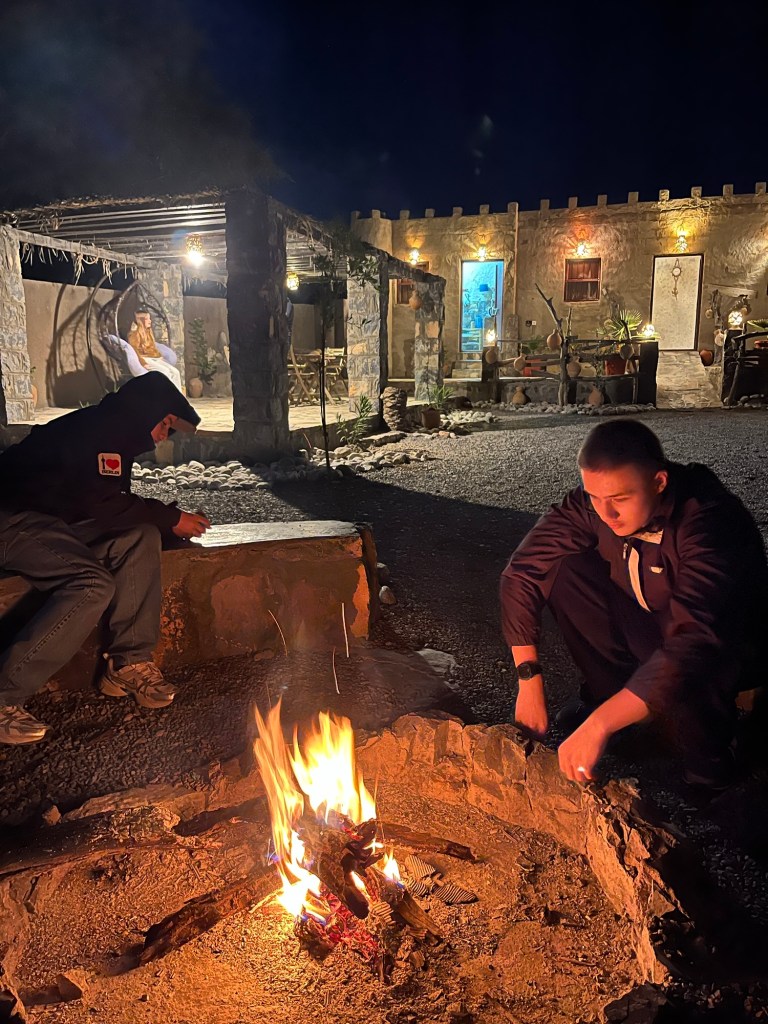
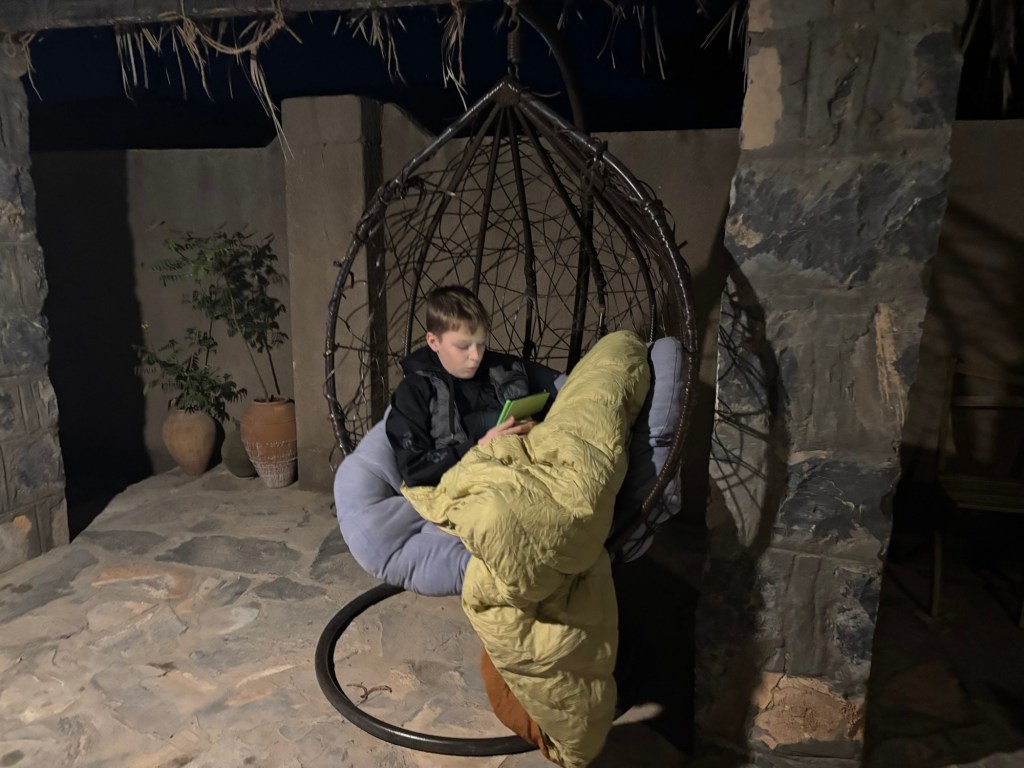
In der Dunkelheit erreichen wir unser Haus, und werden freundlich empfangen – im Hof wird ein Feuer für uns entzündet. Jetzt ist es kühl, nachts soll es bis 7° herunter gehen, wir sind auf 2000 Meter Höhe. Die Schlafsäcke werden ausgepackt. Alle relaxen erst einmal. Doch hungrig, wie wir alle sind, steigen wir noch einmal das Auto und fahren in der Dunkelheit zu dem 3 km entfernten Ressort und genießen alle das Buffet. Denn am nächsten Morgen geht es früh los und wir wollen gestärkt auf die Wanderung aufbrechen.
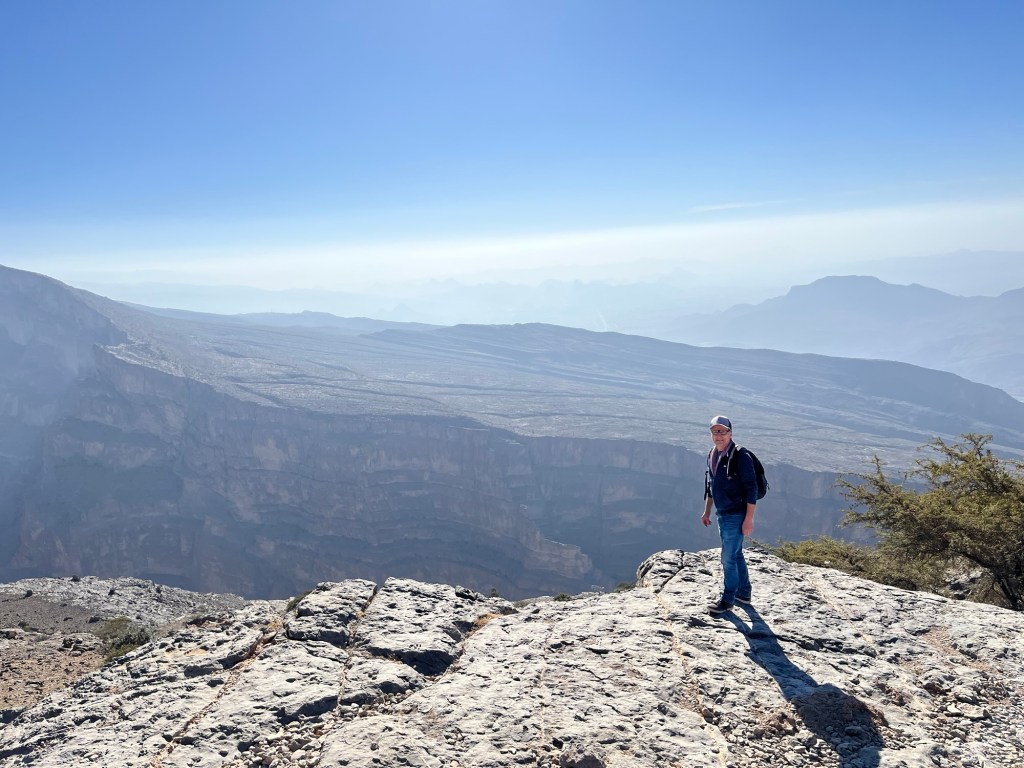
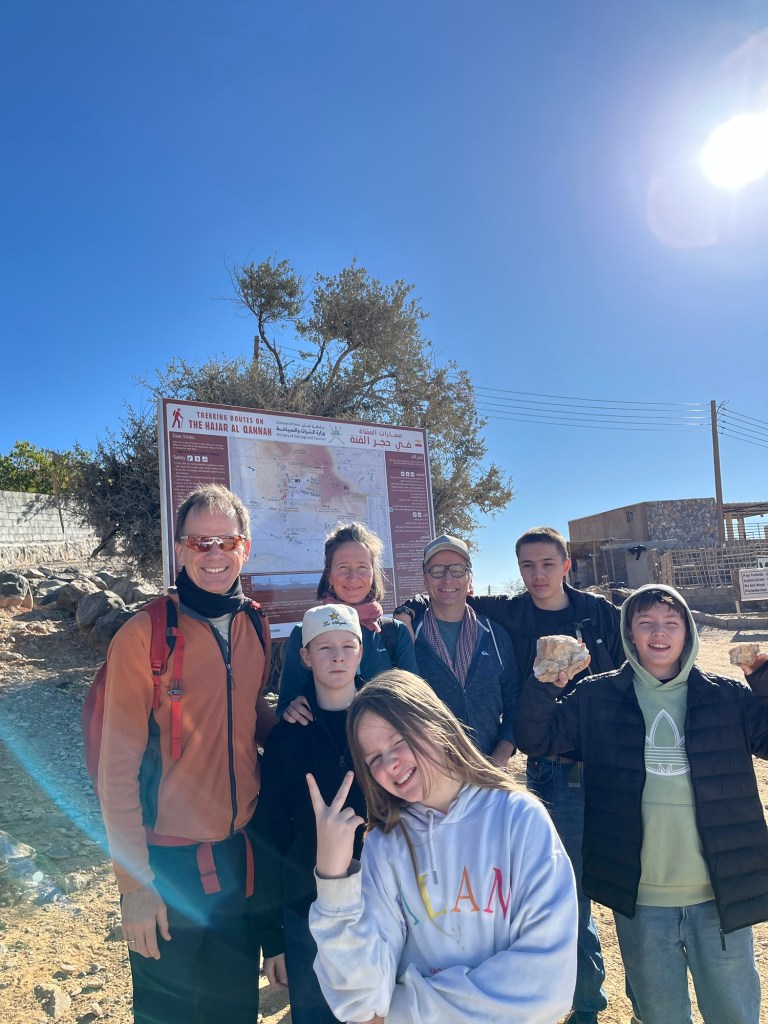
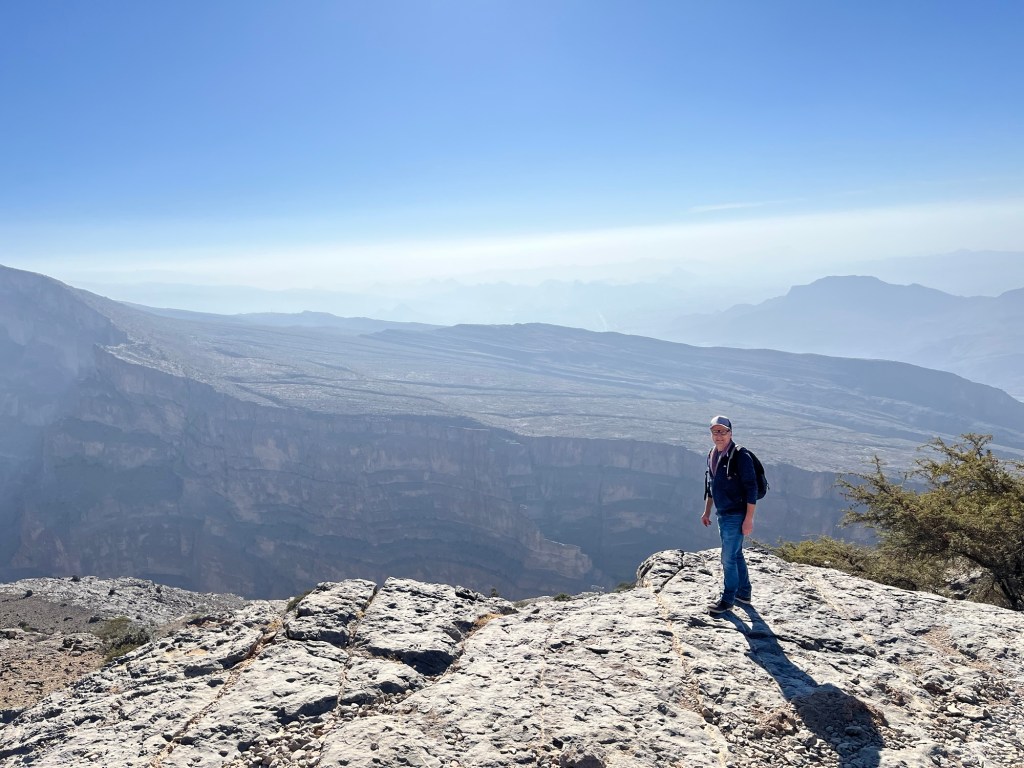
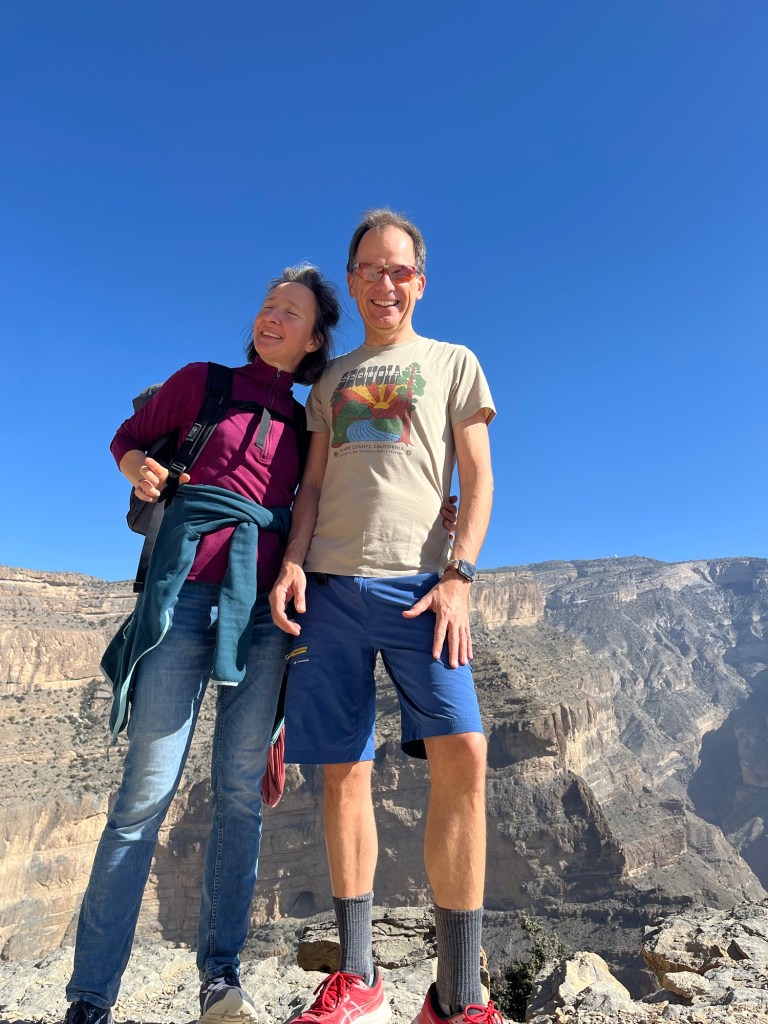
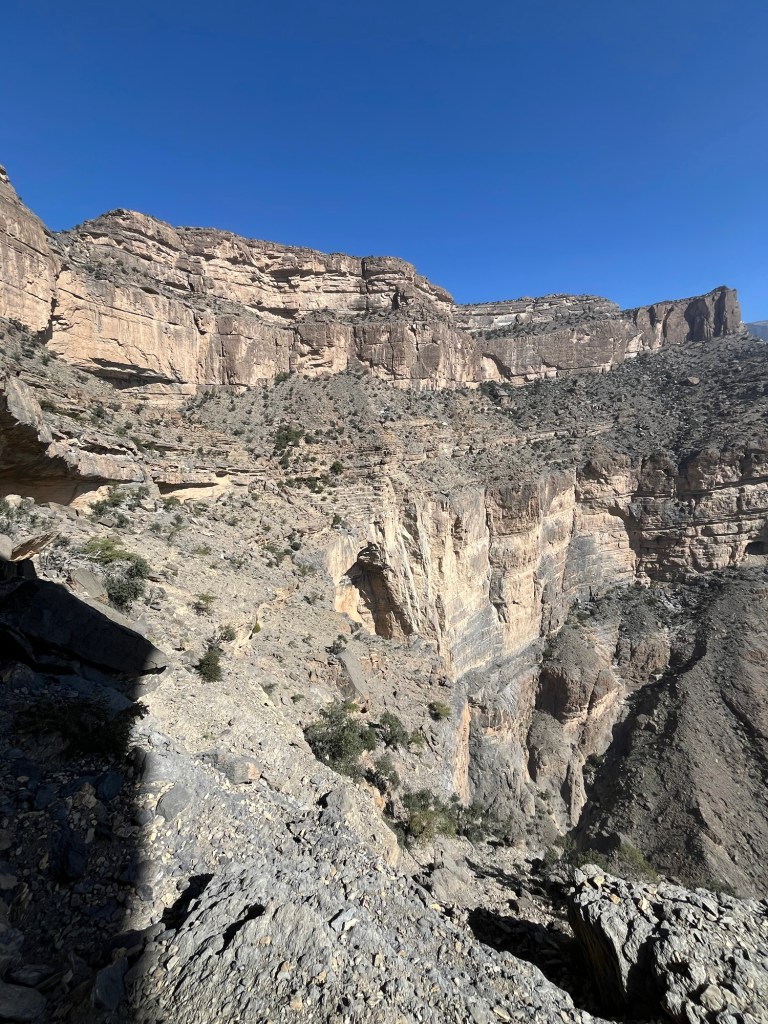
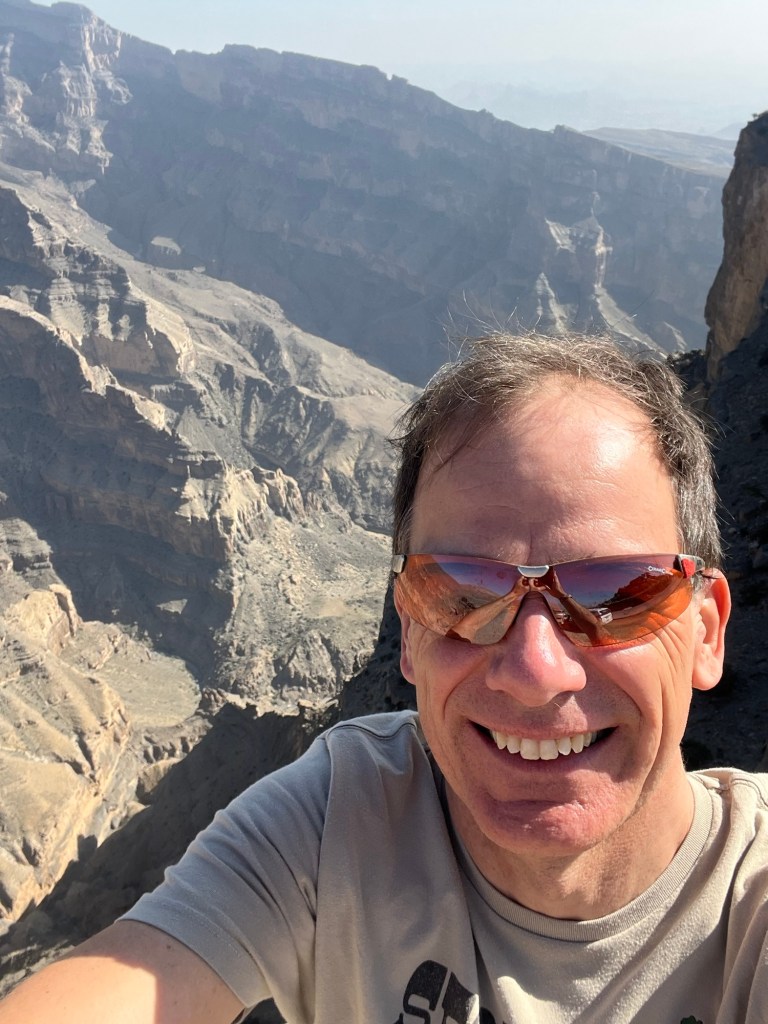
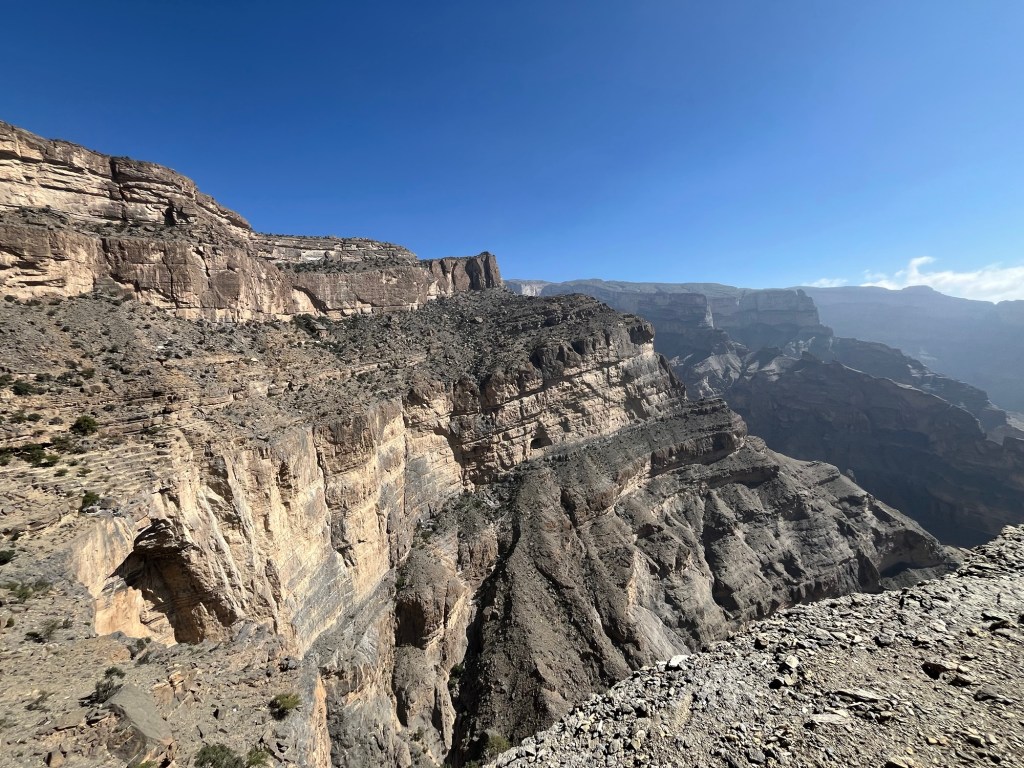
Um 6:30 Uhr klingelt der Wecker, wir haben Fladenbrot, Honigmelone, Gurken und Käse in den Rucksack gepackt, und frühstücken noch einmal kurz in einem alleinstehenden Café. Dort sehen wir schon den Wadi Ghul, auch Grand Canyon des Omans genannt.
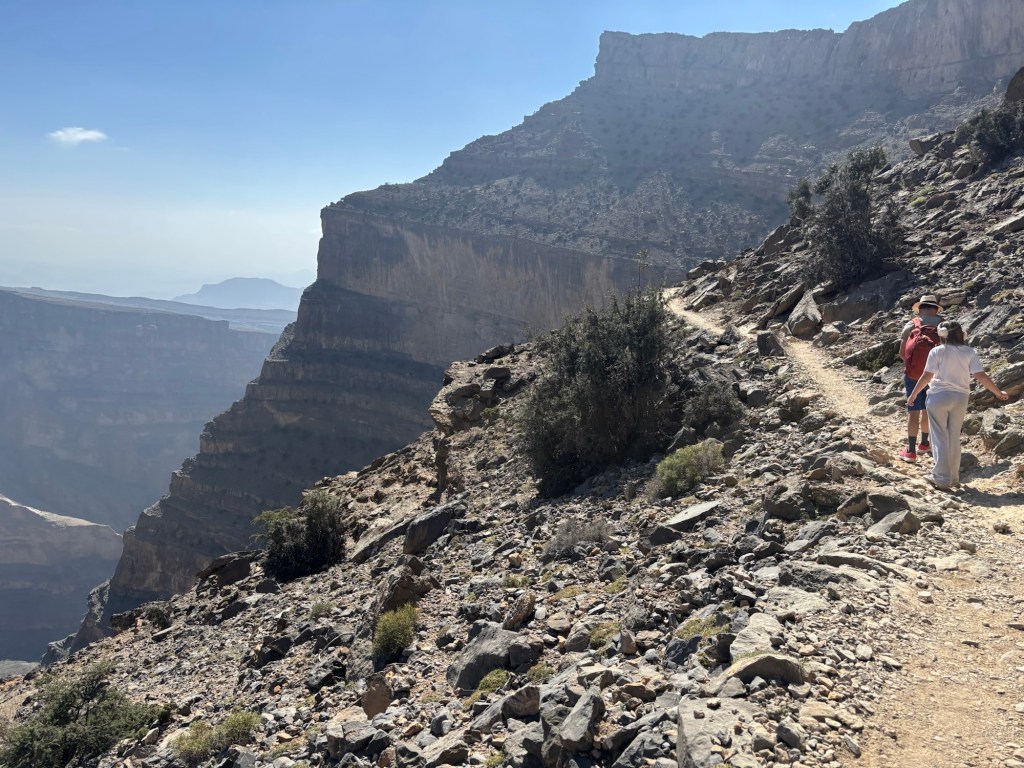
Viereinhalb Stunden soll man für die 9,2 km auf dem Balcony Trail einplanen, und leicht der Beginn ist auch herausfordernder als erwartet.
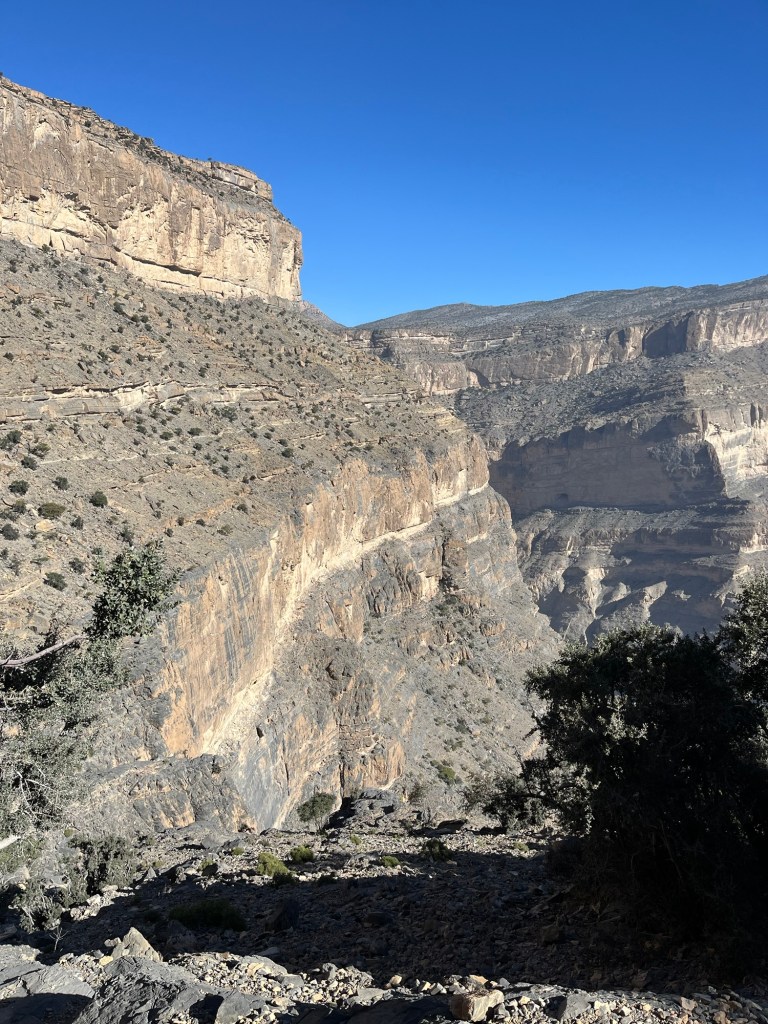
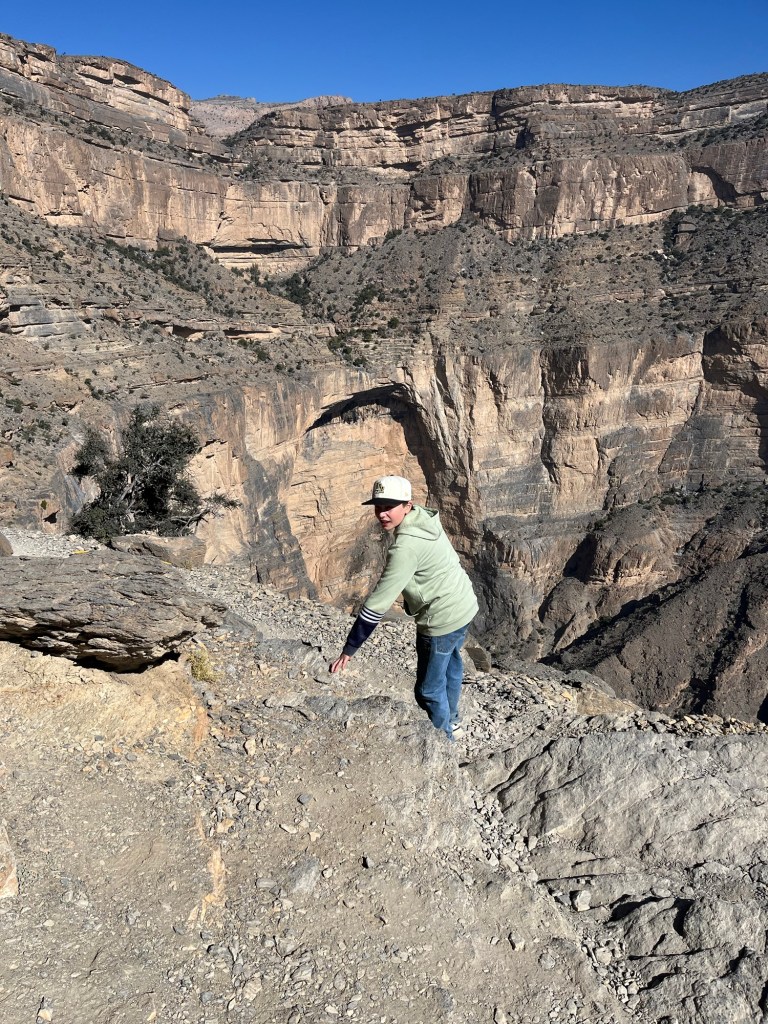
Und gleich sieht man, dass wir uns hier an der steil abfallenden Wand des Canyon entlang bewegen werden. Definitiv nichts, wenn man Höhenangst hat.
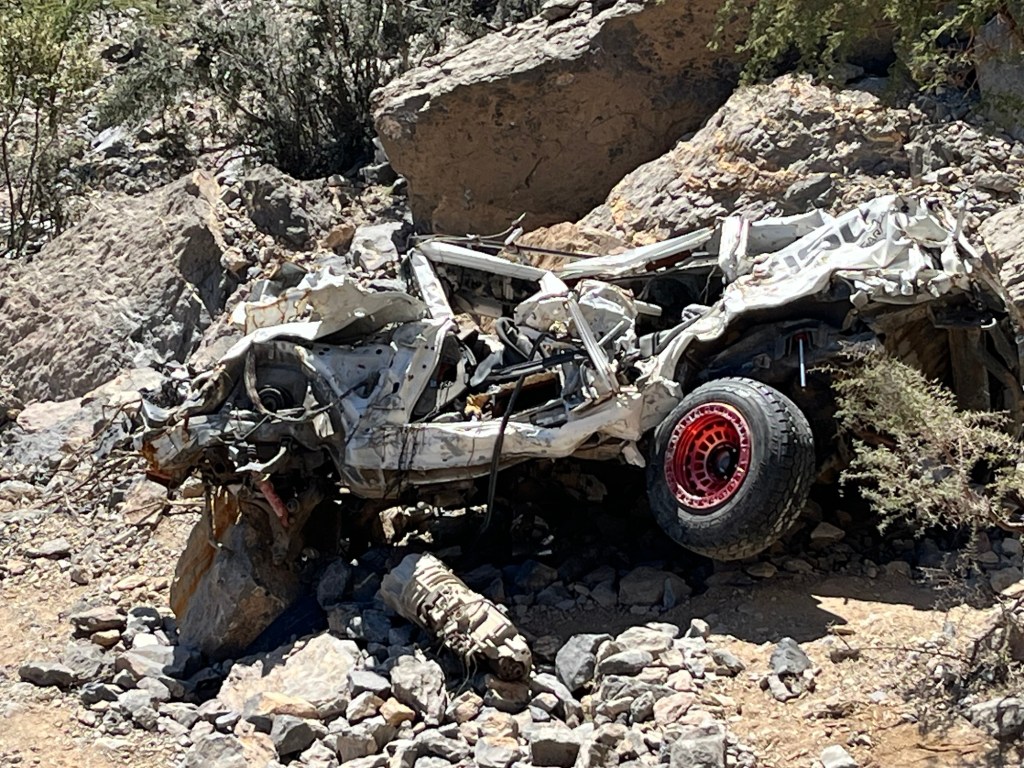
Etwa 50 m unter uns sehen wir das schaurige Wrack eines Geländewagens, der offensichtlich von der darüberliegenden Klippe abgestürzt ist. Das ist nur noch ein Knäuel – kein Wunder dabei ein paar 100 m Sturz in die Tiefe.
Nach zweieinhalb Kilometern machen wir die erste Rast. Bald danach sieht man einen großen Felsenbogen in der Wand, darüber liegt das Ziel, eine verlassene Siedlung in der Felswand an einer Quelle. Leider kickt Tara kurz vor dem Ziel mit dem Knöchel um und hat starke Schmerzen. Gut, dass wir so gut vorbereitet sind, kühles Gel, elastische Binde, Schmerztablette und Ablenkung mit Musik helfen, Tara rasch wieder auf die Beine zu kommen.
Eine Klettergruppe aus Oman mit einer sehr netten, voll ausgerüsteten Frau muntert Tara auf und bietet dir Schokolade an und lobt sie für ihren Einsatz. Sie sind auf dem Weg von einem 50 km Treck, wie sie berichten.
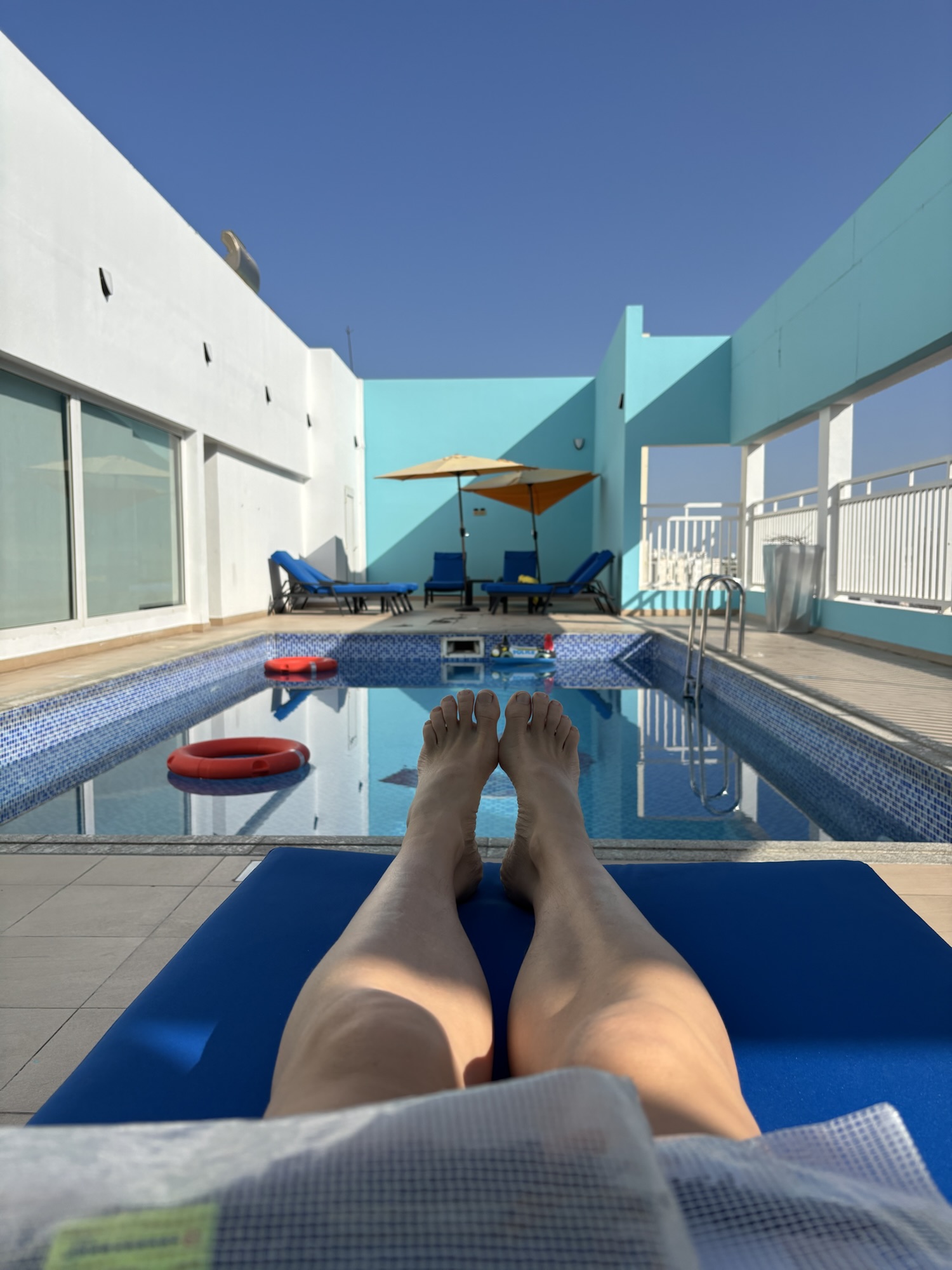
Als wir erschöpft, aber glücklich wieder am Auto angelangt sind, haben alle etwas erlebt. 3 Stunden Fahrt liegen vor uns, um wieder nach Maskat in die Großstadt zurückzukehren, wo uns ein Hotel im lebendigen Stadtzentrum empfängt- Tara springt gleich in den kleinen Pool auf dem Dach.
The Jebel Shams Canyon
Day 9
After the museum, we continue on, we still have to reach our next accommodation in the mountains. The hairpin bends become narrower and finally the asphalt road ends as dusk falls.
I engage the four-wheel drive and the evening sun casts a picturesque light on the rocky landscape.
We reach our house in the dark and receive a warm welcome – a fire is lit for us in the courtyard. Now it is cool, at night it is supposed to go down to 7°, we are at an altitude of 2000 meters. The sleeping bags are unpacked. But hungry as we all are, we get back in the car and drive in the dark to the resort 3 km away and enjoy the buffet. Because the next morning we have an early start and want to set off on the hike feeling refreshed.
The alarm clock rings at 6:30 a.m. We have packed flatbread, honeydew melon, cucumber and cheese in our rucksacks and have a quick breakfast in a stand-alone café. There we can already see the Wadi Ghul, also known as the Grand Canyon of Oman.
You should plan four and a half hours for the 9.2 km on the Balcony Trail, and the start is more challenging than expected.
And you can see straight away that we will be walking along the steep wall of the canyon. Definitely nothing if you’re afraid of heights.
About 50 m below us, we see the gruesome wreckage of an off-road vehicle that has obviously crashed from the cliff above. It’s just a tangle – no wonder after a fall of a few hundred meters.
After two and a half kilometers, we take our first break. Unfortunately, Tara kicks her ankle just before the finish and is in a lot of pain. It’s a good thing we’re so well prepared: cool gel, an elastic bandage, painkillers and distraction with music help Tara to get back on her feet quickly.
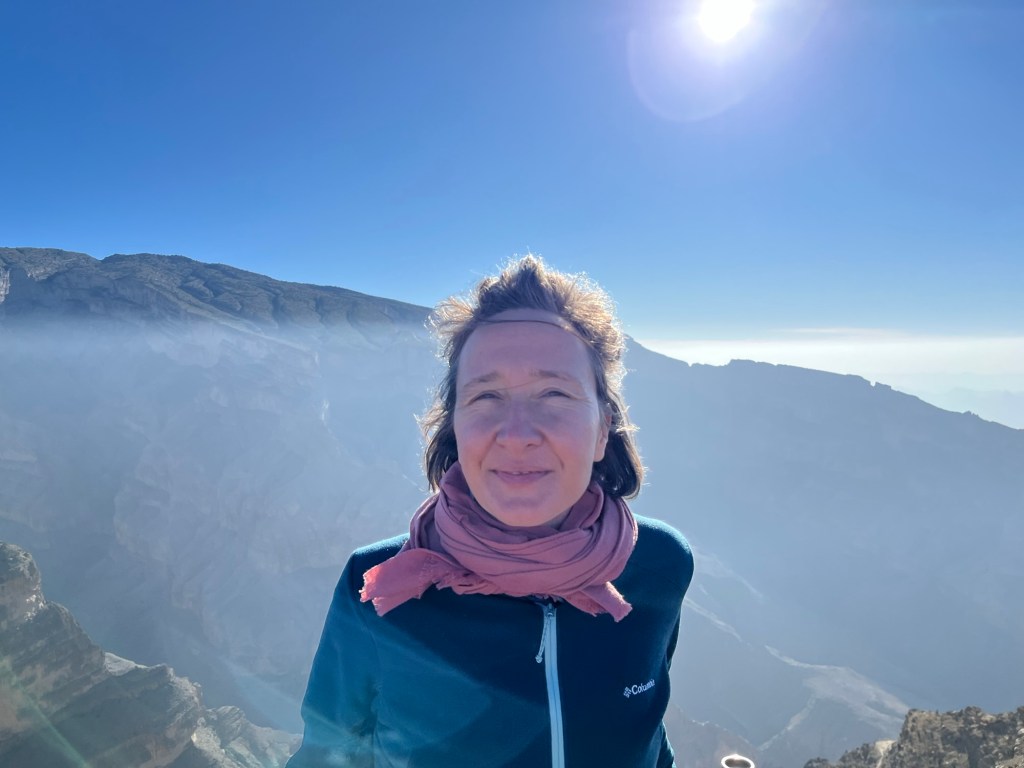
A climbing group from Oman with a very nice, fully equipped woman cheers Tara up and offers you chocolate and entices her for her efforts. They are on their way back from a 50 km trek, they tell us.
By the time we get back to the car, exhausted but happy, everyone has experienced something. We have a 3-hour drive ahead of us to get back to Muscat in the big city, where a hotel in the lively city center welcomes us – Tara jumps straight into the small pool on the roof.
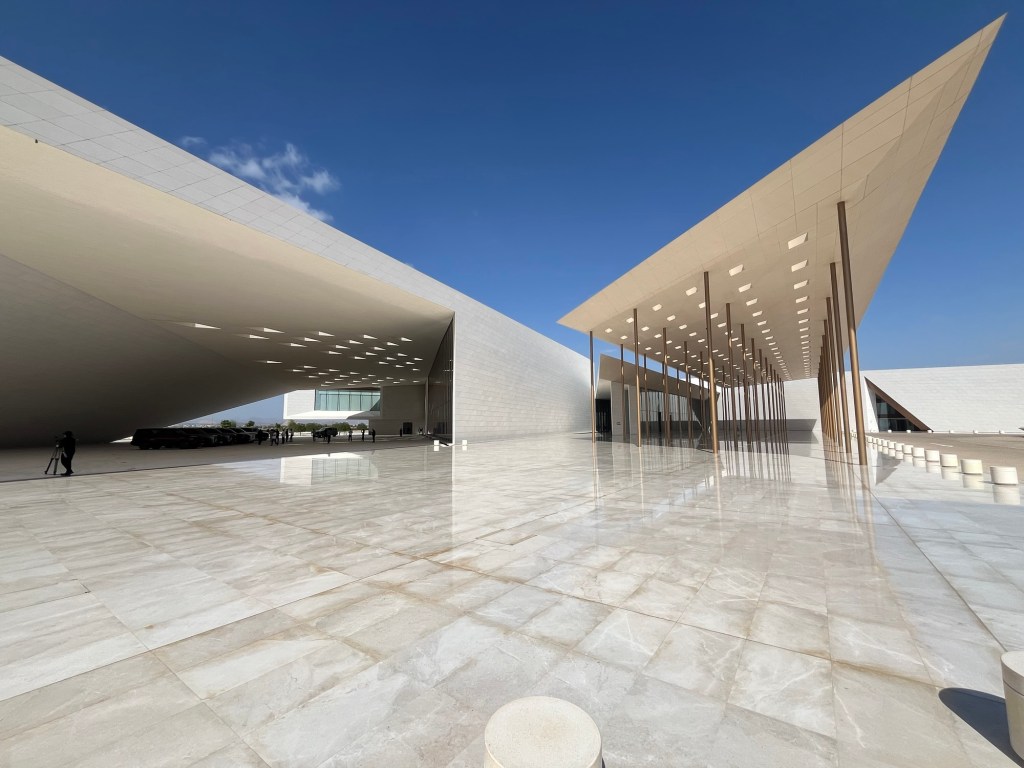
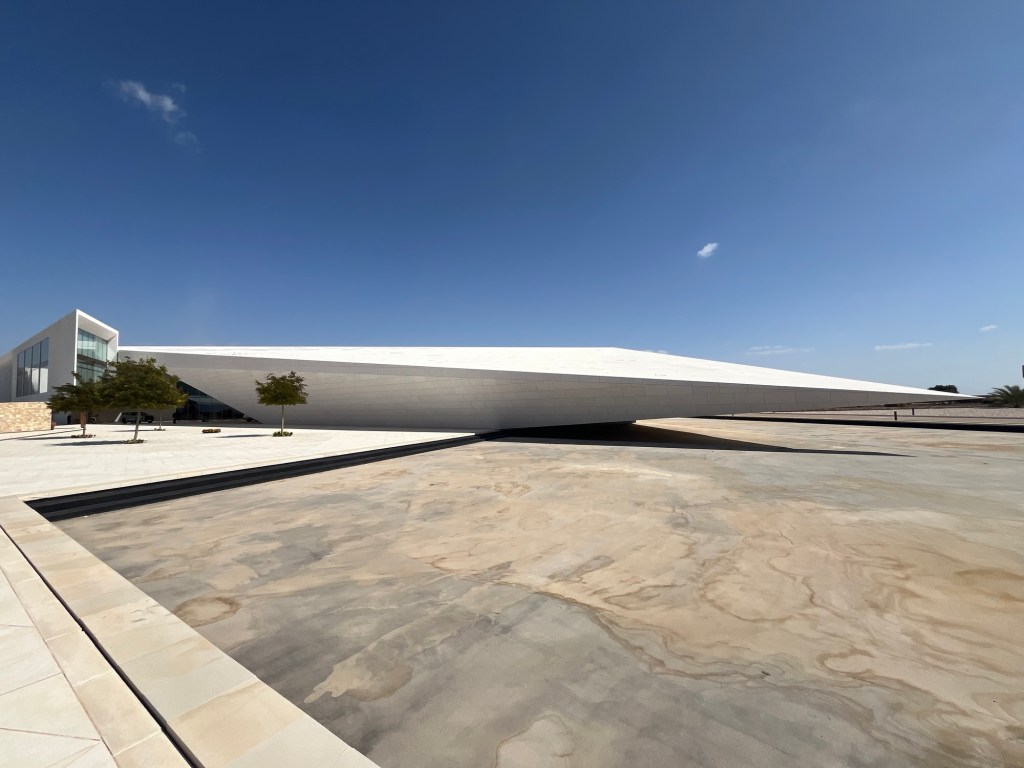
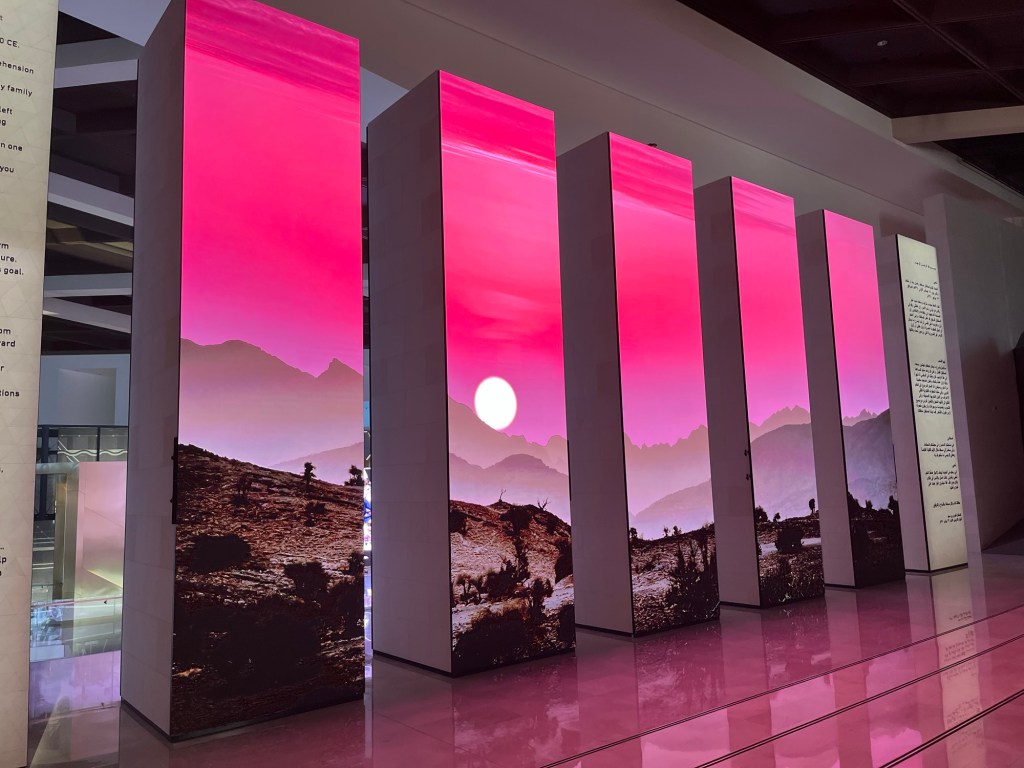
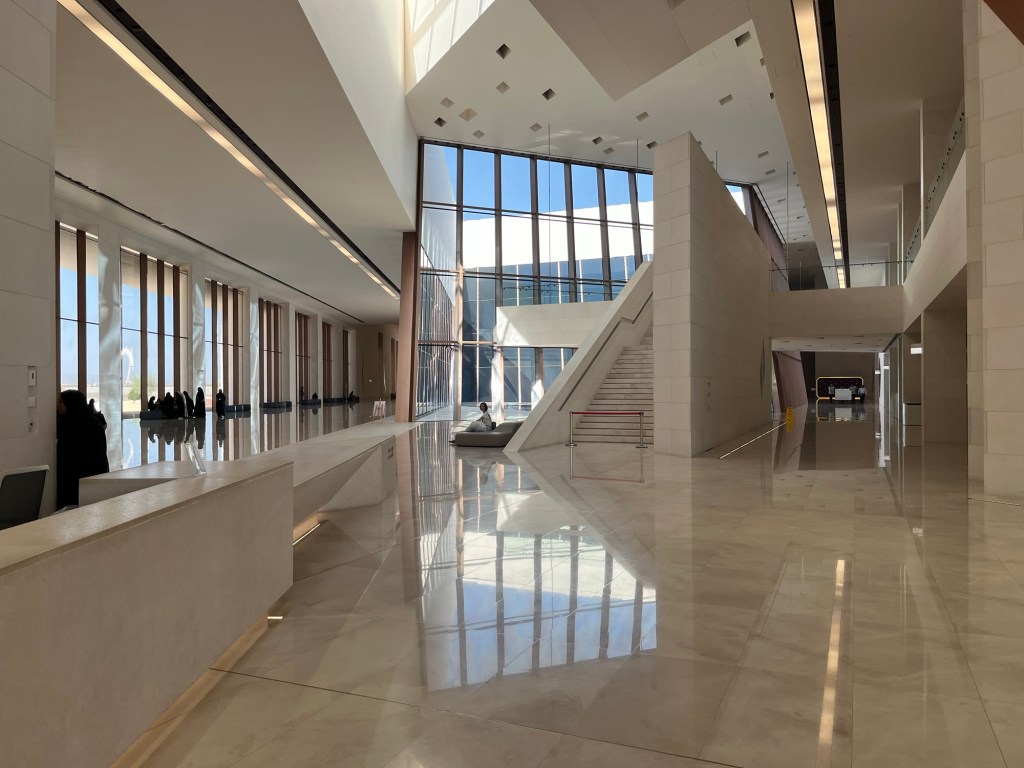
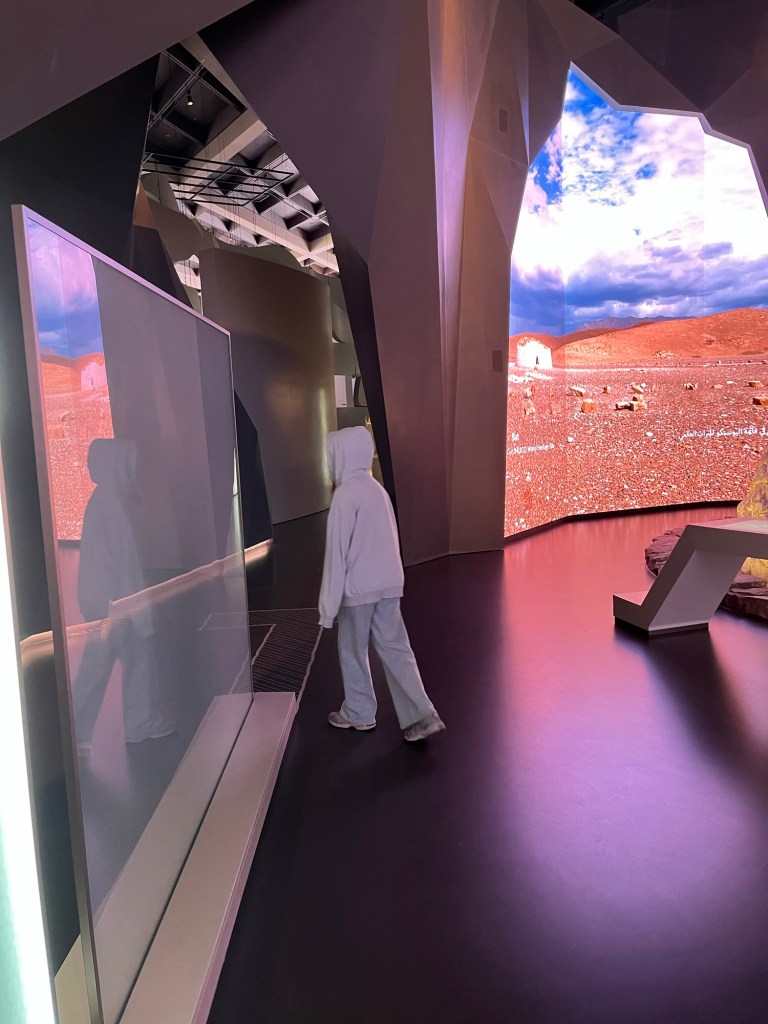
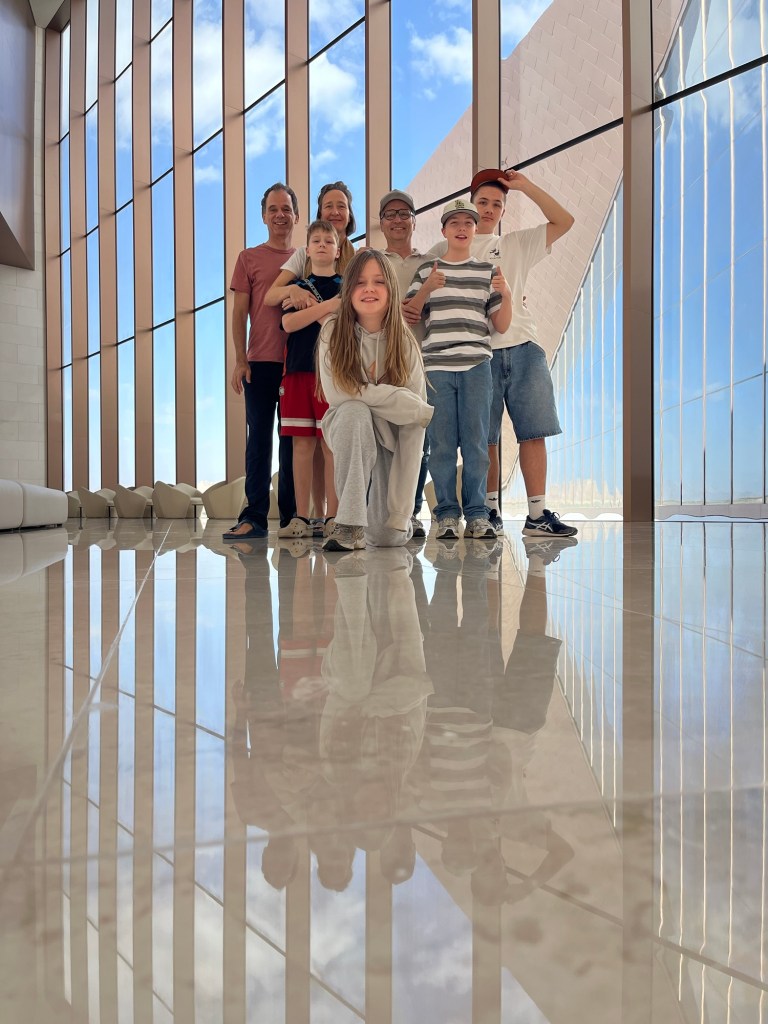
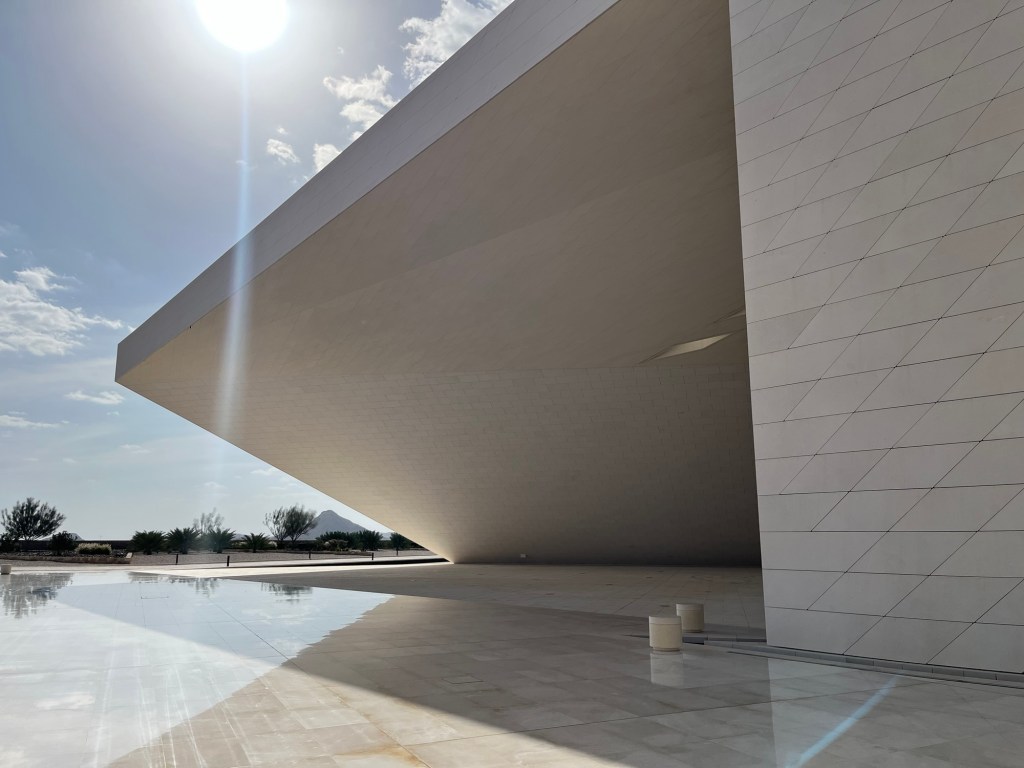
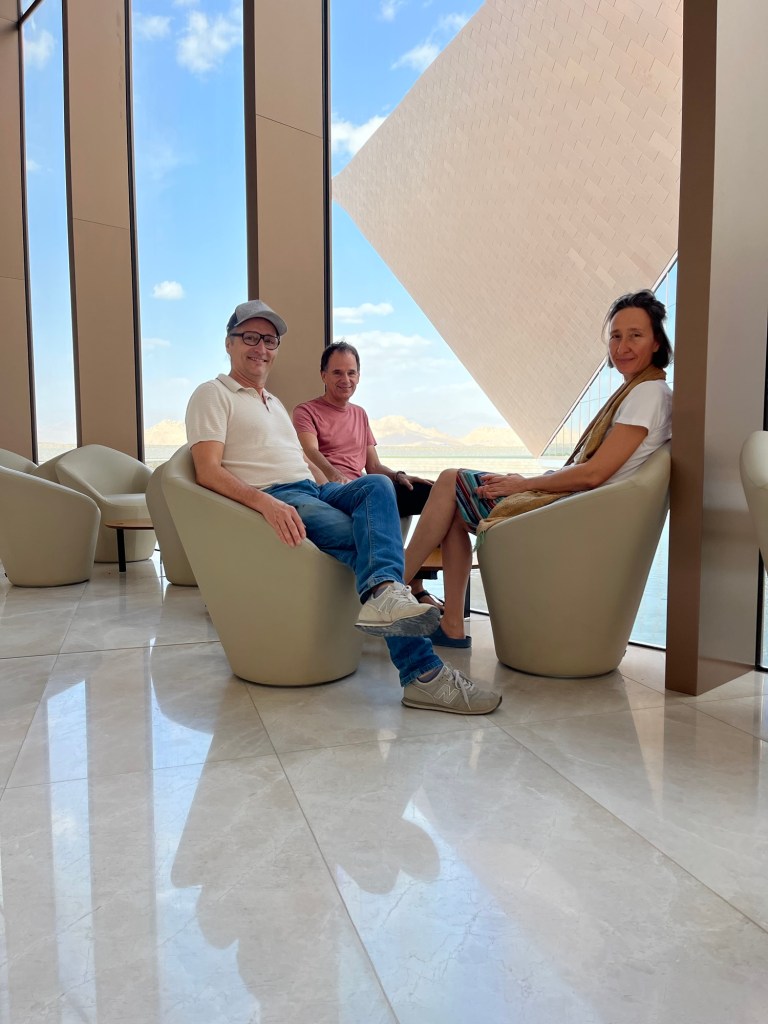
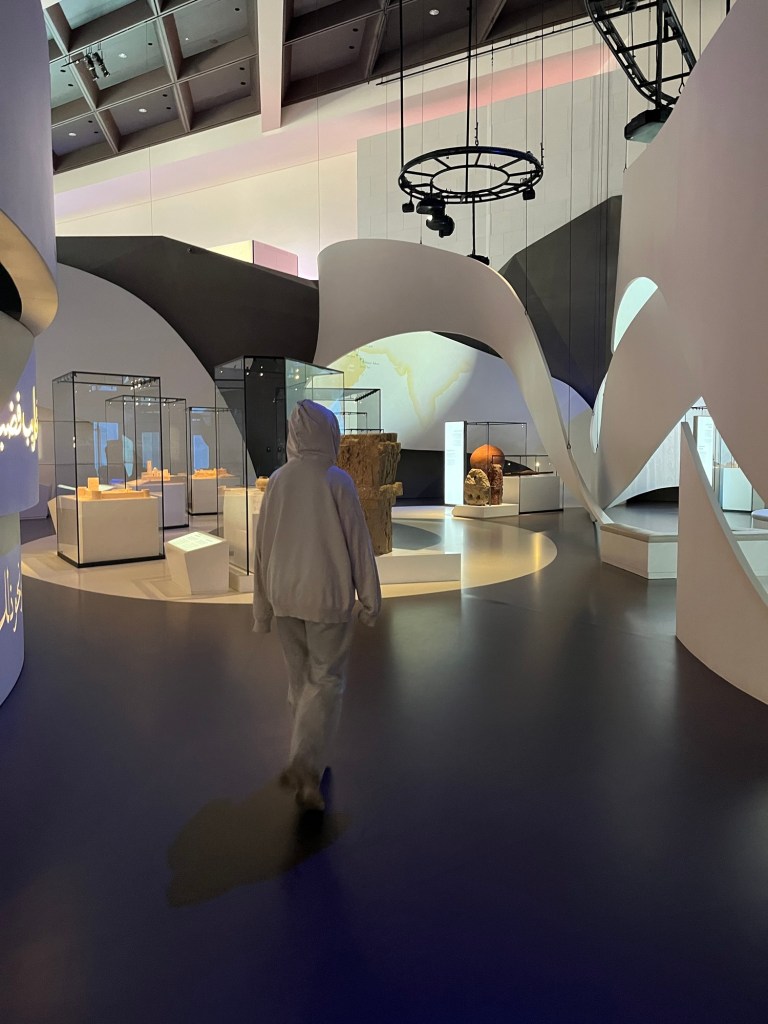
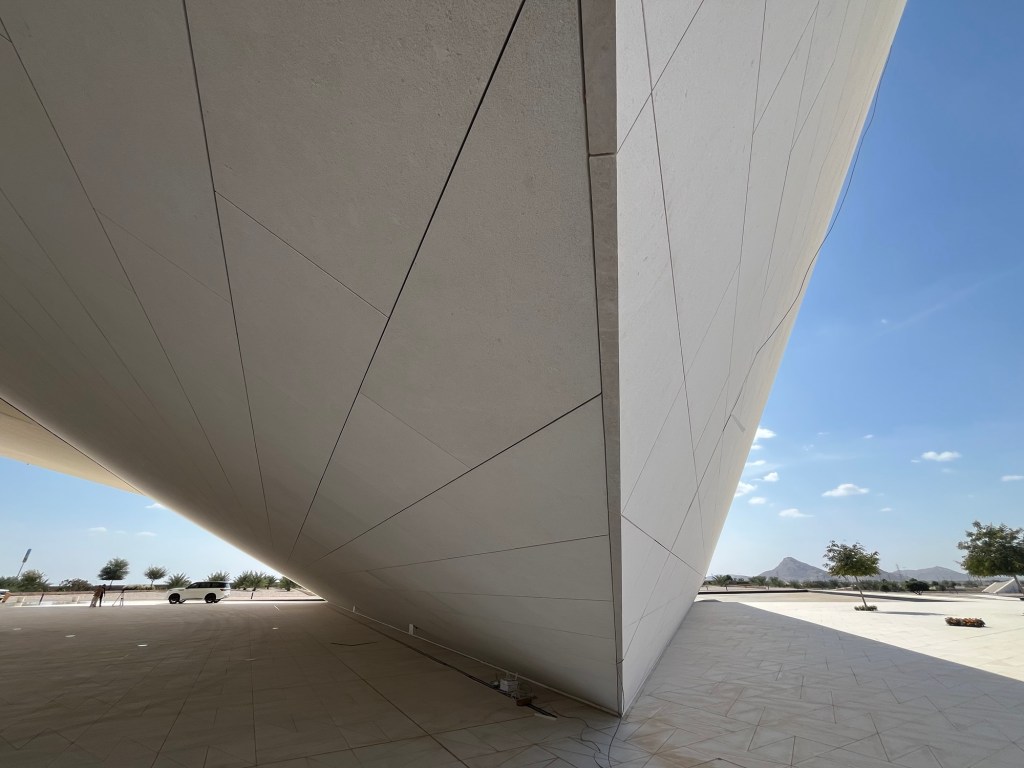
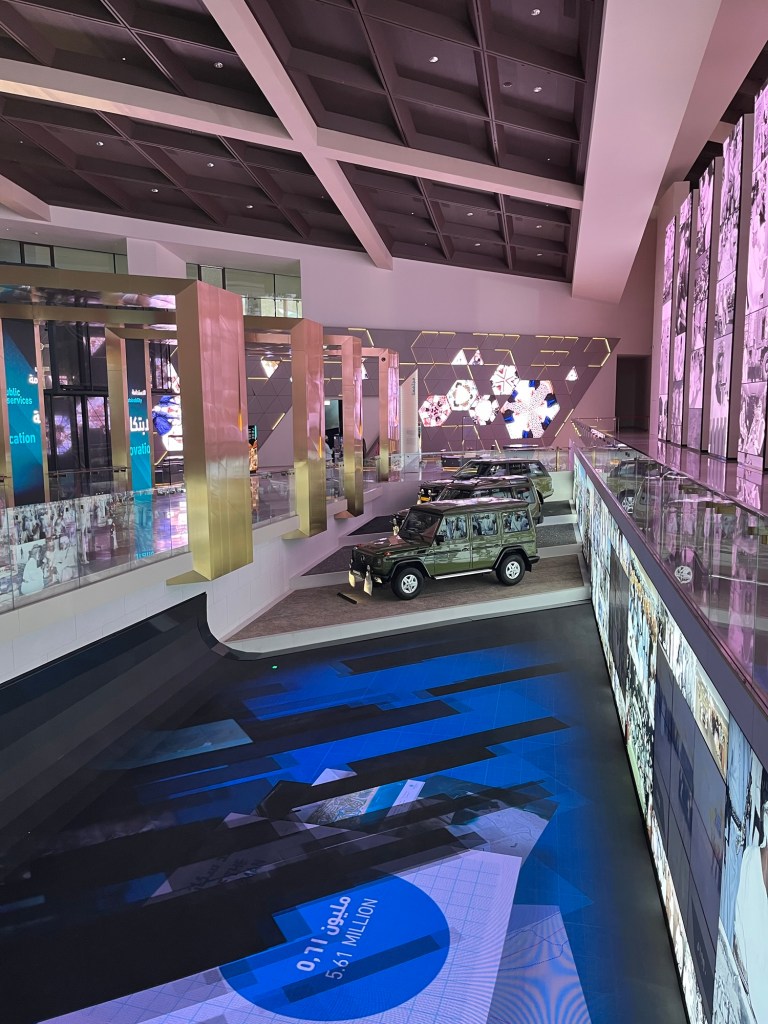
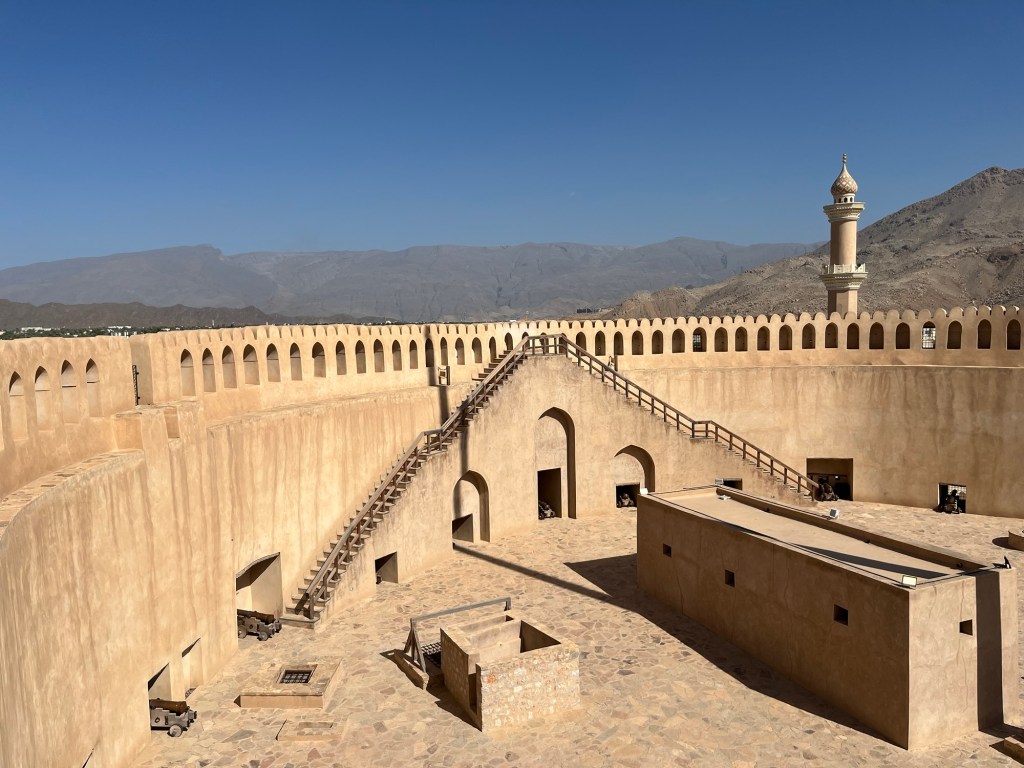
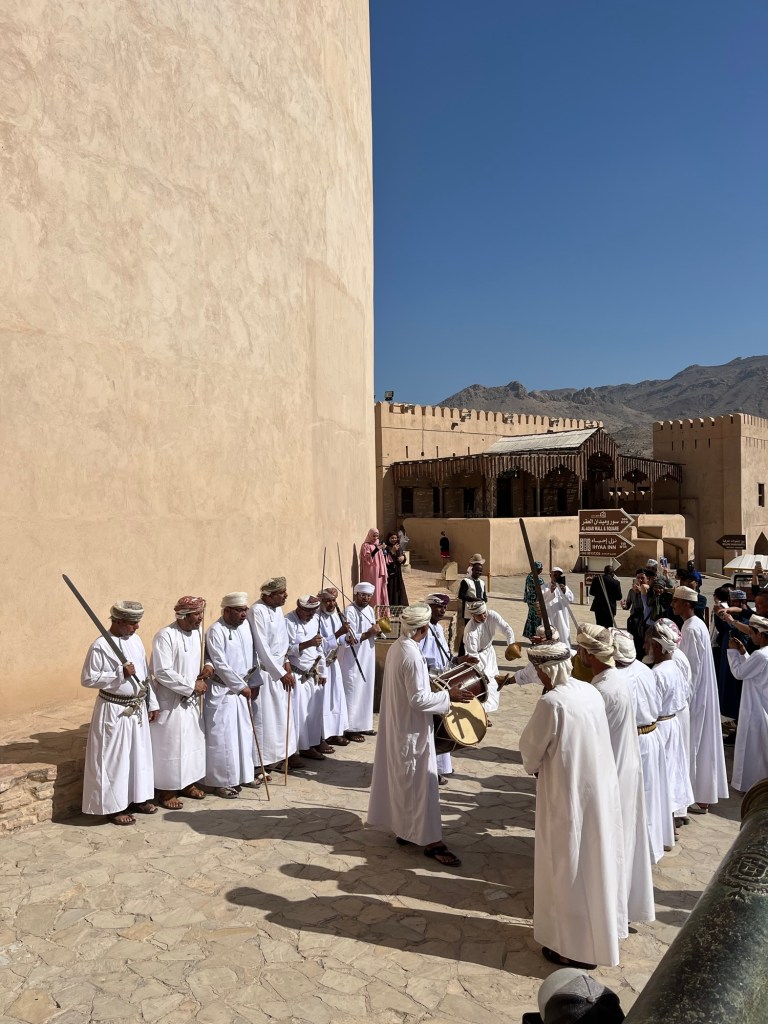
Eigentlich wollte ich ja über das Fort vom Nizwa berichten. Eindrucksvoll restauriert, der meist besuchte Ort des Landes. Den Jungs gefiel am meisten die drei Todesfallen am Eingang. „The King of Germany was there, last year“- meinte der Eisverkäufer zu Andreas und zeigte auf das Bild von Steinmeier. Doch irgendwie verblasste das alles angesichts des Museums, das wir danach sahen. Mit 300.000 m2 50% größer als der Louvre. 3 Milliarden Euro wäre eine konservative Schätzung für die Kosten. 2023 eröffnet, haut es einen in allen Dimensionen einfach um. Von außen wie innen, die Technologie, die interaktiven Objekte. Es sieht wie aus einer science Fiction Szene auf einem fremden Planeten aus.
Ich fand es wirklich beeindruckend- es gewann den Preis als schönstes Museum der Welt 2024. Die australischen Architekten Cox durften sich hier offenbar austoben- Budget und Gestaltung ohne Limit.
Das Dreieck als das geometrische Motiv, in Extremform genutzt. Hier möchte man Influencer sein, um mal ein paar wirksame Selfies zu drehen. Oder den Tesla Cybertruck in Szene setzen. Aber noch wird hier mit Benzin gefahren- Spritpreis 60 Cent der Liter.
Doch der Oman setzt auf Wasserstoff und Tourismus als die Zukunft. Investition von 70 Milliarden US$ sind für grünen Wasserstoff geplant.
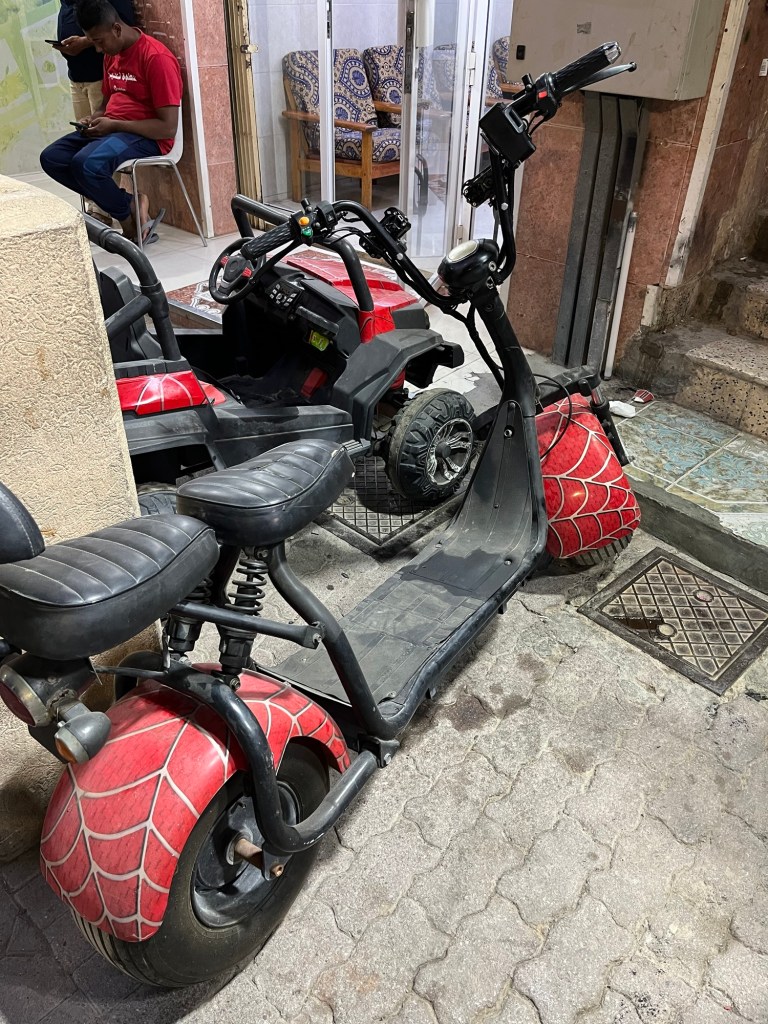
Schon heute begeistert die leisen Elektro-Mopeds, mit denen die Locals abends durch die kleinen Gassen der Altstadt cruisen.
Day 8
I actually wanted to report on the fort in Nizwa. Impressively restored, the most visited place in the country. The boys liked the three deaths at the entrance the most. „The King of Germany was there last year“ – said the ice cream seller to Andreas, pointing to the picture of Steinmeier. But somehow it all paled in the face of the museum we saw afterwards. At 300,000 m2, it is 50% larger than the Louvre. 3 billion euros would be an honorably conservative estimate for the cost. Opened in 2023, it simply blows you away in all dimensions. From the outside as well as the inside, the technology, the interactive objects. It looks like something out of a science fiction scene on an alien planet.
I found it really impressive – it won the prize for the most beautiful museum in the world in 2024. The Australian architects Cox were obviously allowed to let off steam here – budget and design without limits.
The triangle as a geometric motif, used in extreme form. Here you want to be an influencer to take a few effective selfies. Or to showcase the Tesla Cybertruck. But people are still driving on petrol here – the price is 60 cents a liter.
But Oman is banking on hydrogen and tourism as the future. An investment of US$ 70 billion is planned for green hydrogen.
The quiet electric mopeds on which the locals cruise through the narrow streets of the old town in the evenings are already a hit.
Beim Aufbruch gab es unterschiedliche Geschwindigkeiten. Andreas, der erst gegen Mitternacht einschlief wurde um 2 Uhr morgens vom Betonmischer geweckt, der die Baustelle nebenan belieferte, gegen 5 waren dann auch Yuki und Inyan vom Krach wach. Nadine wiederum wollte früh aufbrechen und den Tag nutzen. 9.00 ist Abfahrt- um 9.30 wurde sie unruhig. Auf der Autobahn versuchte Andreas dann die verlorene Zeit wieder reinzuholen- ich hatte Mühe mein 2,5 Tonnen SUV zu beschleunigen um ihn nicht aus den Augen zu verlieren.
Als wir dann nach zwei Stunden Fahrt im Wadi Tanuf ankamen, fehlte Nadine die Snacks für die Wanderung, wir hatten keinen Laden gesehen.
Nach einem kurzen Gespräch waren dann die Wogen wieder geglättet. Ich spielte wie üblich den Oberlehrer und hatte Morpheus und Tara die Fahrt über mit dem Quadratzahlen bis 20 genervt. Was ist 17 mal 17? Irgendwann saß es und wir schwenken auf Harry Potter als Audible Hörbuch, gelesen von Rufus Beck um. So viel mehr Inhalt als im Film, und wie er all die Stimmen variiert!
Nadine übernahm auf halber Strecke das Steuer, und ich konnte etwas relaxen. Draußen Felsen und Berge, wenig grün und die Autobahn akkurat durch die Anhöhen gefräst. Etwas erinnerte es mich an Colorado oder Nevada.
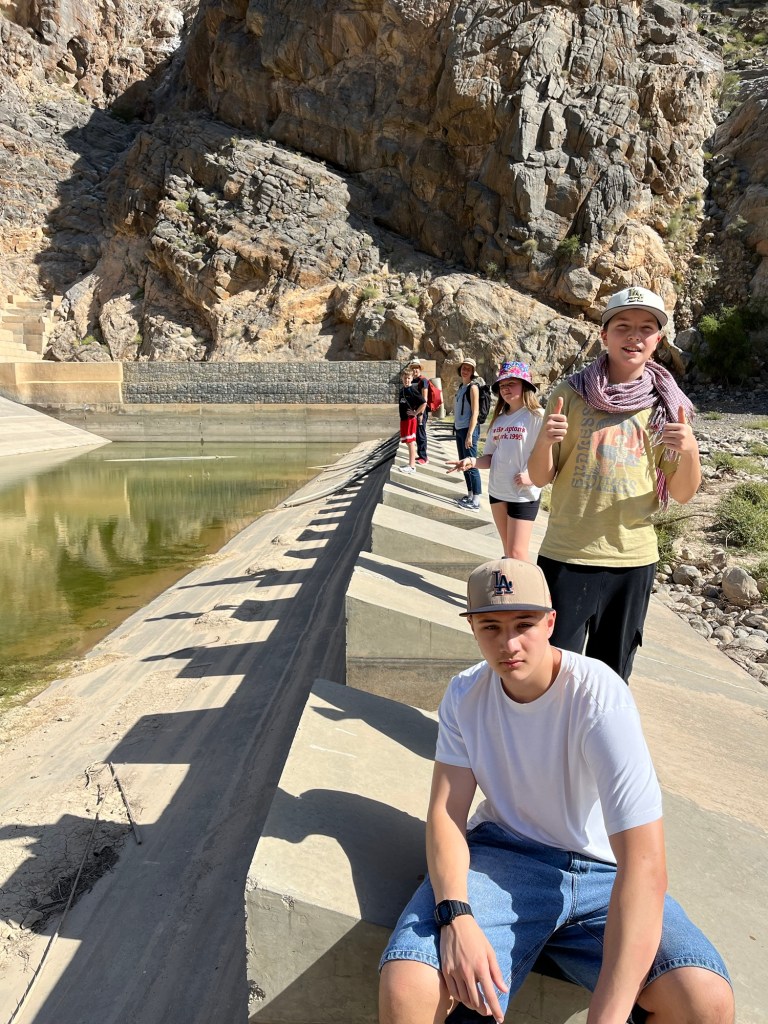
Der Anfang des Tals sah vielversprechend aus- ich hatte ja Baden versprochen und erläutert- hinter der Staumauer kommt das Wasser.
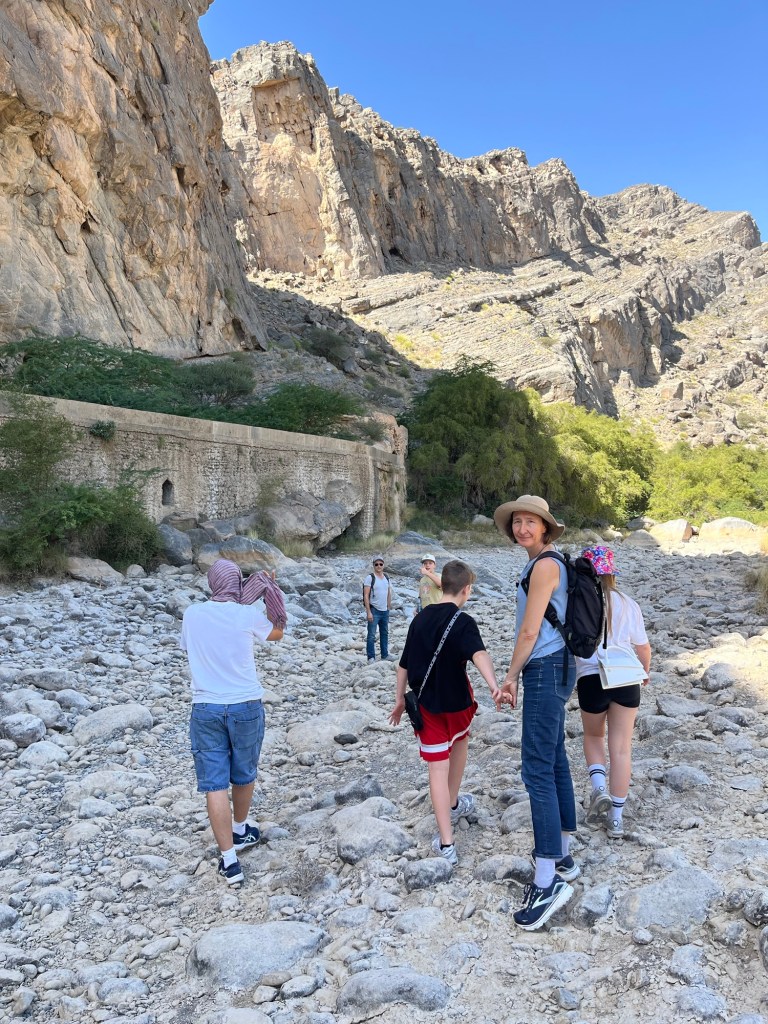
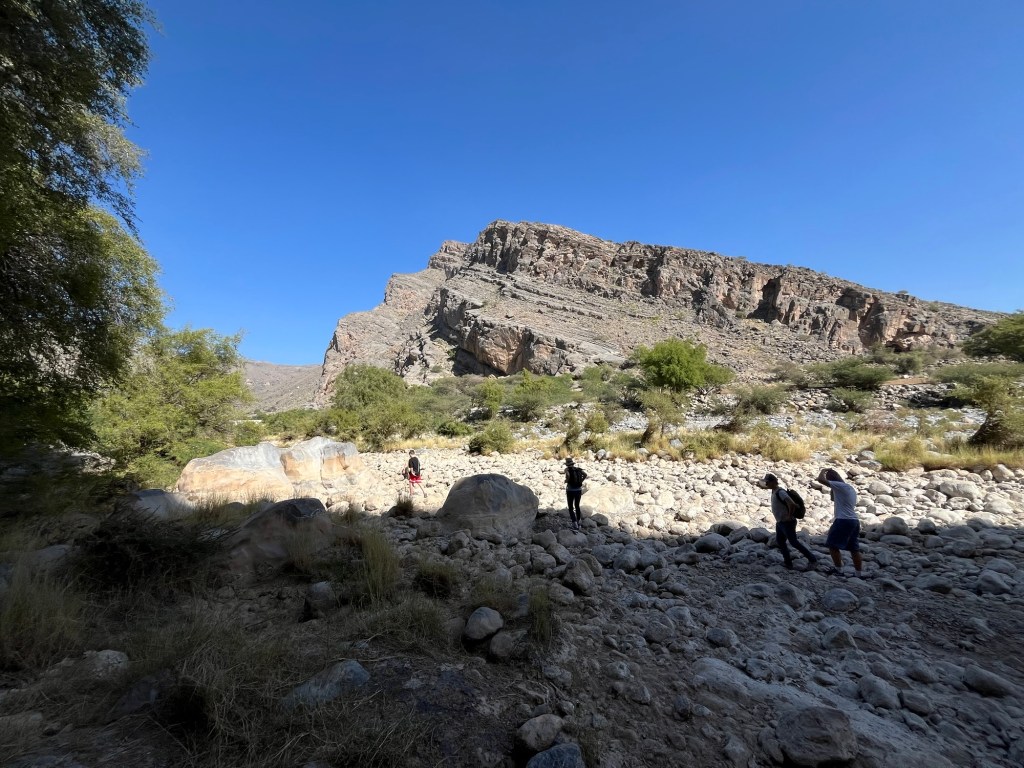
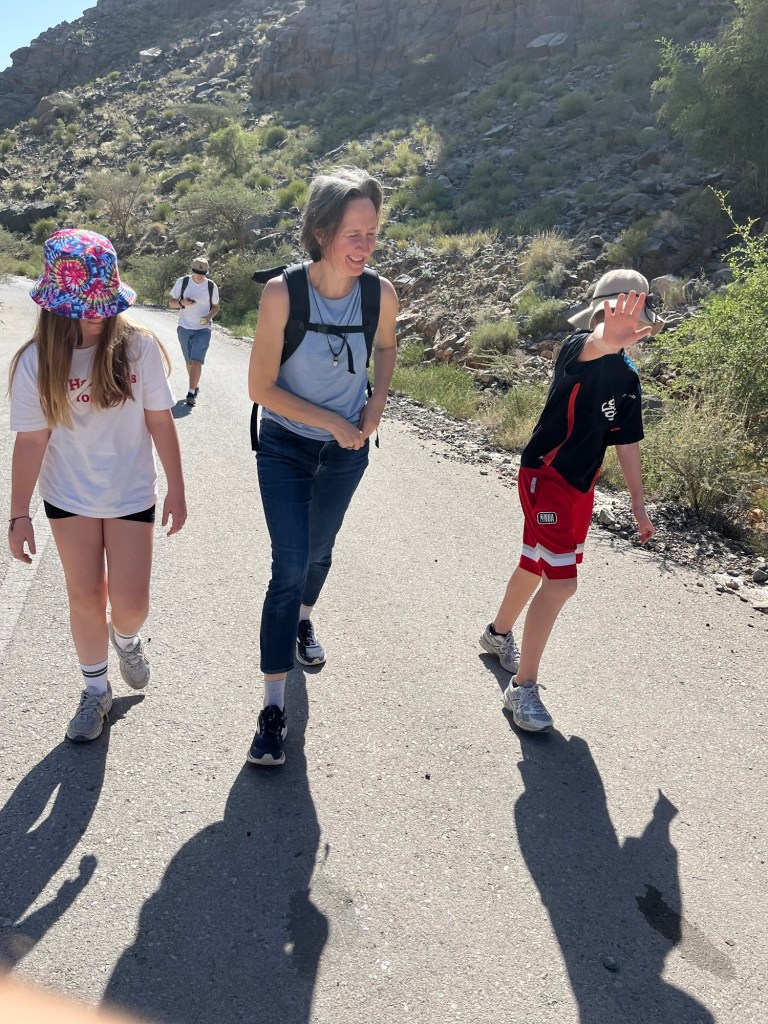
Wir stiegen das trockene Flussbett hinauf und kletterten über glattgeschliffene Felsen gutgelaunt durch die Mittagshitze.
Doch es kam anders. Alles ausgetrocknet, der Rest vor der Staumauer verlockte die Kinder nicht- und es war auch noch klar erklärt- Baden verboten.
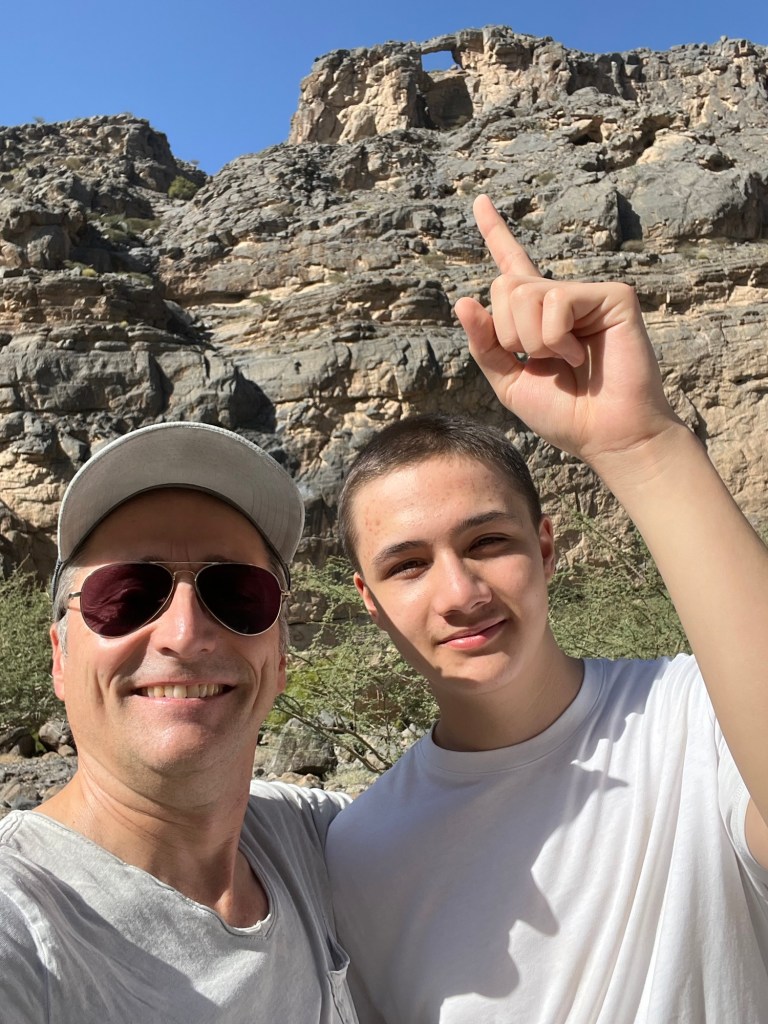
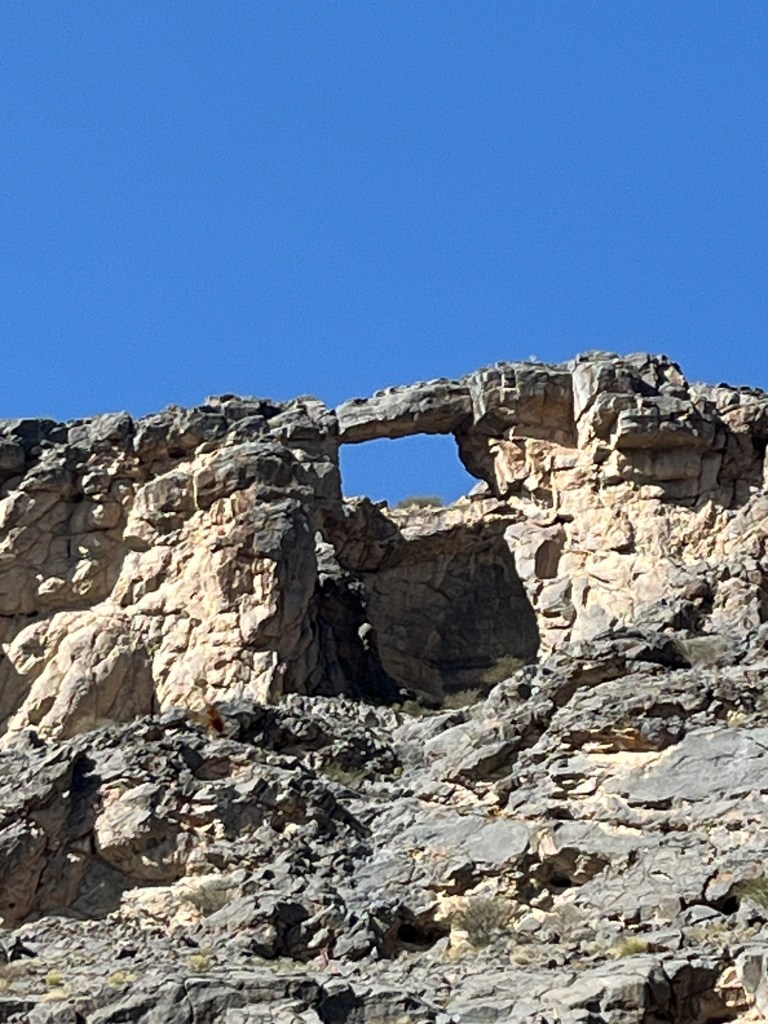
Aber so schnell waren wir nicht aus der Fassung zu bringen. Dann machen wir eben eine Exkursion, das Tal hinauf bis zum Aussichtspunkt, an dem Google Maps einen Steinbogen eingetragen hatte..
Dort dann ein verdientes Picknick im Schatten, die halb angefaulte Wassermelone von vorgestern und die Nüsse mit Wasser schmeckten allen erstaunlich gut . Yuki hatte noch Energie übrig, wollte noch einmal um den Fels herum steigen, um in das aufsteigende Tal zu schauen – hier könnte man längere Trekking Touren machen.
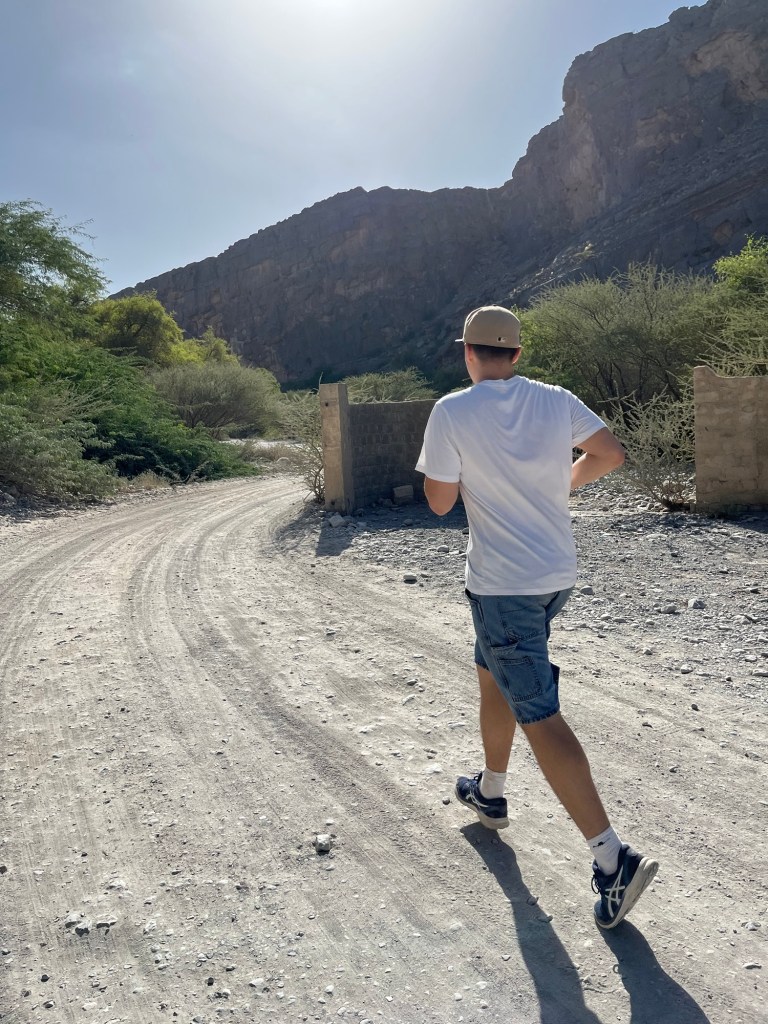
Und er schlug vor, die Strecke zurück zu joggen. Das ließ ich mir nicht nehmen, und wir rannten durch die Hitze zurück, kamen erschöpft, aber Happy wieder am Parkplatz an. Jetzt galt es unser Hotel in der Altstadt von Nizwa zu finden. Mit dem Auto gestaltete sich das schwierig, so dass wir es außerhalb der Mauer auf dem Parkplatz im trockenen Flussbett parkten.
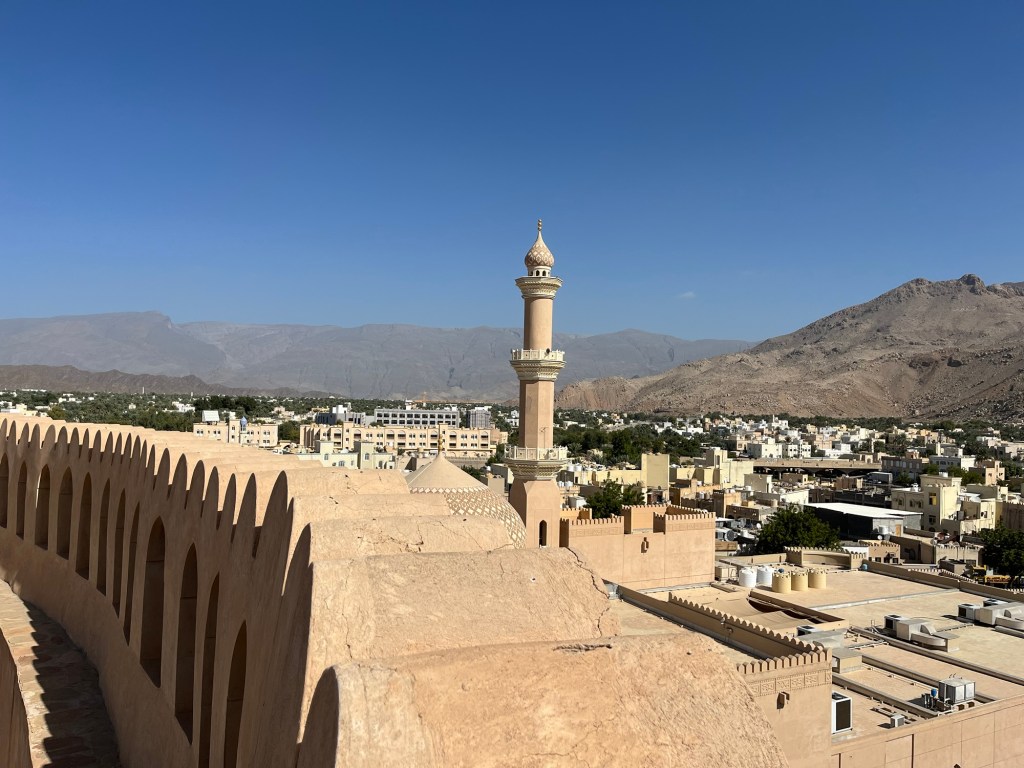
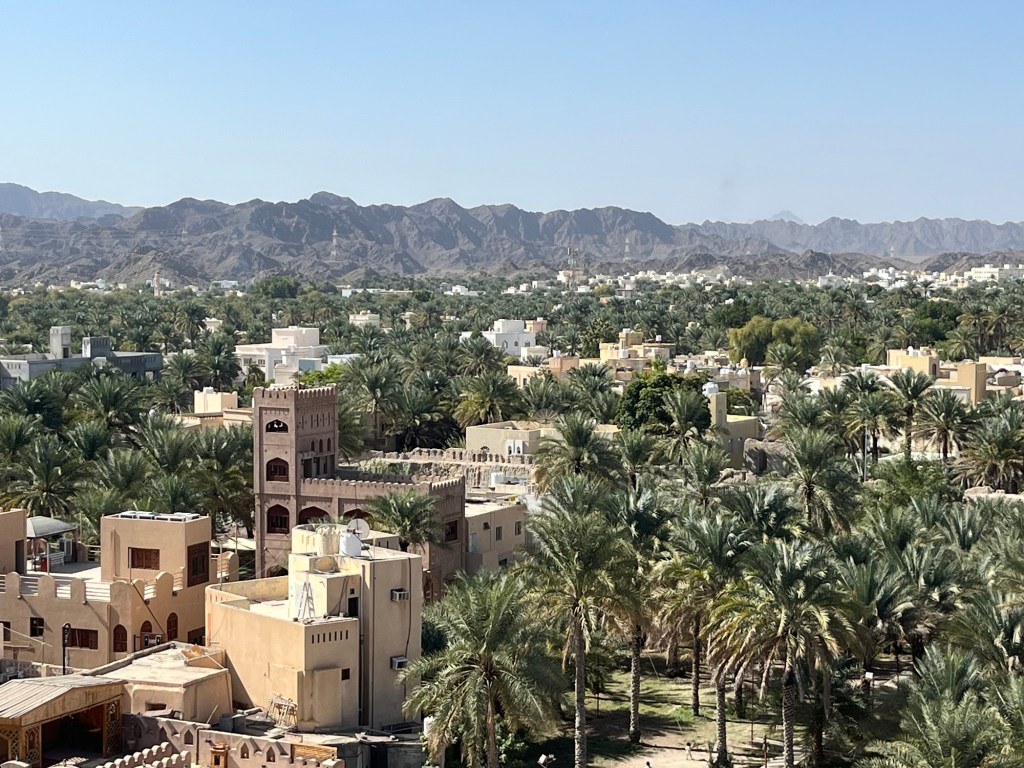
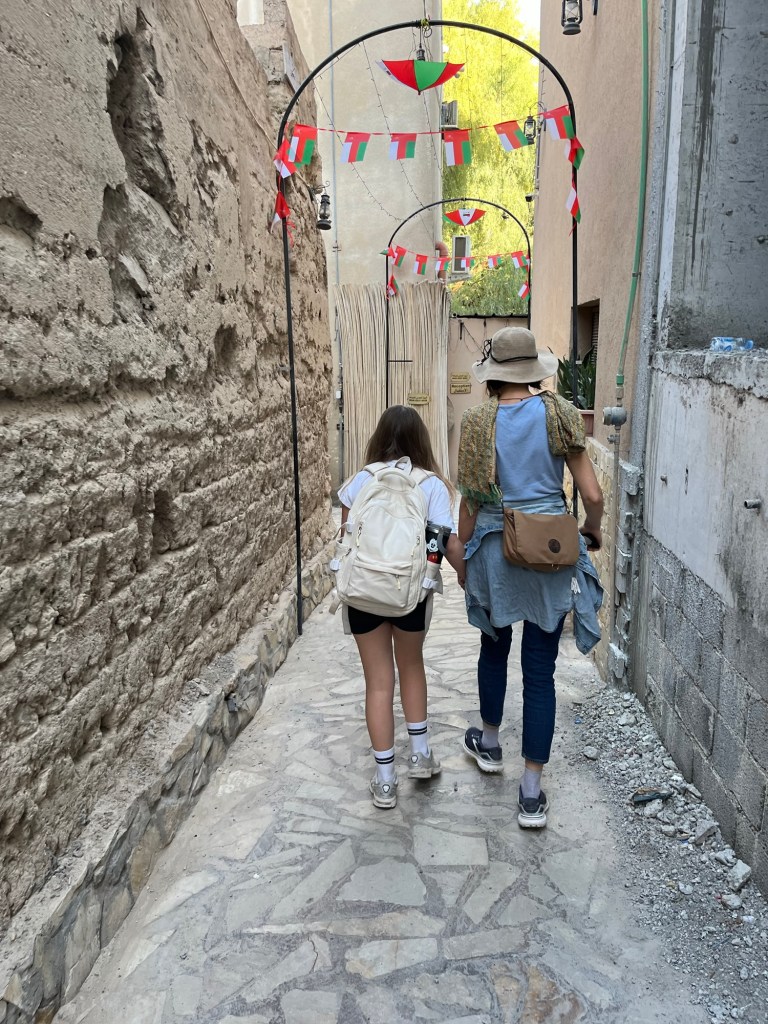
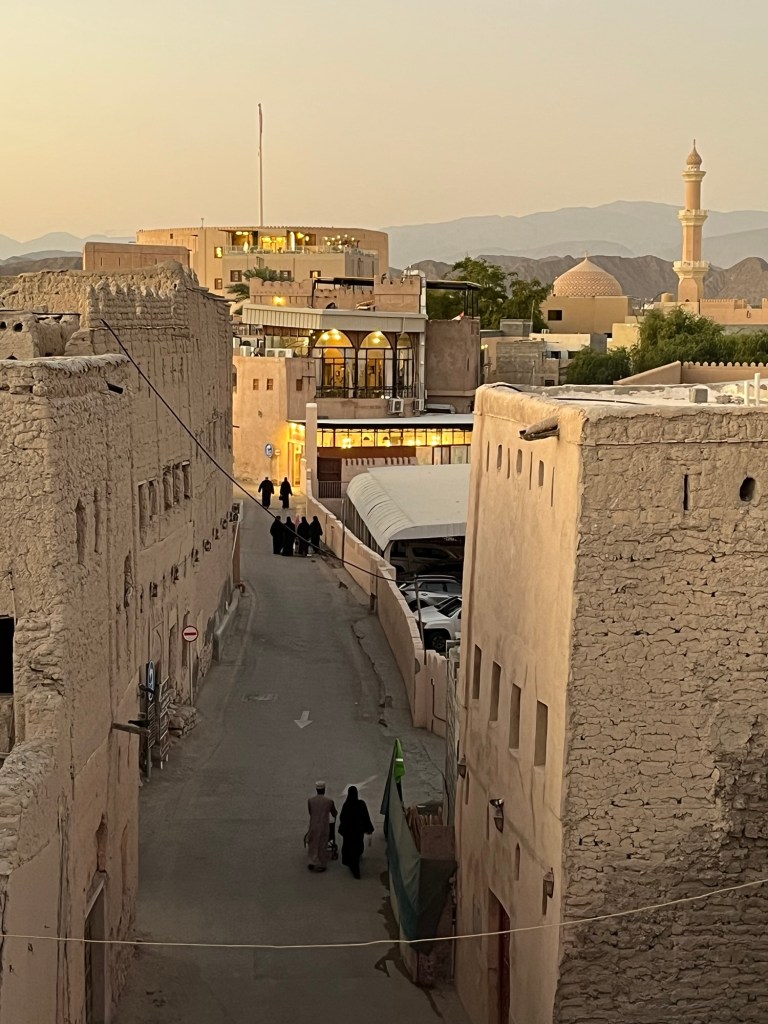
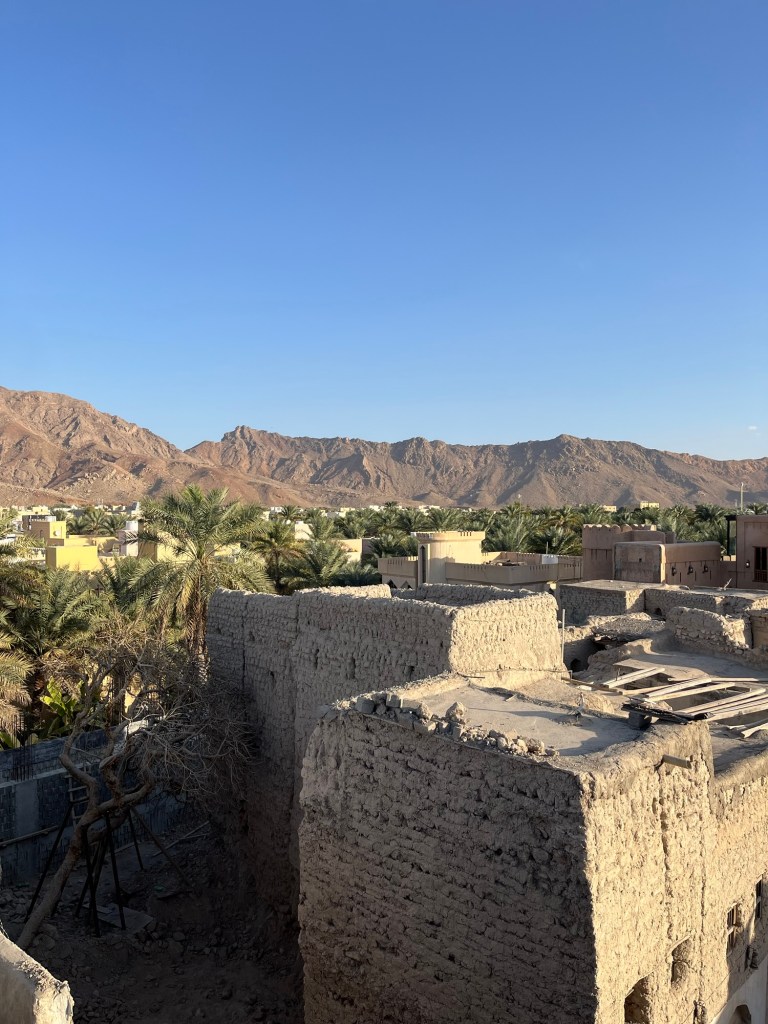
Nach etwas Sucherei mit hungrigen Kindern, die erstaunlich gut die Stimmung hielten, erreichten wir unser super schönes Haus und wurden freundlich mit Datteln und Kaffee empfangen – und zum Sonnenuntergang der Blick über die Stadt mit Blick auf die Berge, über Palmen und historische Gebäude hinweg, einfach traumhaft. Ein Schluck Rum aus der duty free Flasche half beim relaxen, bevor wir uns durch die Altstadt zu einem Original indischen Restaurant aufmachten. Dieses hätte exakt so auch in Goa ausgesehen, und bei Dahl Chicken Masala und vegetable Kuruma, mit Fladenbrot und dazu Lemon, Mint Juice kam schon Vorfreude auf Indien auf. Aber man muss sagen dieses Land hat wirklich etwas zu bieten und Oman hat zurecht erkannt, dass Tourismus Zukunft ist.
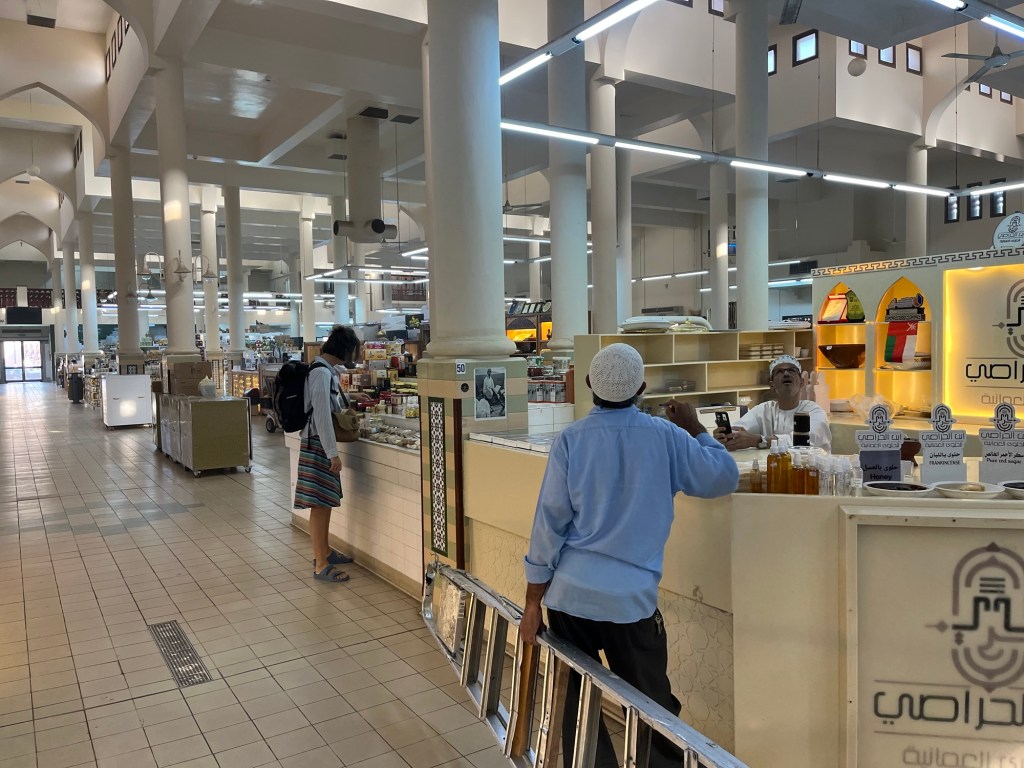
Der nette Hotelangestellte erzählte mir auf dem Dach, er sei vor sechs Monaten aus Nepal gekommen mit einem zwei Jahres Arbeitsvisum. Hier treffen wirklich verschiedene Kulturen aufeinander, die voll verschleierten Frauen in schwarz, die Männer in ihren weißen Umhängen, die Gruppen an indischen, nepalesischen oder pakistanischen Arbeitern auf den Straßen und dazwischen die Touristen aus Europa. Und überall duftet es nach Weihrauch.
Sogar die Straßenlaternen sind schwarz golden bemalt und sehen aus wie historische Gaslichter, die es an die Autobahn verschlagen hat. Schick auch die vielen Elektroroller und Mopeds
Wir lassen uns Zeit und werden morgen noch den Tag hier verbringen, das Fort und das super moderne Museum anschauen, bevor es in die Berge geht.
Wadi Tanuf and Nizwa
Day 7
There were different speeds when we set off. Andreas, who only fell asleep around midnight, was woken up at 2 a.m. by the concrete mixer delivering concrete to the construction site next door, and Yuki and Inyan were also awake by 5 a.m. from the noise. Nadine, on the other hand, wanted to get up early and make the most of the day. 9.00 is departure time – at 9.30 she became restless. On the highway, Andreas tried to make up for lost time – I had trouble accelerating my 2.5-ton SUV so as not to lose sight of him.
When we arrived in Wadi Tanuf after a two-hour drive, Nadine didn’t have any snacks for the hike – we hadn’t seen a store.
After a brief conversation, the dust had settled. As usual, I played the head teacher and annoyed Morpheus and Tara with squares up to 20. What is 17 times 17? At some point it sunk in and we switched to Harry Potter as an Audible audiobook, read by Rufus Beck. So much more content than in the movie, and how he varies all the voices!
Nadine took over the wheel halfway along the route and I was able to relax a little. Outside, there were rocks and mountains, little greenery and the highway carved accurately through the hills. It reminded me a little of Colorado or Nevada.
We climbed up the dry riverbed and scrambled over smooth rocks in good spirits through the midday heat. But things turned out differently. Everything was dry, the rest in front of the dam wall didn’t tempt the children and it was also clearly stated – no swimming. But we were not to be put off so easily. So we went on an excursion up the valley to the viewpoint where Google Maps had marked a stone arch.
We then had a well-earned picnic in the shade, the half-rotten watermelon from the day before and the nuts with water tasted surprisingly good. Yuki still had energy left and wanted to climb around the rock again to look into the rising valley – you could do longer trekking tours here.
And he suggested jogging the route back. I didn’t miss it and we ran back through the heat, arriving back at the parking lot exhausted but happy. Now we had to find our hotel in the old town of Nizwa. This proved difficult by car, so we parked outside the wall in the parking lot on the dry riverbed.
After a bit of searching with hungry children, who kept their spirits up surprisingly well, we reached our super nice house and were warmly welcomed with dates and coffee – and at sunset the view over the city with a view of the mountains, over palm trees and historic buildings was simply fantastic. A sip of rum from the duty-free bottle helped us relax before we set off through the old town to an original Indian restaurant. It would have looked exactly the same in Goa, and with dahl chicken masala and vegetable kuruma, with flatbread and lemon and mint juice, we were already looking forward to India. But it has to be said that this country really has something to offer and Oman has rightly recognized that tourism is the future.
The nice hotel employee told me on the roof that he had come from Nepal six months ago with a two-year work visa. Different cultures really do come together here, the fully veiled women in black, the men in their white cloaks, the groups of Indian, Nepalese or Pakistani workers on the streets and the tourists from Europe in between. And the smell of frankincense is everywhere.
Even the street lamps are painted black and gold and look like historic gas lights that have been moved to the highway. The many electric scooters and mopeds are also stylish.
We are taking our time and will spend the day here tomorrow, visiting the fort and the super modern museum before heading into the mountains.
Tag 6 – Morgens beim Spaziergang zum Strand wurde es uns klar: so warm wird es jetzt die nächsten 4 Monate bleiben. Und vermutlich scheint auch meistens die Sonne. Früh aufstehen ist angesagt, wo doch die Sonne gegen 6 aufgeht und abends um die gleiche Zeit untergeht. Als um 7:45 Uhr der Wecker klingelt, fühlt es sich aber immer noch sehr früh an, obwohl es draußen schon strahlend hell ist.
Nach unserem morgendlichen Sportprogramm gibt es Frühstück. Tara liest die fünf Grundregeln des Islam vor – und danach wird Mathe gemacht. Wir versuchen neue Routinen einzuführen. Gegen 13:00 Uhr dann Reste von Gestern Essen und einen Salat, den wir in unserer kleinen Küche im Apartment bereiten, danach geht es los zum National Museum of Oman. Wir sind erstaunt, dass es 20 km weg ist, und ich verfahre mich in dem Labyrinth der Schnellstraßen gleich mehrfach.
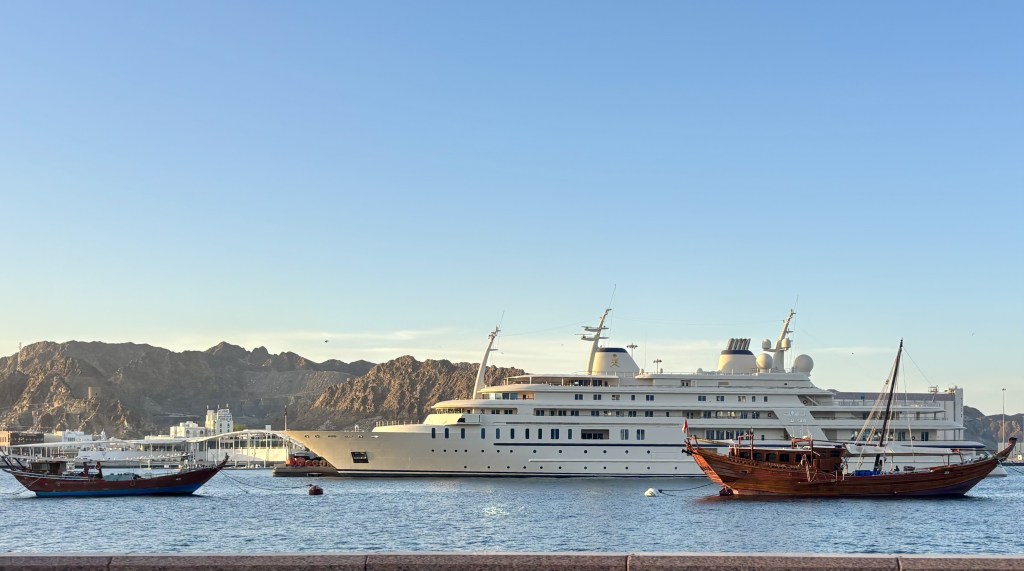
Oman ist ein Auto-Land, das wird uns schnell klar. Vieles erinnert an die USA; an Los Angeles oder Las Vegas. Draußen die heiße Wüste, ewig viel Platz und riesige Parkplätze, dahinter Shopping-Malls, Hotels oder Hafenanlagen. Wir passieren einen Kreuzfahrt-Riesen und die Yacht des Sultans, die Al Said. Nummer 7 in der Welt der Mega-Yachten, mit 155 Meter Länge, ein Prachtexemplar der Lürssen-Werft aus Bremen.
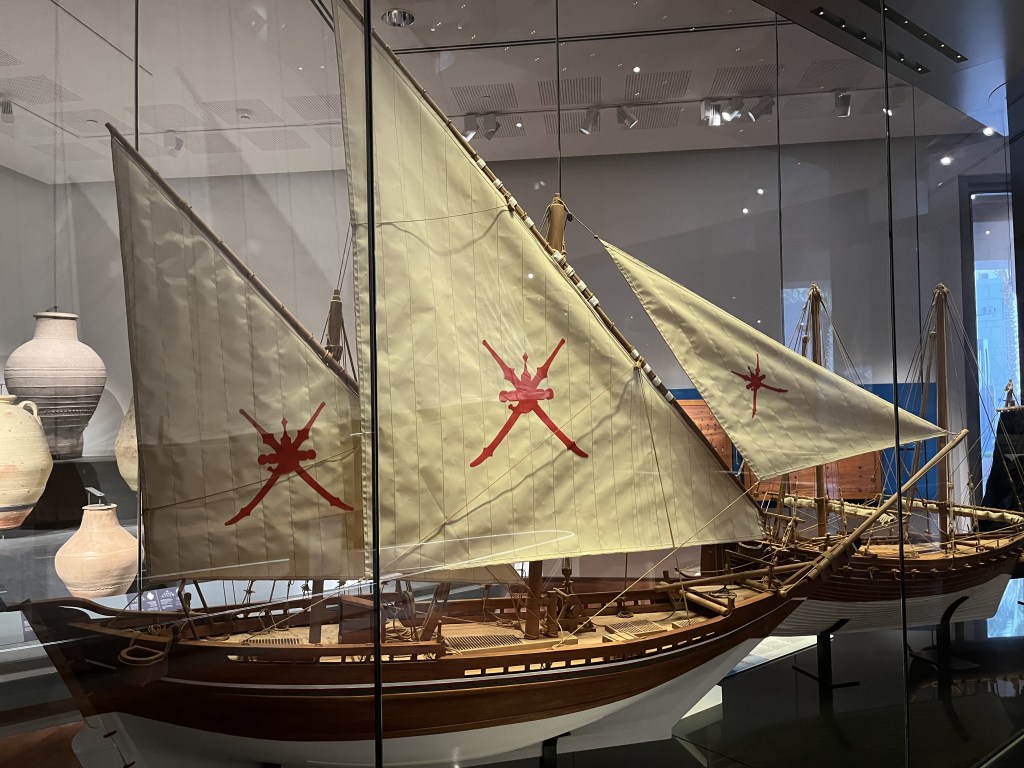
Im National Museum sehen wir – Schiffe spielen eine zentrale Rolle in der Geschichte des Omans. Als Zwischenstop auf dem Weg nach Indien war der Oman eine wichtige Anlaufstation, und über die Jahrhunderte waren Schiffe aus aller Welt hier mit Gütern aus China, Indien, Afrika und Europa unterwegs.
Das Museum beeindruckt die Kinder mit einem eigenen Kinosaal, in dem die ersten menschlichen Funde 2 Millionen Jahren zurücklagen, mit einem Faustkeil des Australopithecus, der damals von Afrika sich nach Europa und Asien ausbreitete.
Die größte Veränderung fand durch kriegerische Araber aus dem Süden statt, als sich die Botschaft des Propheten verbreitete. Mohammed (Friede sei mit ihm) lobte die Stämme des Oman, sie hätten den neuen Glauben ohne Kampf und mit viel Verständnis angenommen.
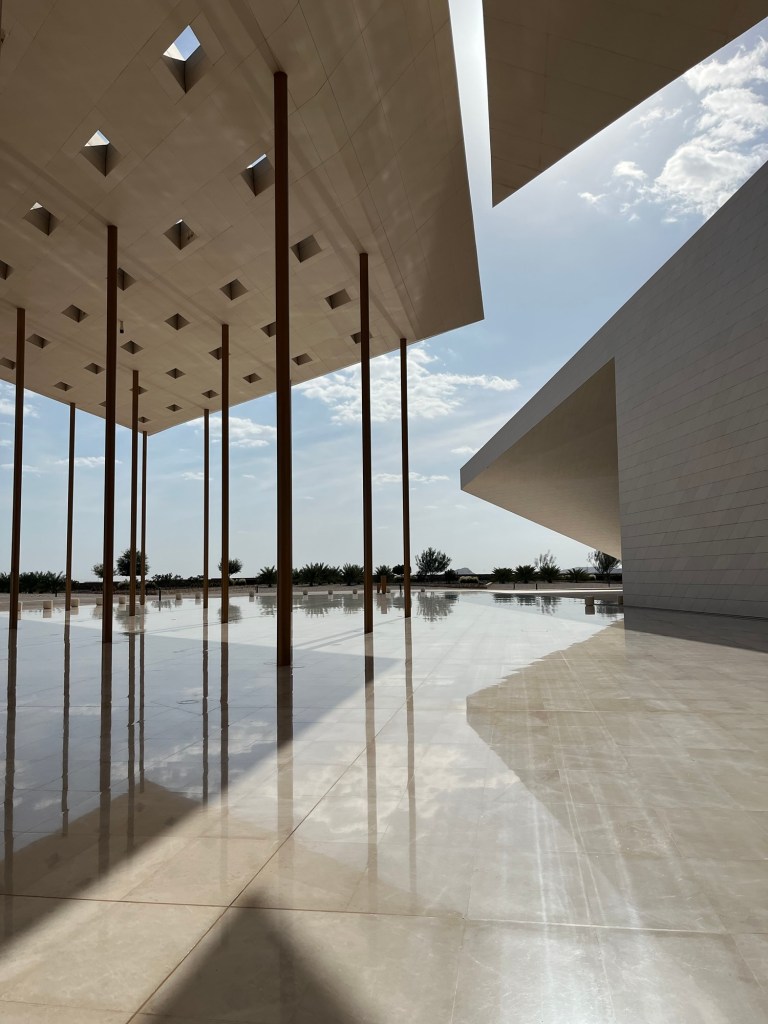
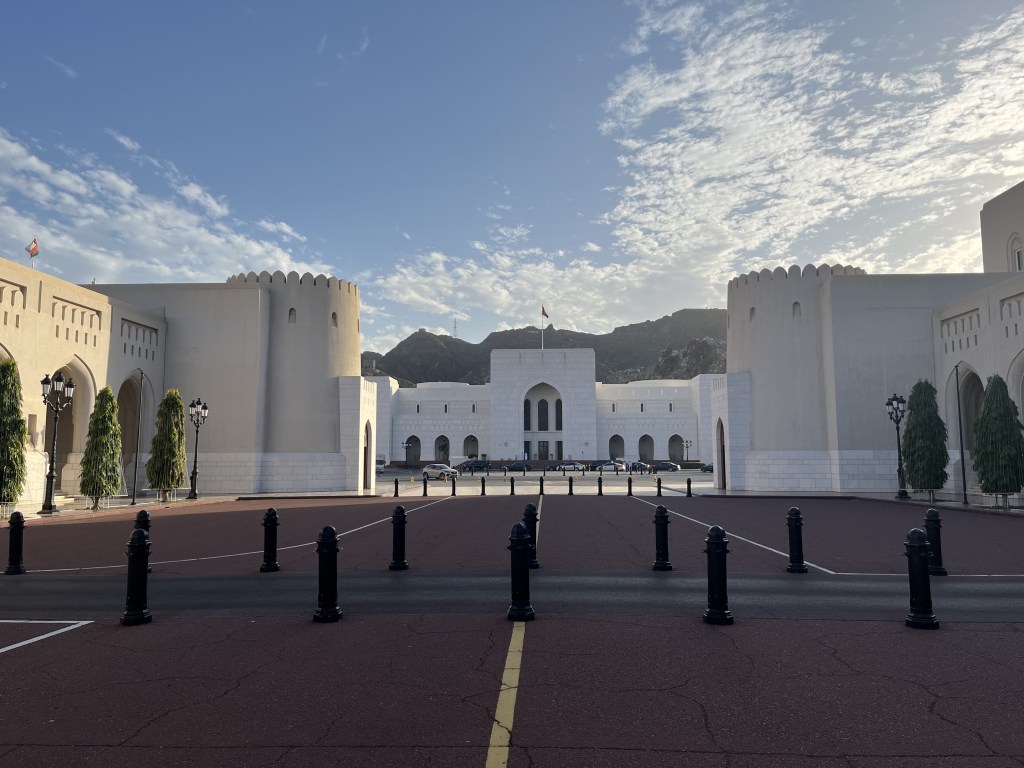
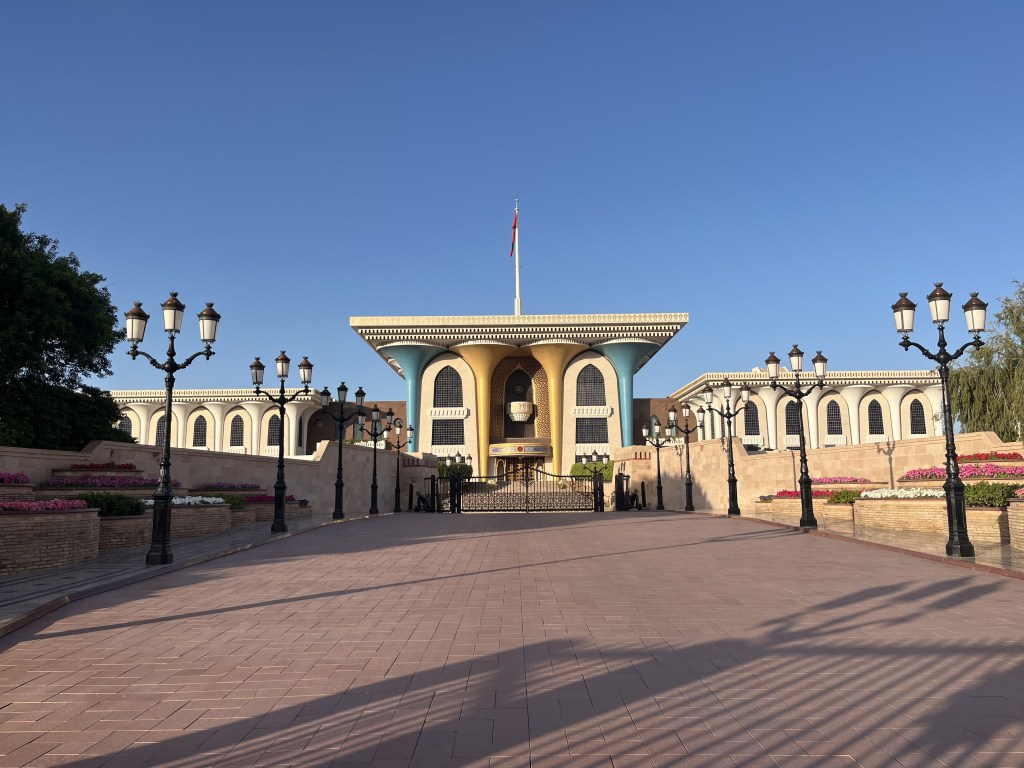
Doch alles anders wurde 1970. Die ersten Ölvorkommen wurden entdeckt, und die folgen dieses Booms kann man besonders deutlich rund um das Nationalmuseum beobachten. Teilweise sieht die Architektur aus wie bei Star Wars, auf einem fremden Planeten. Alles glänzt und scheint und sieht nagelneu aus, unwirklich groß und repräsentativ, so dass die wenigen Touristen darin völlig untergehen.
Den Kindern gefällt es, vor allem das Kino und dass es eine Malecke gibt, wo man Krummdolche und andere Waffen zeichnen kann. Das Museum ist eindrucksvoll und imposant gebaut, bis 25 Jahre ist der Eintritt frei und man hat viel Platz – bis eine Diplomaten-Mission mit 10 Mercedes S-Klasse ankommen und durch die Hallen geführt werden. Dann und wann haben die Kinder Erschöpfungszustände, die mit Keksen und Cola bekämpft werden.
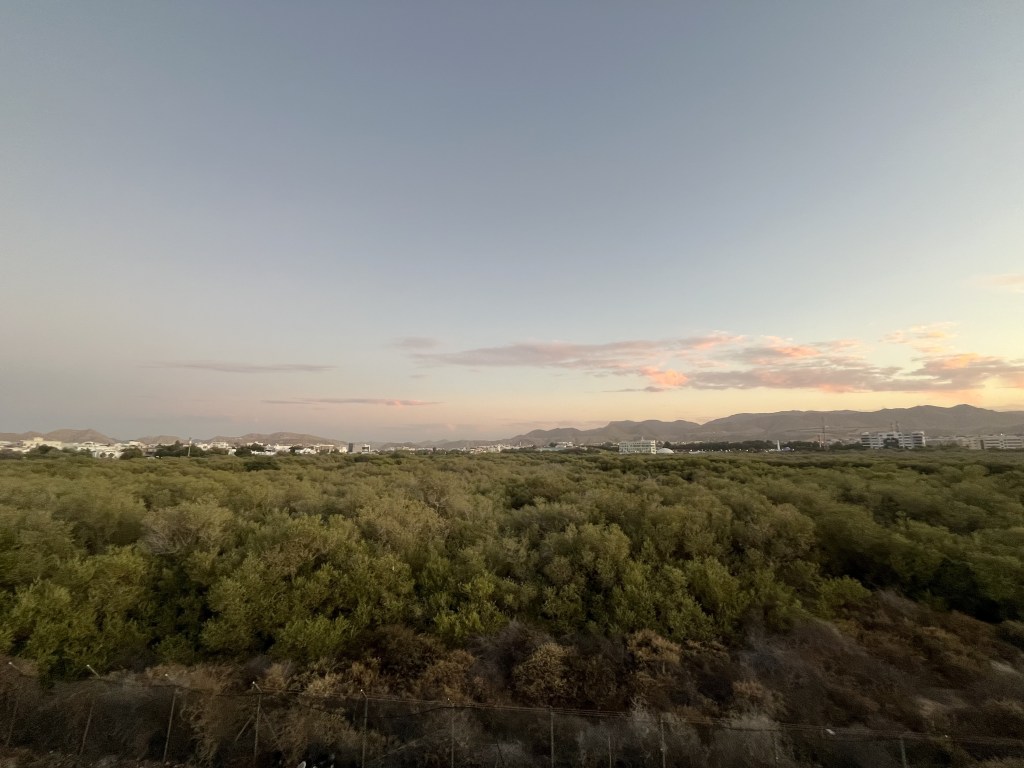
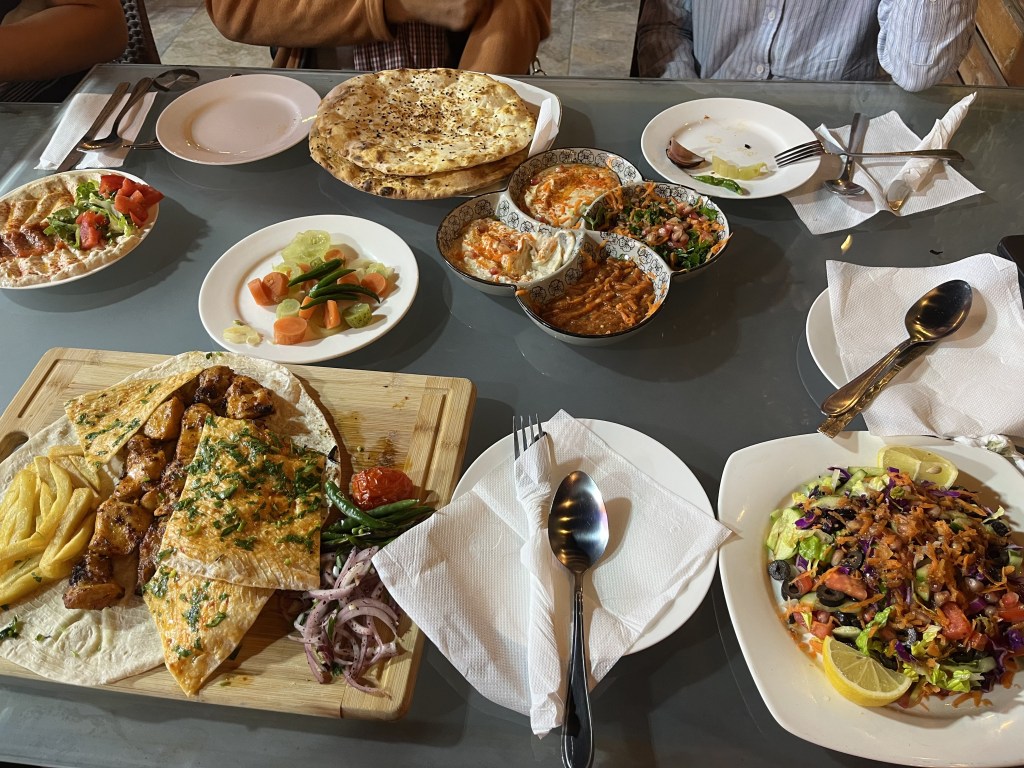
Auf der Fahrt zurück an der Küste überrascht uns eine grüne Sumpflandschaft, die einen starken Kontrast zu den felsigen Bergen des Hintergrunds bildet. Dort wollen wir morgen hinfahren. Und um die Badesachen auszupacken ist es schon zu spät, so begnügen wir uns mit einem Spaziergang zum Sonnenuntergang. Als wir eine Street-Food-Ecke bei Google Maps ausfindig gemacht haben, stellen wir fest, dass dies eher amerikanische Größenordnungen mit Parkplätzen und Restaurants sind, die Essen aus allen Ländern kredenzen – wir sind bei einem türkischen Restaurant gelandet und erstaunt, was wir für 40 Euro zu siebt alles geboten bekommen, von den frisch gepressten Fruchtsäften in XL über die Salate, Vorspeisen und Grillgerichte. Alle sind begeistert, es ist günstiger und mindestens so lecker wie in Istanbul.
Morgen geht es in die Berge, zur zweigrößten Stadt des Landes nach Nizwa und in ein Gebirgstal. Wir sind gespannt.
The palace of the sultan
Day 6 – On our morning walk to the beach, we realised: it’s going to stay this warm for the next 4 months. And the sun will probably be shining most of the time. We have to get up early, as the sun rises around 6 a.m. and sets at the same time in the evening. When the alarm clock rings at 7.45, it still feels very early, even though it is already bright outside.
After our morning sports programme, we have breakfast. Tara reads out the five basic rules of Islam. And then comes school, mathematics. We try to introduce new routines. Around 1 p.m., we have leftovers from yesterday’s meal and a salad, which we prepare in our small kitchen in the flat, before heading off to the National Museum of Oman. We are amazed that it is 20 kilometres away and I get lost several times in the labyrinth of motorways.
We quickly realise that Oman is a car country. Much reminds us of the USA; of Los Angeles or Las Vegas. Outside, the hot desert, endless space and huge car parks, with shopping malls, hotels and harbours behind them. We pass a cruise giant and the Sultan’s yacht, the Al Said. Number 7 in the world of mega yachts, at 155 metres long, a magnificent specimen from the Lürssen shipyard in Bremen.
In the National Museum we see that ships play a central role in the history of Oman. As a stopover on the way to India, Oman was an important port of call, and over the centuries ships from all over the world travelled here with goods from China, India, Africa and Europe.
The museum impresses the children with its own cinema room, where the first human finds date back 2 million years, with a hand axe from the Australopithecus, which spread from Africa to Europe and Asia at that time.
The greatest change was brought about by warlike Arabs from the south, when the message of the Prophet spread. Muhammad (peace be upon him) praised the tribes of Oman for accepting the new faith without fighting and with much understanding.
But everything changed in 1970, when the first oil reserves were discovered and the consequences of this boom can be seen particularly clearly around the National Museum. Some of the architecture looks like something out of Star Wars, on an alien planet. Everything is shiny and shiny and looks brand new, unreal in size and prestigious, so that the few tourists are completely lost in it.
The children like it, especially the cinema and the fact that there is a drawing corner where you can draw scimitars and other weapons. The museum is impressive and imposingly built, admission is free up to the age of 25 and there is plenty of space – until a diplomatic mission arrives with 10 Mercedes S-Class cars and is guided through the halls. Every now and then the children are exhausted, which is combated with biscuits and cola.
As we drive back along the coast, we are surprised by a green marshland landscape that forms a stark contrast to the rocky mountains in the background. We want to go there tomorrow. And it’s already too late to unpack our swimming gear, so we make do with a walk to watch the sunset. When we find a street food corner on Google Maps, we realise that these are more American-sized places with car parks and restaurants serving food from all over the world – we end up at a Turkish restaurant and are amazed at what the seven of us can get for 40 euros, from the freshly squeezed XL fruit juices to the salads, starters and grilled dishes. Everyone is delighted, it’s cheaper and at least as tasty as in Istanbul.
Tomorrow we are travelling to the mountains, to Nizwa, the second largest city in the country, and to a mountain valley. We are excited.
Tag 5 Es ist zwei Uhr morgens auf meiner Uhr, als der Airbus A321 zur Landung ansetzt. Aus dem Fenster sah man schon lange zuvor gelbe Lichter, in Straßen und Siedlungen aufgereiht. Ich bin nicht ganz unfroh, denn unsere Reihe 39 hatte wie die klassischen Billigflieger feste Rückenlehnen, und so richtig gelungen ist mir das Schlafen nicht. Anders als Tara, die sich über den leeren Platz neben ihr ausgestreckt hat und mit dem Kopf auf meinem Schoß schlief. Kurz nach 3 Uhr Ortszeit dann die super sanfte Landung. Morpheus war noch schwindelig, während Tara sich mit Nadine schon munter sich auf den Weg zur Gepäckausgabe machte und strahlend mit meinem roten Koffer ankam.
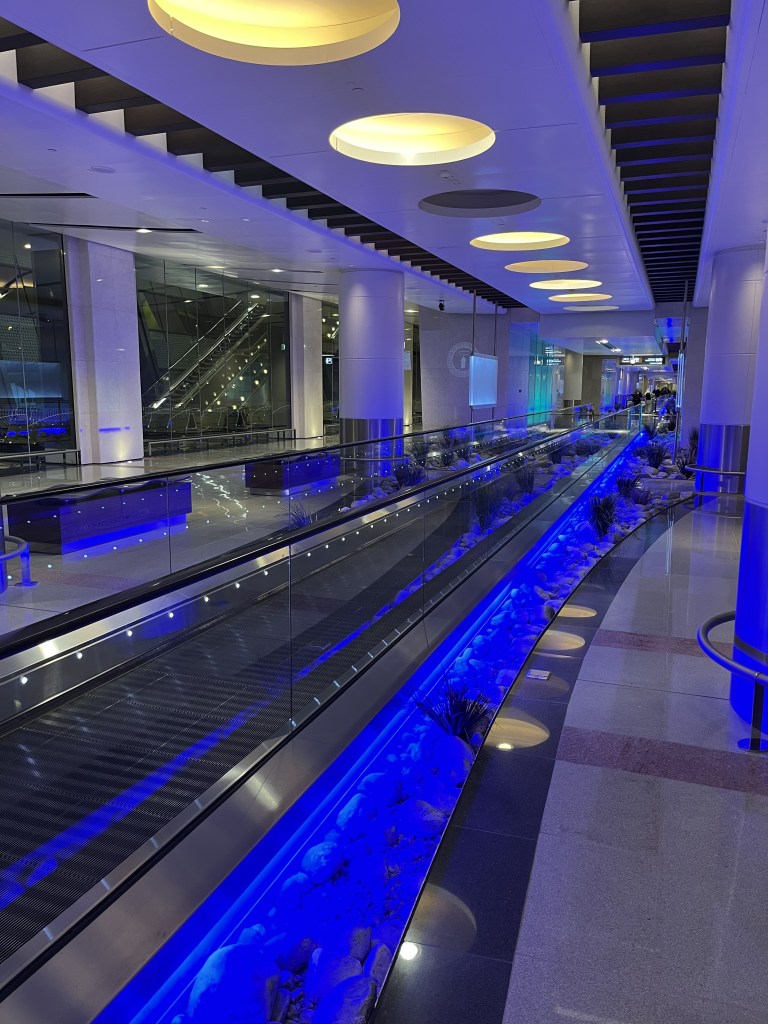
Der Flughafen gefiel beiden, hochmodern, sehr elegant. Die verschleierte junge Grenzbeamtin war sehr freundlich und verzichtete darauf, bei uns die Fingerabdrücke abzunehmen, anders als bei Andreas und seinen Kindern. Wir kauften uns Telefonkarten von einem netten Inder, der für die staatliche Telefongesellschaft arbeitete. Den Mietwagen hatten wir erst um 6 bestellt, also gab es noch etwas Wartezeit in der entspannten Stille des frühen Morgens. Ich teilte mir ausnahmsweise einen halben Cappuccino mit Nadine, der außerordentlich lecker schmeckte. Koffein wirkt eben doch Wunder, besonders wenn man es nicht mehr gewohnt ist. Morpheus ging es nach einer Cola auch schon viel besser.
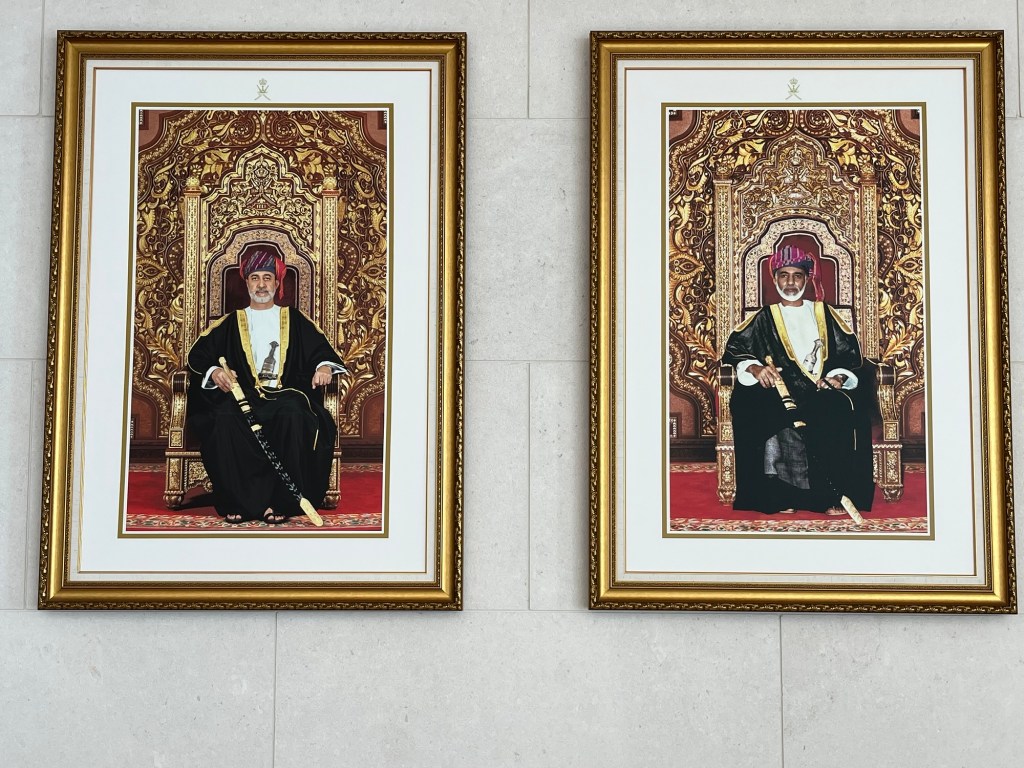
Auf dem Tisch lag ein Hochglanz-Bildband zum 47. Jahrestag der Nation 2017. Auf schätzungsweise 100 Seiten wurde die Weisheit und Güte von Sultan Quabus gelobt, immer mit weißem Bart, gütigem Lächeln und einem Schwert abgebildet. Der 2020 verstorbene Herrscher war schließlich 50 Jahre für die Geschicke des Landes verantwortlich, das in dieser Zeit von einer der ärmsten Länder der Welt zu einem wohlhabenden Land aufstieg, dem Erdöl sei dank.
Ich war noch nie in einem der Golf-Staaten, und Tara meinte zurecht: „Ich dachte das wäre wie Jordanien oder Marokko. Das ist aber wie Spanien!“
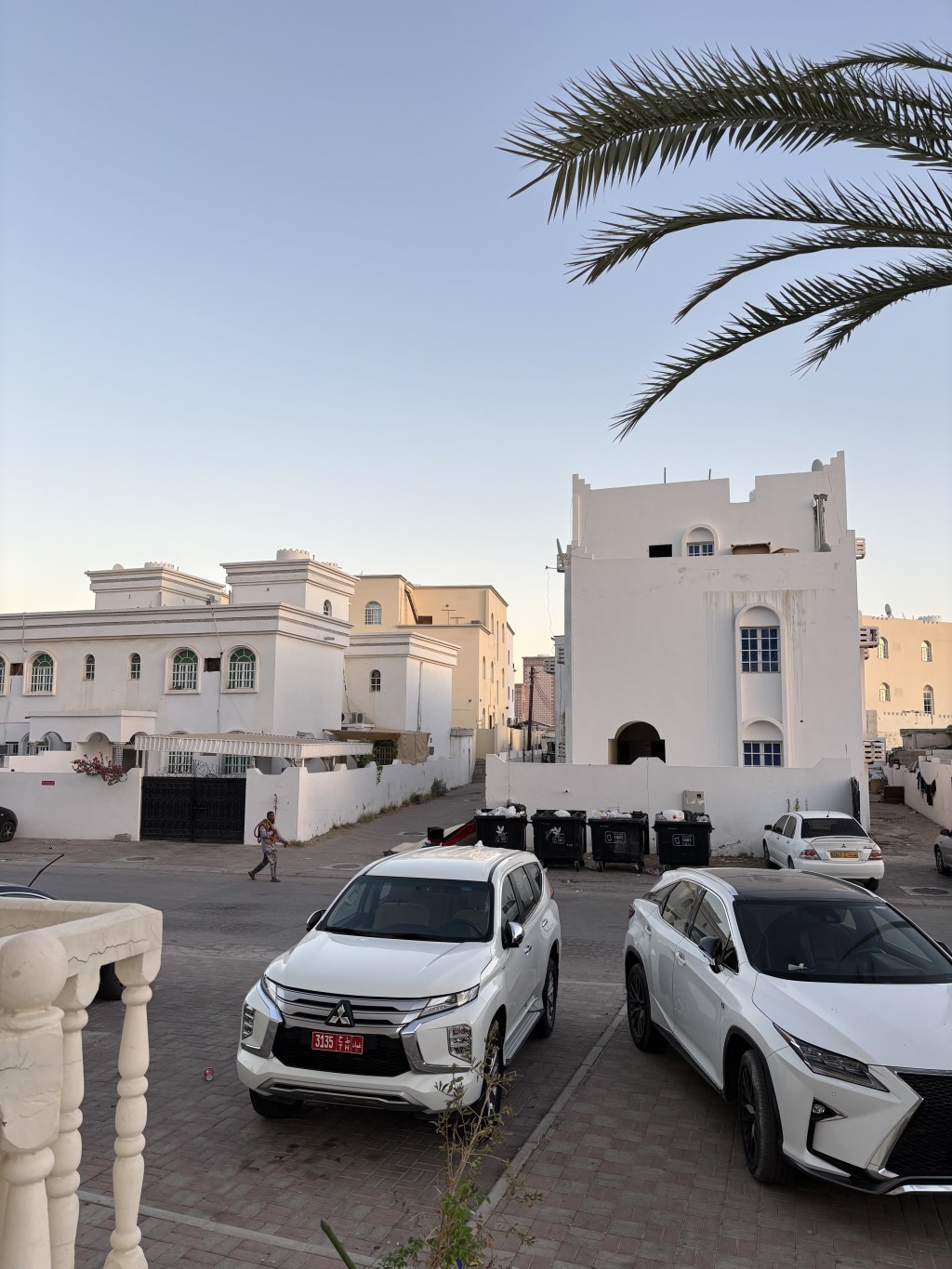
Im Sonnenaufgang fuhren wir mit einem standesgemäßen SUV der Größe eines Kleinbusses über gut ausgebaute Schnellstraßen entlang an Prachtbauten wie der Moschee zu unserm Hotel. Wie am Flughafen das vertraute Englisch und Kopfnicken der Inder zum Empfang, alle superfreundlich.
Bei der Währung muss man sich umstellen. 1 OmanRial (OMR) entspricht 2.45 Euro. So viel kostete aber auch das Frühstück bei uns im Hotel, nach einem kurzen Power-Nap trafen sich dort wieder alle. Danach schliefen alle für zwei Stunden. Danach war das helle Licht draußen noch beeindruckender.
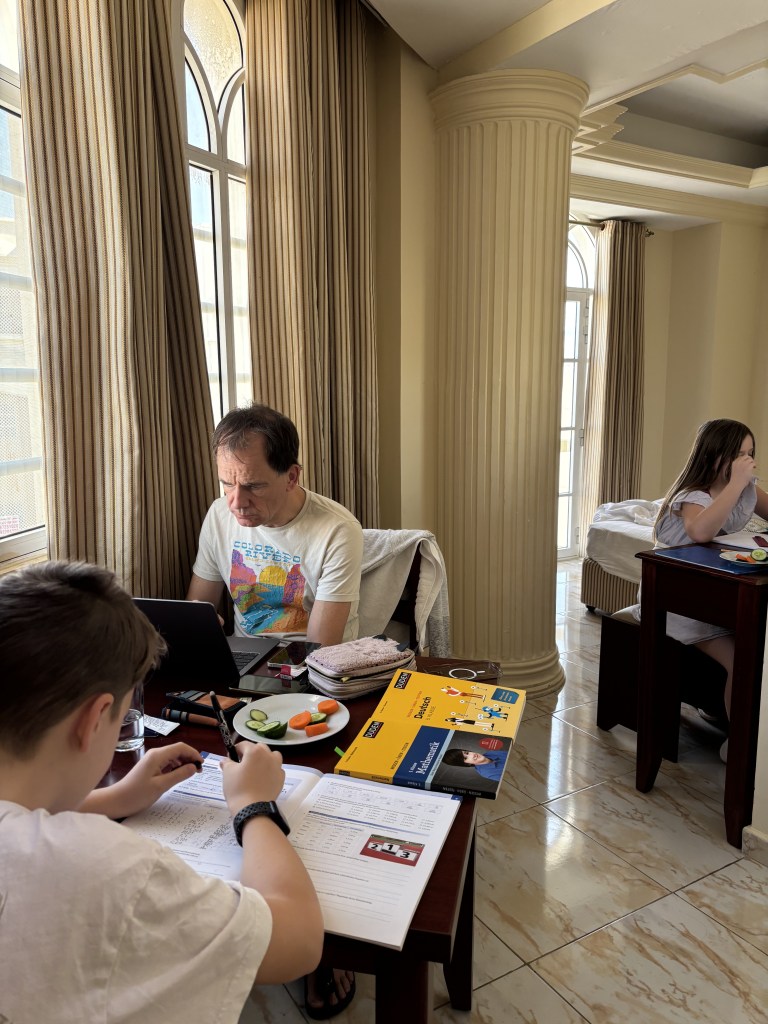
Aber wir sind ja nicht zum Spaß hier. Deshalb begann danach die Weltreiseschule. Morpheus suchte sich das Matheübungsbuch heraus, Tara erstellte sich einen Ländervergleich von Oman, Türkei und Indien und lachte laut auf, als sie bei der Einwohnerzahl von Indien war. Ich holte auch den Rechner heraus. Um 14:00 Uhr waren wir alle wie besprochen aufbruchsbereit zum Strandausflug.
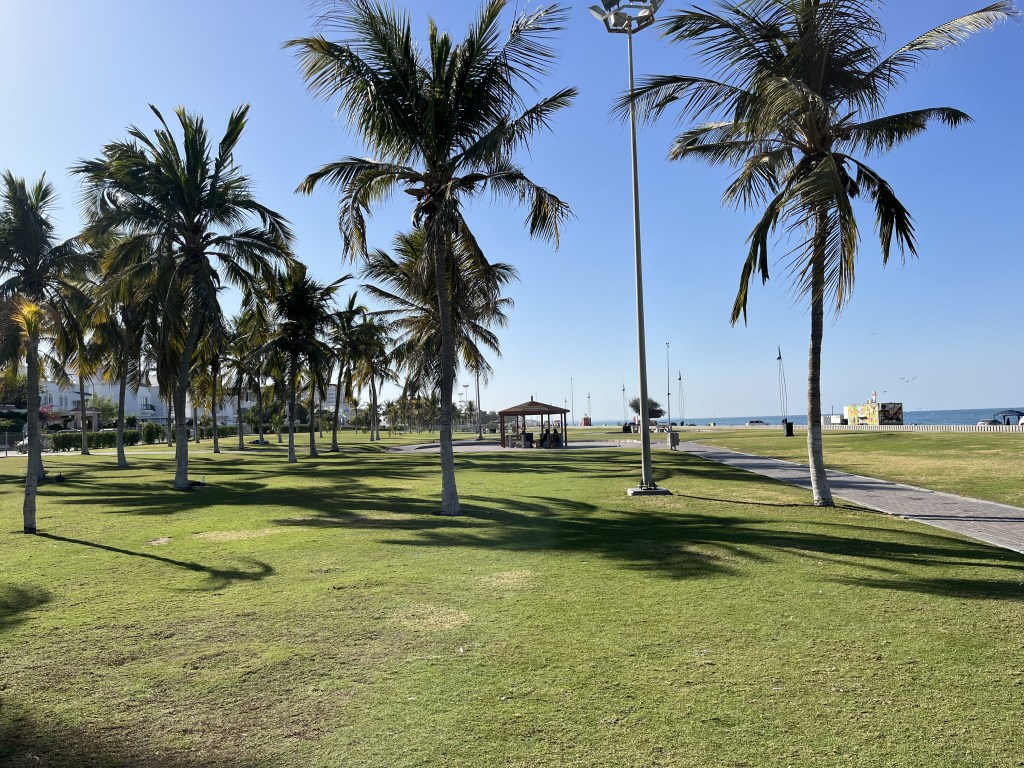
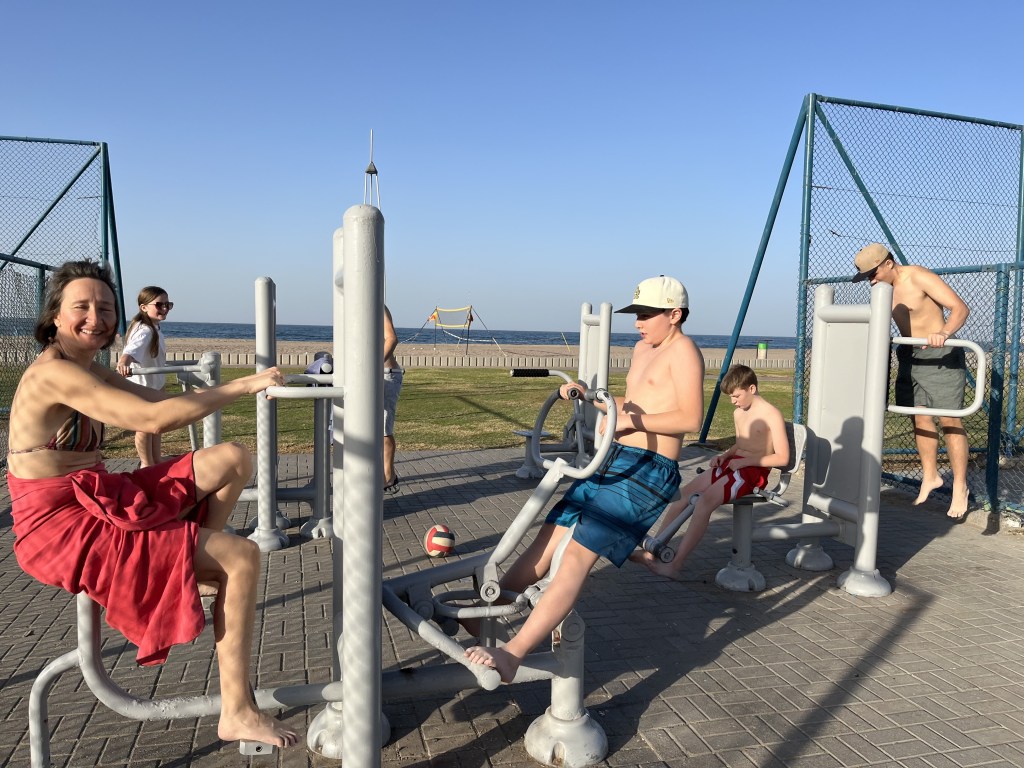
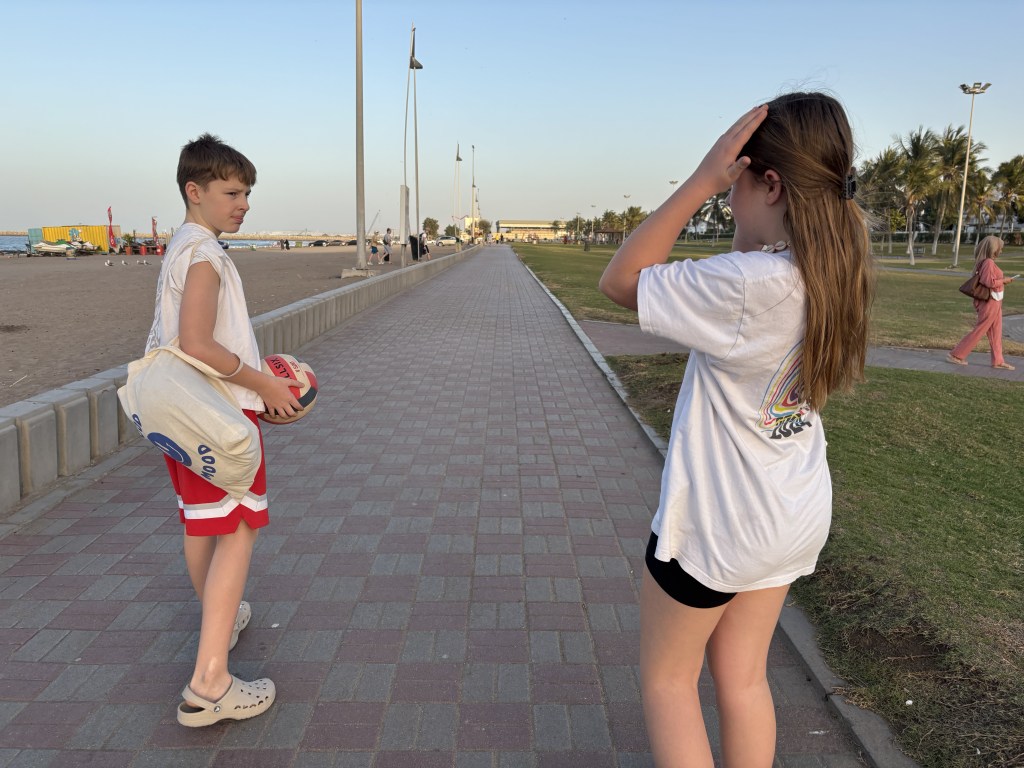
Im Oman fährt man mit dem Auto an den Strand, das haben wir gleich verstanden. Wir parkten dennoch brav auf dem Parkplatz, staunten über die hochmoderne Toilette und die Parkanlage mit Fitnessbereich, Fußballfeld und Beachvolleyball, alles frei zugänglich und fast menschenleer.
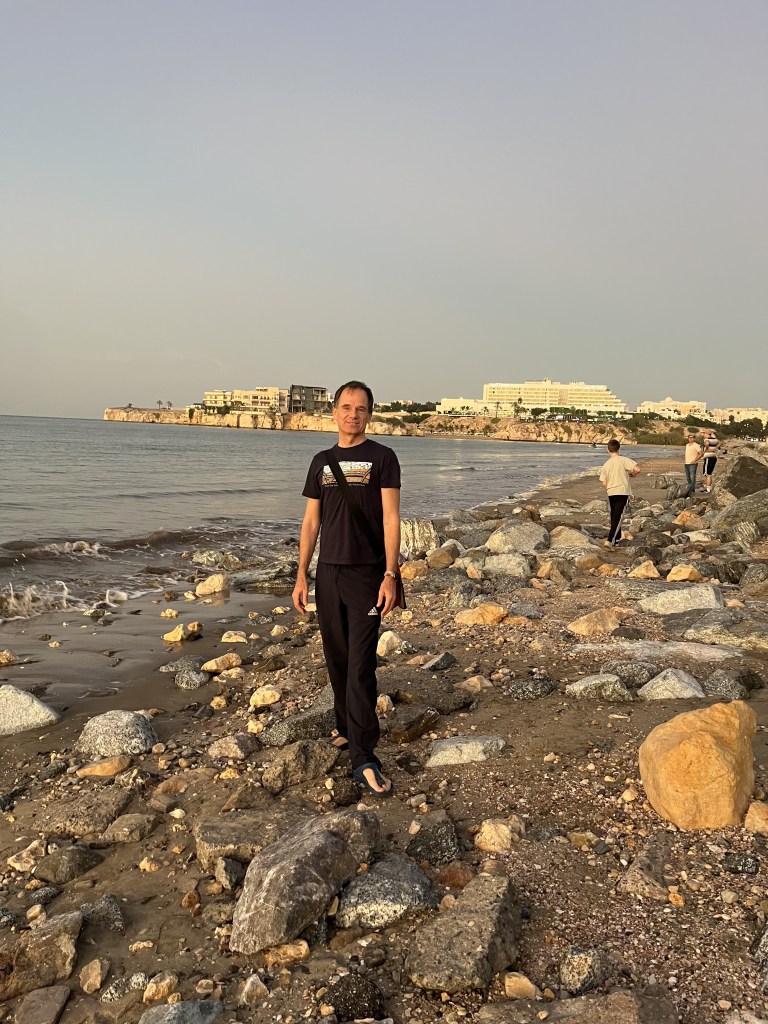
Tara war gleich im Meer, aber an der falschen Stelle – scharfkantige Felsen verursachten erste Kratzer am Fuß. Hier also nicht ins Wasser. Wir liefen 500 Meter weiter und fanden eine besser Stelle mit mehr Kies und Sand.
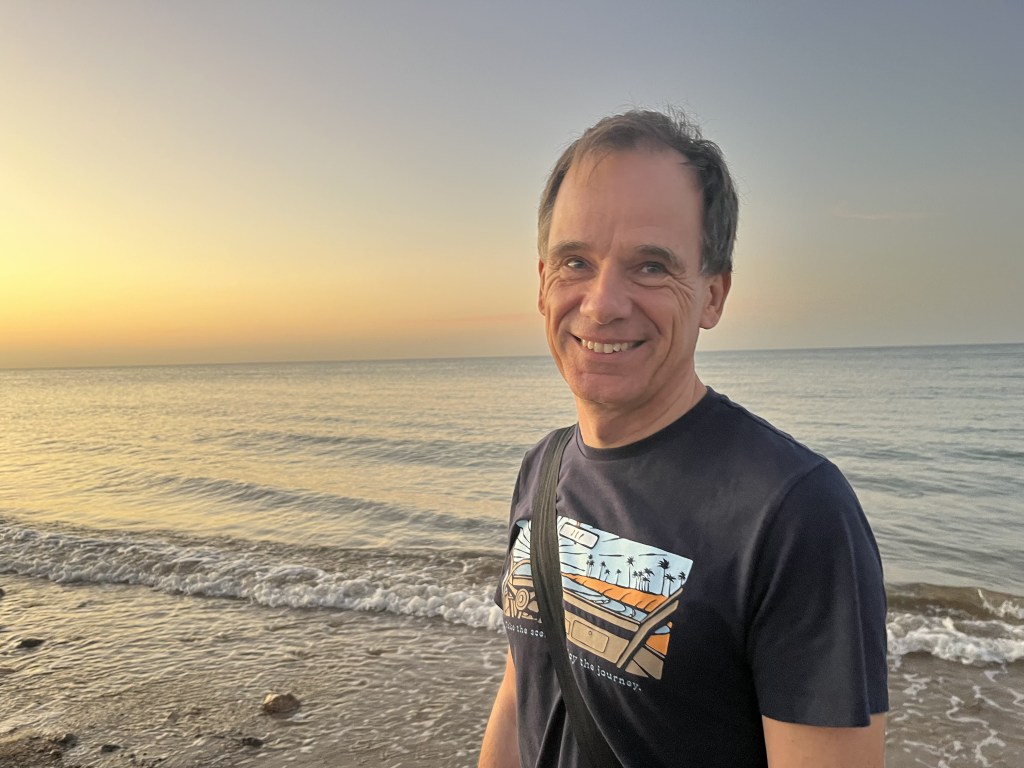
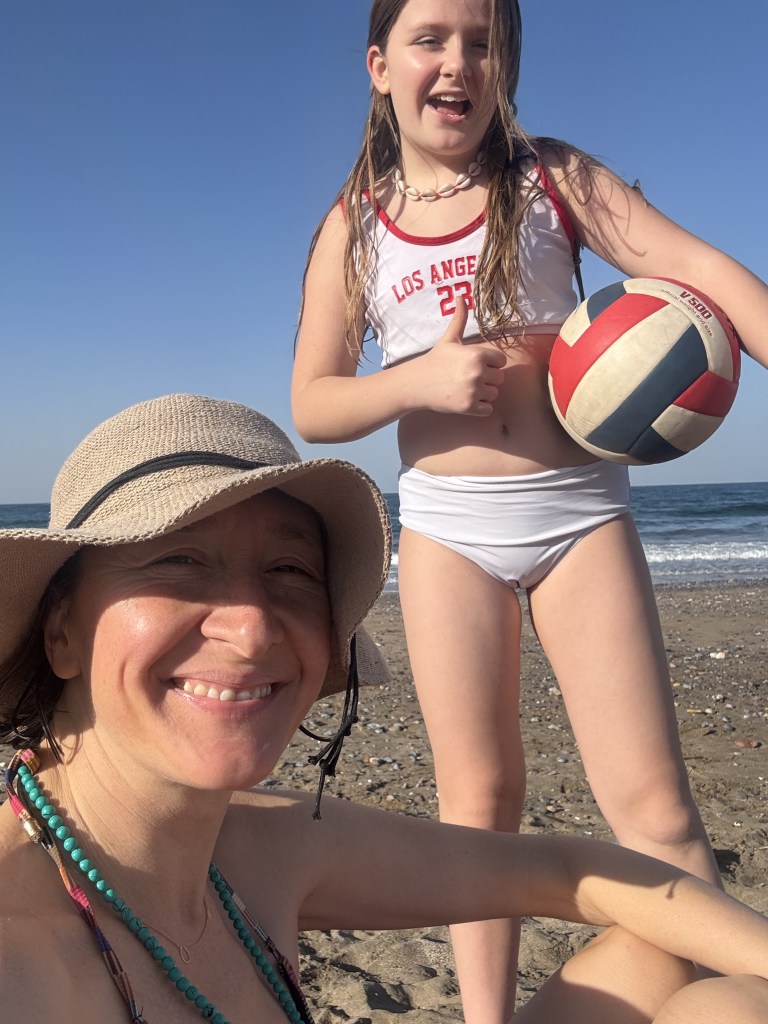
Wann war ich zuletzt bei 25 Grad Wassertemperatur im Meer? Das muss zuletzt auf der Weltreise vor 7 Jahren gewesen sein. Traumhaft. Alle waren im Wasser und strahlten.
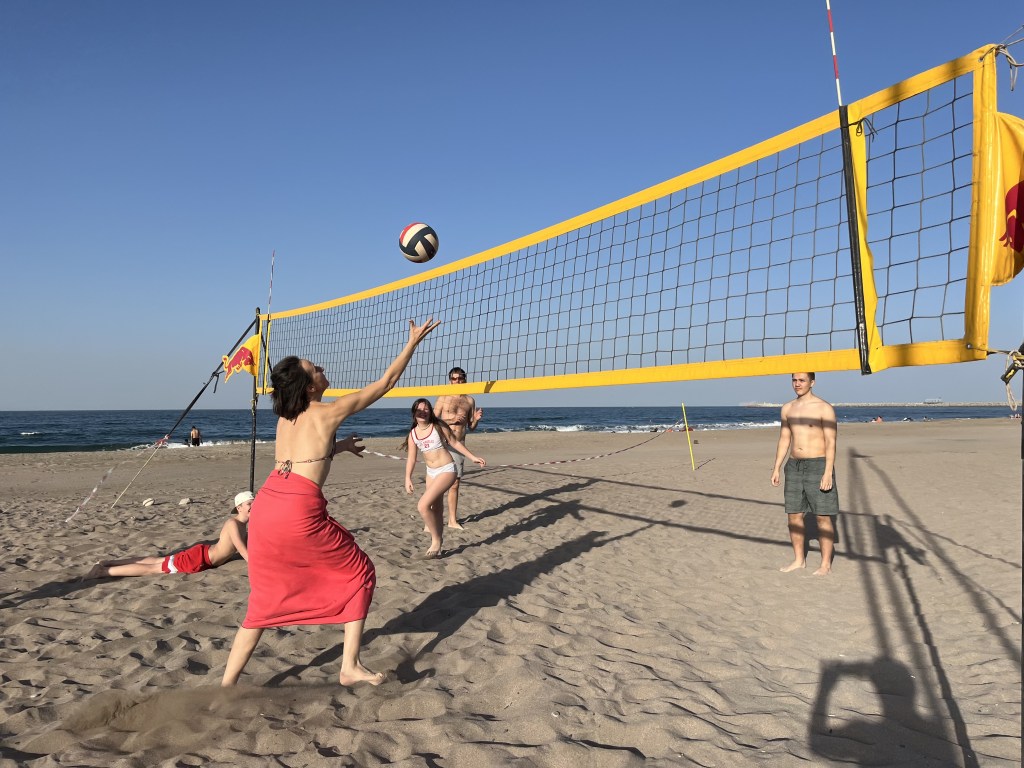
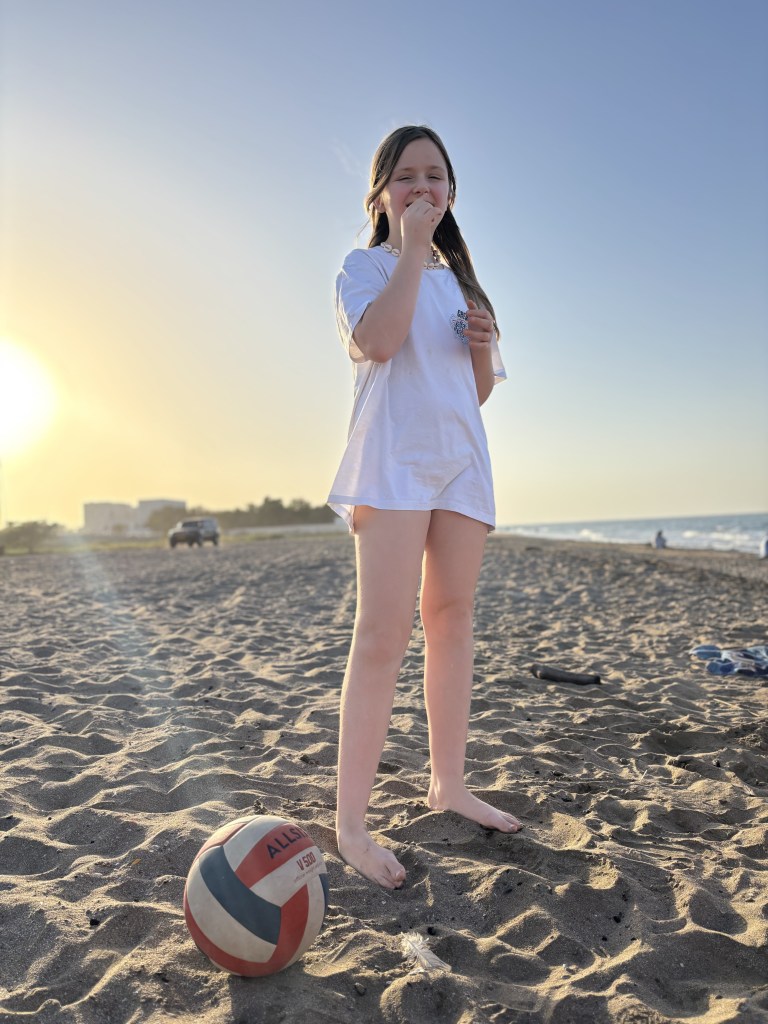
Danach das Sportprogramm: Beachvolleyball und Training an den Geräten. Wir hatten großen Spaß. Inyan begann das Geburtstagsgeschenk Zauberwürfel auszuprobieren.
Wir tranken ein aus der Türkei eingeschmuggeltes Bier heimlich zu dritt und aßen Pistazien. Entspannung. Morpheus freute sich, endlich wieder in der Natur zu sein.
Zurück ging es zum Supermarkt (schnell die Knie bedecken, jeder suchte sich ein Tuch oder eine Hose), wir fanden alles für Spaghetti mit Tomatensoße und Salat. Daheim kochen, etwas Normalität wie zuhause. Es hat allen geschmeckt. Man kann also Nachtflüge nutzen und dennoch den Tag etwas erleben – aber jetzt sind die Kinder müde ins Bett gefallen und wir bald auch.
Arrival in Oman
Day 5
It’s two o’clock in the morning on my watch as the Airbus A321 is about to land. Out of the window you could see yellow lights lined up in streets and neighbourhoods long before. I’m not entirely unhappy, because our row 39 had fixed backrests like the classic low-cost planes, and I didn’t really manage to sleep. Unlike Tara, who stretched out across the empty seat next to her and slept with her head on my lap. Shortly after 3 a.m. local time, we made a super soft landing. Morpheus was still dizzy, while Tara was already cheerfully making her way to baggage reclaim with Nadine and arrived beaming with my red suitcase.
They both liked the airport, ultra-modern and very elegant. The veiled young border official was very friendly and refrained from taking our fingerprints, unlike from Andreas and his children. We bought telephone cards from a nice Indian who worked for the state telephone company. We hadn’t ordered the hire car until 6 a.m., so there was still some waiting time in the relaxed silence of the early morning. For once, I shared half a cappuccino with Nadine, which tasted exceptionally delicious. Caffeine works wonders, especially when you’re not used to it. Morpheus felt much better after a coke.
On the table was a glossy illustrated book commemorating the nation’s 47th anniversary in 2017, with an estimated 100 pages praising the wisdom and goodness of Sultan Quabus, always depicted with a white beard, a benevolent smile and a sword. The ruler, who died in 2020, was ultimately responsible for the fate of the country for 50 years, during which time it rose from one of the poorest countries in the world to a prosperous country, thanks to oil.
I’ve never been to one of the Gulf states, and Tara rightly said: ‘I thought it was like Jordan or Morocco. But it’s like Spain!’
At sunrise, we drove to our hotel in a SUV the size of a minibus on well-developed motorways past magnificent buildings such as the mosque. As at the airport, the familiar English and nodding heads of the Indians at the reception, all super friendly.
You have to get used to the currency. 1 Oman Rial (OMR) is equivalent to 2.45 euros. But that’s also how much breakfast at our hotel cost, and after a short power nap everyone met up there again. Then everyone slept for two hours. Afterwards, the bright light outside was even more impressive.
But we are not here for fun. That’s why the world travelling school started afterwards. Morpheus picked out the maths exercise book, Tara drew up a country comparison of Oman, Turkey and India and laughed out loud when she got to the population of India. I also got out the calculator. At 2.00 p.m. we were all ready to set off for the beach excursion as discussed.
In Oman, you go to the beach by car, we realised that straight away. Nevertheless, we parked dutifully in the car park, marvelling at the ultra-modern toilets and the park with fitness area, football pitch and beach volleyball, all freely accessible and almost deserted.
Tara was in the sea straight away, but in the wrong place – sharp-edged rocks caused the first scratches on her feet. So don’t go into the water here. We walked 500 metres further and found a better spot with more gravel and sand.
How warm was the water then? When was the last time I was in the sea with a water temperature of 25 degrees? It must have been 7 years ago on our trip around the world. Fantastic. Everyone was in the water and beaming.
Then the sports programme: beach volleyball and training on the equipment. We had great fun. Inyan started to try out the birthday present of Rubik’s cubes.
The three of us secretly drank a beer smuggled in from Turkey and ate pistachios. Relaxation. Morpheus was delighted to finally be out in nature again.
Back we went to the supermarket (quickly covering our knees, everyone looked for a scarf or a pair of trousers), we found everything we needed for spaghetti with tomato sauce and salad. Cooking at home, some normality like at home. Everyone enjoyed it. So you can use night flights and still enjoy the day – but now the children have fallen into bed tired and soon we will too.








 our travel space