• Arriving in New Zealand

    Tag 117 und 118

    Bei der Landung in Neuseeland kommt die gute Nachricht- Nadine, Velis, Tara und Andreas, die ja in China am Flughafen zurück bleiben mussten, haben auch endlich die Einreisegenehmigung nach Neuseeland bekommen, die Ihnen gestern am Flughafen nicht erteilt wurde- kein Mensch weiß wieso.

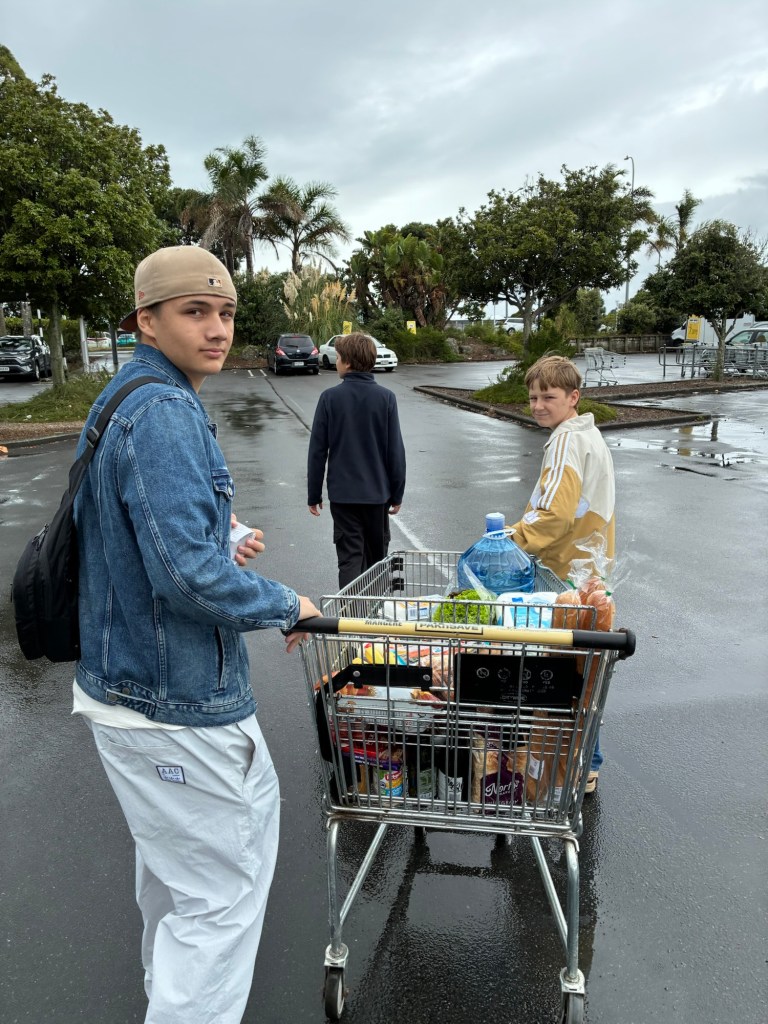
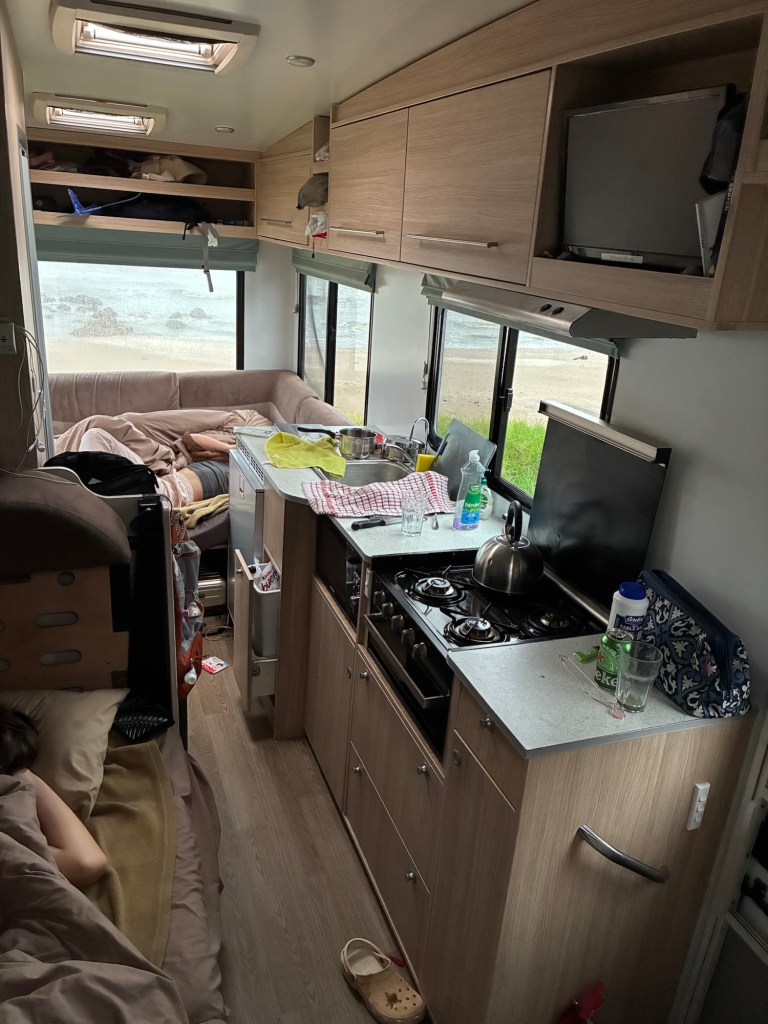
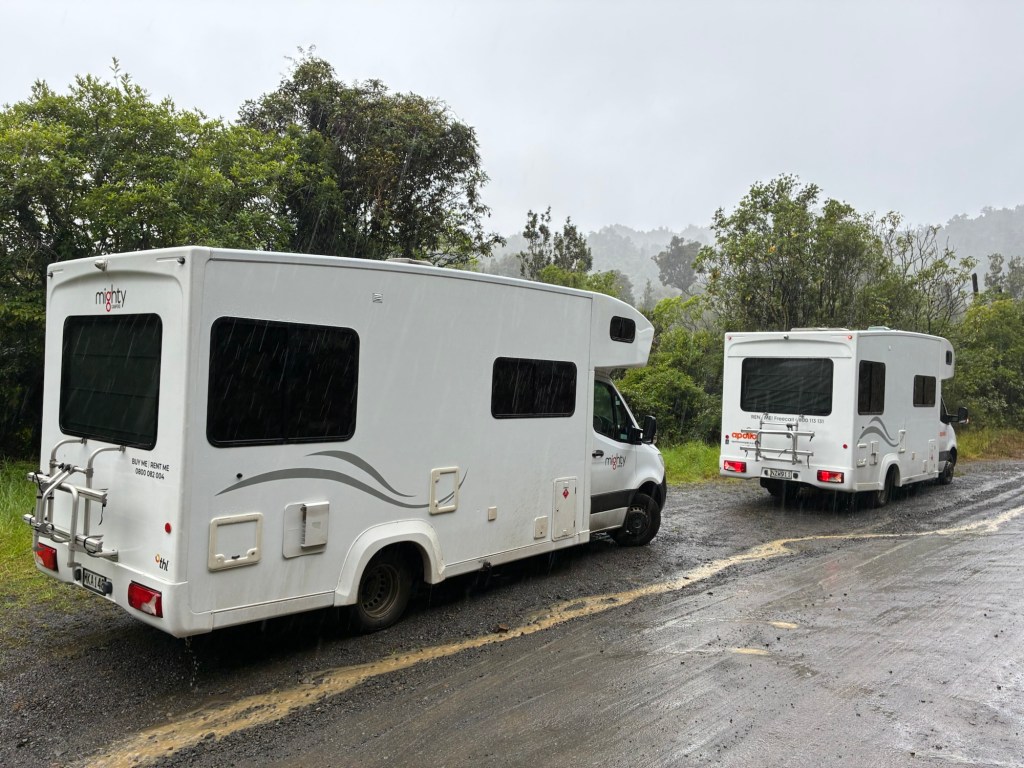
    So können sie am nächsten Tag nachkommen. Wir nutzen die Zeit schon, um nach einer Nacht im Hotel das Wohnmobil abzuholen. Morpheus, Inyan und Yuki machen super mit und checken alleine aus, Morpheus packt meinen Koffer – während ich das Wohnmobil abhole und erläutere, das Andreas erst um 16.00 lUhr landen wird- und das Büro zur gleichen Zeit schließt. Es scheint unmöglich, aber wir glauben daran. Wir kaufen im Supermarkt für eine Woche ein, laden den Kühlschrank voll, räumen die Koffer aus und beziehen die Betten. Dann gibt es Brot, Fisch und Käse im Wohnmobil auf dem Parkplatz. Wir warten dann vor dem Verleih- es heißt die Maschine hat Verspätung und die Hoffnung sinkt. 

    Aber ich stehe demonstrativ mit dem Mobil am Eingang, und als es 16.00 Uhr ist fragt man mich ob ich Hilfe brauche. Ich sage- mein Freund ist gelandet- Andreas hatte gerade angerufen. 

    Es wird knapp, alle Mitarbeiter bereiten den Feierabend vor, die Tür wird geschlossen.  Andreas hat einen Uber bestellt, die anderen warten am Flughafen. 

    Im allerletzten Moment wird ihm kurz nach 16.30 Uhr noch mal aufgemacht, und er bekommt auf die Schnelle ein Fahrzeug- wie sich herausgestellt leider mit leerer Batterie und ohne Wasser.

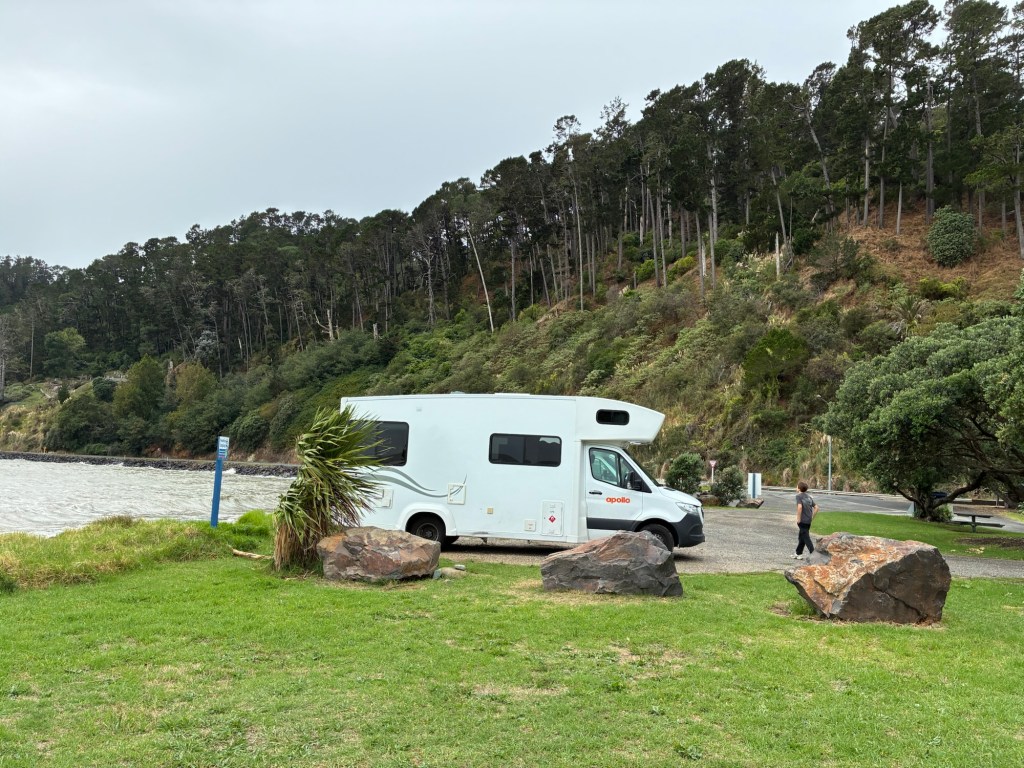
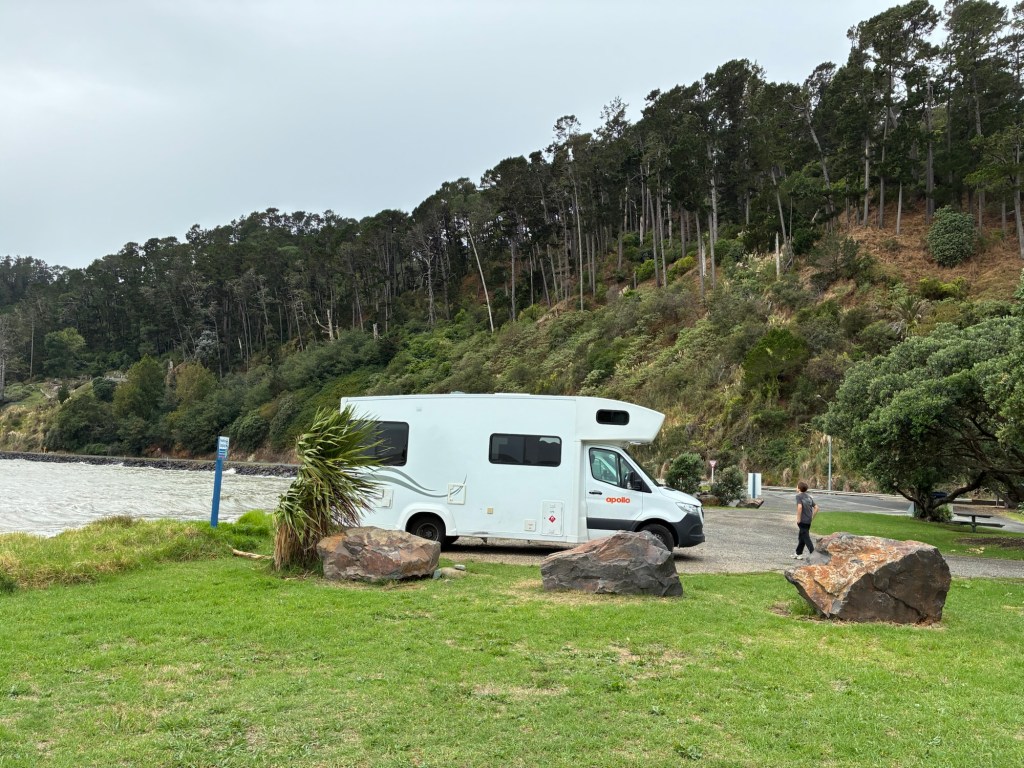
    Aber die Freude ist groß! Wir haben es geschafft! Ich kann Nadine und die Kinder am Flughafen holen, und zusammen geht es noch mal zum Markt, und in der Dunkelheit noch los zur Coromandel Halbinsel auf einen Free Parking Place am Meer, wo wir  gegen 20.00 Uhr noch die letzten beiden Plätze finden.

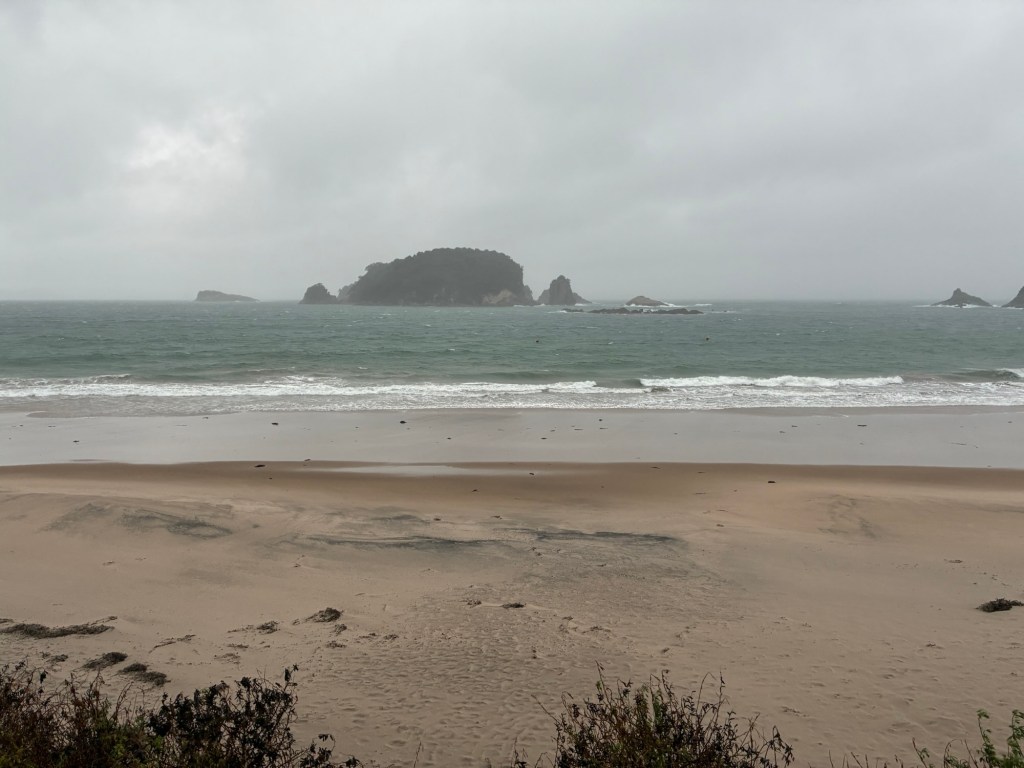
    Es regnet die ganze Zeit und es stürmt, der schwerste Sturm des Jahres auf der Südinsel.

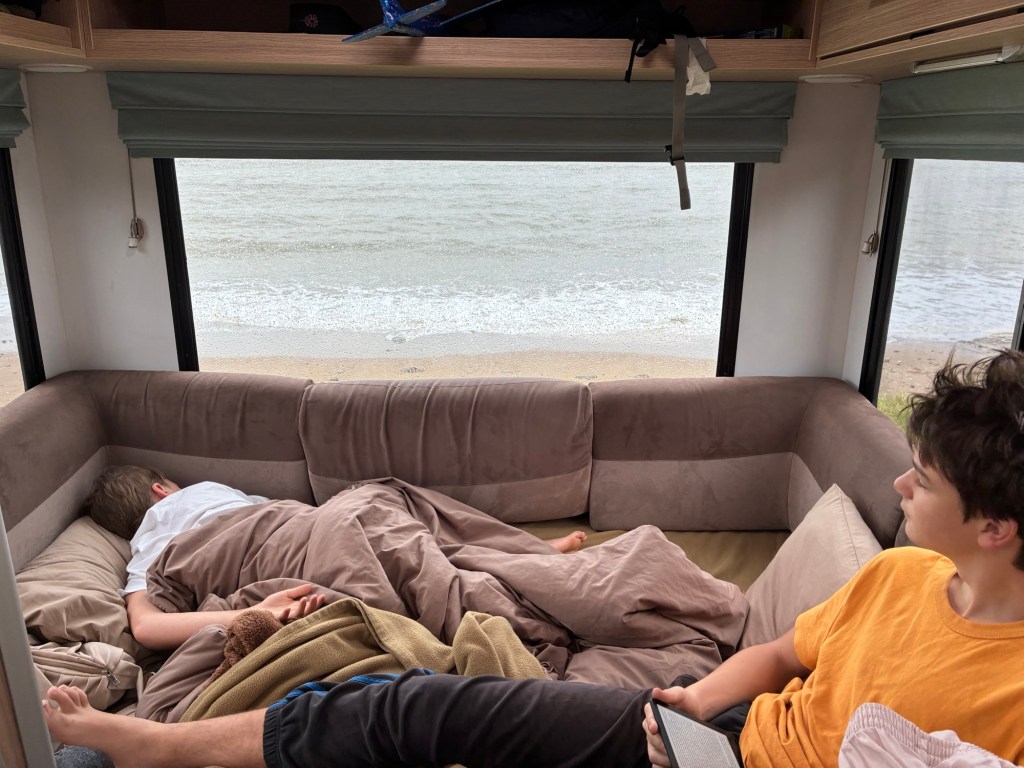
    Wir  sind erschöpft, aber glücklich am Meer, und das prasseln des Regens hat etwas Gemüliches.

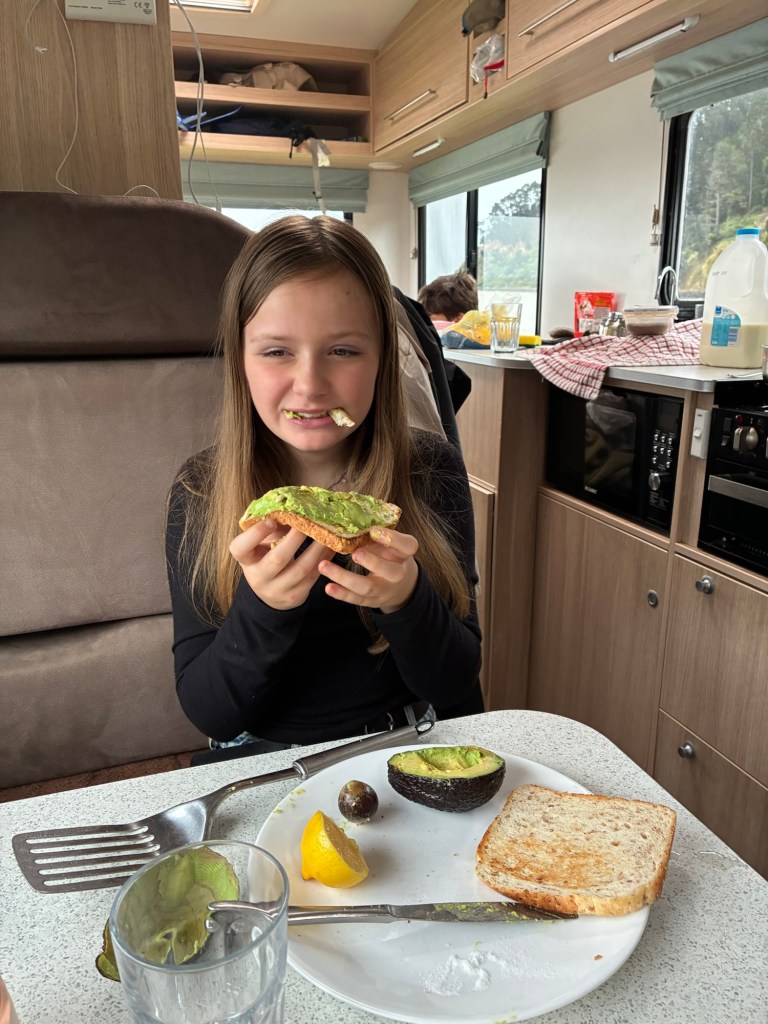
    Die Kinder freuen sich über Baguette und Avocado, Käse und Butter. 

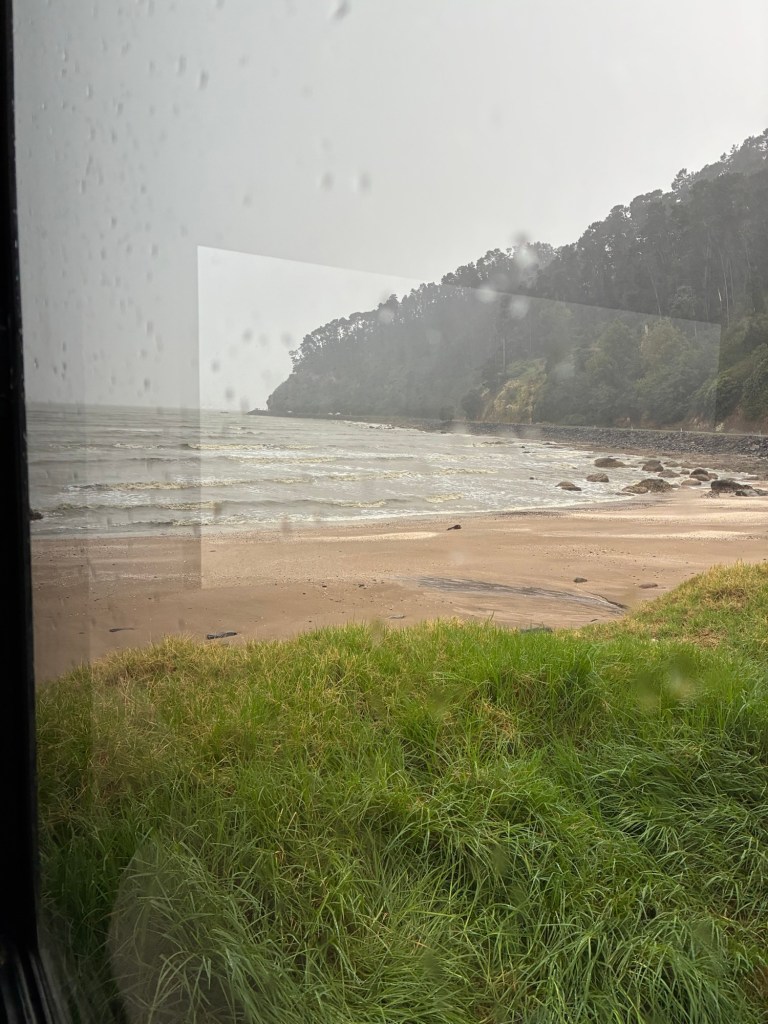
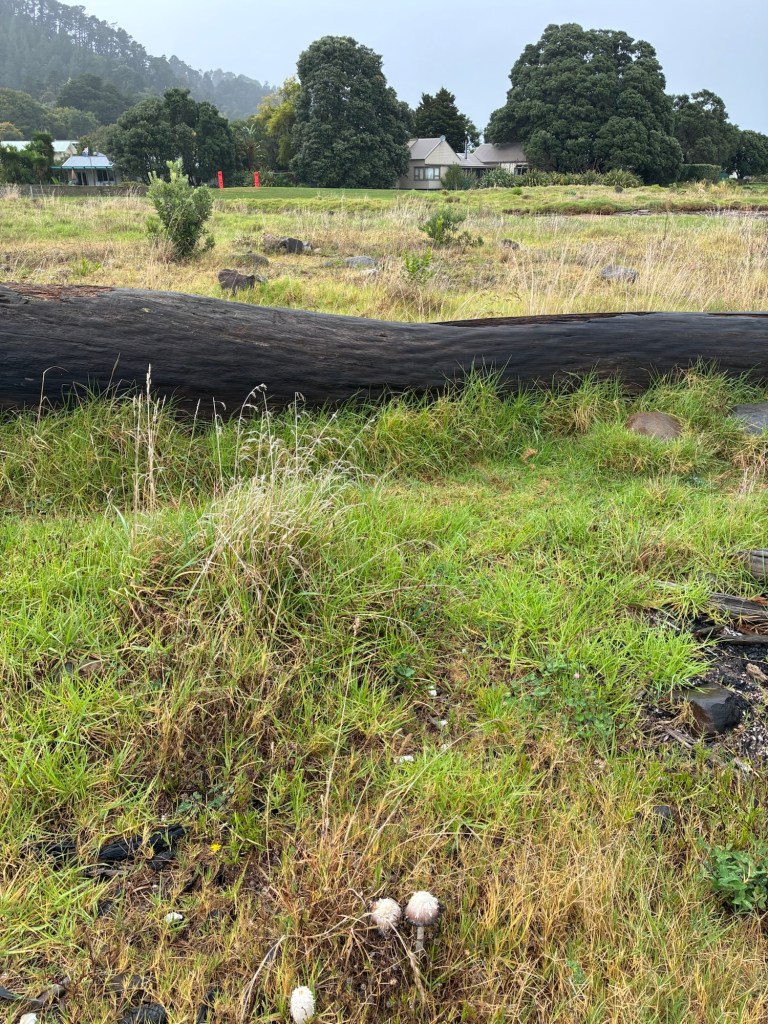
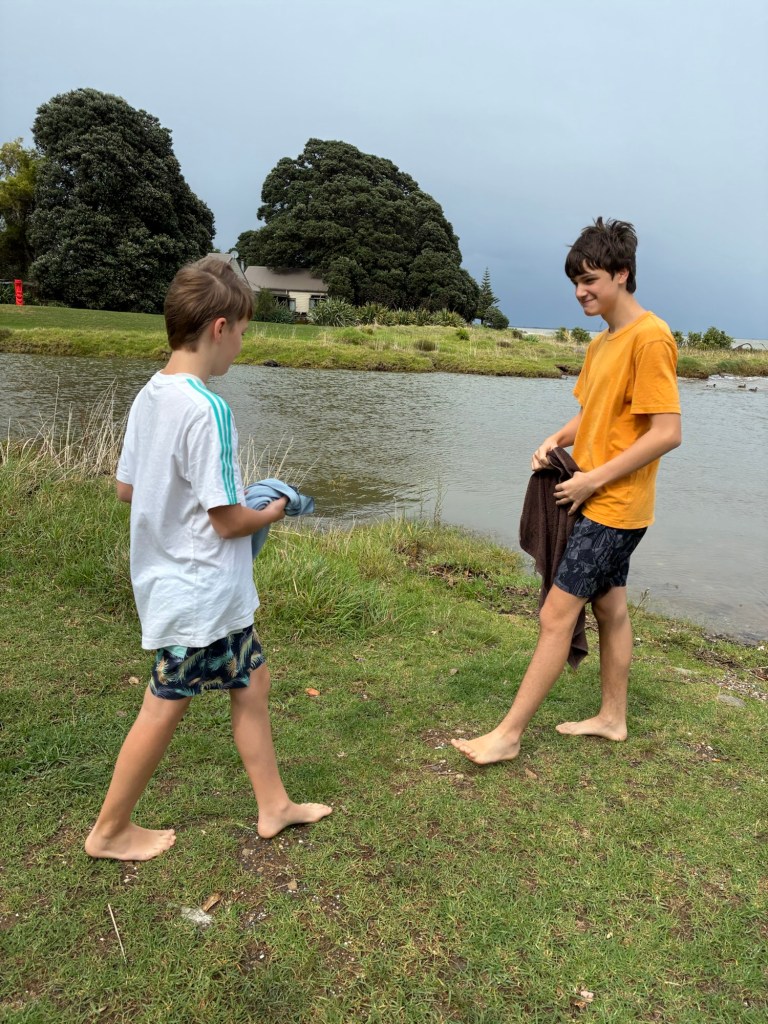
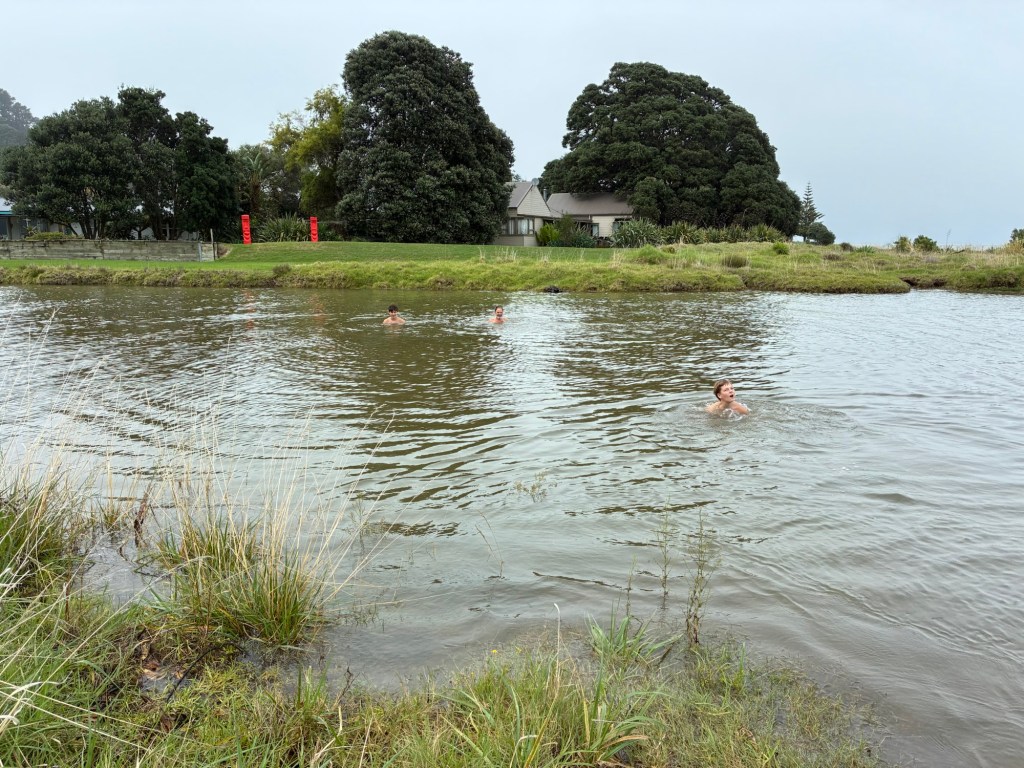
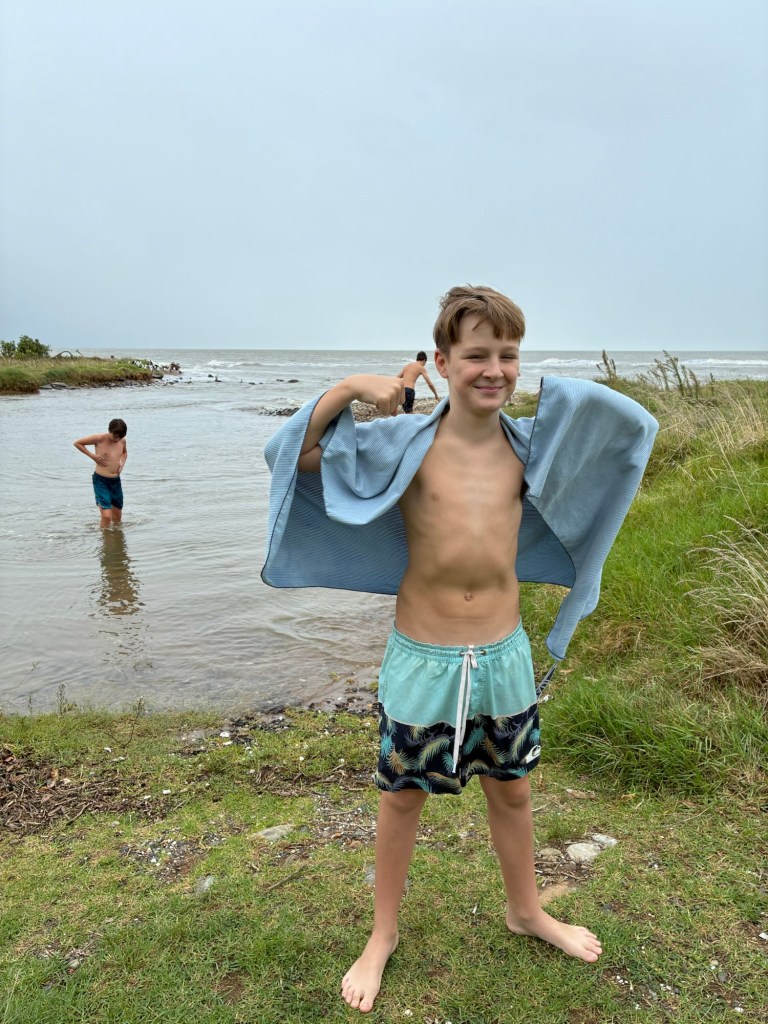
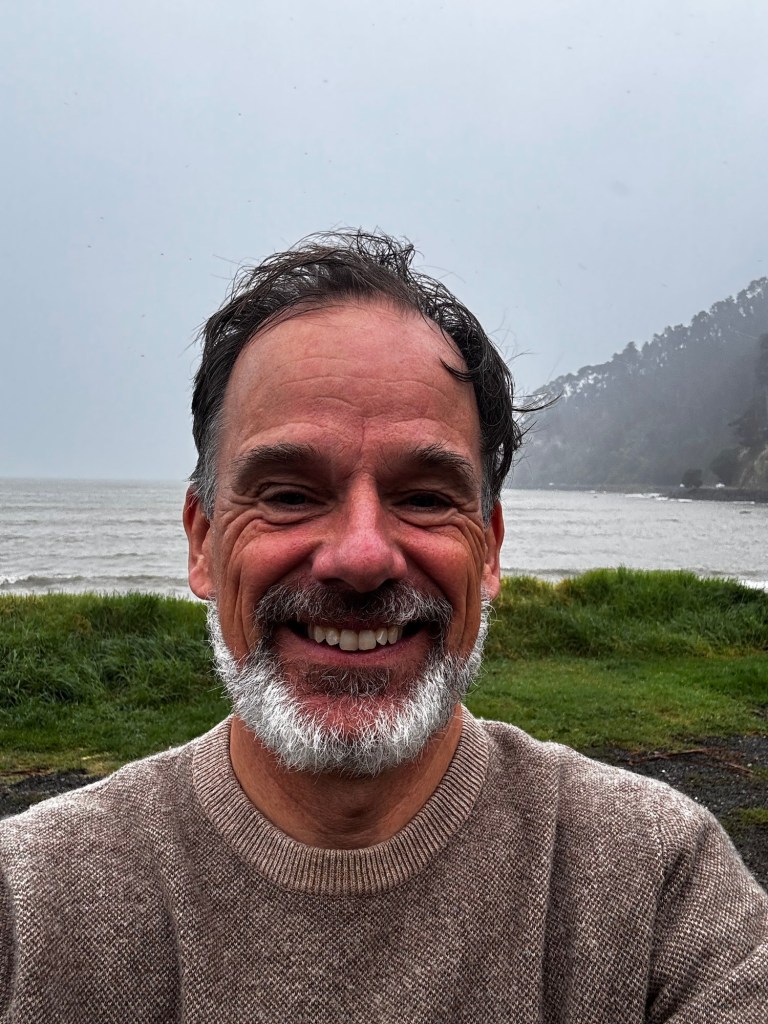
    Am nächsten Morgen sehen wir, dass wir nur wenige Meter vom Meer entfernt stehen. Wir gehen trotz Regen an der Mündung eines Baches baden. 

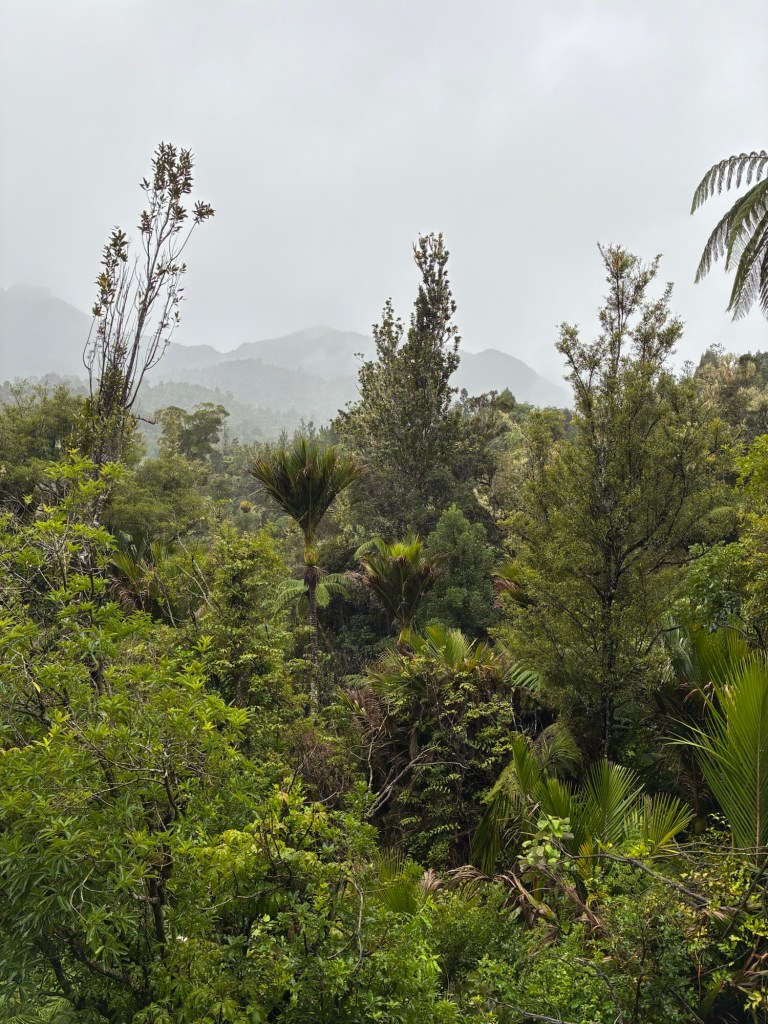
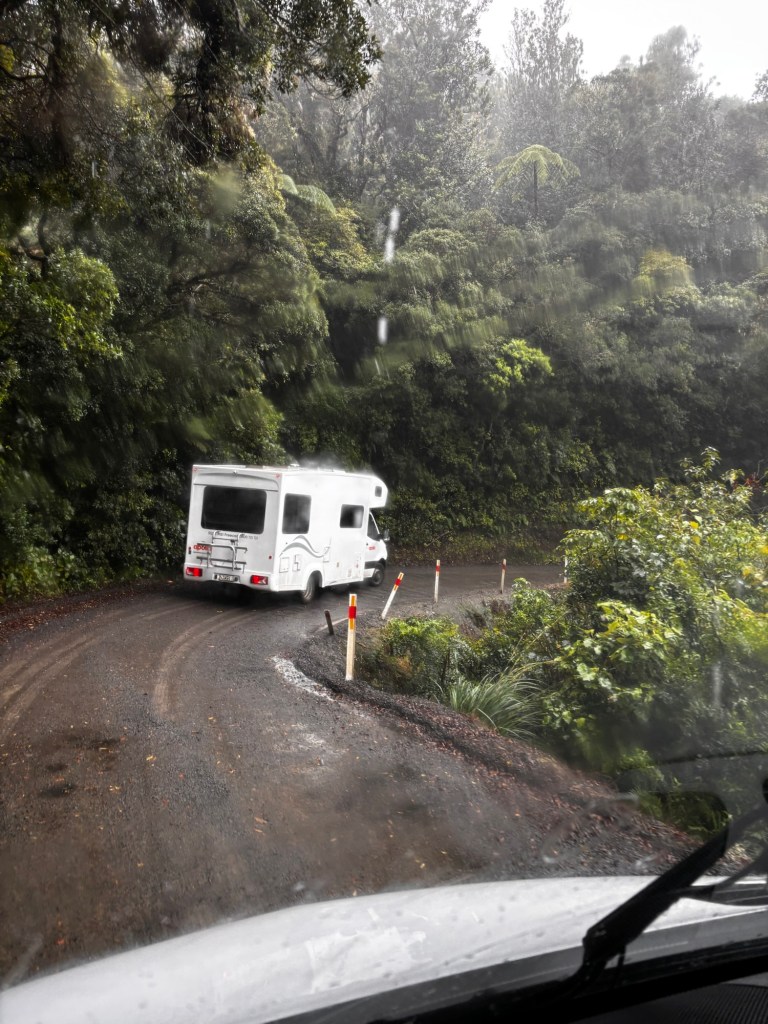
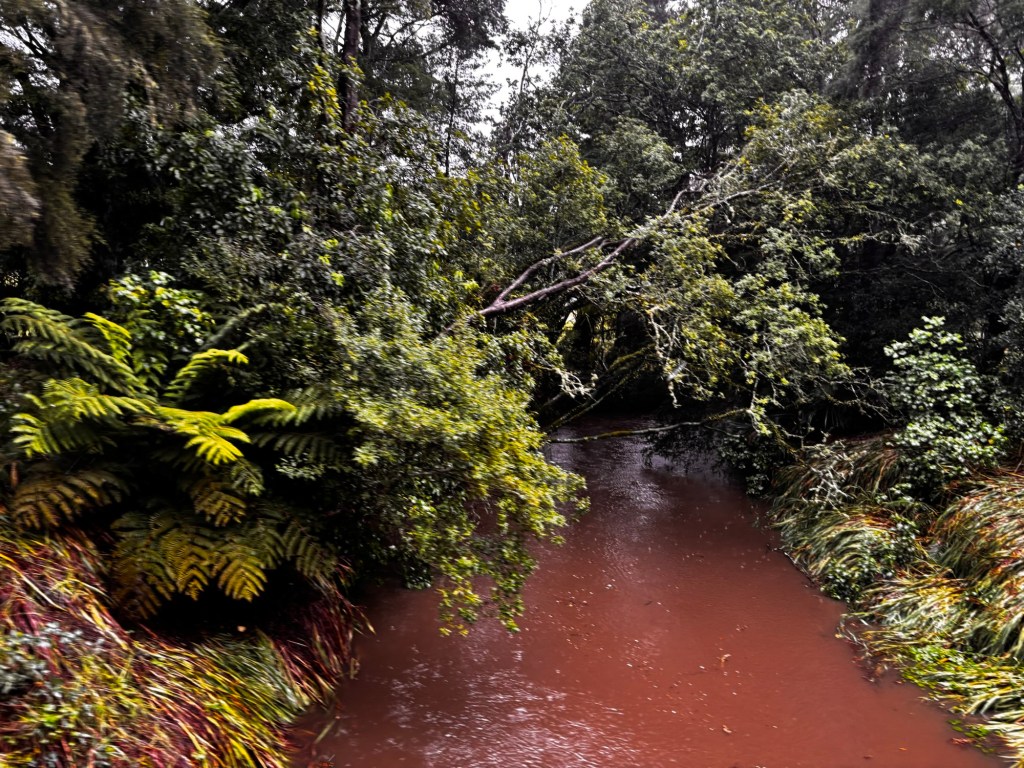
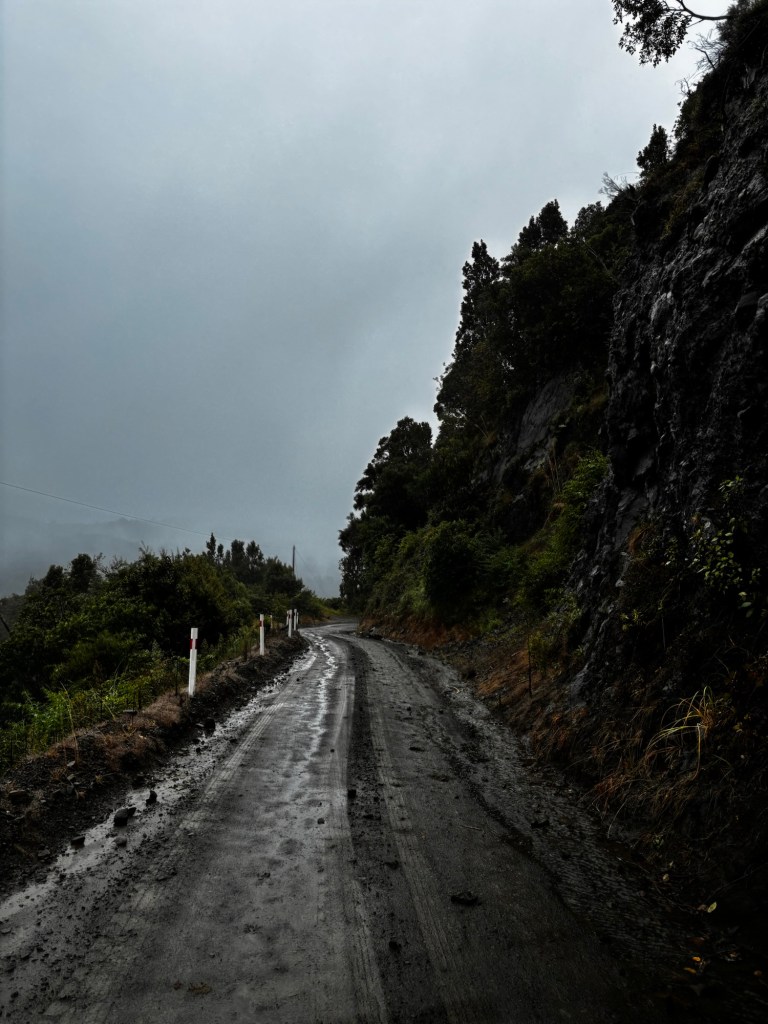
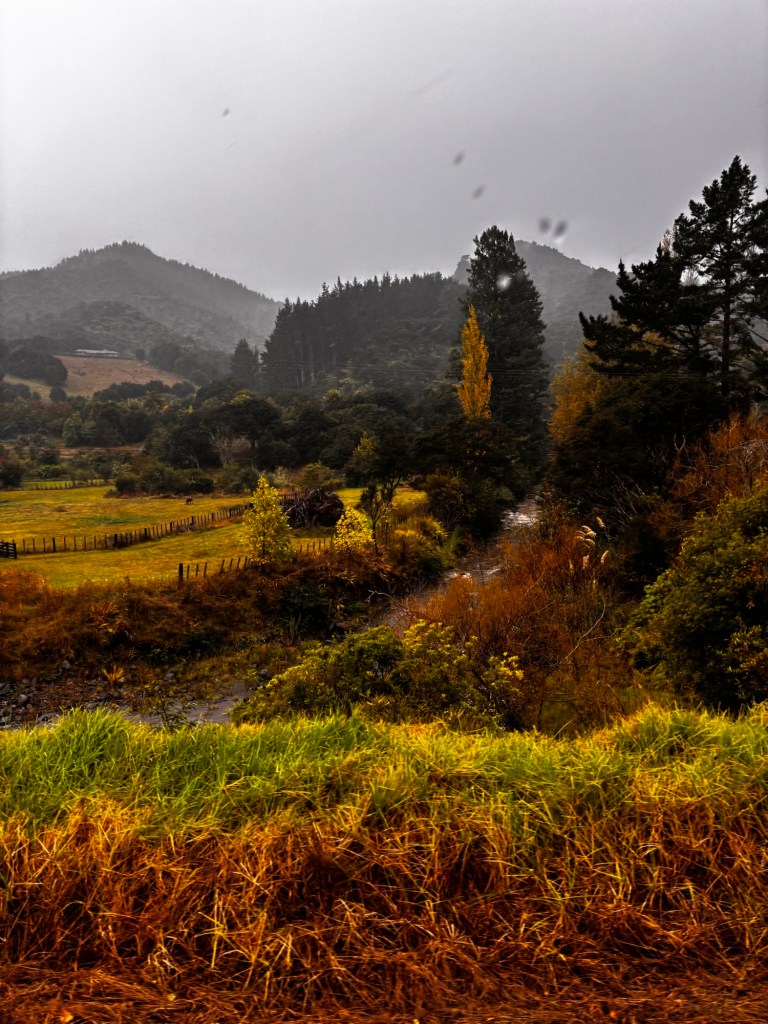
    Danach geht es durch den wunderschönen Regenwald der Halbinsel auf die östliche Seite, eine wilde Straße durch die Berge, vorbei an reißenden Bächen und Flüssen, die über die Ufer treten.

    Wir kommen noch vor der Dunkelheit in Hahei an, auf einem richtigen Campingplatz mit netten jungen Mitarbeiten und buchen für 21.00 Uhr den HotTub am Strand- trotz strömendem Regen. 

    Vorher gibt es Fischstäbchen und Kartoffelbrei  und Salat und besonders Velis freut sich sehr. Er bekommt von Tara noch eine Kur zur Entspannung.

    Die Natur ist wirklich atemberaubend schön, und morgen soll auch die Sonne scheinen.
    Day 117 and 118

    When we land in New Zealand, the good news comes – Nadine, Velis, Tara and Andreas, who had to stay behind at the airport in China, have finally received their entry permits for New Zealand, which were not granted to them yesterday at the airport – nobody knows why.

    So they can join us the next day. We use the time to pick up the motorhome after a night in the hotel. Morpheus, Inyan and Yuki do a great job and check out on their own, Morpheus packs my suitcase – while I pick up the motorhome and explain that Andreas won’t be landing until 4 p.m. and the office closes at the same time. It seems impossible, but we believe it. We buy a week’s worth of groceries at the supermarket, fill the fridge, clear out the suitcases and make up the beds. Then we have bread, fish and cheese in the camper van in the parking lot. We wait outside the rental office – the plane is late and our hopes are sinking. 

    But I stand demonstratively with the mobile at the entrance, and when it’s 4 p.m. I’m asked if I need help. I say – my friend has landed – Andreas had just called. 

    It’s getting close, all the staff are getting ready to leave, the door is closed.  Andreas has ordered an Uber, the others are waiting at the airport. 

    At the very last moment, shortly after 4.30 p.m., the door is opened again and he quickly gets a vehicle – unfortunately, as it turns out, with a flat battery and no water.

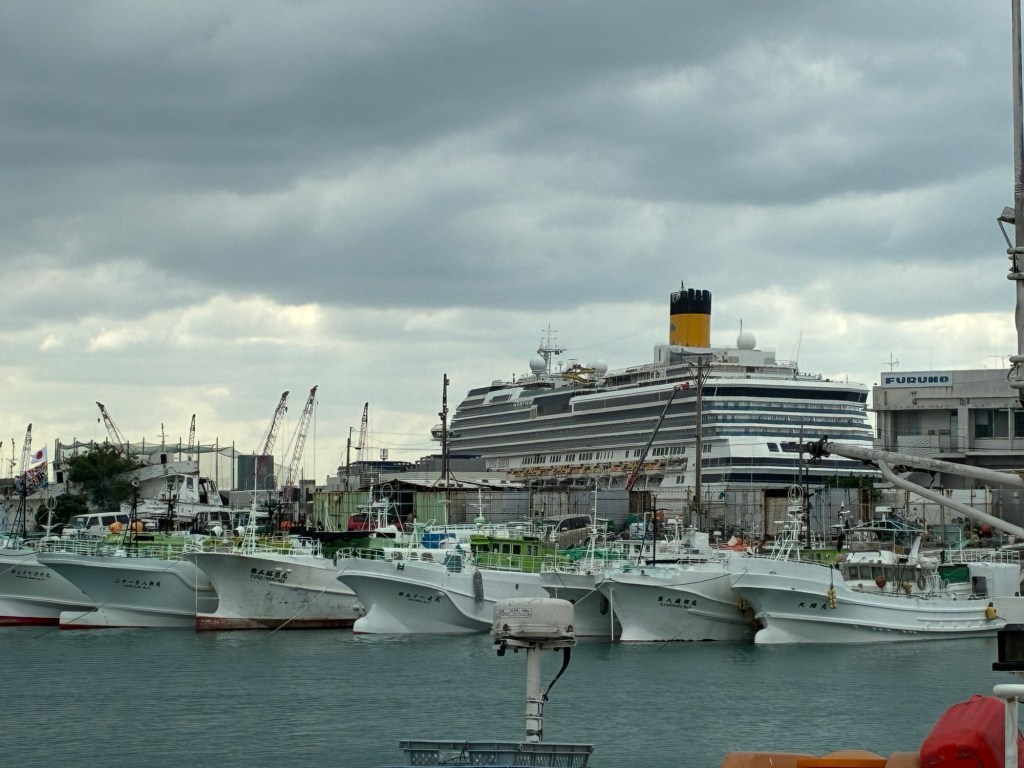
    But the joy is great! We have made it! I can pick up Nadine and the children at the airport, and together we go to the market again, and in the dark we head off to the Coromandel Peninsula to a free parking lot by the sea, where we find the last two spaces at around 8.00 pm.

    It rains the whole time and it storms, the heaviest storm of the year on the South Island.

    We are exhausted but happy by the sea, and the pattering of the rain has a cozy feel to it.

    The children are happy with baguettes and avocado, cheese and butter. 

    The next morning we see that we are only a few meters from the sea. Despite the rain, we go for a swim at the mouth of a stream. 

    Then we head through the peninsula’s beautiful rainforest to the eastern side, a wild road through the mountains, past torrential streams and rivers that overflow their banks.

    We arrive in Hahei before dark, at a proper campsite with friendly young staff and book the hot tub on the beach for 9 p.m. – despite the pouring rain. 

    We have fish sticks, mashed potatoes and salad beforehand and Velis is particularly happy. 

    The nature is really breathtakingly beautiful, and tomorrow the sun is supposed to shine.
  • China: Guangzhou (Canton)

    Tag 115 und 116- (Updated)

    China ist im ersten Eindruck sehr groß und erstaunlich leise.  So ruhig kann also eine Straße sein, wenn alle Autos und Motorräder, Busse und Kleinlaster elektrisch fahren. Wenn dann und wann mal ein Laster kommt, oder jemand hupt, erinnert man sich wie laut es früher mal war. Oder in Deutschland oder Indien. 

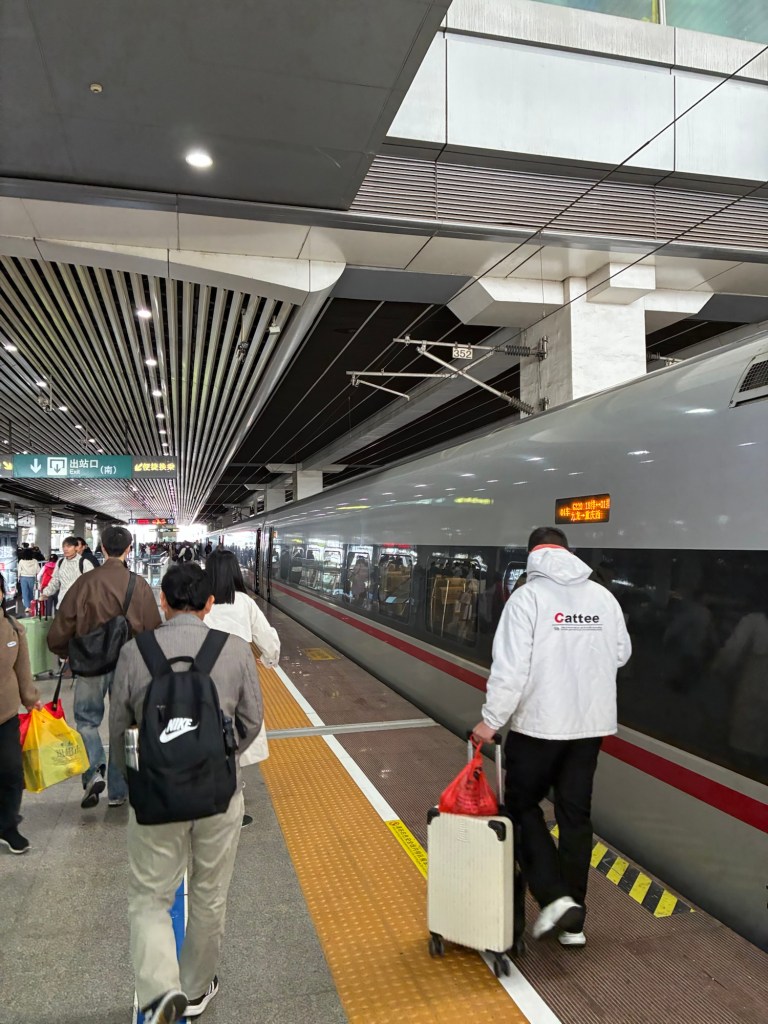
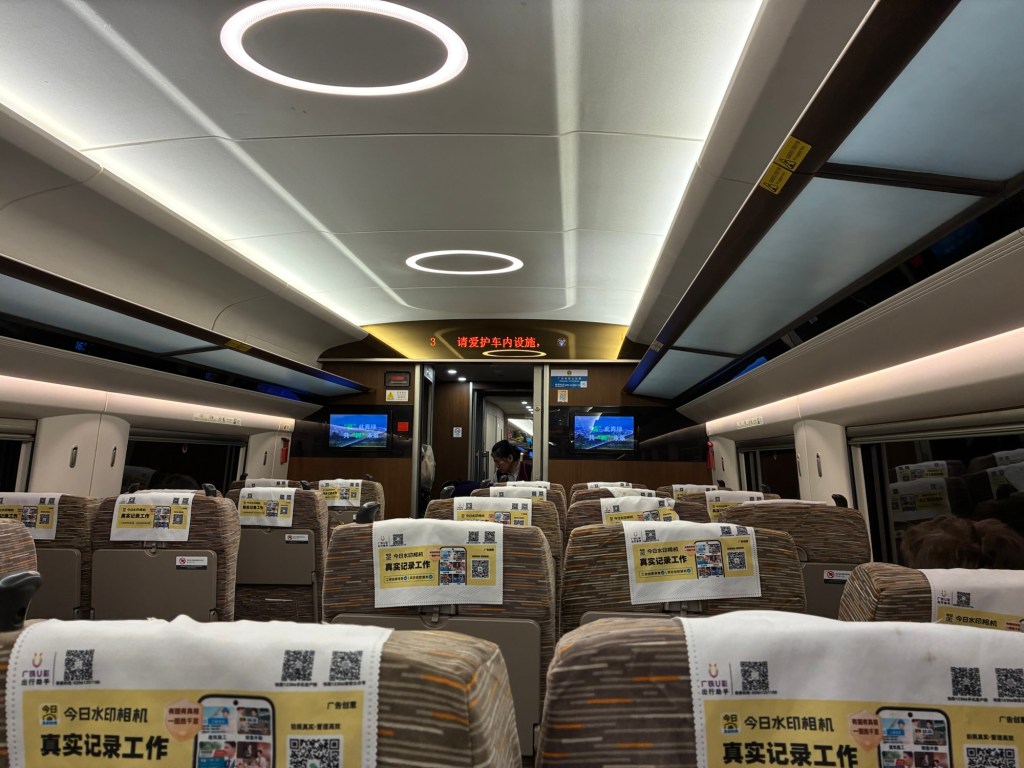
    Auch der Zugverkehr ist erstaunlich. Mit Tempo 300 durch Millionenstädte, Shenzen und Guangzhou, in 52 Minuten für 170 km mit Zwischenhalt.

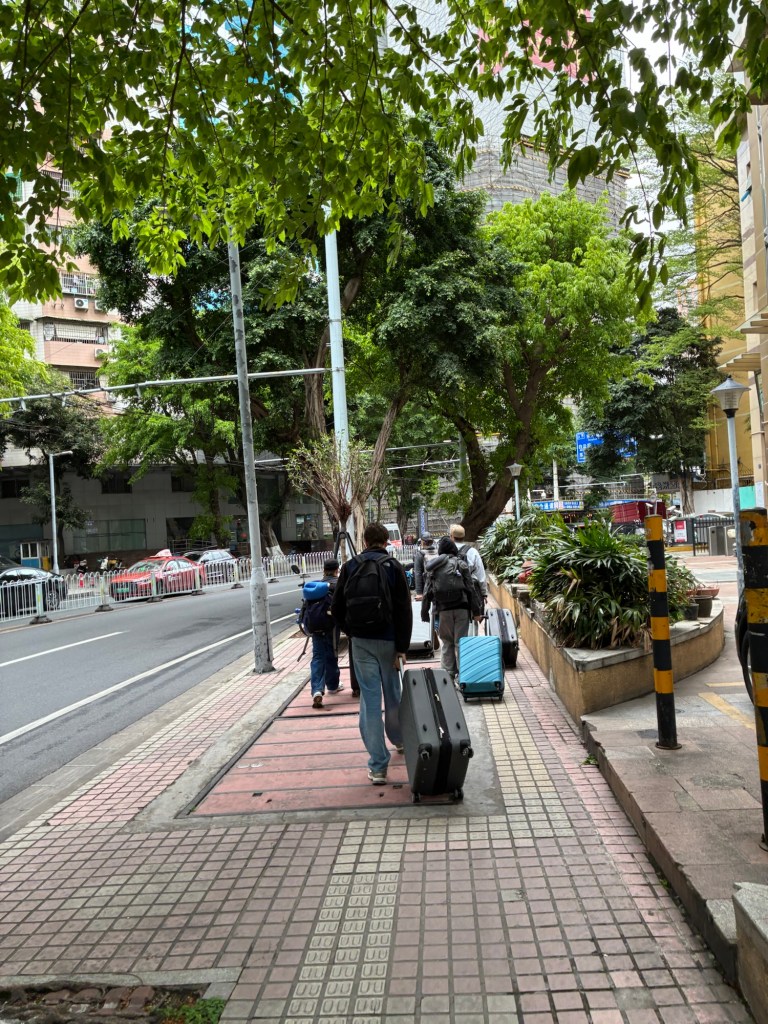
    Der neue Bahnhof in Guangzhou hat 28 Gleise für Hochgeschwindigkeitszüge. Er ist größer als viele Flughäfen. Für Touristen nicht ganz so einfach, es gibt keinen Geldautomaten und keine Wechselstube, man kann nur mit Alipay oder WeChat bezahlen, und die App bekomme ich nicht geladen- die Firewall lässt es nicht zu mich anzumelden. Aber zum Glück gibt es einen Info-Stand, und der kann uns helfen – nach einer halben Stunde haben wir die 8 drei-Tages-Pässe für je 6 Euro in der Hand. 

    Es ist eine ganz andere Welt als Hongkong.

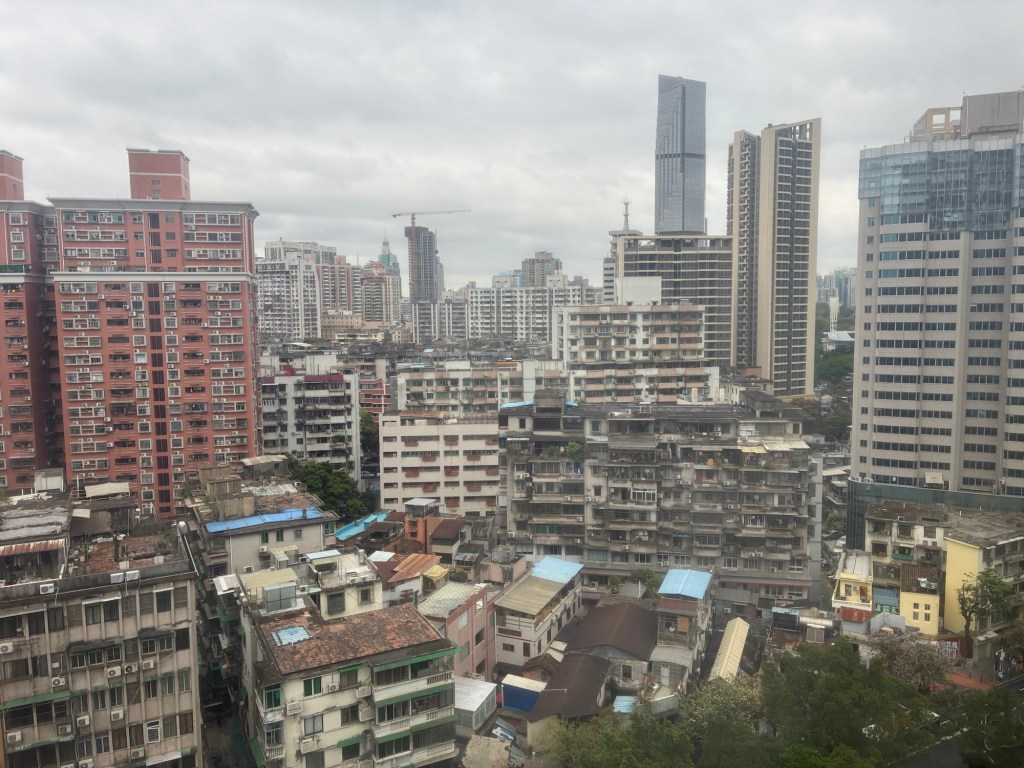
    Wir sind in der „Greater Bay Area“, der größten Metropolregion der Welt – je nach Quelle zwischen 65 und 86 Millionen Menschen wohnen hier auf der Fläche von Thüringen. Eine Millionenstadt grenzt an die nächste an- Shenzen, Guangzhou, Foshan …jede mit 10 bis 20 Millionen.

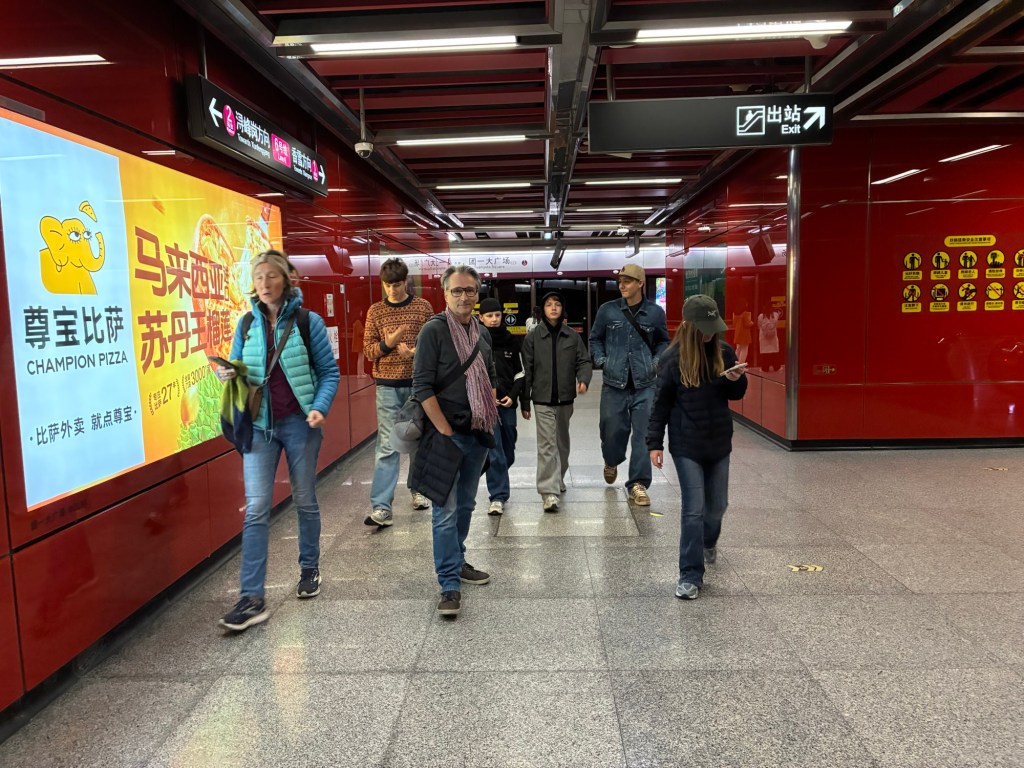
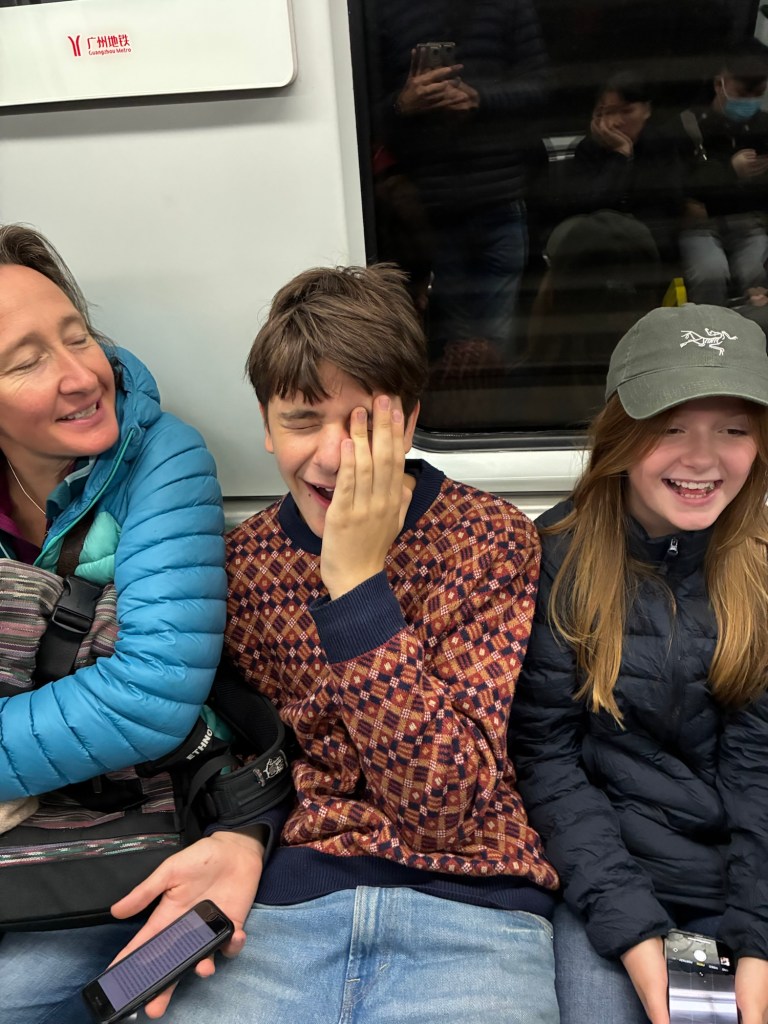
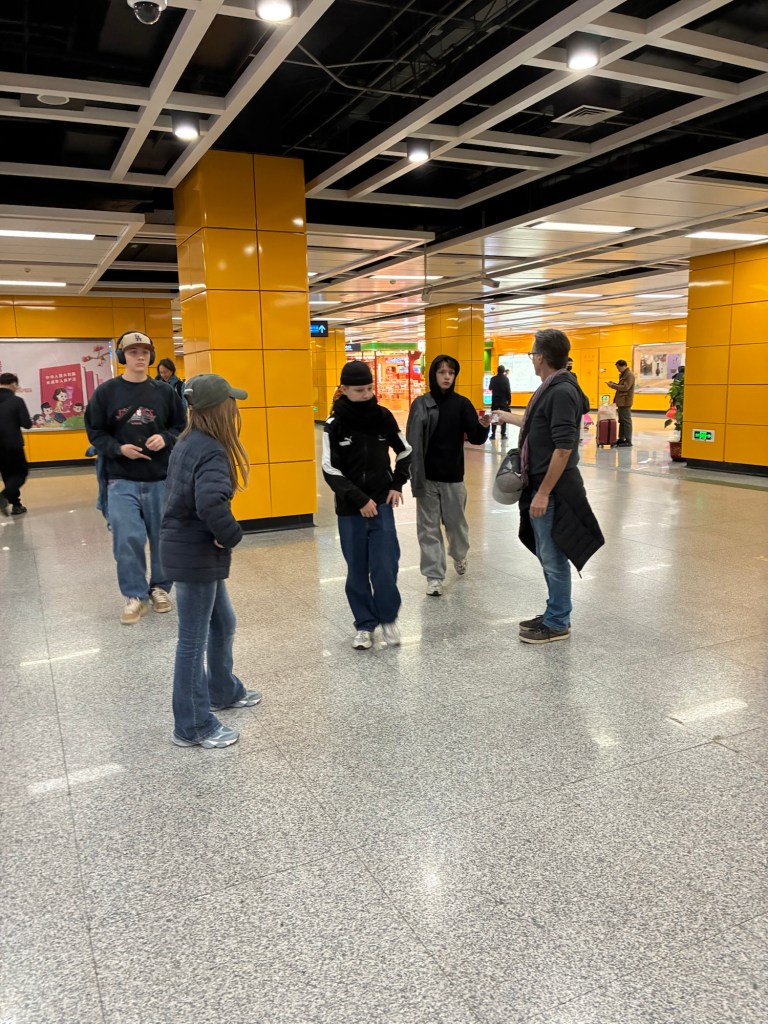
    Alle Züge und Bahnhöfe sind neu, hochmodern, überall gibt es Rolltreppen. Jeder U-Bahn-Zugang hat eine Röntgenkontrolle für das Gepäck, es steht immer eine ein Meter große Metallkugel mit 10 cm Stahl da, in der gefährliche Gegenstände sicher gelagert werden können. 

    China ist etwa so groß wie die USA, und hat das ganze Land flächendeckend mit 45.000 km Hochgeschwindigkeitszugstrecken verbunden, bis 2035 sollen es 70.000 km werden. 

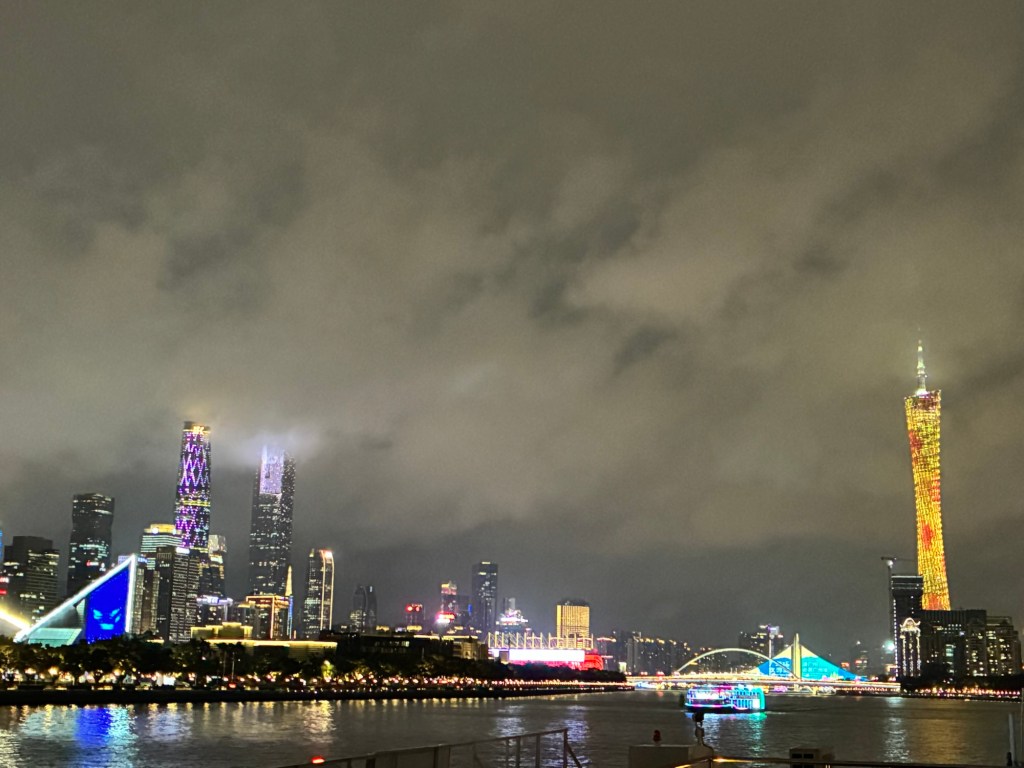
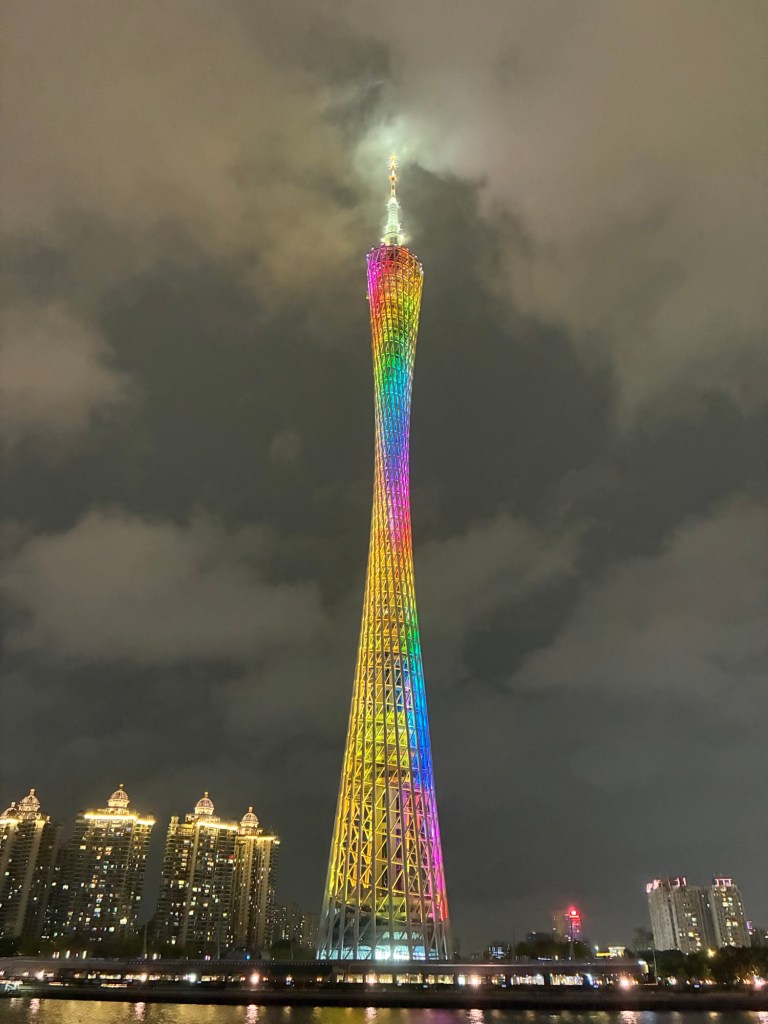
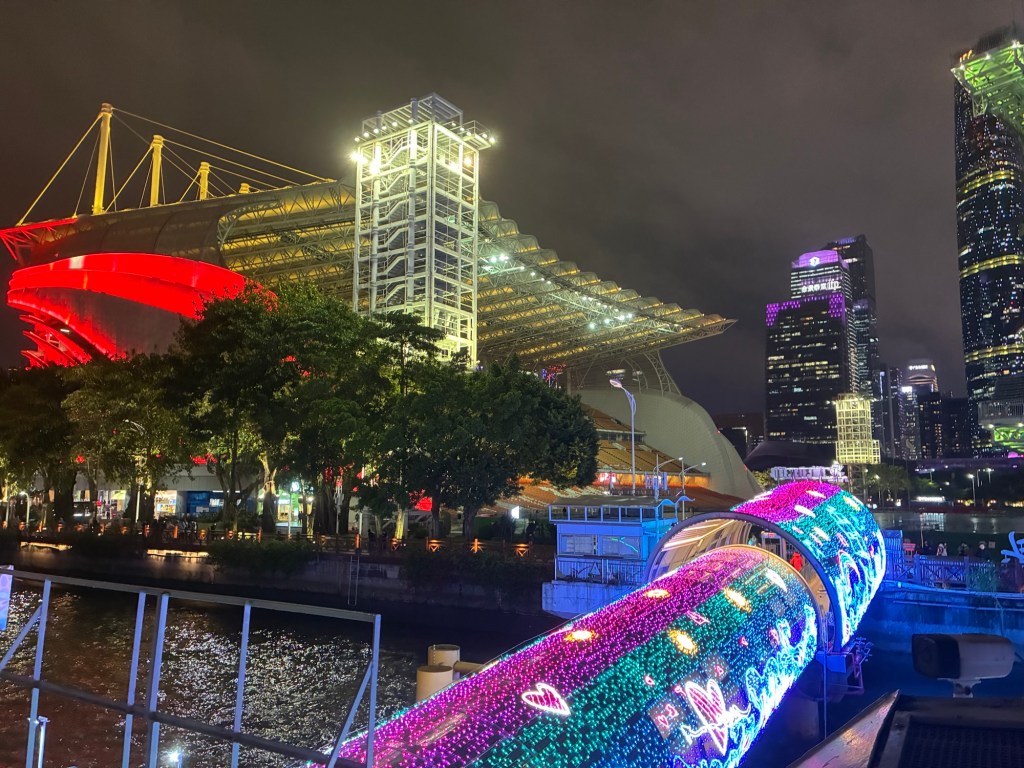
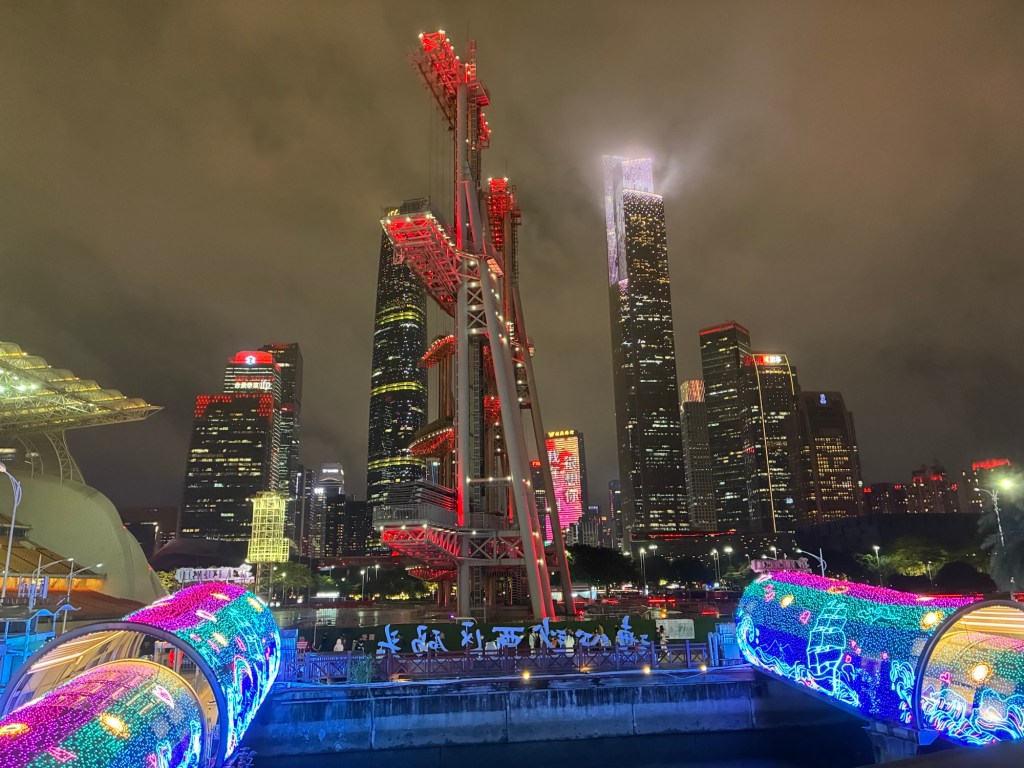
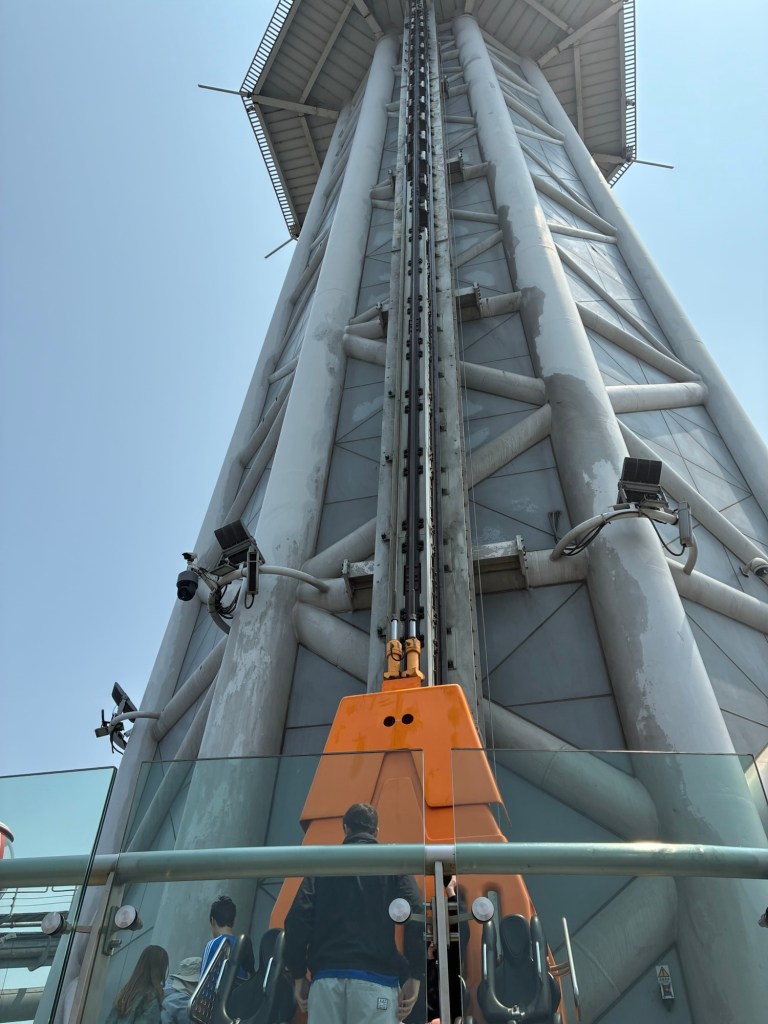
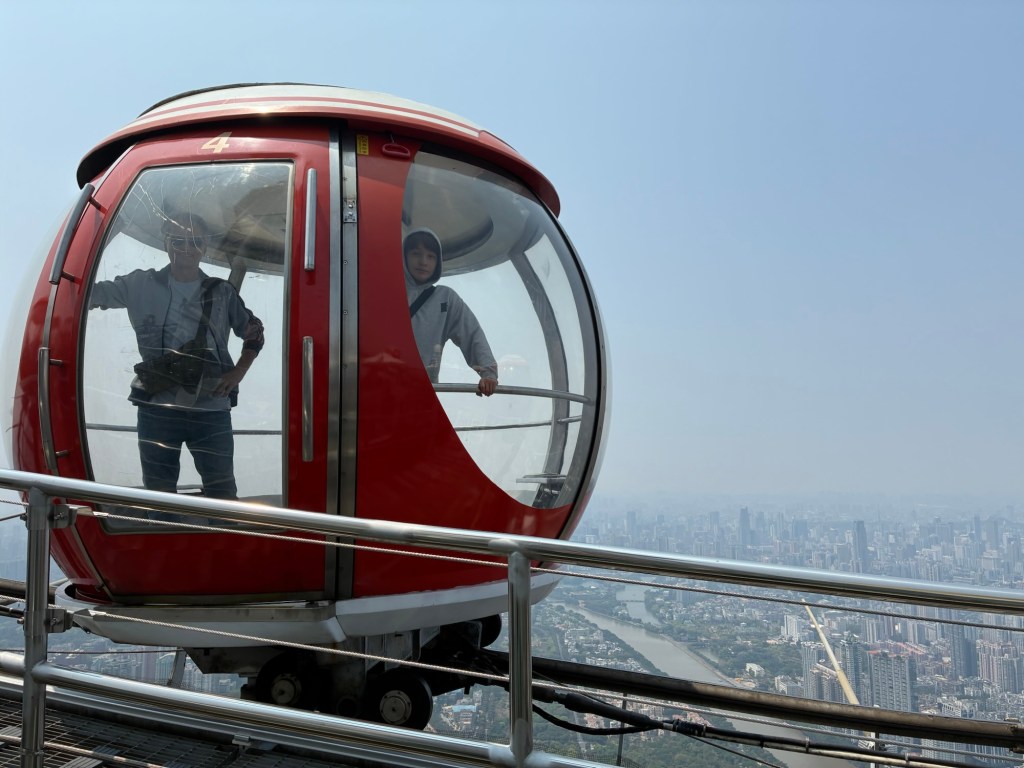
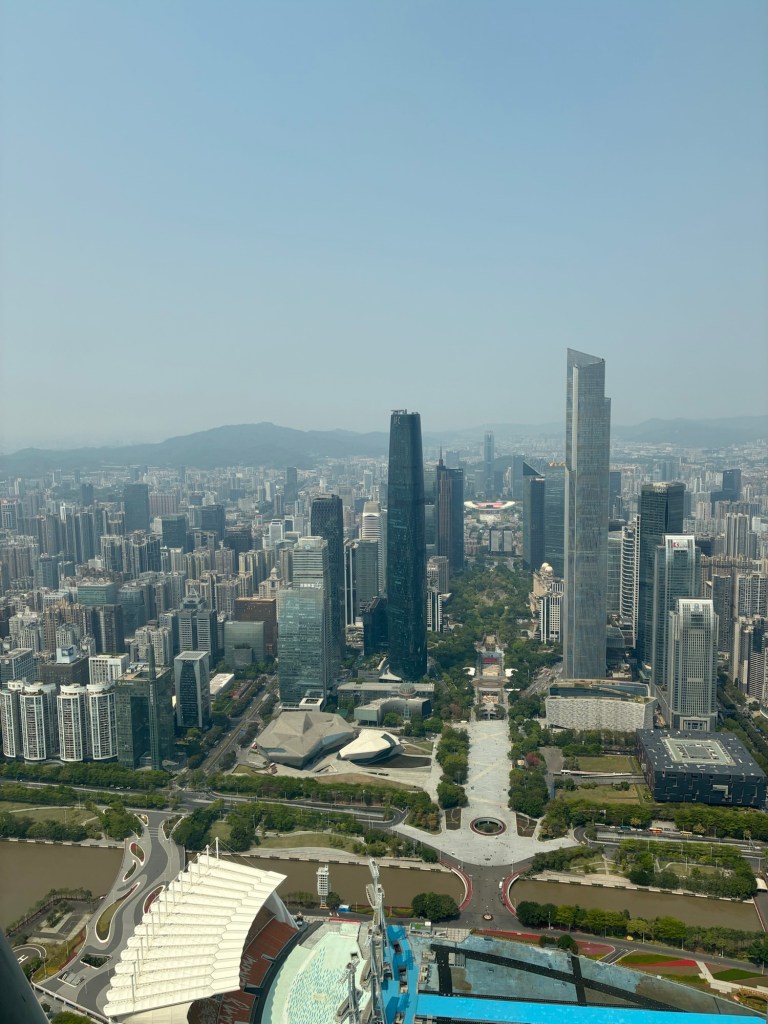
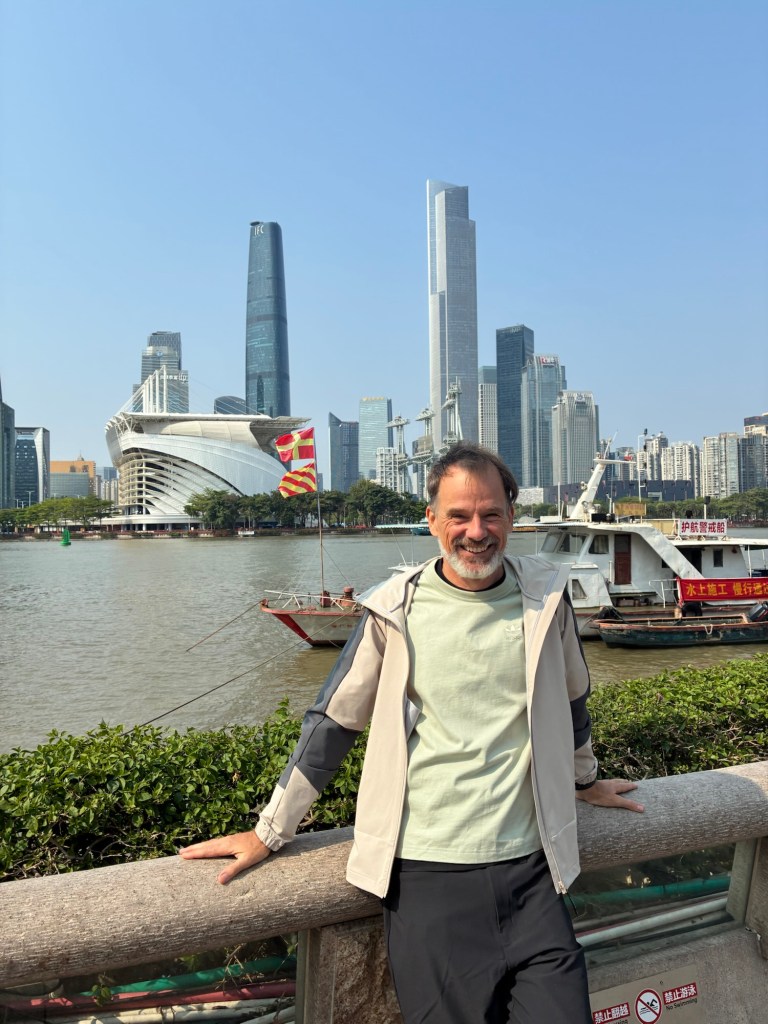
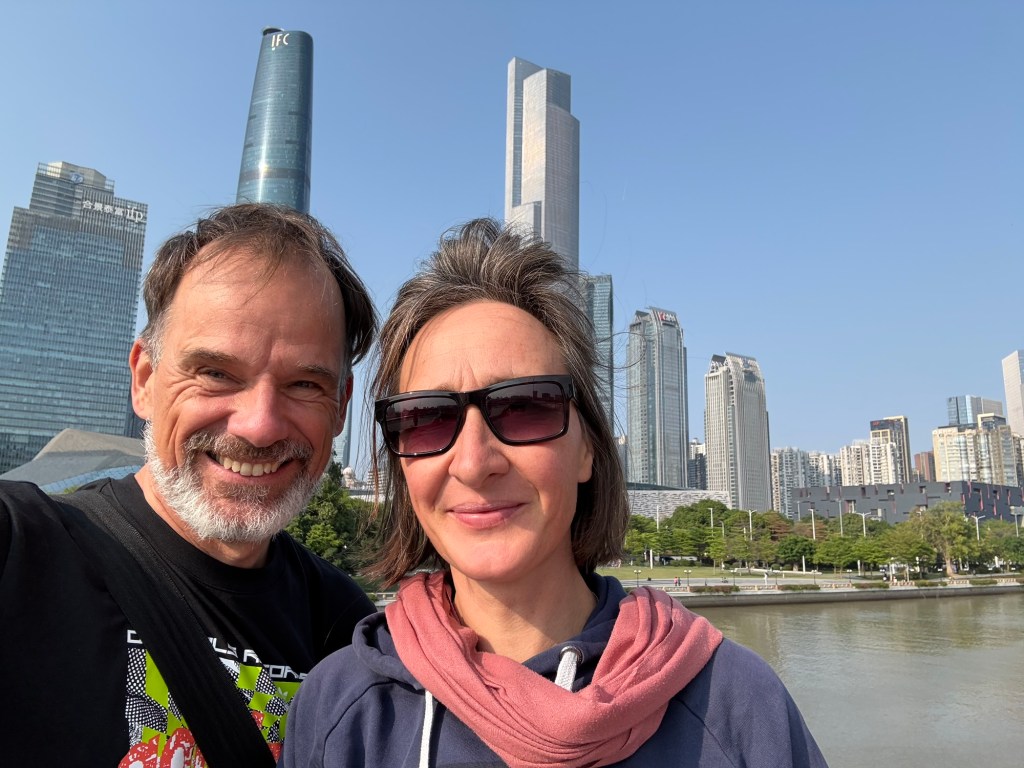
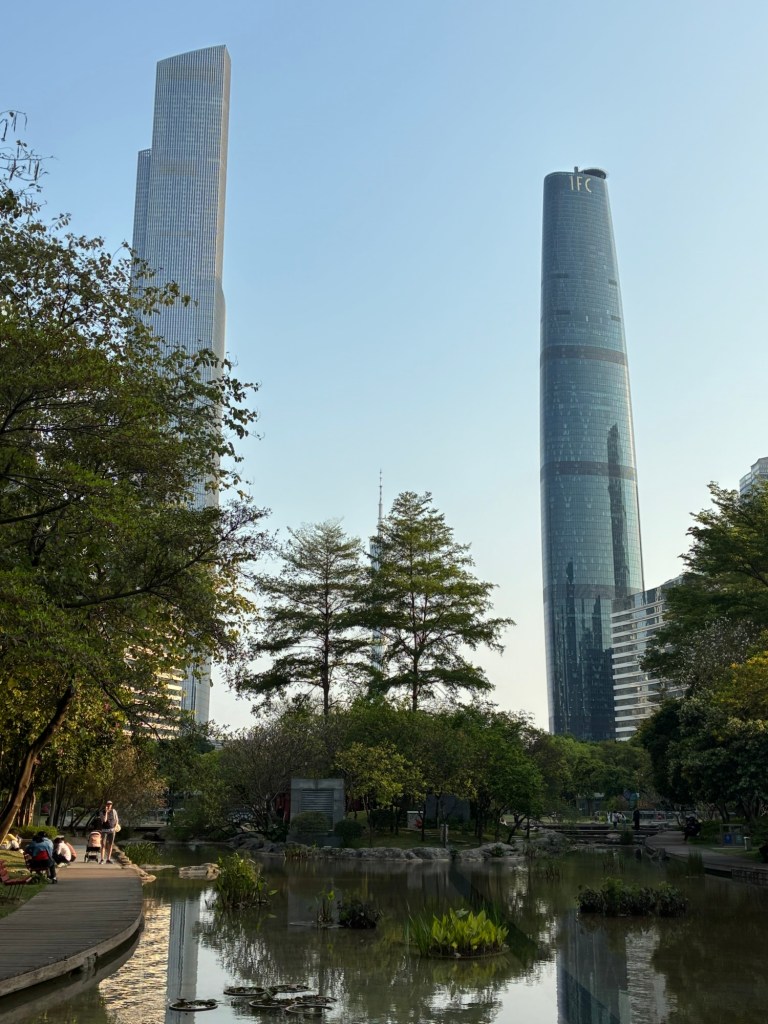
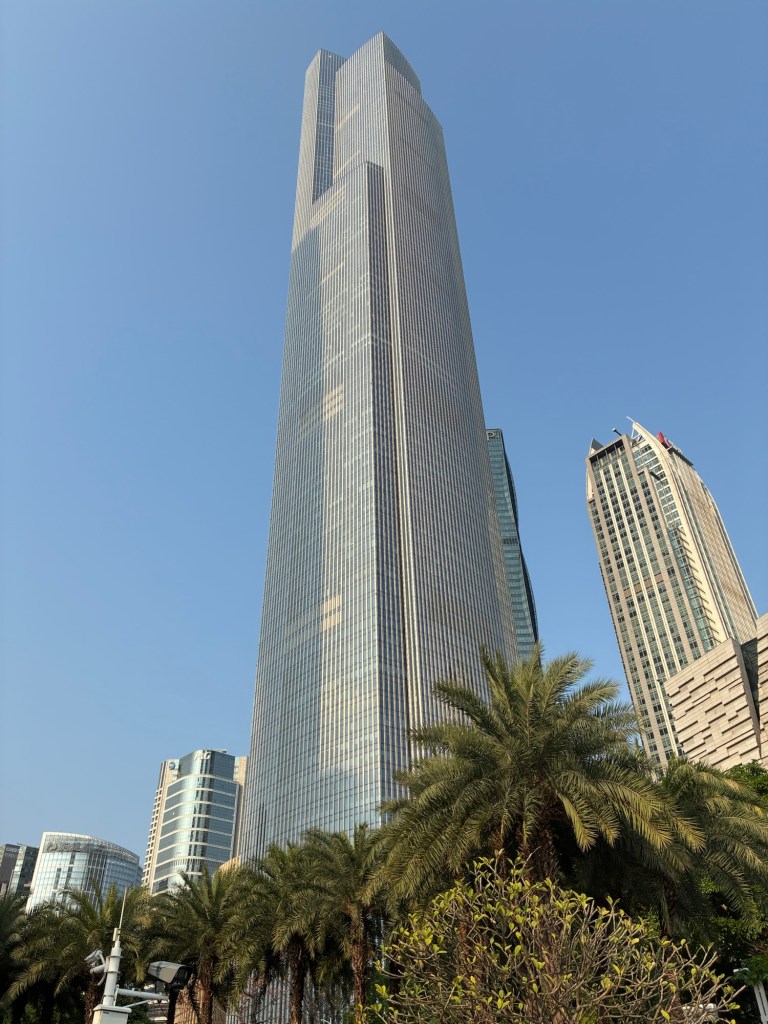
    Wir sind in einer Handelsmetropole, das ehemalige Kanton hat eine eindrucksvolle Skyline, mit 550 bis 600 Meter hohen Türmen die man besonders Nachts vom Perlfluss bewundern kann. Und es gibt einen Freefall Tower auf 480 Meter Höhe-man fällt zwar nur 30 Meter, aber die haben es im sich. Das können wir uns nicht entgehen lassen.

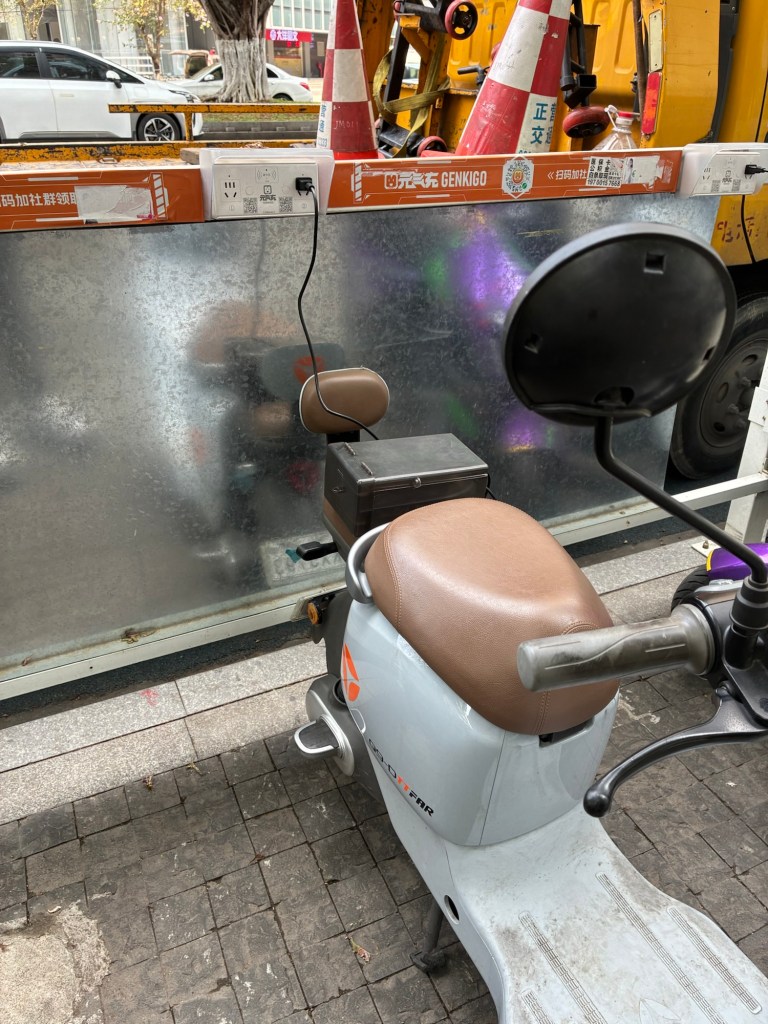
    Die. Taxis sind elektrisch und europäische Marken sind  im Straßenbild rar geworden. Es gibt nur noch elektrische Motorräder, und überall Steckdosen für die Roller. 

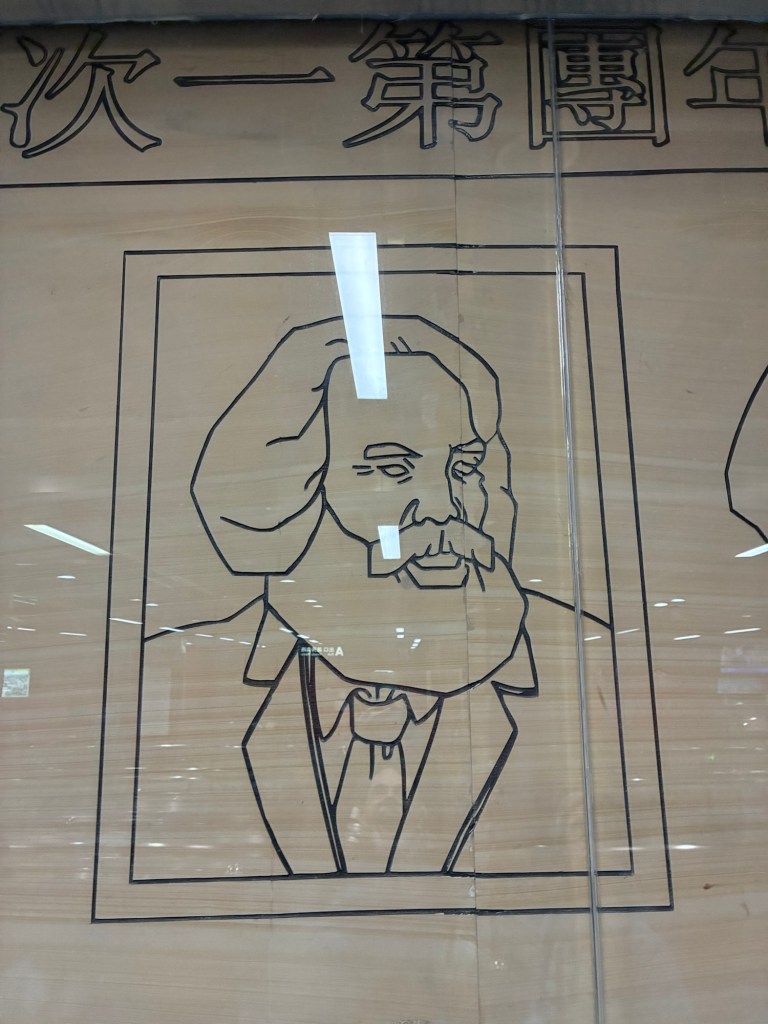
    Auf den Plätzen machen die Leute abends Gruppengymnastik. An machen Ecken sieht es aus wie in Indien, an anderen moderner als wir es kennen. Dann und wann sieht man Karl Marx, aber selten die rote Fahne. Aber aus den Lautsprechern im Park werden Partei-Lieder gespielt, wie mir Shazam verrät.

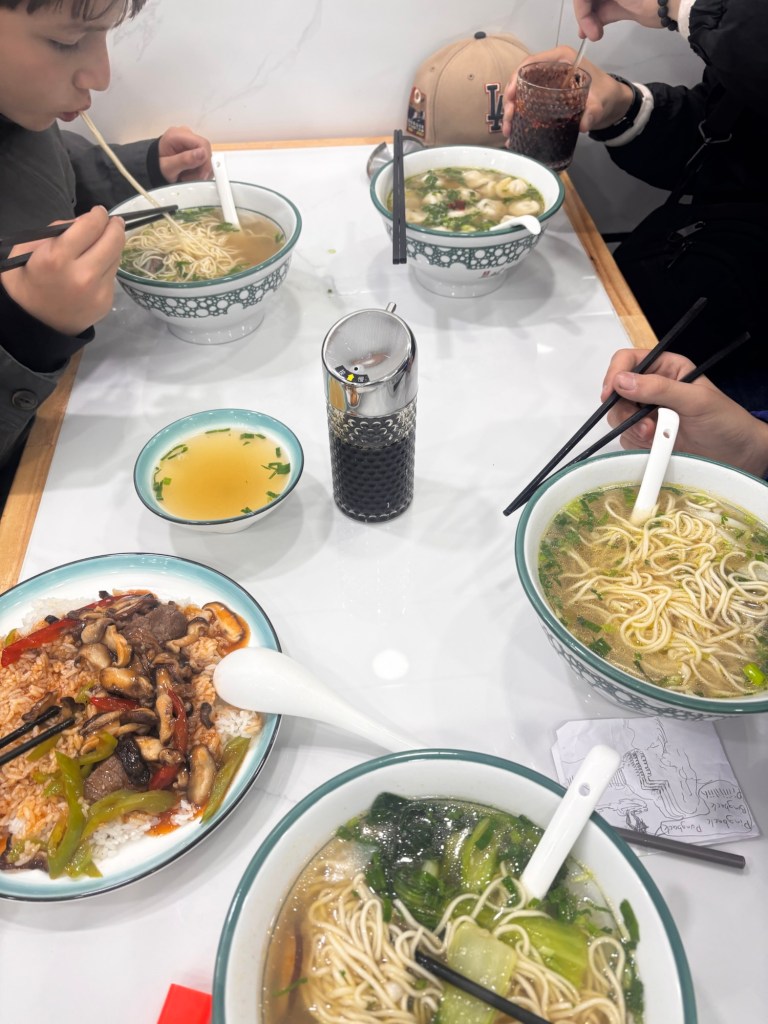
    Ja, China. Dieses Land löst auf jeden Fall gemischte Gefühle aus. Schon ab Hongkong hat man die Firewall gespürt, die alle Regimekritik im Internet blockieren soll, man kann sie zwar umgehen, aber dann bricht die Verbindung immer wieder ab. Die unglaublichen Sicherheitsvorkehrungen überall sind für mich klar gegen Anschläge gerichtet, die Uiguren werden ja massiv unterdrückt. Das Essen ist für mich schwierig, so richtig warm werde ich damit nicht. Velis liest gerade 1984 und meinte, das ist ja China. Da ist etwas dran. Aber auf der anderen Seite, wenn man aus Indien kommt ist es erstaunlich, was für eine Entwicklung dieses Land gemacht hat und wie organisiert und massiv hier die Zukunft gebaut wird – oder auch seit tausenden von Jahren ein Staatssystem alles regelt und bestimmt. Überall achtet jemand auf die Ordnung, und überall sind Kameras. Beim einchecken wurde darauf geachtet, dass in einer exakt geraden Linie angestellt wird.

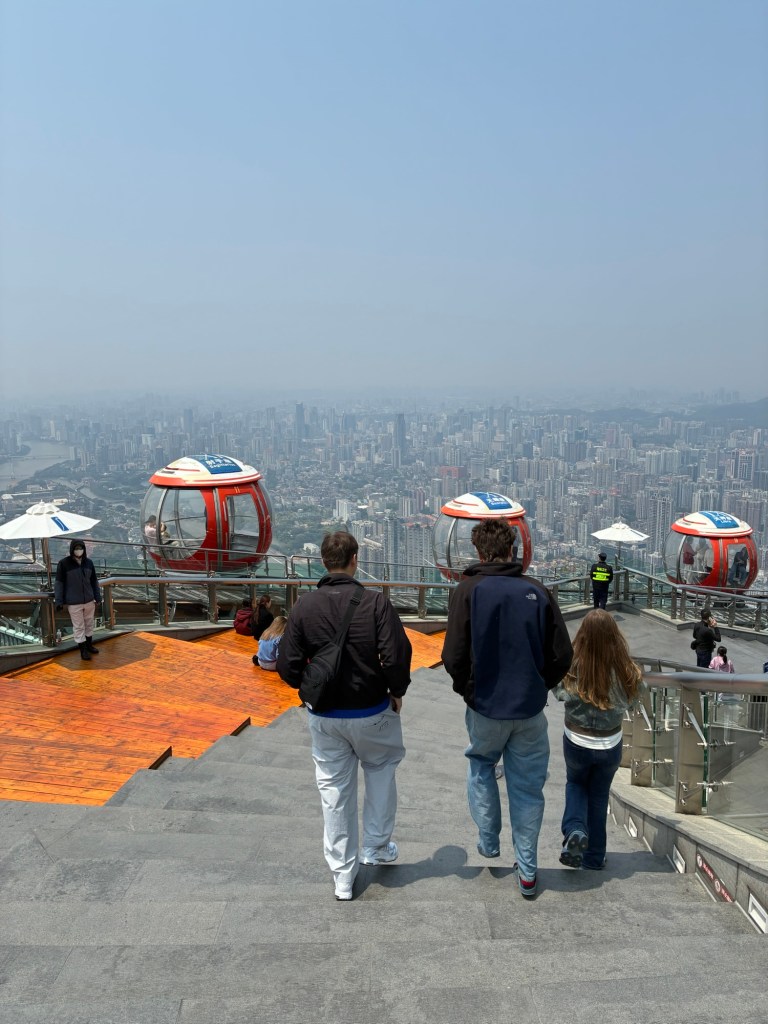
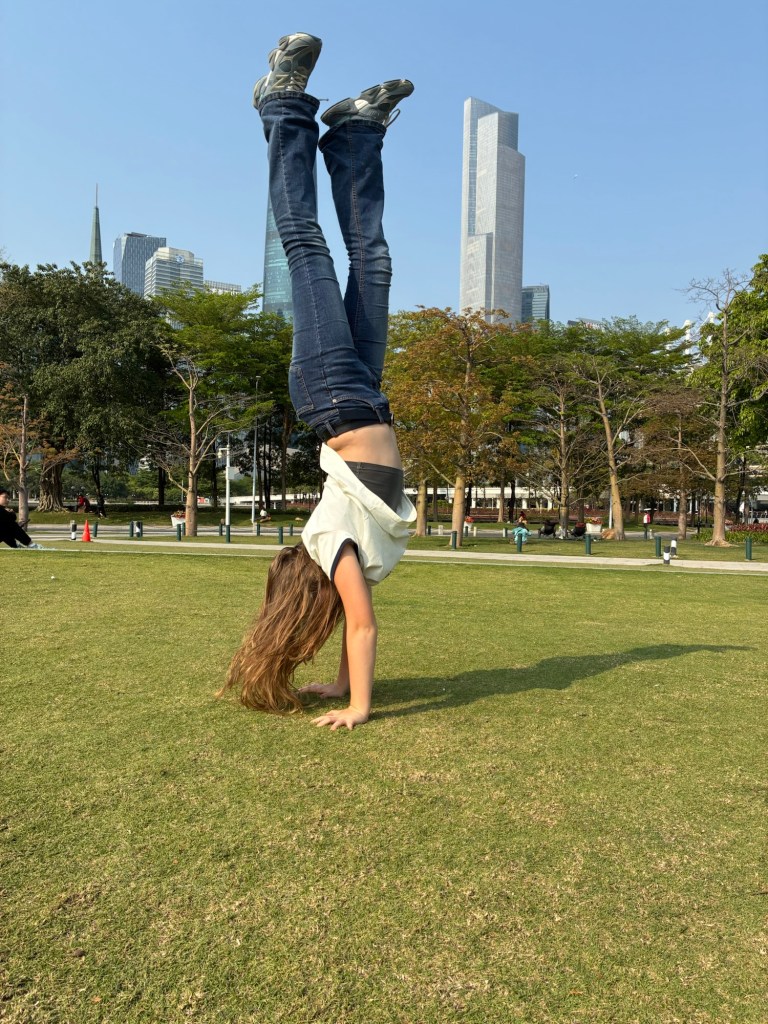
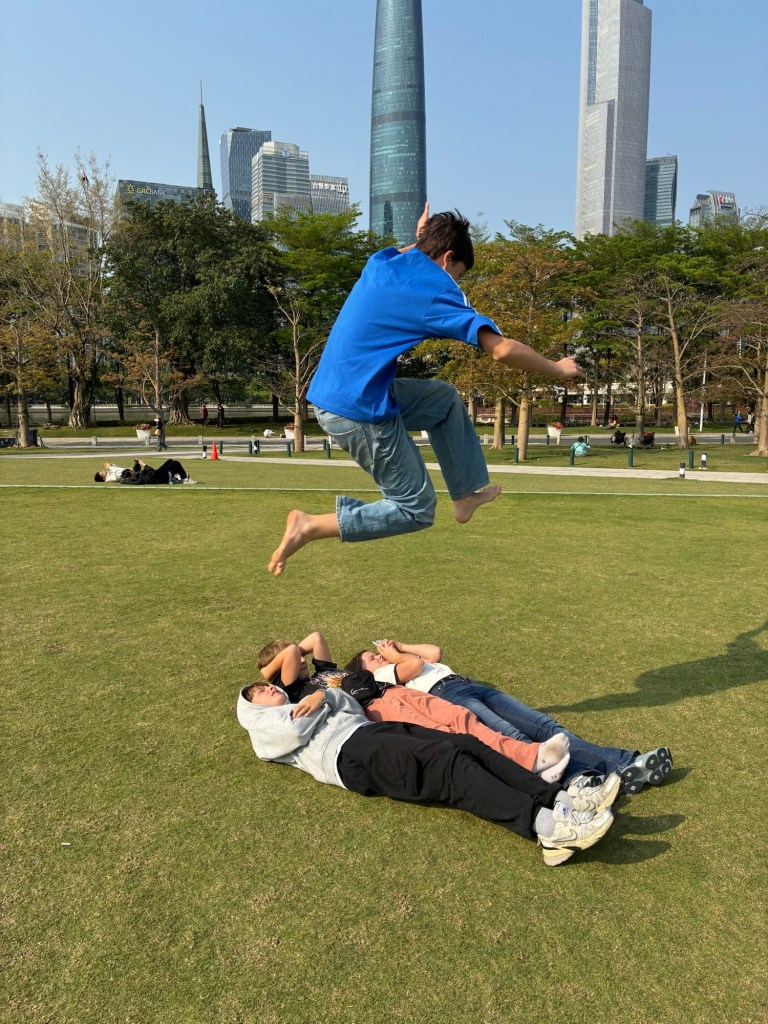
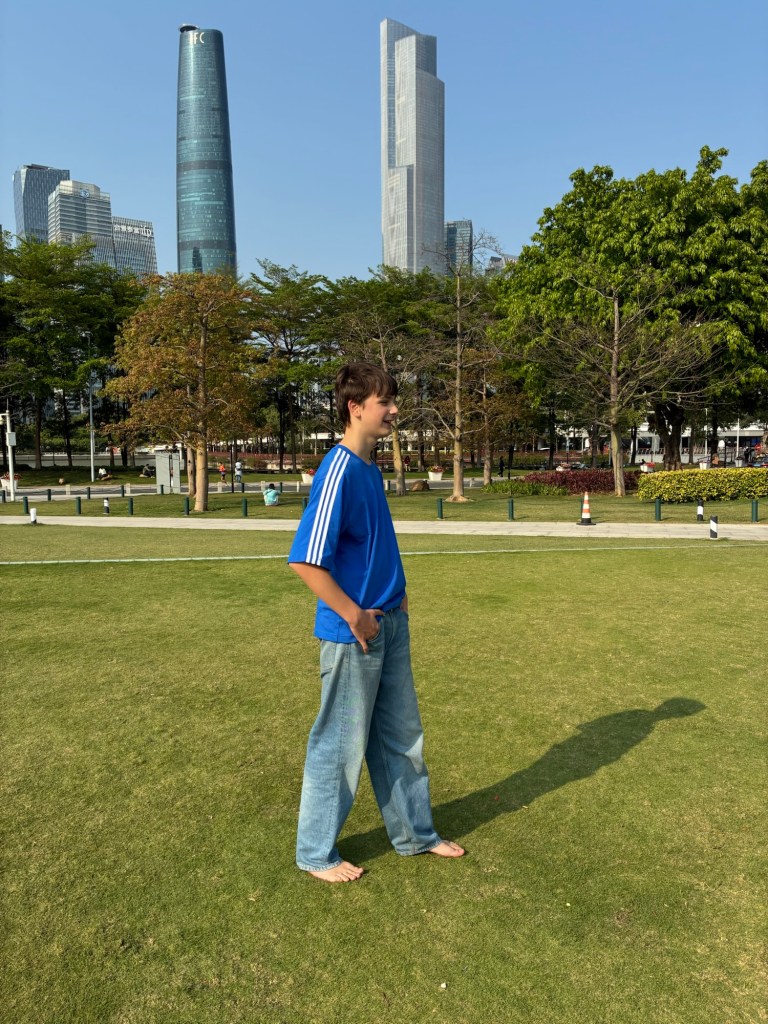
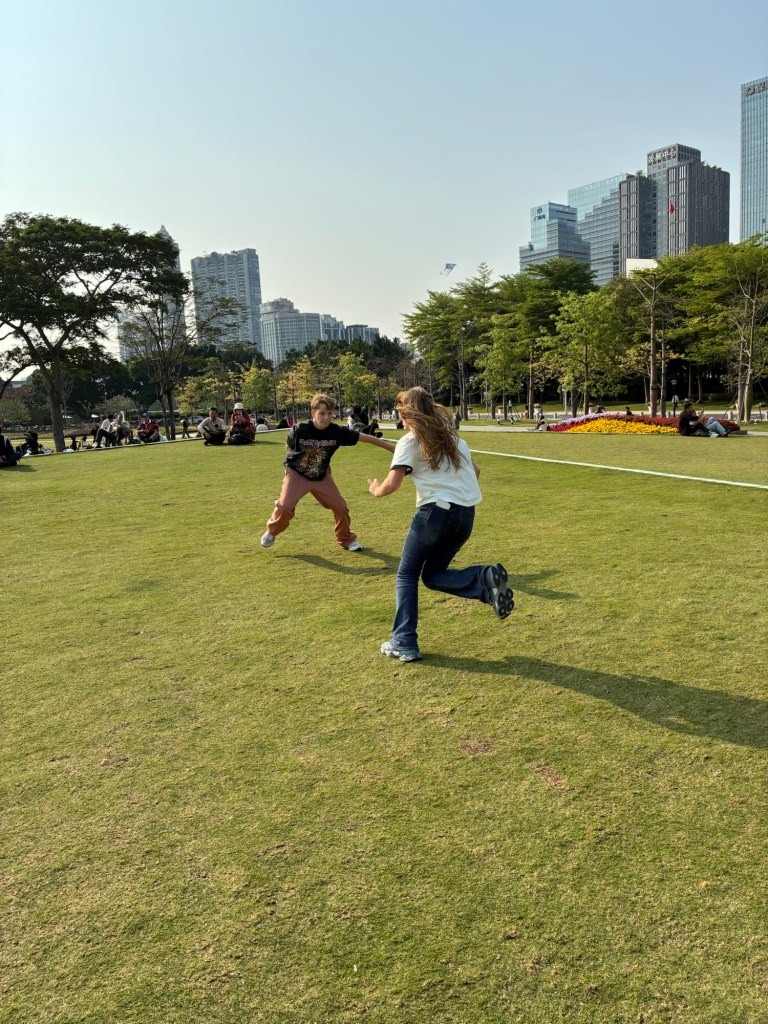
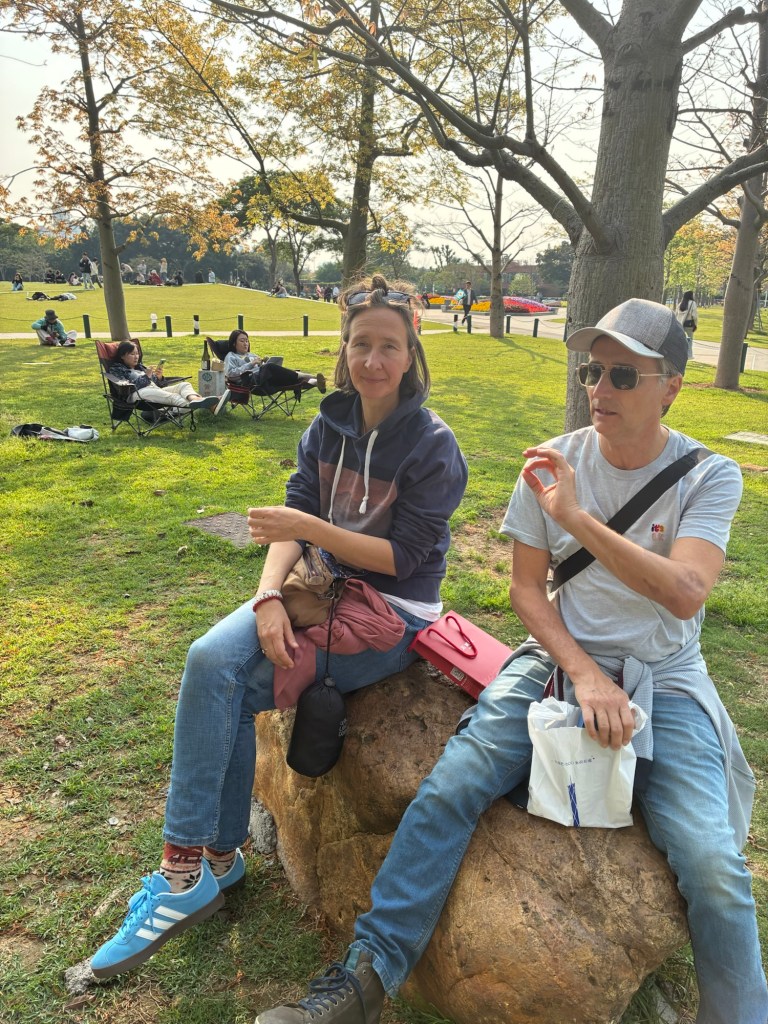
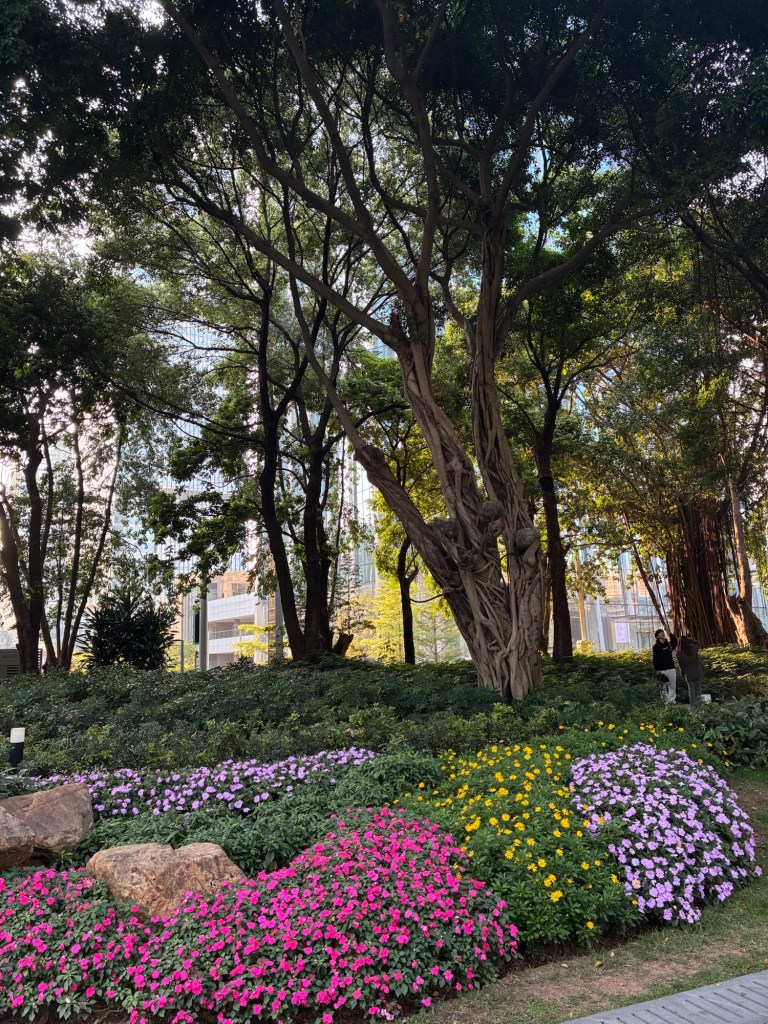
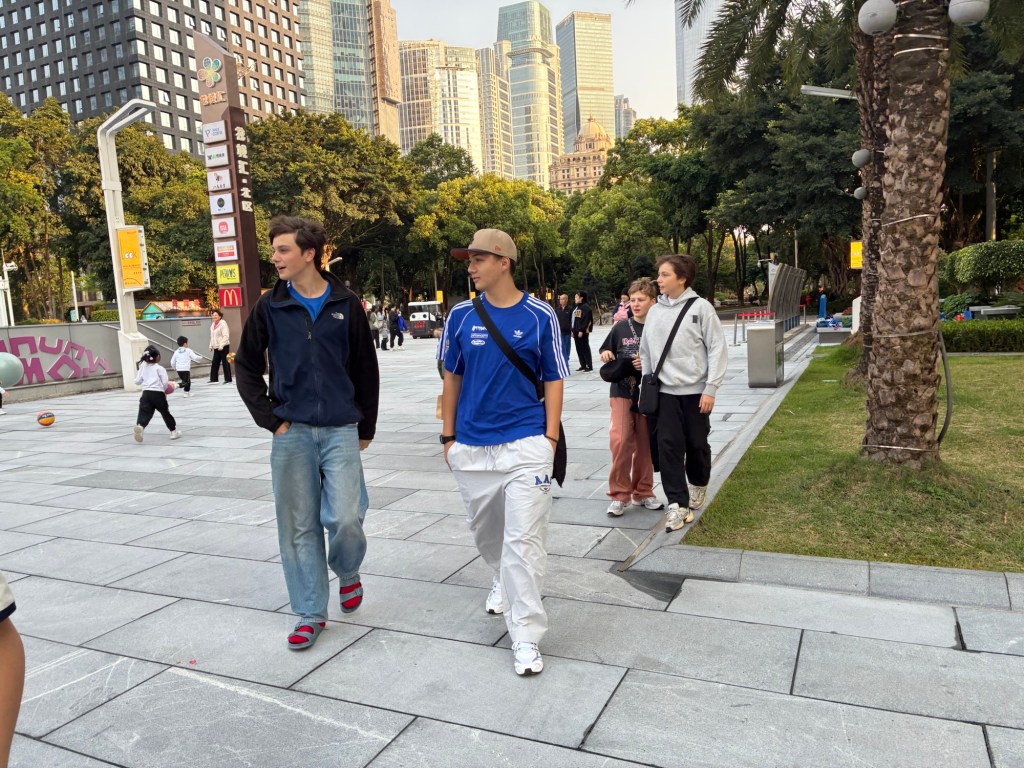
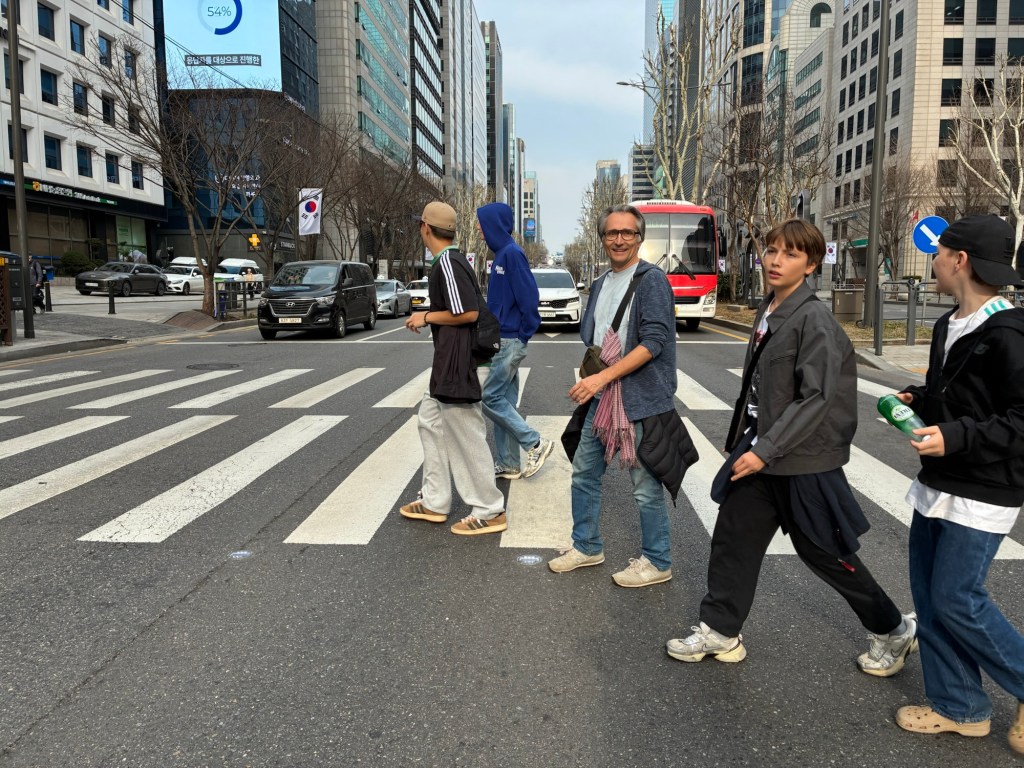
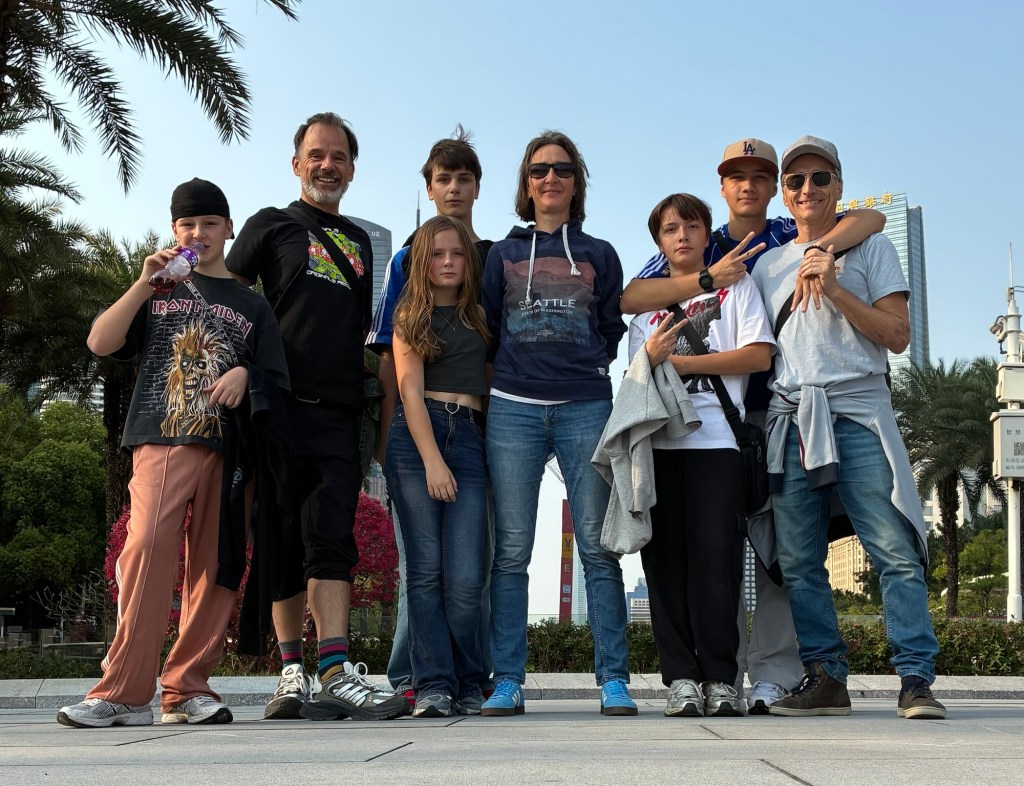
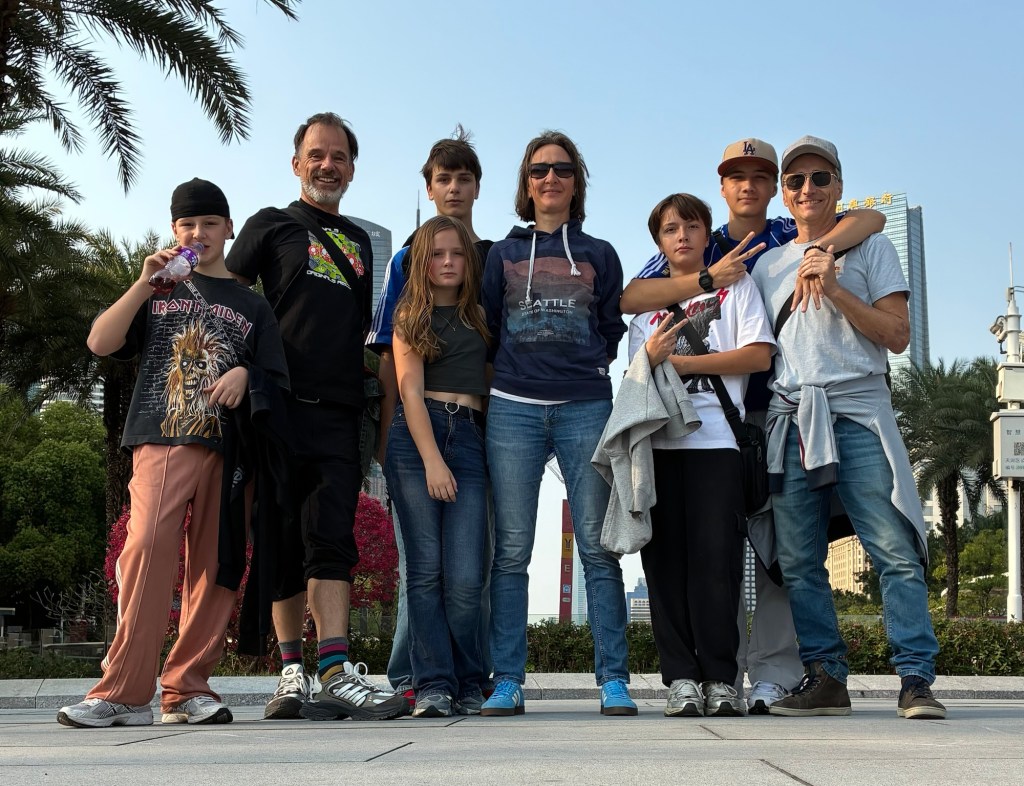
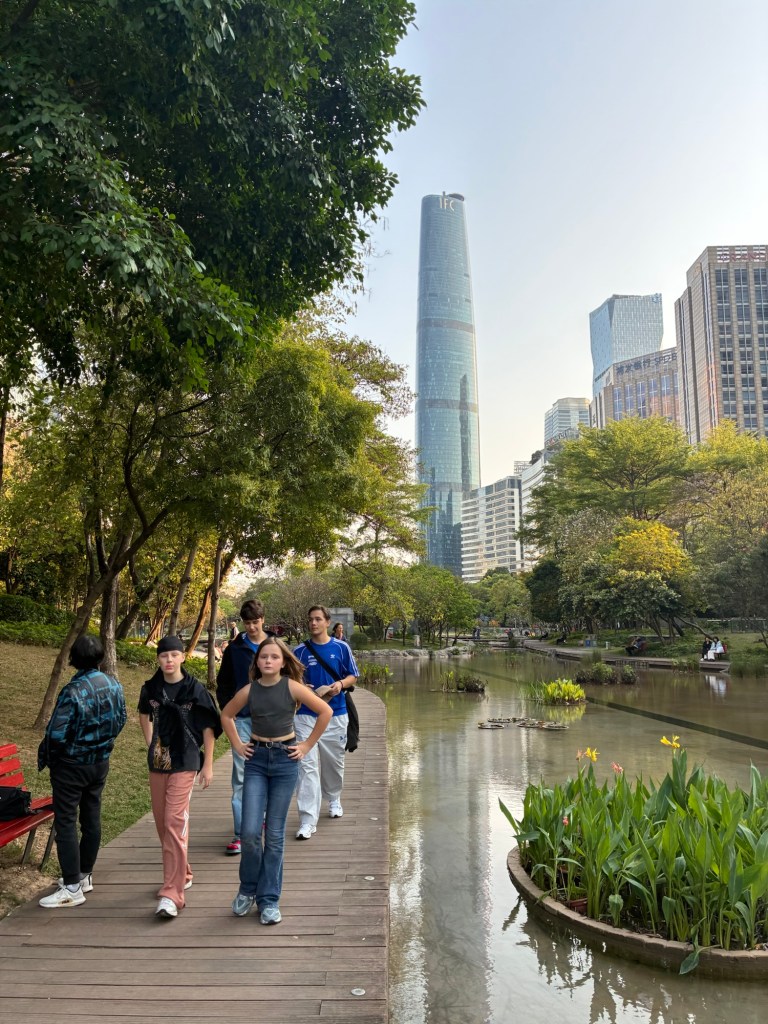
    Zum Abschied gibt es strahlenden Sonnenschein, wir genießen die tolle Parkanlage in der Skyscraper- Gegend und die Kinder toben sich noch mal aus, bevor es heute Nacht 11 Stunden nonstop nach Auckland auf die Nordinsel Neuseelands geht, vom Frühling in den Herbst. 

    Die Kinder freuen sich sehr auf Wohnmobil, die Landschaft der Hobbits und die westlichen Länder und viel Natur, die jetzt vor uns liegen. 

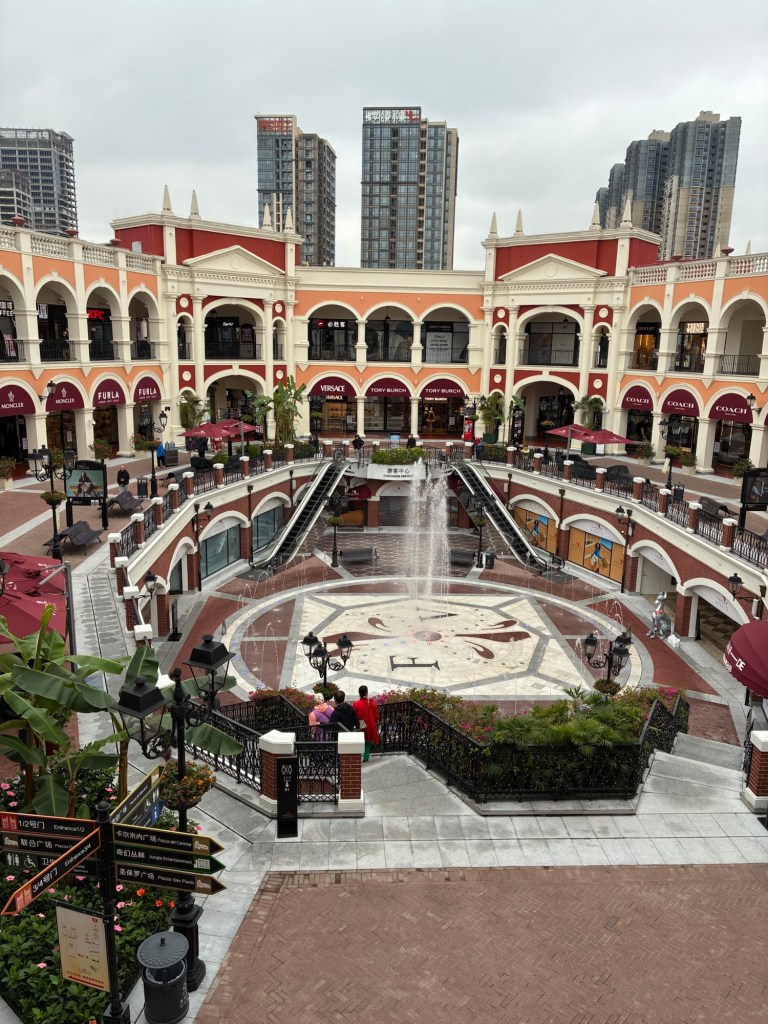
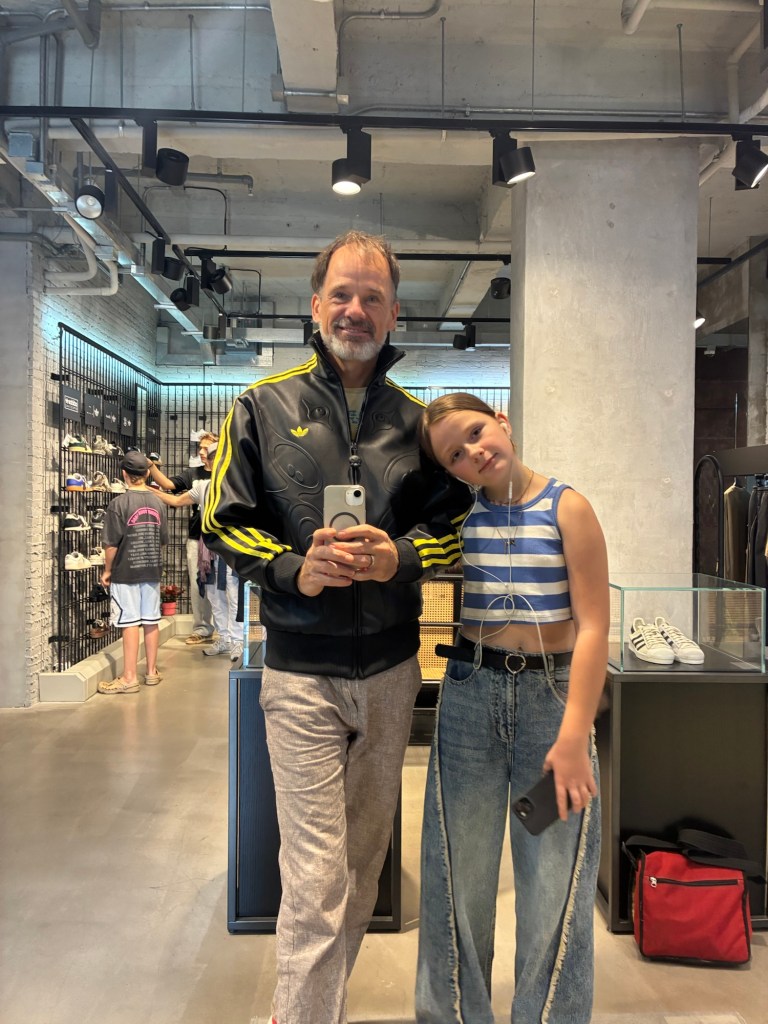
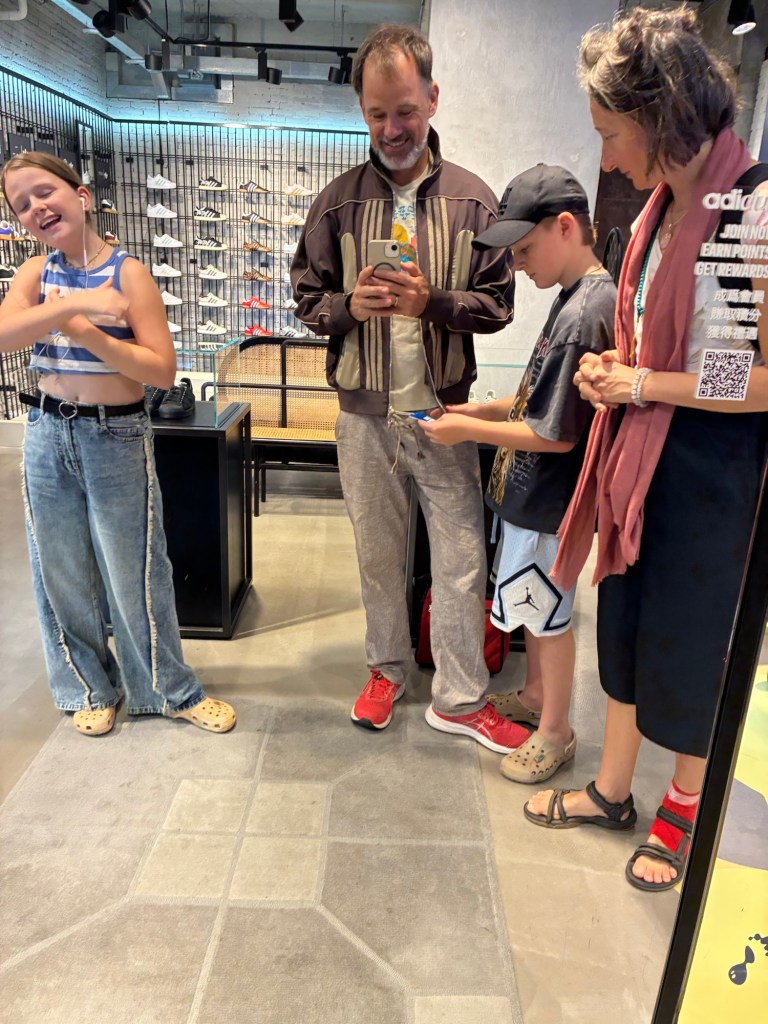
    Alle haben die intensive Tour durch Asien mit Bravour gemeistert. Und ich China freue sogar ich mich manchmal über McDonald’s und Starbucks, günstige Shopping-Outlets im italienischen Stil, wo es 4 Adidas-Läden mit dem Angebot des Monats gibt- alles 52% reduziert.

    Wir sind jetzt eine Reisegruppe mit drei Streifen..

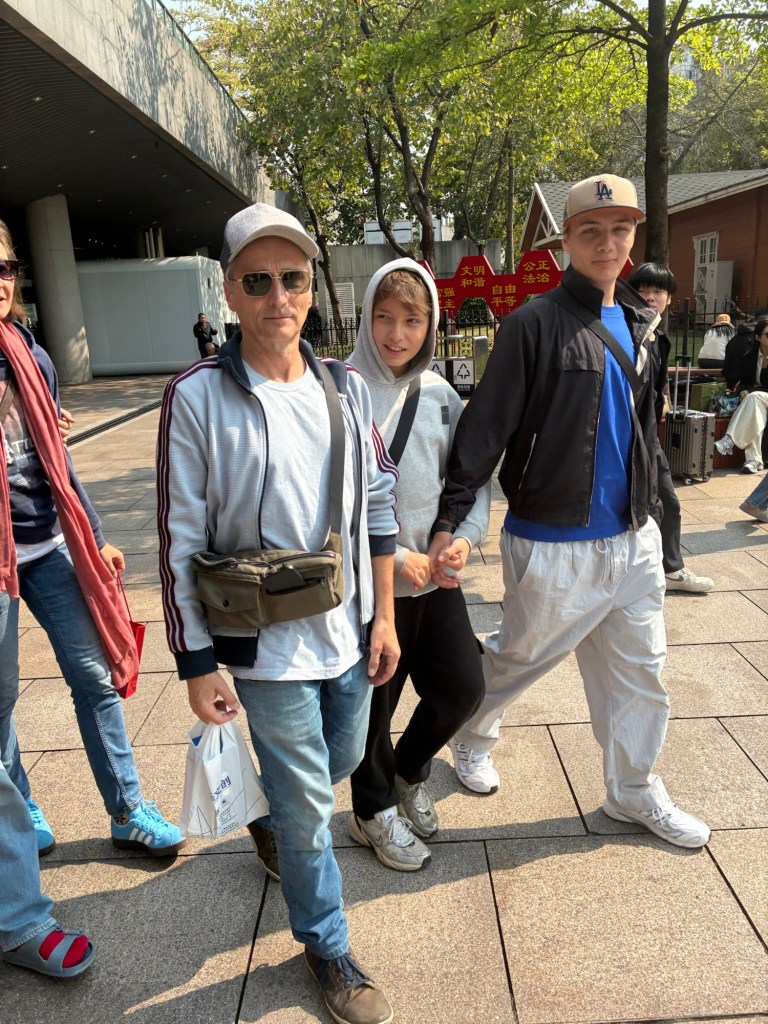
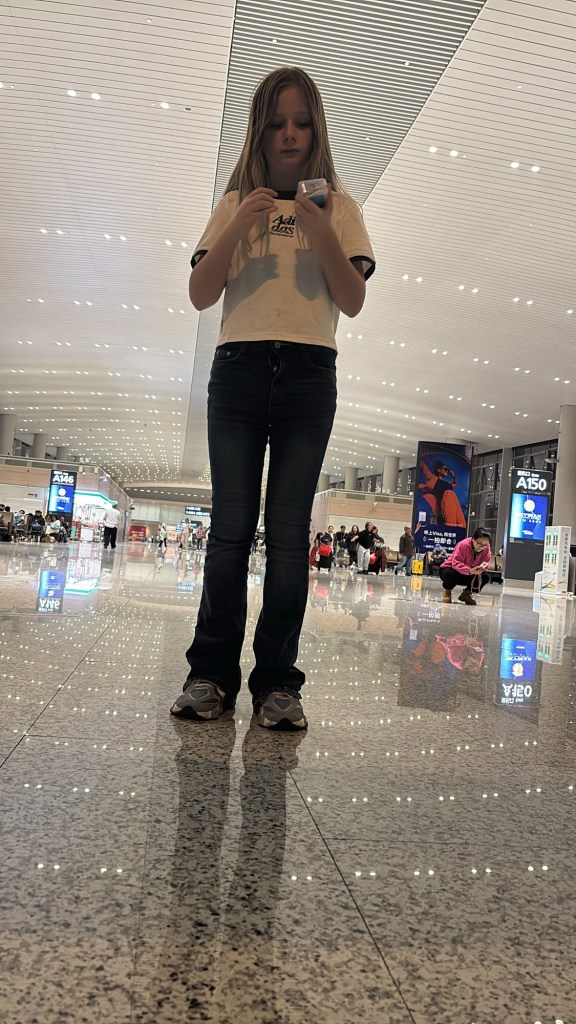
    Am Flughafen jetzt mit drei U-Bahnen rechtzeitig angekommen jetzt leider beim Einchecken die Frage nach der Einreisegenehmigung für Neuseeland. Ich frage ChatGPT- leider muss die auch für Deutsche vorher beantragt werden, auch wenn wir kein Visum brauchen. Wir laden die App, und ein Wettrennen gegen die Zeit beginnt. Als wir alle Reisepässe gescannt, Fotos gemacht und per Kreditkarte bezahlt haben beginnt das Warten. Morpheus, Inyan, Yuki und ich sind gleich grün- bei den anderen steht- Pending. 

    Wir müssen uns aufteilen- ich fliege mit den drei Kids, die anderen buchen sich ein Hotel und müssen in China warten, bis die Genehmigung kommt.

    Wir sind jetzt nach 11 Stunden Flug gut gelandet, Nadine mit Tara, Velis und Andreas haben jetzt auch die Bestätigung und können heute Nacht nachkommen. Wir holen schon mal das Wohnmobil ab.

    Day 115 and 116
    The first impression of China is that it is very large and surprisingly quiet. That’s how quiet a street can be when all the cars and motorcycles, buses and vans are electric. When the occasional truck comes along or someone honks their horn, you remember how loud it used to be. Or in Germany or India.
    Train traffic is also amazing. At 300 km/h through megacities, Shenzen and Guangzhou, in 52 minutes for 170 km with a stopover.
    The new train station in Guangzhou has 28 tracks for high-speed trains. It is larger than many airports. Not so easy for tourists, there is no ATM and no bureau de change, you can only pay with Alipay or WeChat, and I can’t get the app to load – the firewall won’t let me log in. But luckily there is an information stand and it can help us – after half an hour we have the 8 three-day passes for 6 euros each in our hands.
    It’s a completely different world to Hong Kong.
    We are in the „Greater Bay Area“, the largest metropolitan region in the world – depending on the source, between 65 and 86 million people live here in an area the size of Thuringia. One megacity borders on the next – Shemzen, Guangzhou, Foshan … each with 10 to 20 million.
    All the trains and stations are new and ultra-modern, with escalators everywhere. Every subway entrance has an X-ray check for luggage, and there is always a one-meter metal ball with 10 cm of steel in which dangerous objects can be safely stored.
    China is about the same size as the USA and has connected the entire country with 45,000 km of high-speed train lines, with plans to build 70,000 km by 2035.
    We are in a commercial metropolis, the former Canton has an impressive skyline, with 550 to 600 meter high towers that can be admired from the Pearl River, especially at night. And there is a freefall tower at a height of 480 meters – you only fall 30 meters, but they are quite something. We can’t miss out on that.

    The. Cabs are electric and European brands have become rare on the streets. There are only electric motorcycles and scooter sockets everywhere.

    People do group gymnastics in the squares in the evenings. In some places it looks like India, in others more modern than we are used to.

    Every now and then you see Karl Marx, but rarely the red flag. But party songs are played from the loudspeakers in the park, as Shazam tells me.

    Yes, China. This country definitely triggers mixed feelings. From Hong Kong onwards, you can already feel the firewall that is supposed to block all criticism of the regime on the Internet. For me, the incredible security measures everywhere are clearly directed against attacks, as the Uyghurs are massively repressed. The food is difficult for me, I don’t really warm to it. Velis is reading 1984 and said that this is China. There is something to that. But on the other hand, when you come from India, it’s amazing how much this country has developed and how organized and massive the future is being built here – or how a state system has regulated and determined everything for thousands of years. Everywhere someone is keeping order and there are cameras everywhere. When we checked in, we made sure that we queued in an exactly straight line.
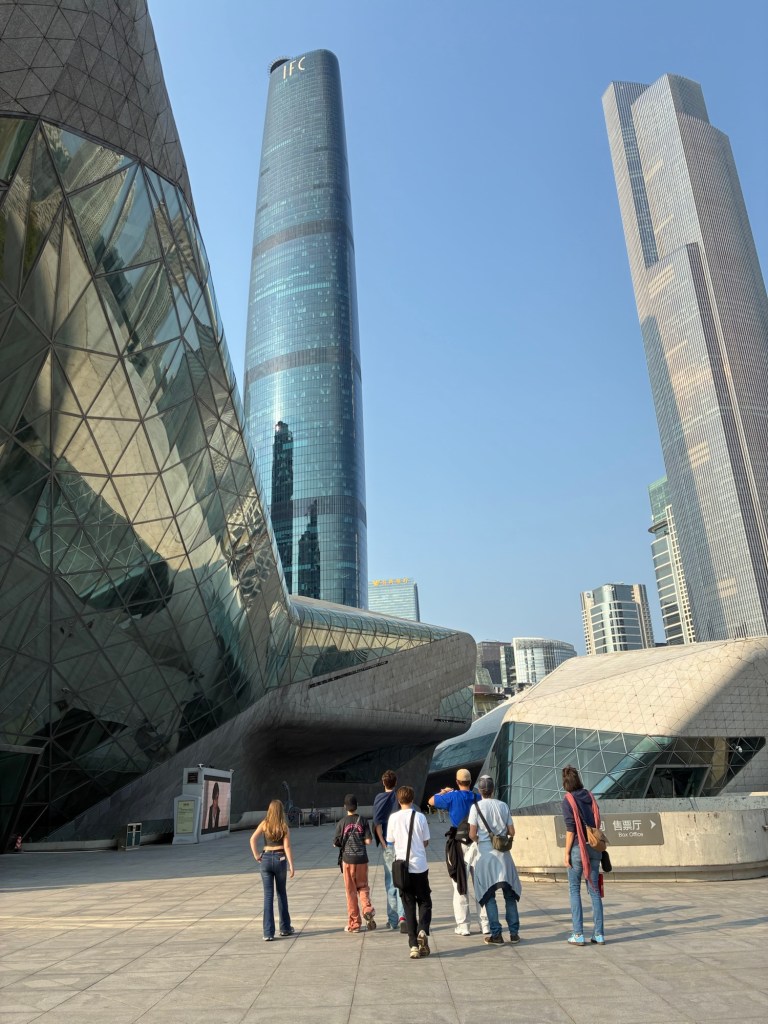
    We say goodbye in bright sunshine, enjoy the great park in the Skyscraper area and let the children run around before the 11-hour non-stop flight to Auckland on the North Island of New Zealand tonight, from spring to fall.

    The children are really looking forward to the motorhome, the Hobbit landscape and the western countries and lots of nature that now lie ahead of us.

    Everyone has mastered the intensive tour through Asia with flying colors. And I China, even I sometimes enjoy McDonald’s and Starbucks, cheap Italian-style shopping outlets where there are 4 Adidas stores with the offer of the month – all 52% off.
    We are now a travel group with three stripes.

    Arrived at the airport on time with three subway trains, but now unfortunately the question about the entry permit for New Zealand at check-in. I ask ChatGPT – unfortunately this also has to be applied for in advance for Germans, even if we don’t need a visa. We download the app and a race against time begins. Once we’ve scanned all the passports, taken photos and paid by credit card, the wait begins. Morpheus, Inyan, Yuki and I are immediately green – the others are marked Pending.

    We have to split up – I fly with the three kids, the others book a hotel and have to wait in China until the permit arrives.

    We have now landed safely after an 11-hour flight, Nadine with Tara, Velis and Andreas have now also received confirmation and can join us tonight.

  • Hong Kong- The Vertical City

    Tag 113 und 114 

    Die Einreise nach Hongkong ist erstaunlich unkompliziert, keine Formulare, keine Biometrie. Hongkong ist schwül warm, und gleich nochmals ein ganz anderes Kaliber als die bisherigen Großstädte.

    Um ChatGpt weiter nutzen zu können, und die große chinesische Firewall zu umgehen, müssen wir erst ein VPN fürs Handy laden – doch dann geht alles wieder, auch mit der lokalen Telefonkarte. Wie wir lernen, gehört Hongkong zwar zu China, ist aber eine Special District Zone, mit eigener Währung und eigenem Telefonnetz – für Main Land brauchen wir ein Roaming.

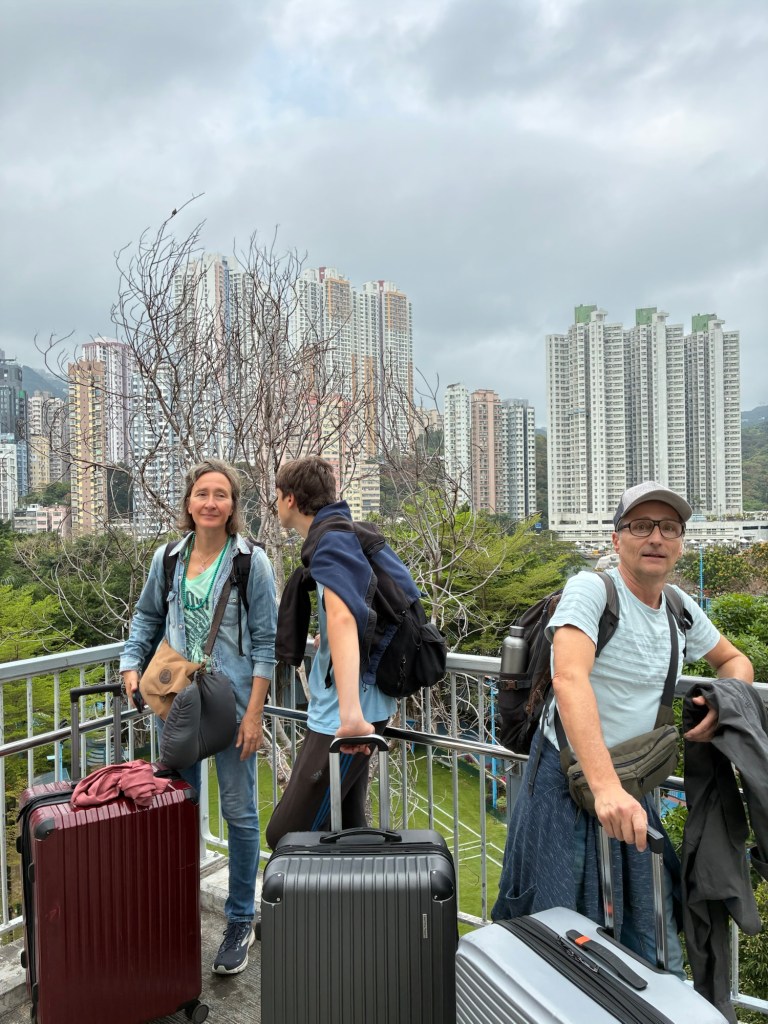
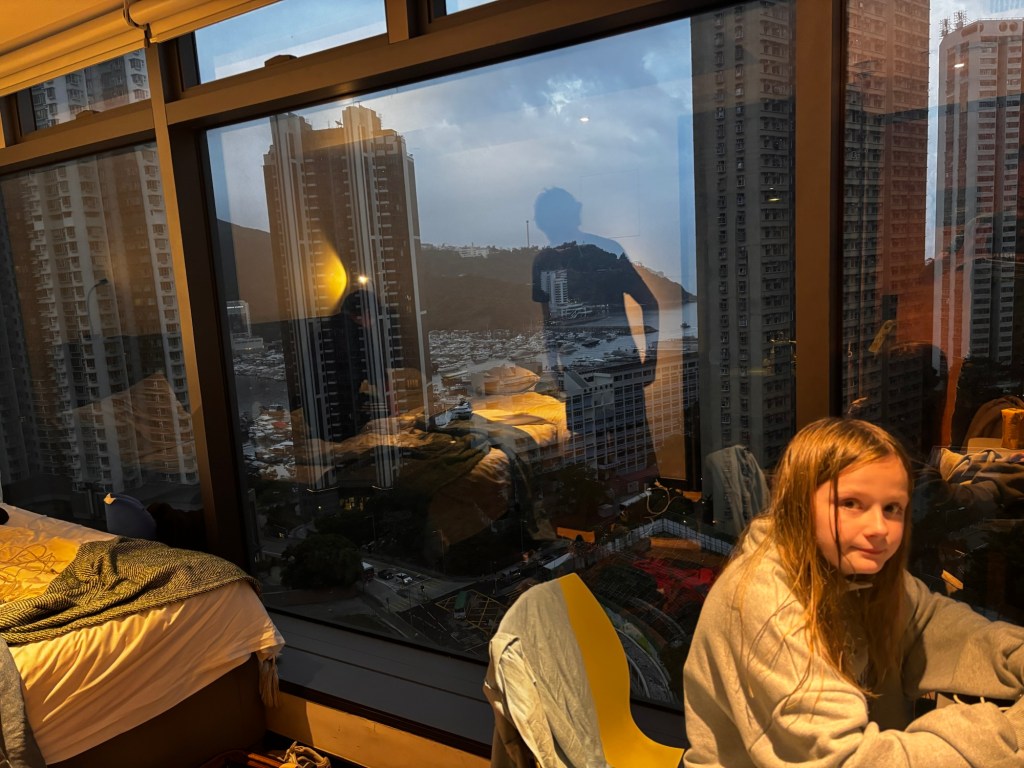
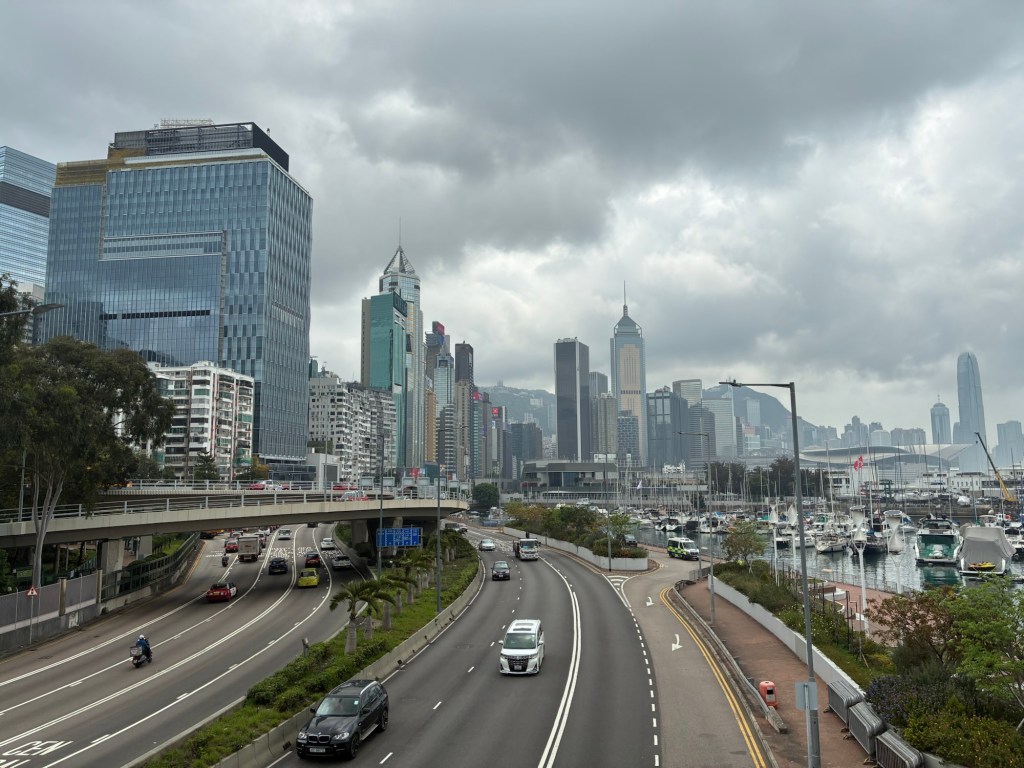
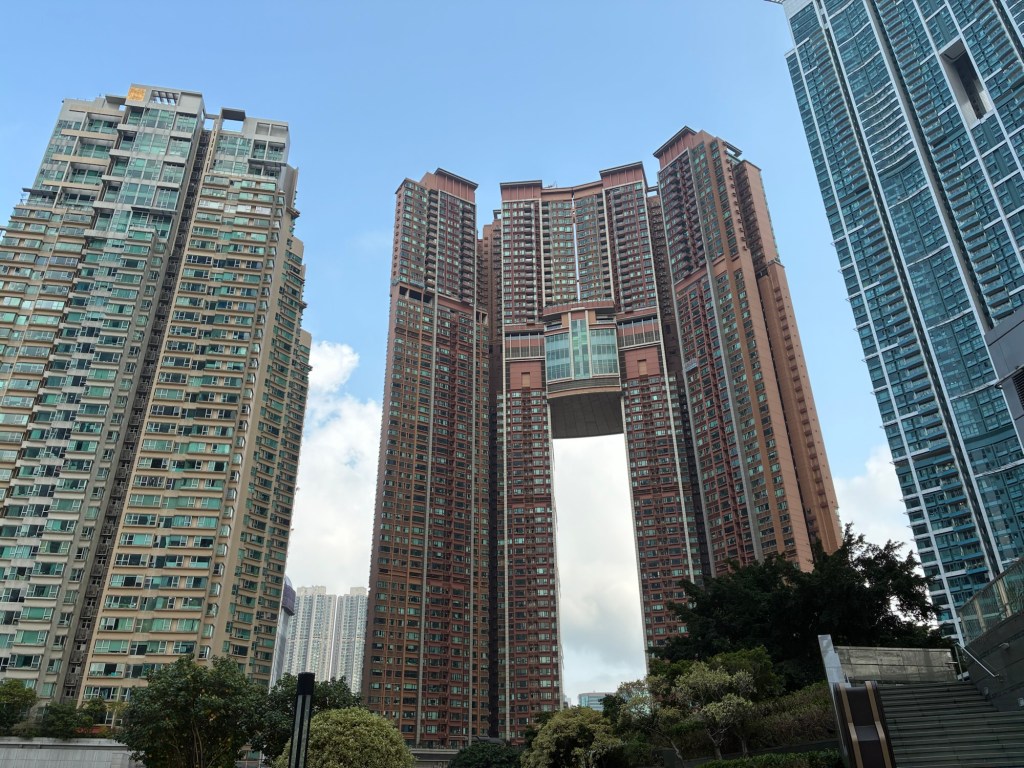
     Der Highspeed Train bringt uns in 25 Minuten in die Innenstadt, und mit der U-Bahn landen wir ganz im Süden auf South Island in einer Hochhäusergegend. Unser Hotel ist nagelneu, hat nur drei Zimmer pro Stockwerk, dafür aber 29 Stockwerke. Aus dem Zimmer der Kinder im 28. Stock sieht man aber, dass dies nur ein kleines Haus ist.

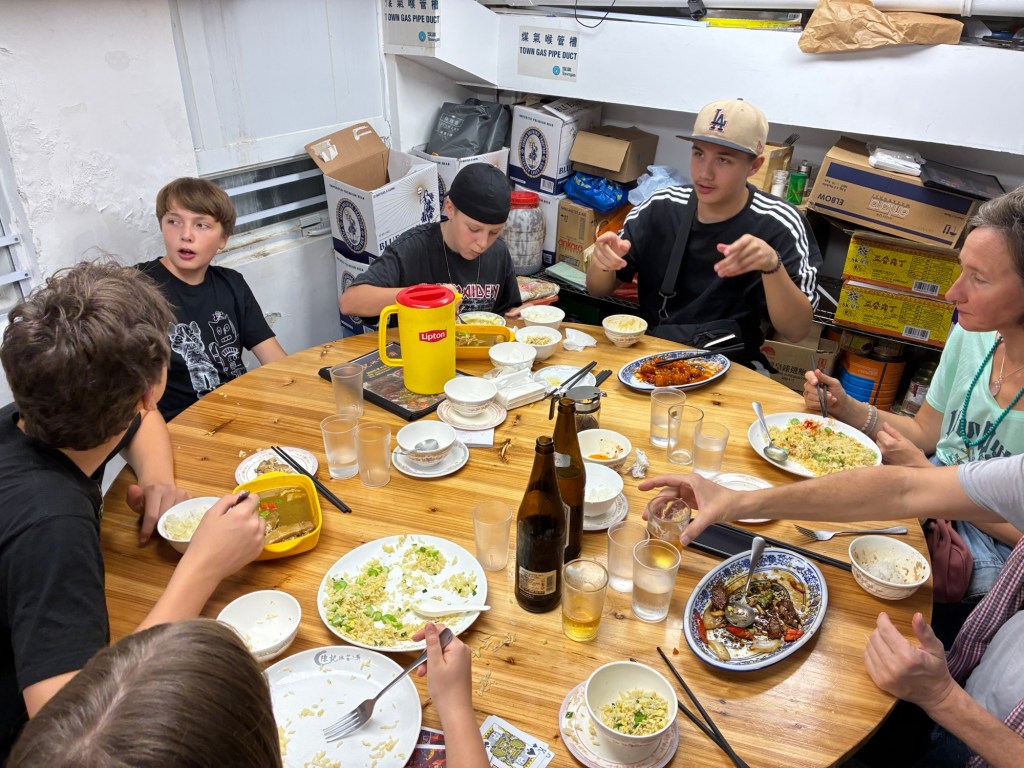
    Zum Abendessen gehen wir in ein kleines, lokales Restaurant, im zweiten Stock ist im Lager noch Platz, und alle sind sehr herzlich.

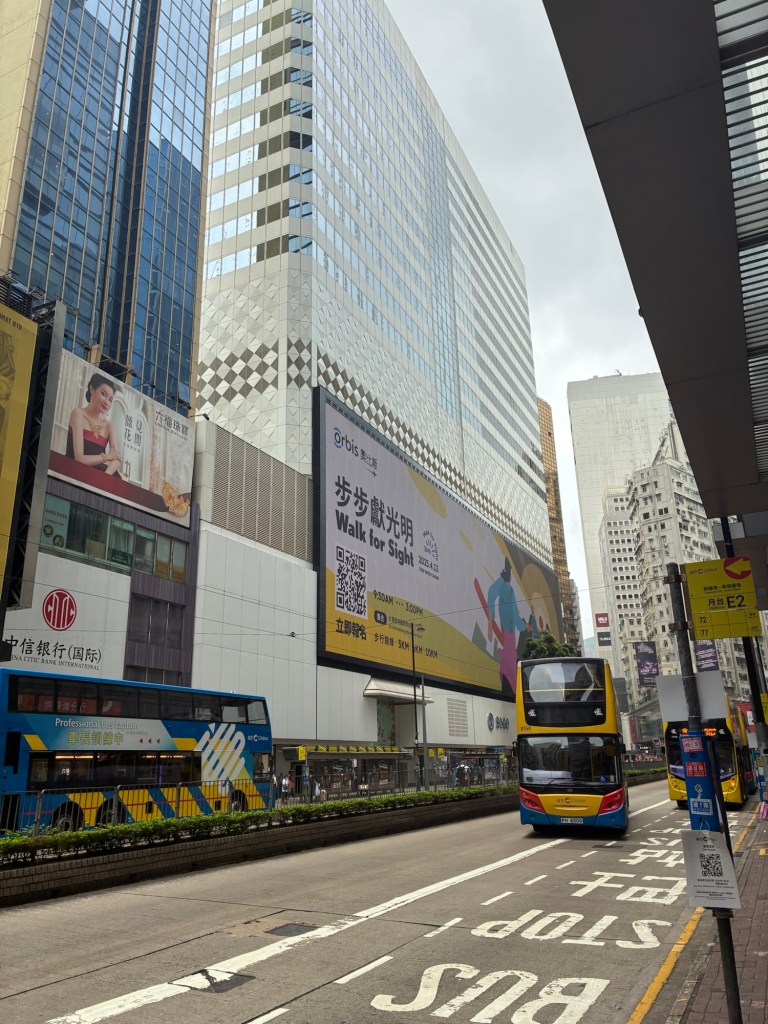
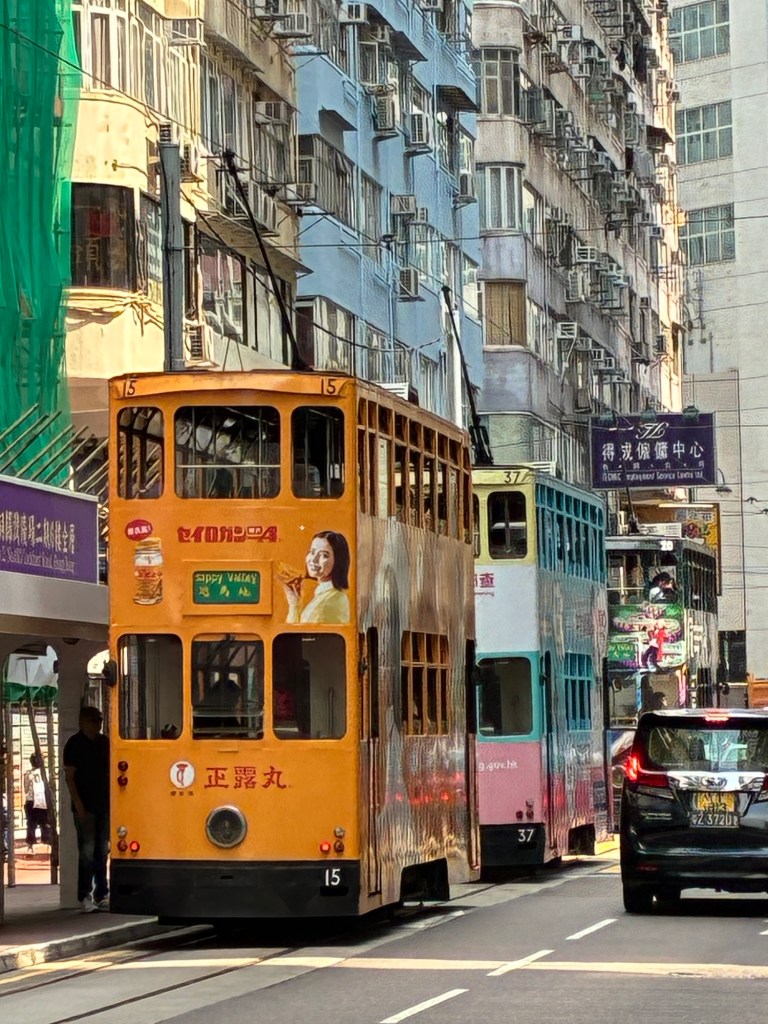
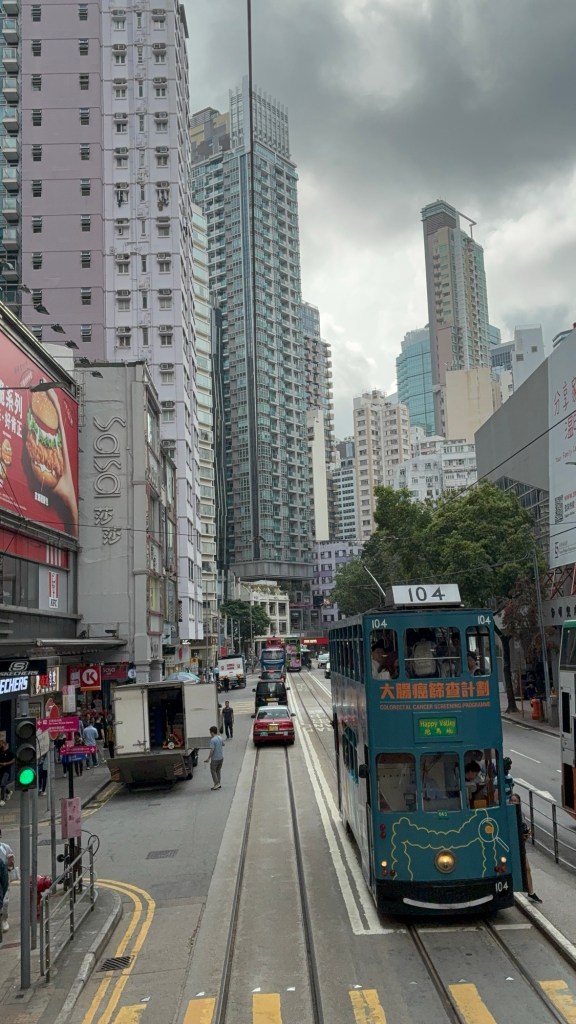
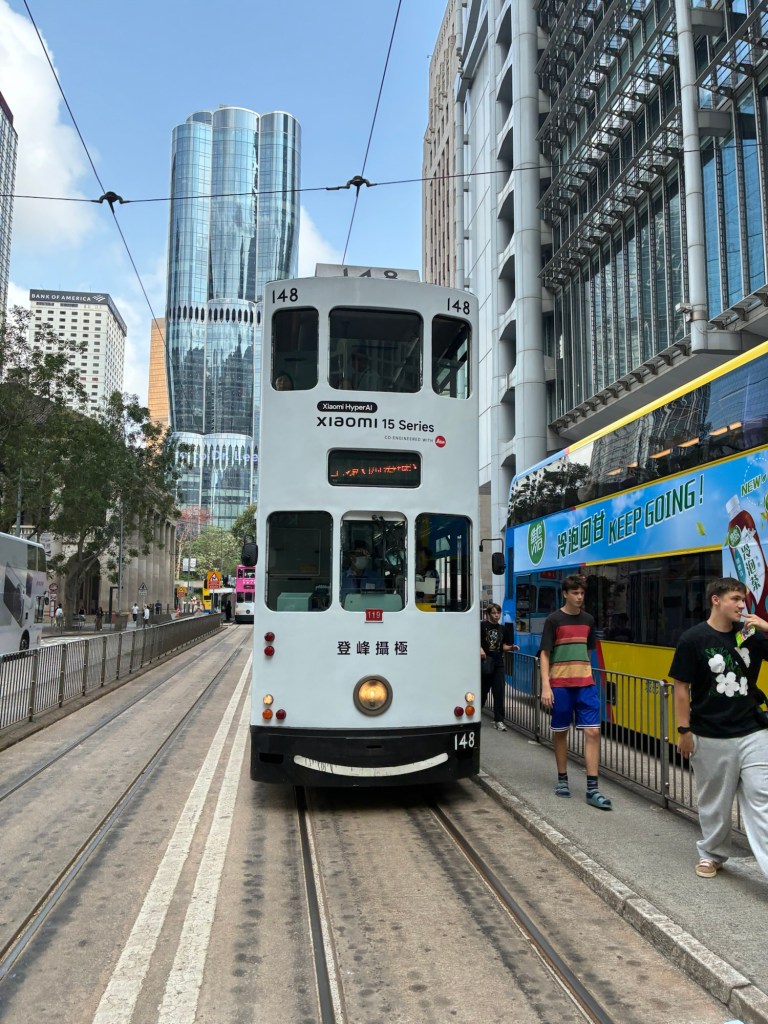
    Am nächsten Tag geht es mit der Doppelstockstraßenbahn durch das Bankenviertel – eine tolle Erfahrung.

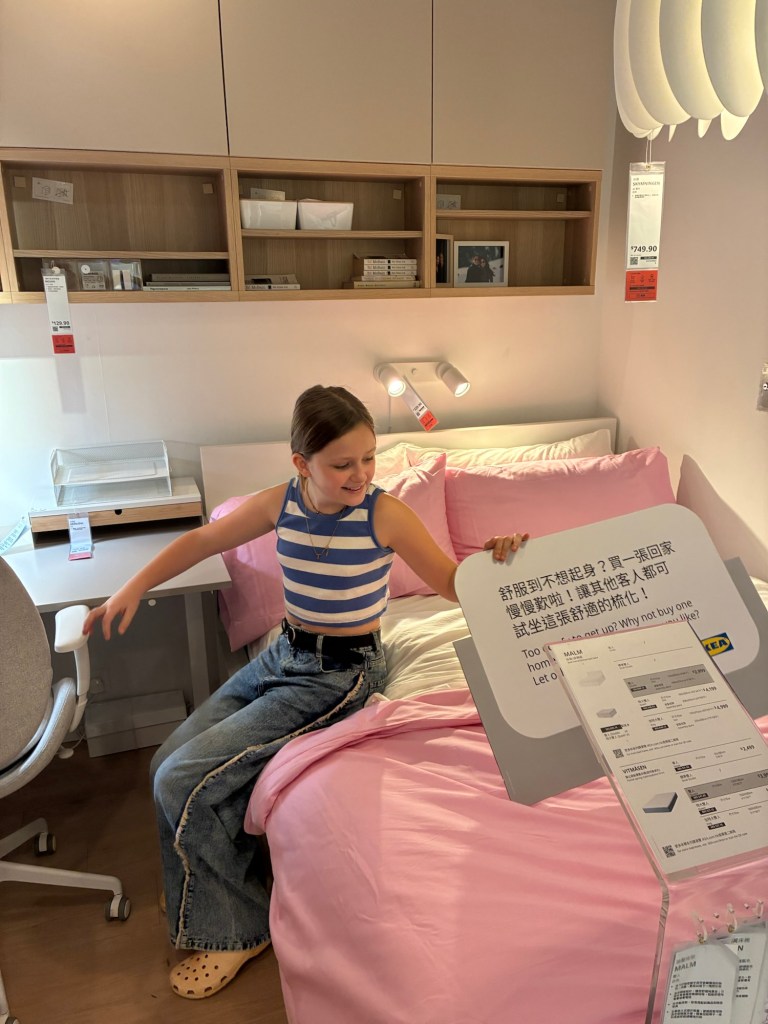
    Wir schauen in ein paar Läden vorbei, kaufen dann aber doch nichts . Tara freut sich über eine Stippvisite des Ikea-Markts. Hier sind alle Einrichtungen sehr klein gehalten, bei einer Miete von 50 Euro pro Quadratmeter sind die Wohnung entsprechend winzig. Auch in unser Hotelzimmer passt neben dem Bett praktisch nichts mehr hinein.

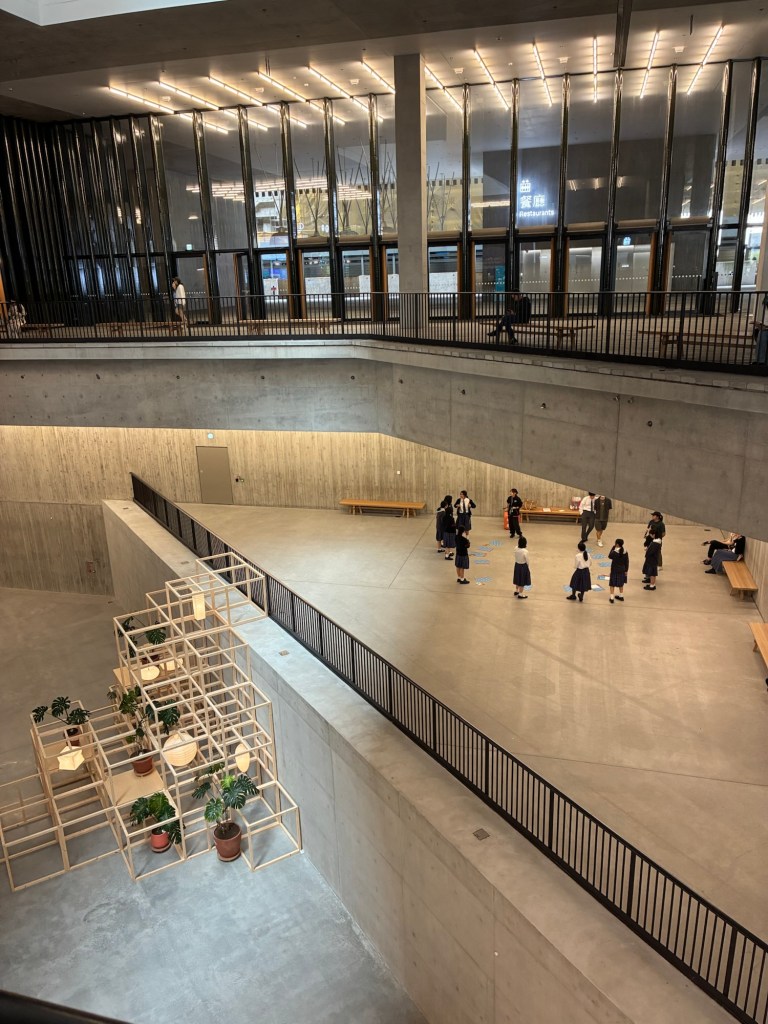
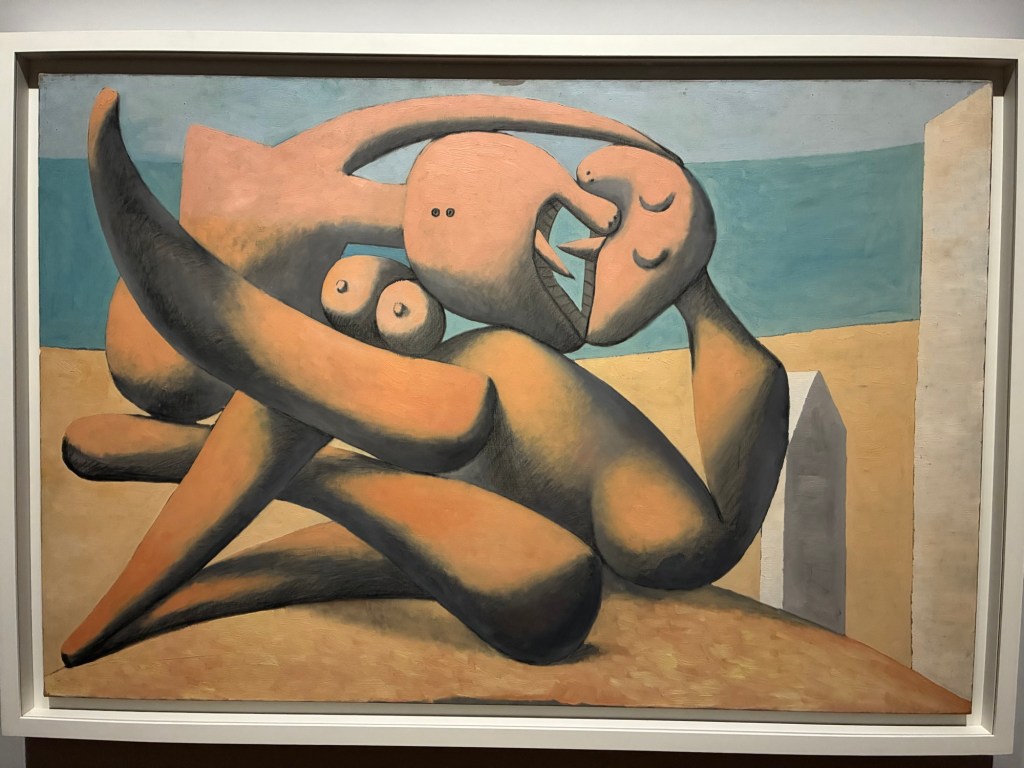
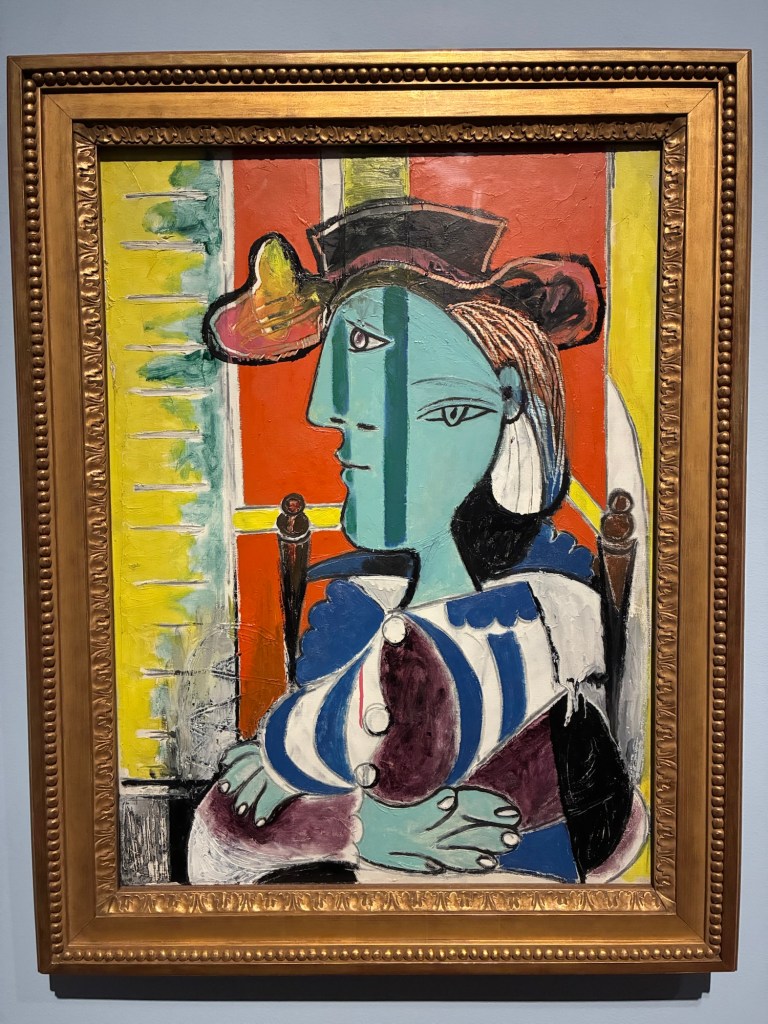
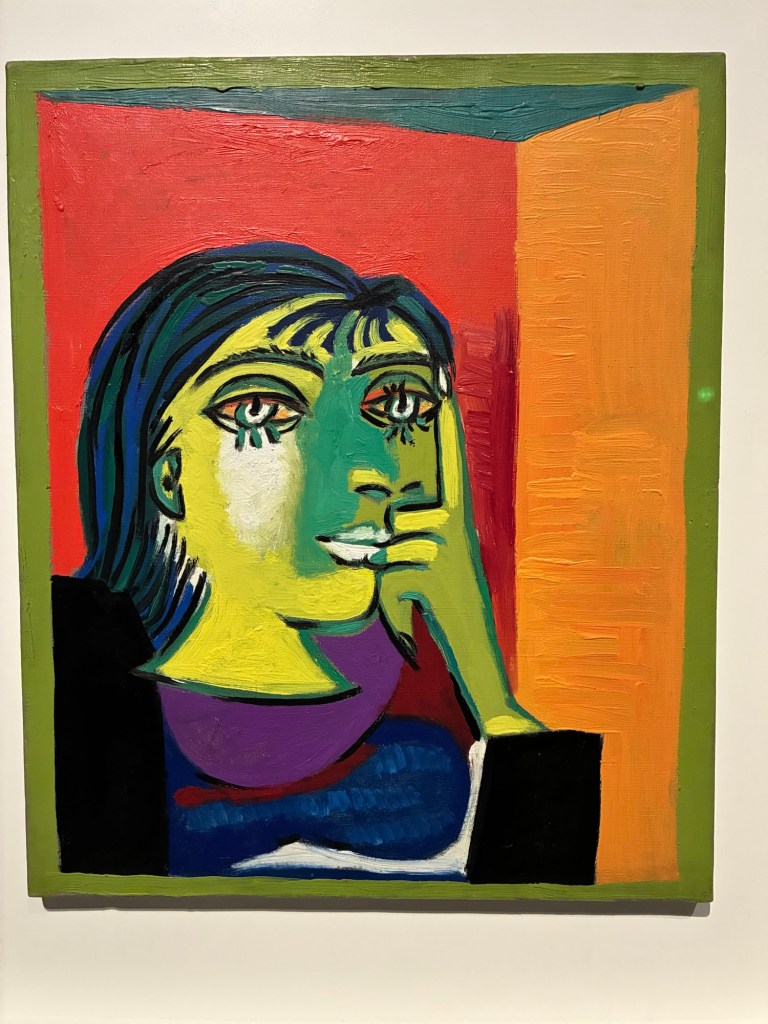
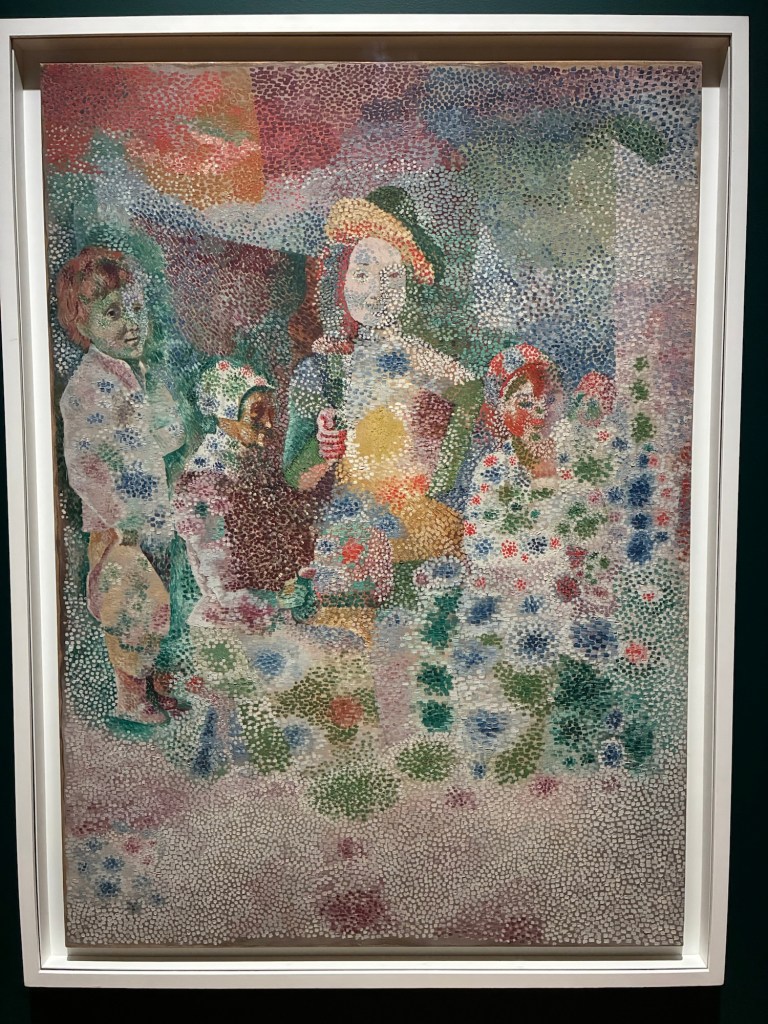
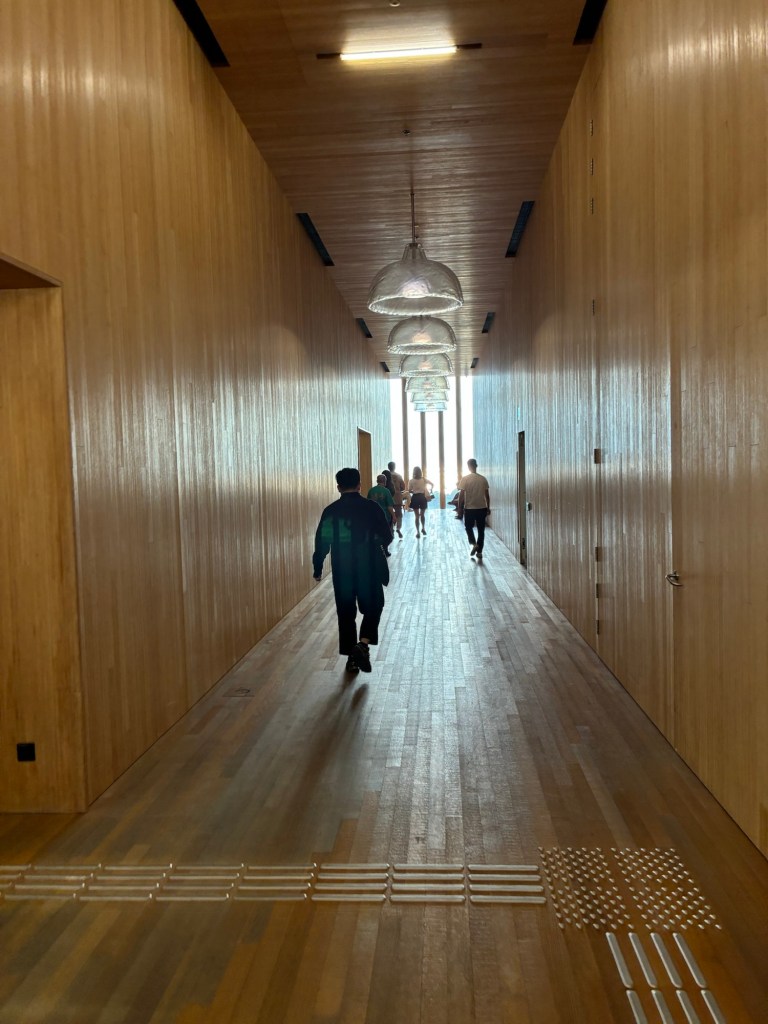
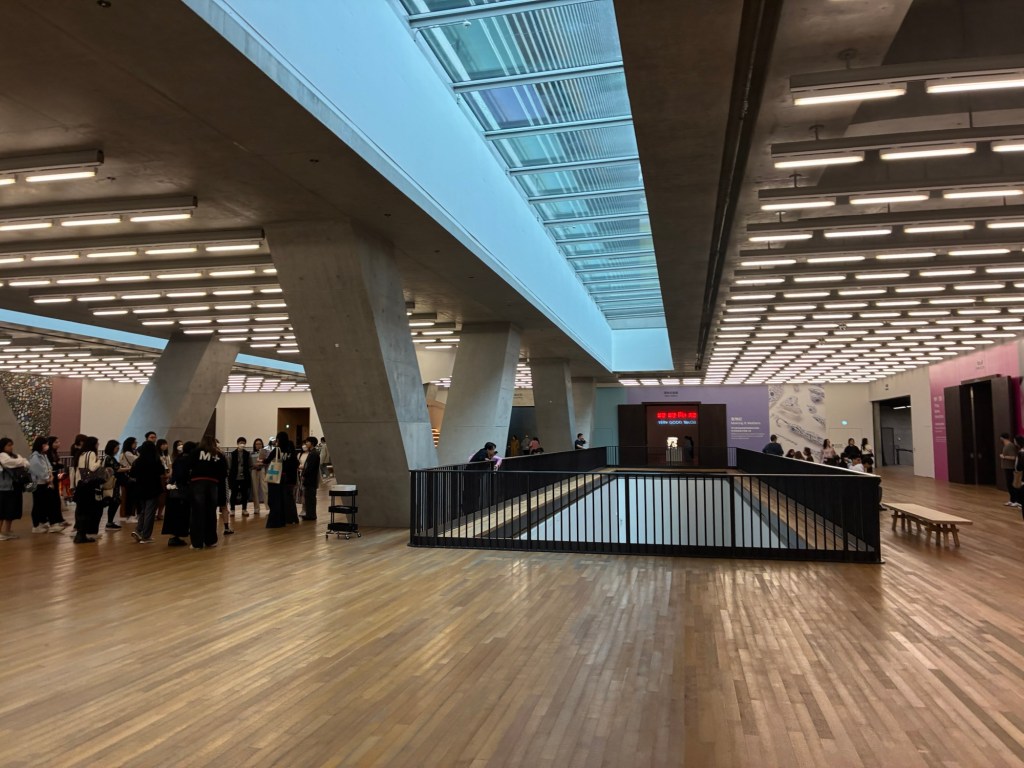
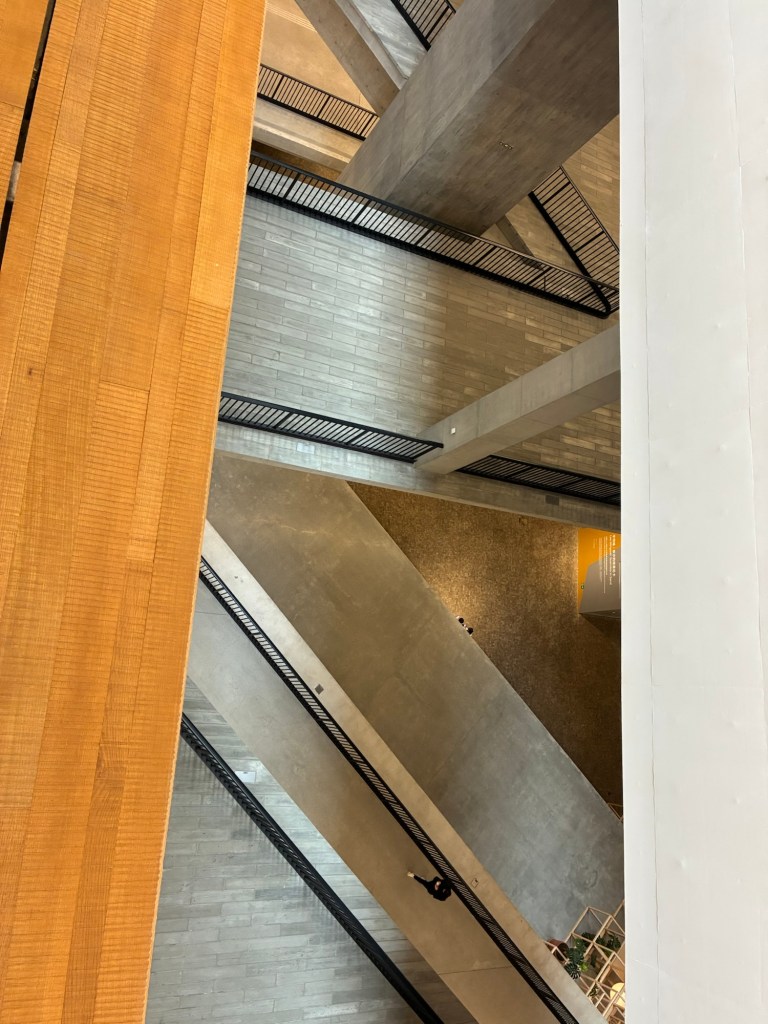
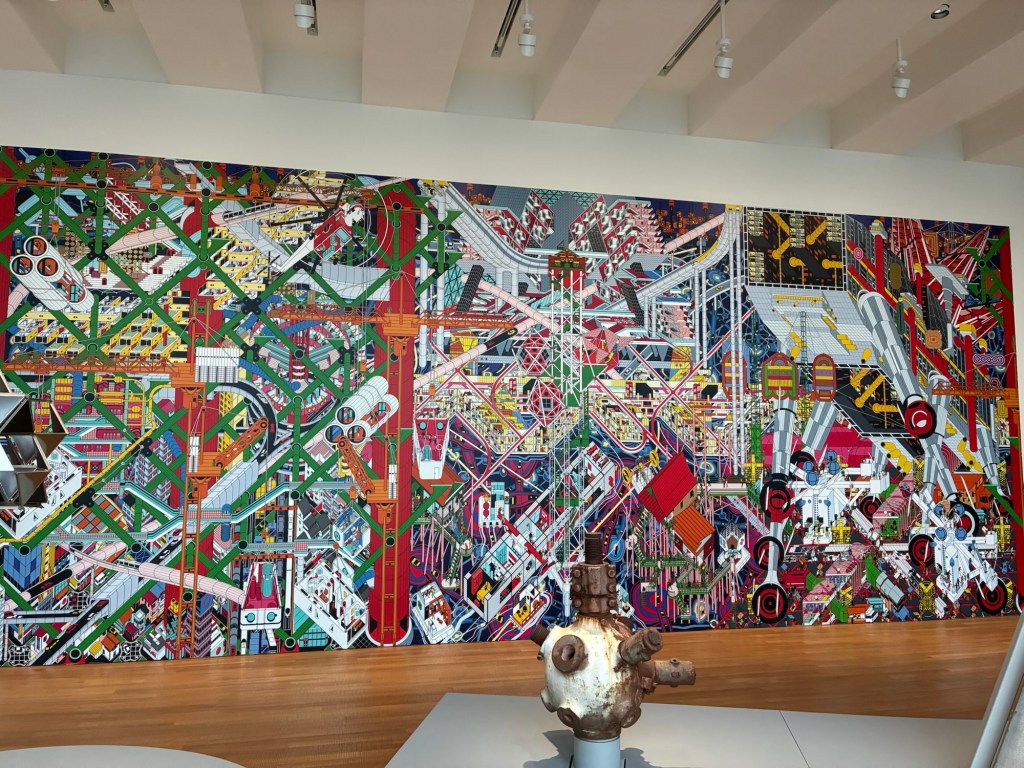
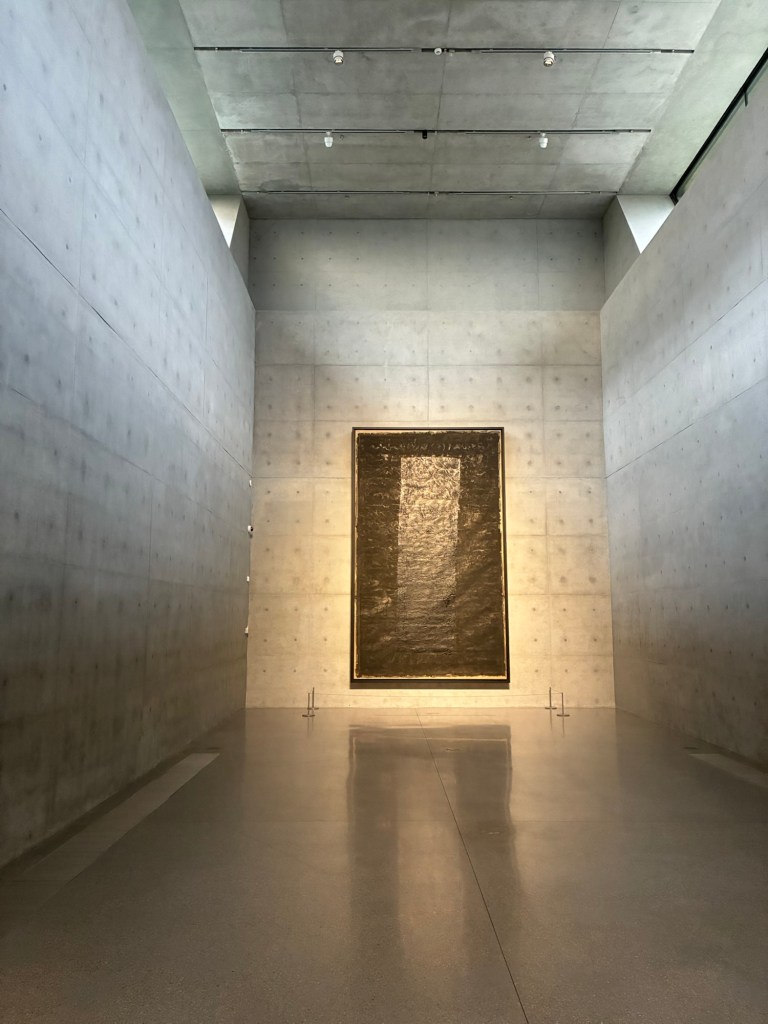
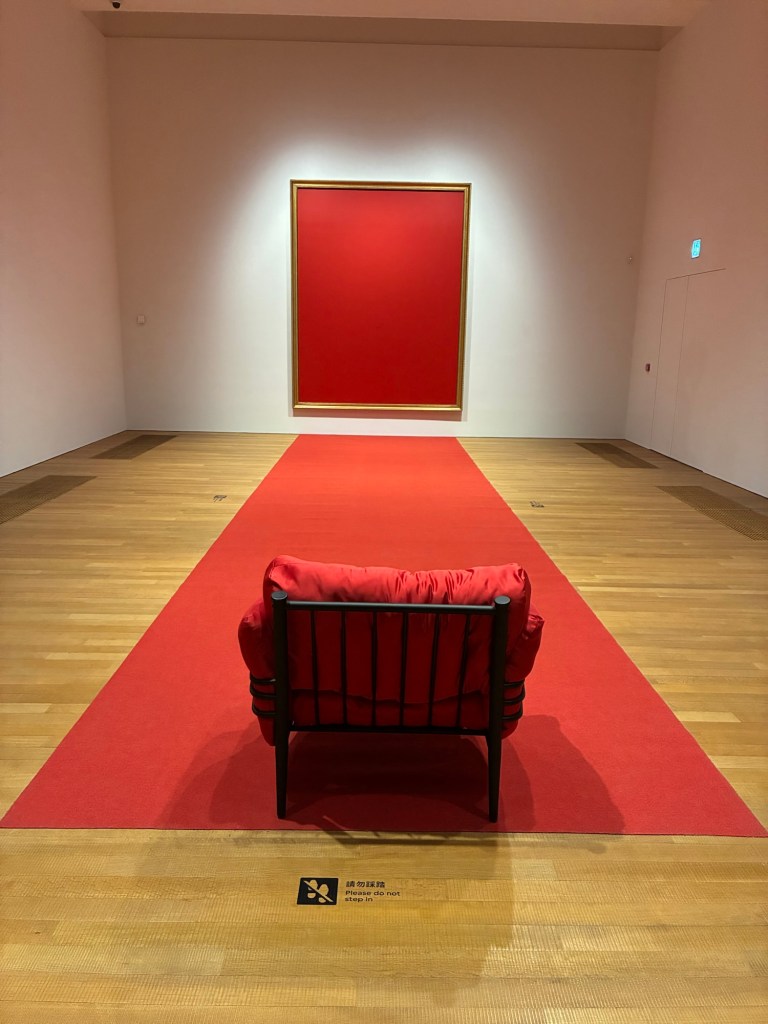
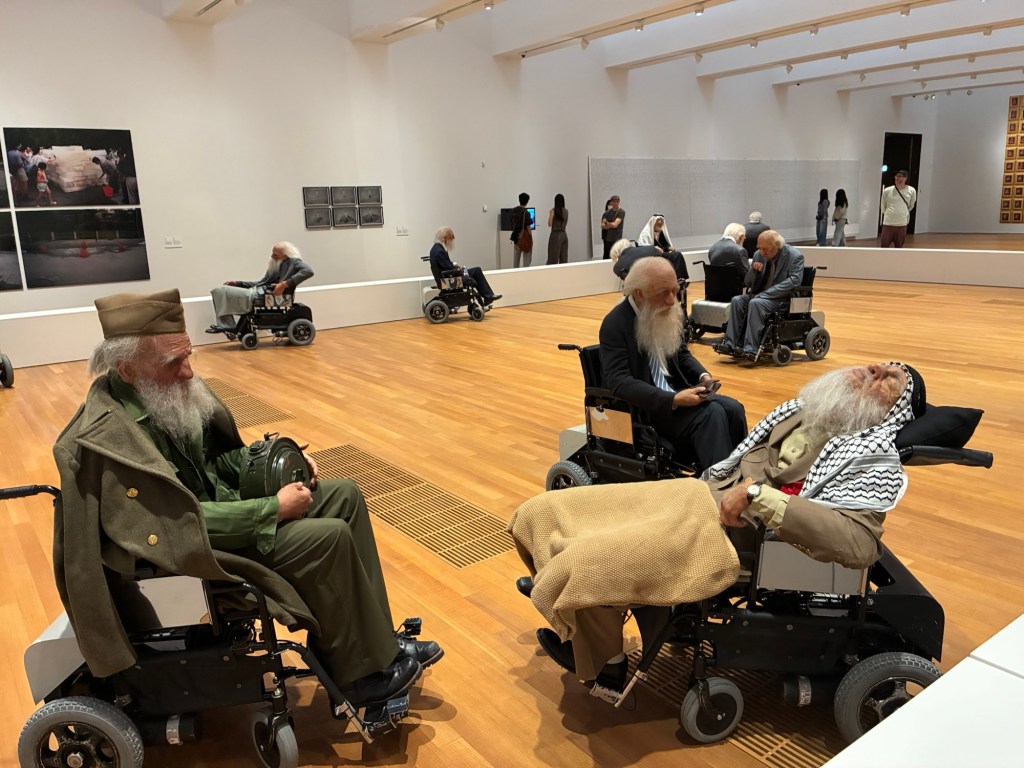
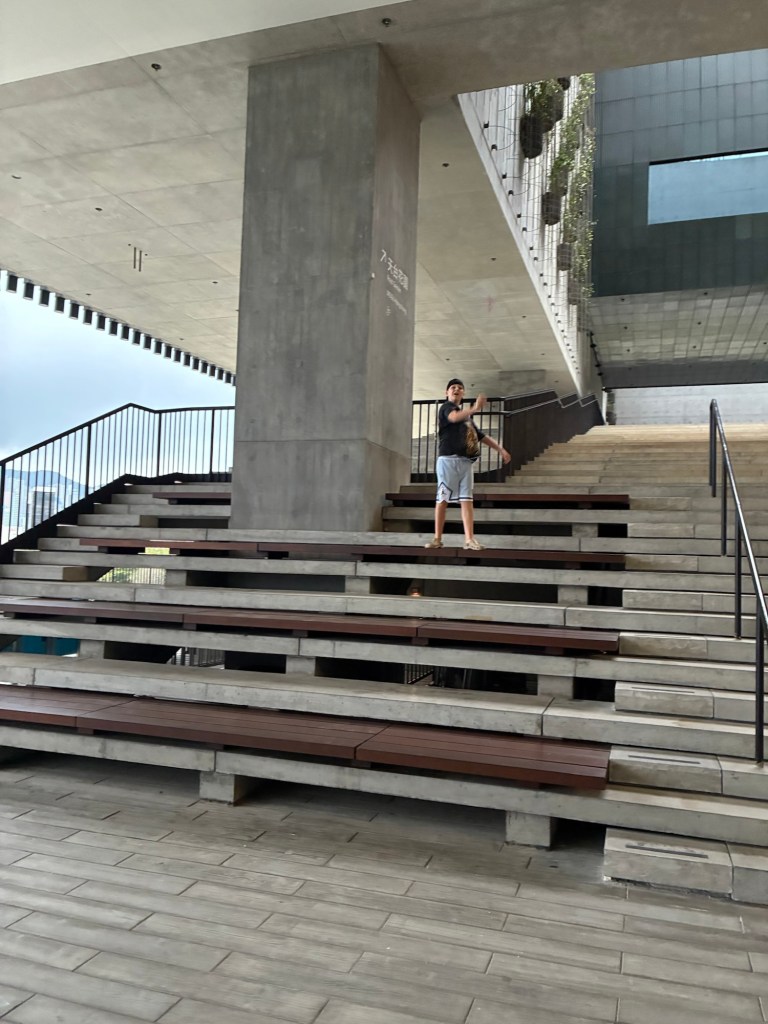
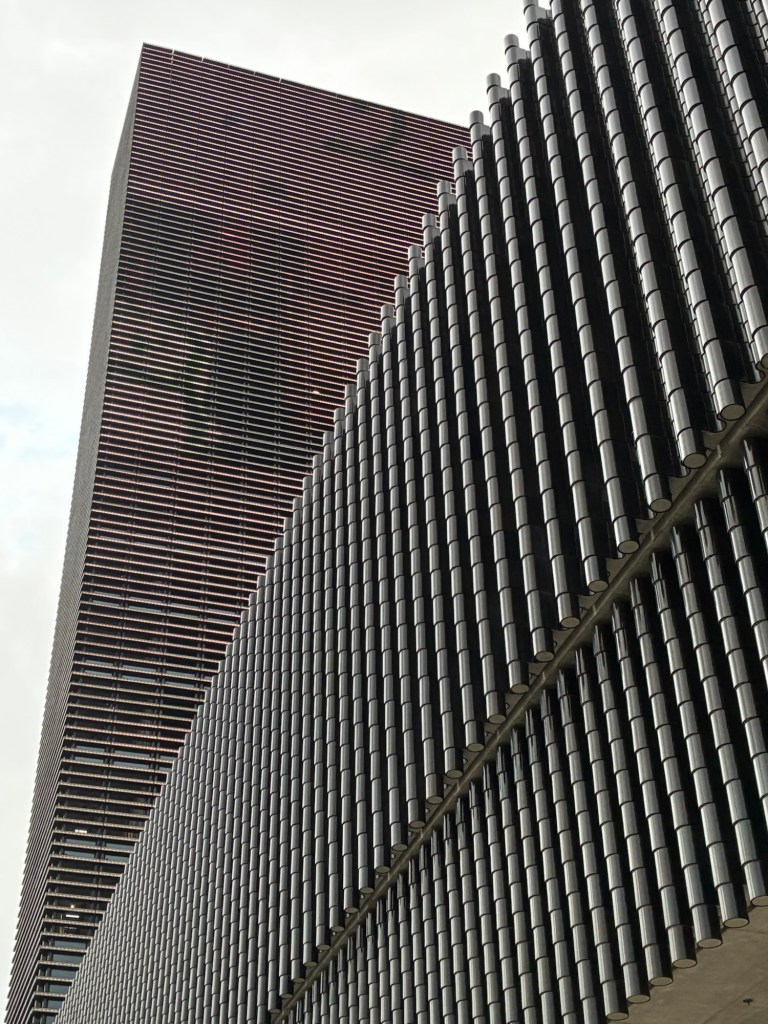
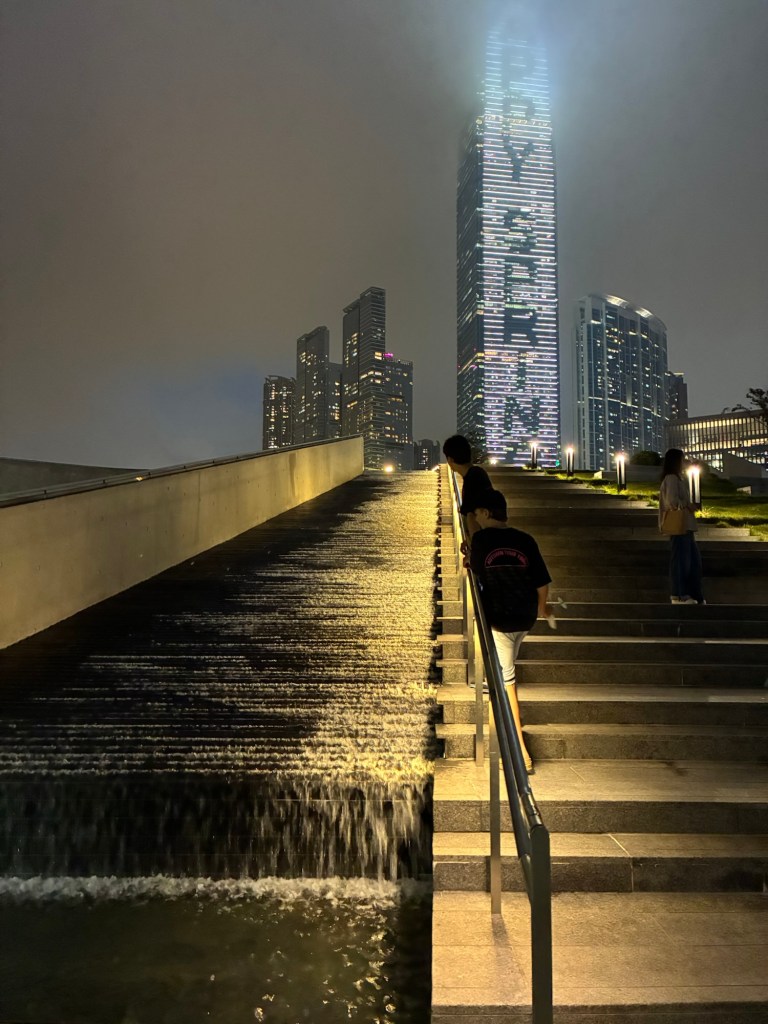
    Das neue, 2021 eröffnete M+ Museum verlockt mit der Picasso- Ausstellung, und seiner beeindruckenden Architektur. Man spürt, dass Hongkong Milliarden investiert, um die von 65 auf 45 Millionen Touristen im Jahr gesunkenen Besucherzahlen wieder zu steigern. 

    Ich denke, es wird gelingen. Das ganze Areal rund um das neue Museum und das Museum selbst sind wirklich eindrucksvoll – und auch Picasso war mal wieder sehr schön, gerade in seiner Rezeption in Asien dargestellt. 

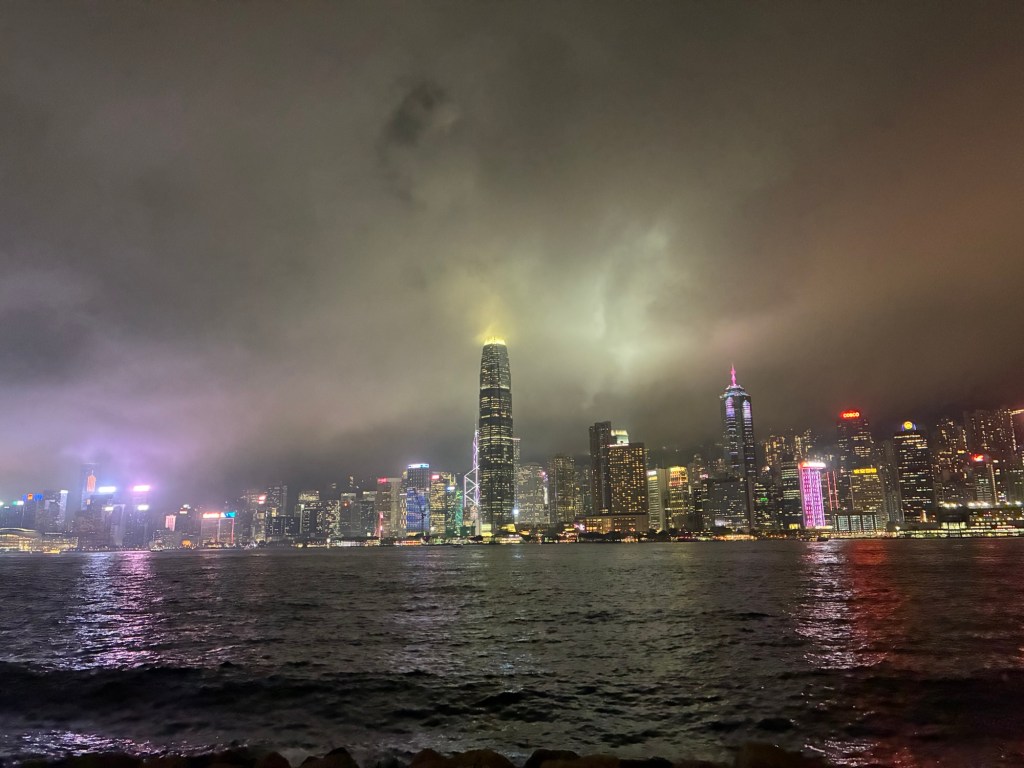
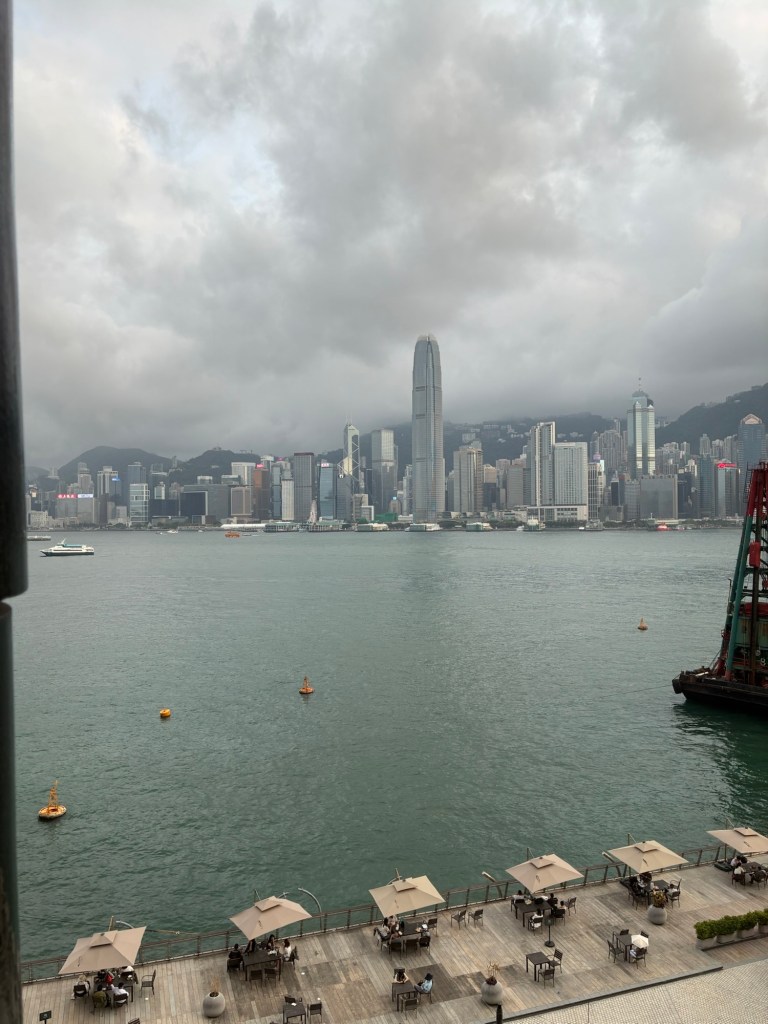
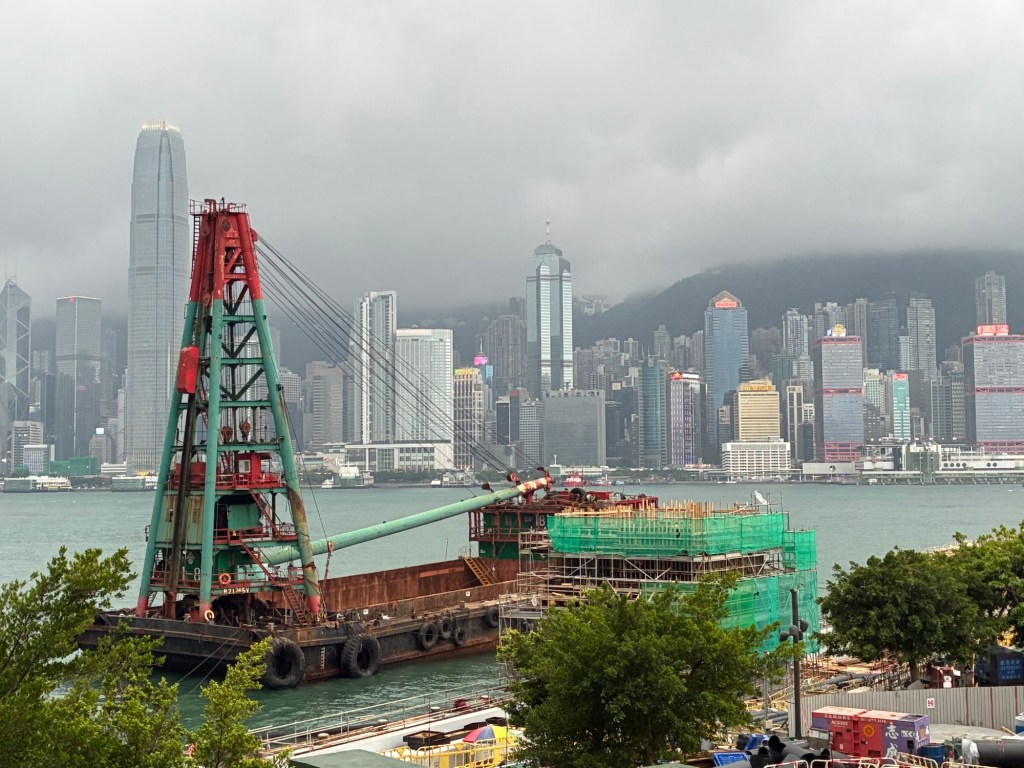
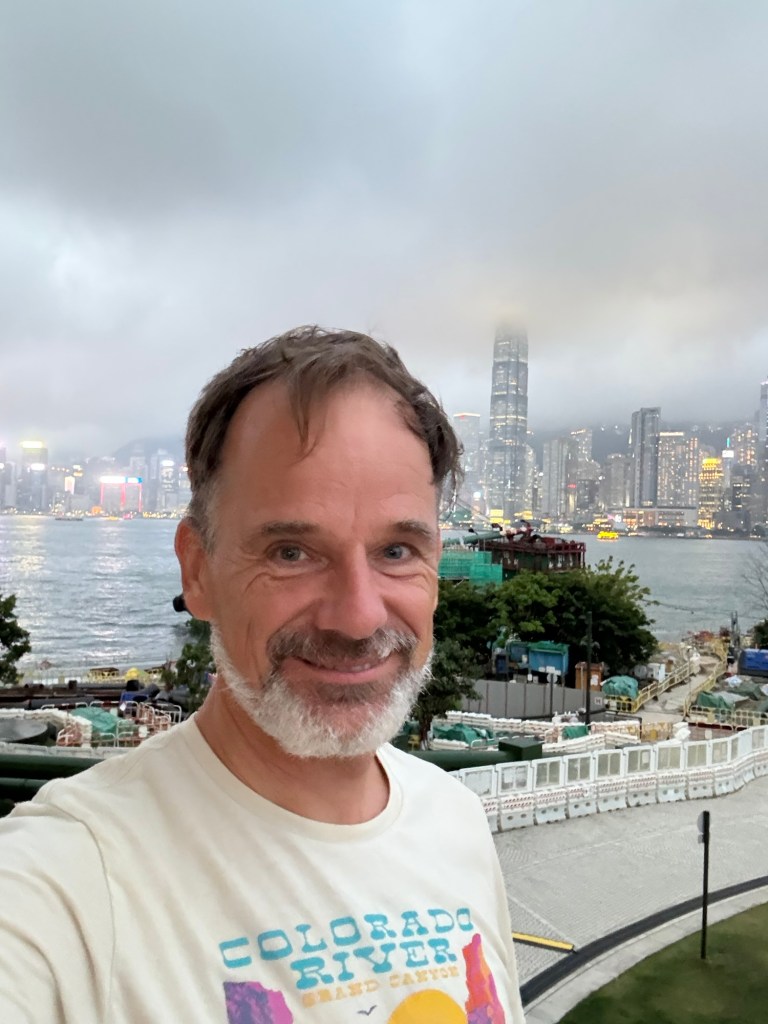
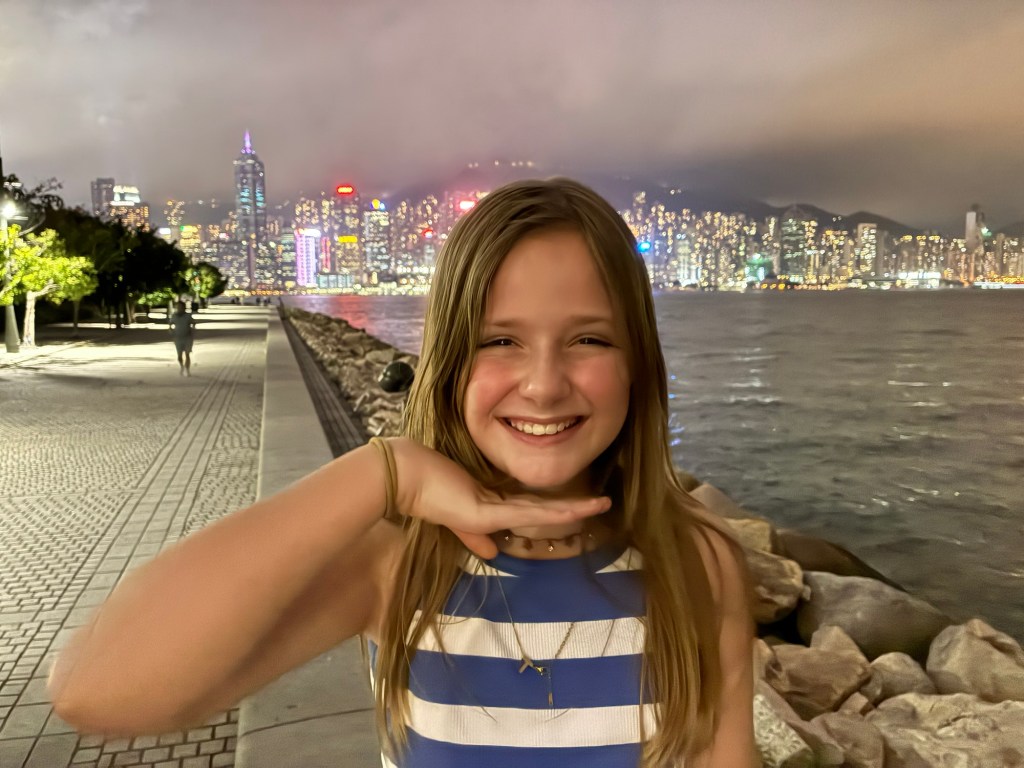
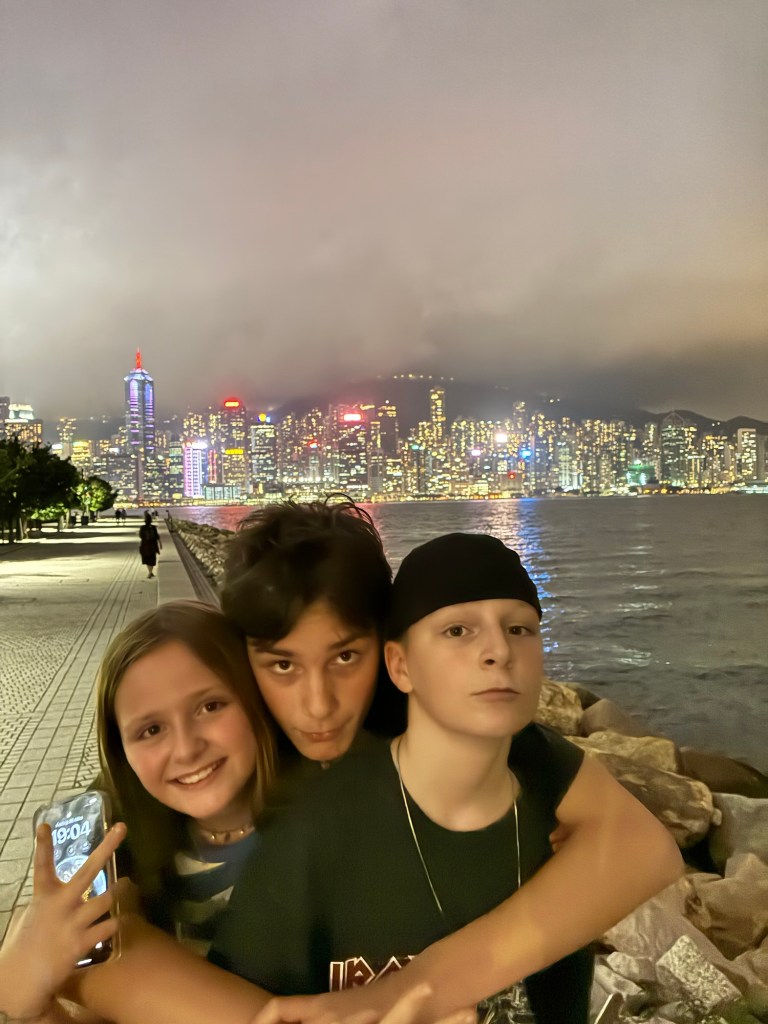
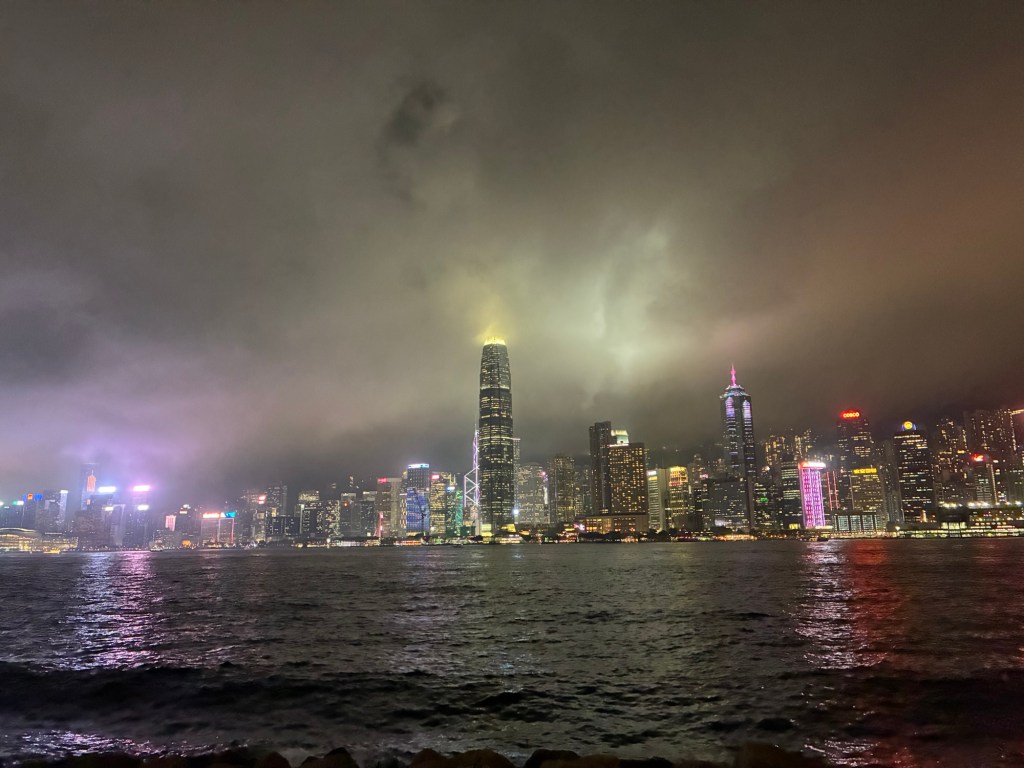
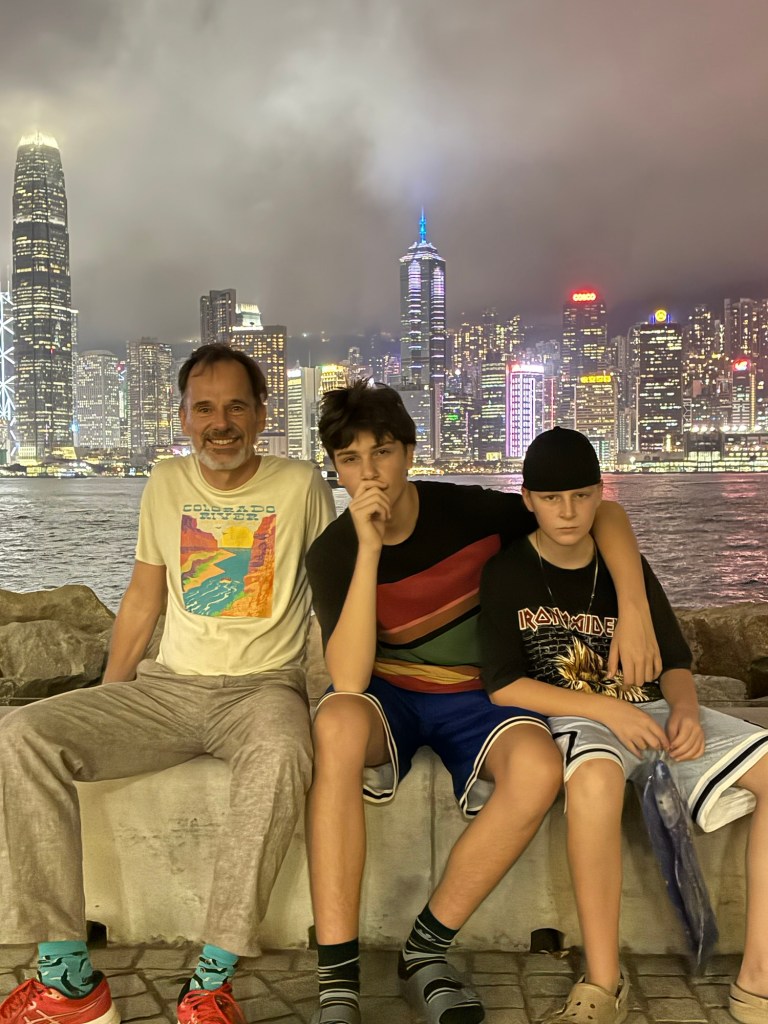
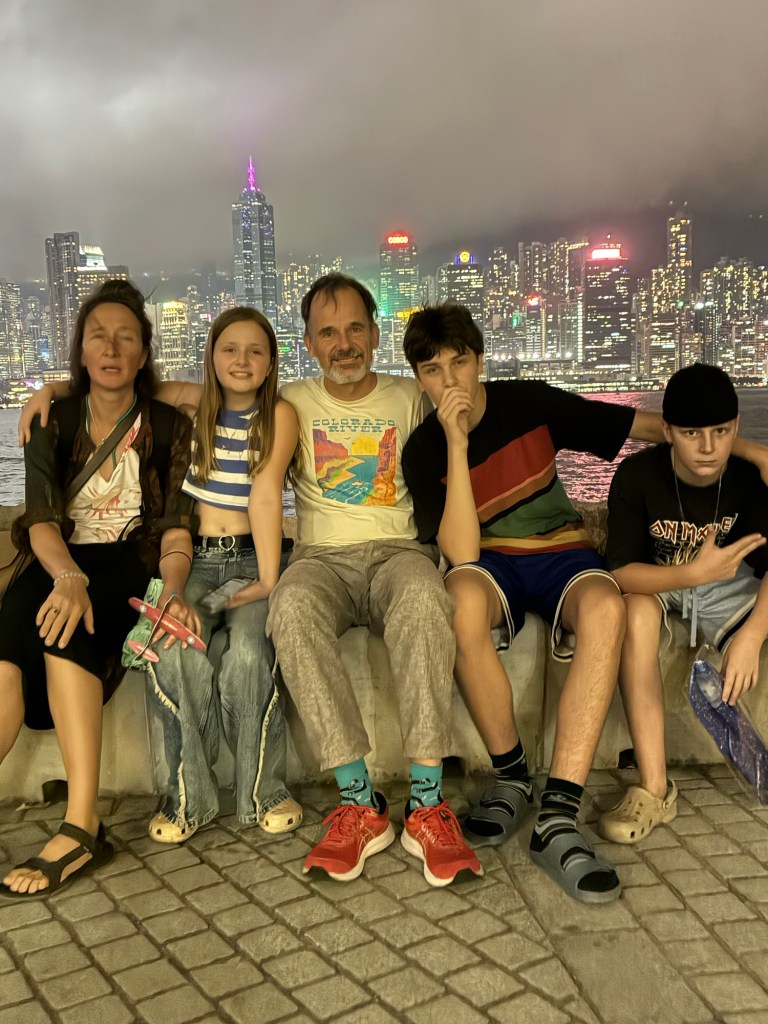
    Den ganzen Tag sind dunkle Wolken am Himmel, und die Abendstimmung am Meer mit dem Blick auf die Kulisse von Hongkong mit seiner Hochhäuser Lightshow auf LED Basis an den Hochhäuser- Fassaden ist wirklich unvergleichlich.

    Wir spüren, die Dramaturgie unserer Reise stimmt – jede Großstadt ist noch etwas spektakulärer als die vorherige. Jetzt fehlen nur noch Guangzhou und am Ende New York. 

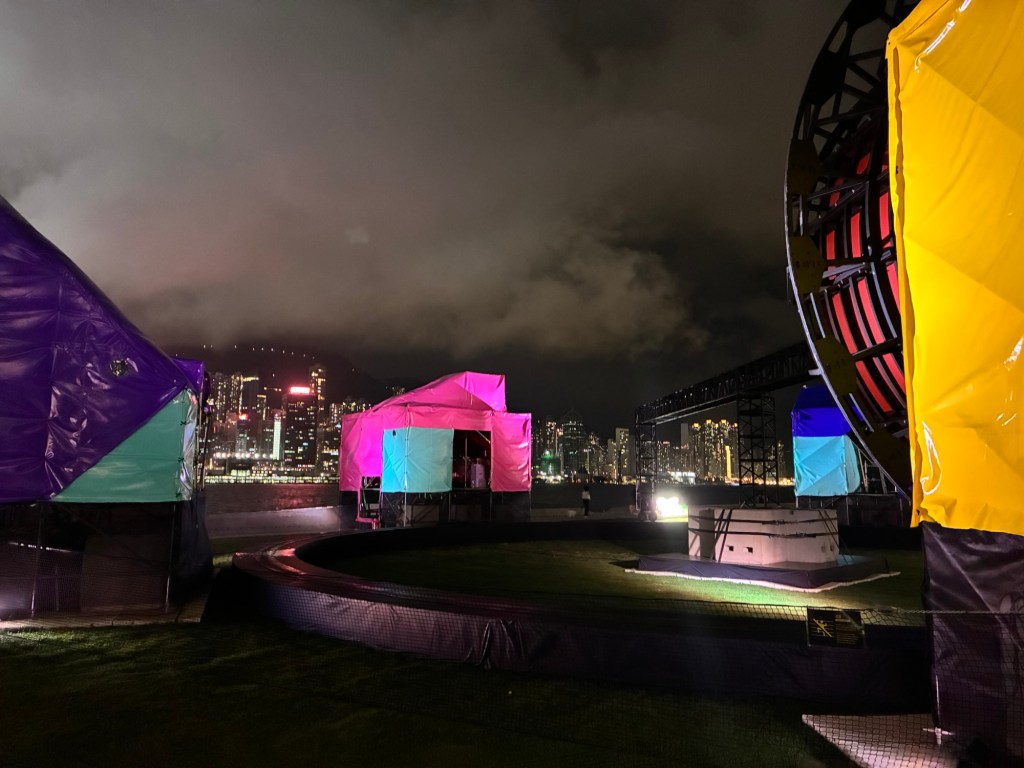
    Andreas traf zwei befreundete Künstler aus Berlin in einer open Air Raum Installation mit einer Art Riesenhamsterrad. 

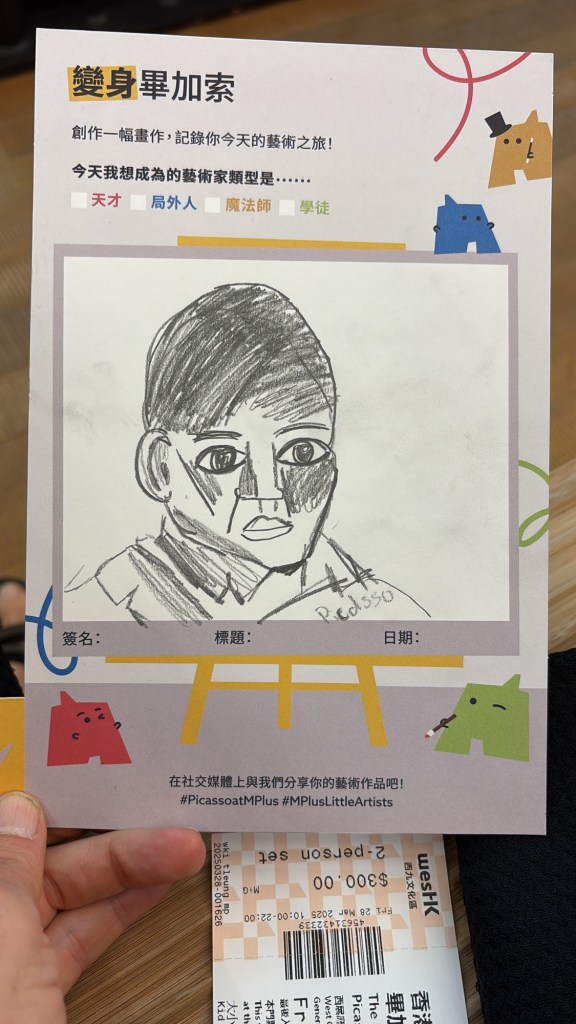
    Die Kinder bauen kleine Flugzeuge und lassen sie im Wind fliegen. Tara hat sich von Picasso inspirieren lassen und ein Bild gemalt. Tara hat Harry Potter Band 3 fertig gelesen, sie lief lesend auf dem Handy durch die Stadt, und Velis die Verwandlung von Kafka. Morpheus ist im 6. Band von Harry Potter. Alle träumen von deutschem Brot. 

    Heute Morgen machen die Kinder Schule, und wir planen die Fahrt morgen nach Guangzhou mit dem Zug und waschen Wäsche im Waschsalon.

    Day 113 and 114 

    Entering Hong Kong is surprisingly straightforward, no forms, no biometrics. Hong Kong is hot and humid, and a completely different caliber to the previous big cities.

    In order to continue using ChatGpt and bypass the great Chinese firewall, we first have to download a VPN for our cell phone – but then everything works again, even with the local phone card. We learn that although Hong Kong is part of China, it is a Special District Zone with its own currency and telephone network – we need roaming for Main Land.

     The high-speed train takes us to the city center in 25 minutes, and the subway takes us all the way south to South Island in a high-rise area. Our hotel is brand new, has only three rooms per floor, but 29 floors. From the children’s room on the 28th floor, however, you can see that this is only a small building.

    We go to a small, local restaurant for dinner, there is still room on the second floor in the warehouse, and everyone is very welcoming.

    The next day, we take the double-decker streetcar through the banking district – a great experience.

    We pop into a few stores but don’t buy anything after all. Tara enjoys a flying visit to the Ikea store. All the facilities here are very small, and with a rent of 50 euros per square meter, the apartments are correspondingly tiny. Even in our hotel room, there is practically no room for anything other than the bed.

    The new M+ Museum, which will open in 2021, entices us with its Picasso exhibition and impressive architecture. You can tell that Hong Kong is investing billions to increase the number of visitors, which has fallen from 65 to 45 million a year. 

    I think it will succeed. The whole area around the new museum and the museum itself are really impressive – and Picasso was once again very beautiful, especially in his reception in Asia. 

    There are dark clouds in the sky all day, and the evening atmosphere by the sea with the view of the backdrop of Hong Kong with its high-rise LED light show on the facades of the skyscrapers is truly incomparable.

    We feel that the dramaturgy of our trip is right – every big city is even more spectacular than the last. All that’s missing now is Guangzhou and, at the end, New York. 

    Andreas met two artist friends from Berlin in an open-air installation with a kind of giant hamster wheel. 

    The children build small airplanes and let them fly in the wind. Tara was inspired by Picasso and painted a picture. Tara has finished reading Harry Potter Volume 3, she walked through the city reading on her cell phone, and Velis has read Kafka’s The Metamorphosis. Morpheus is in the 6th volume of Harry Potter.  All are dreaming of German bread.

    This morning the children are at school and we are planning tomorrow’s trip to Guangzhou by train and doing laundry at the laundromat.

  • National Culture Day

    Tag 112

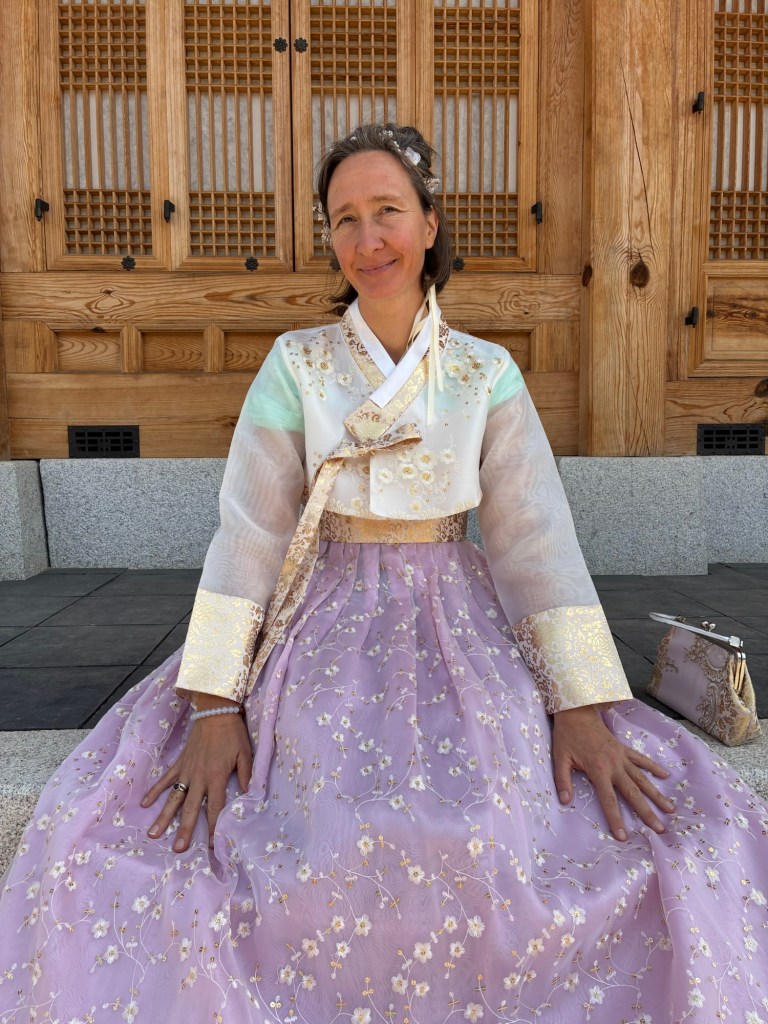
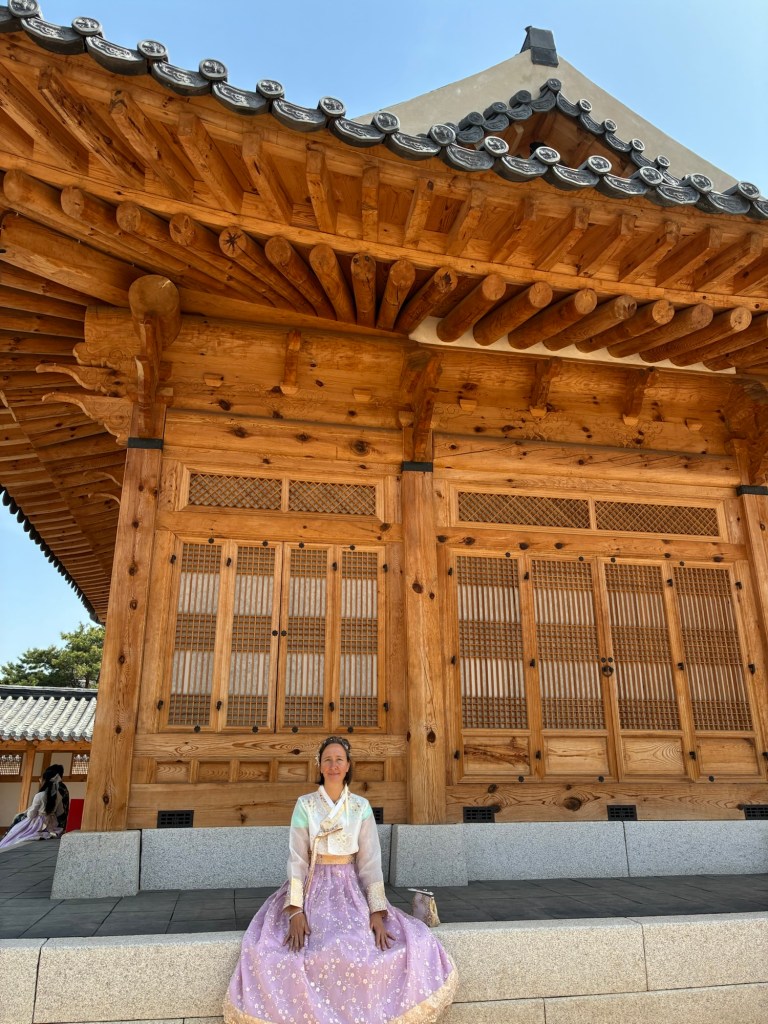
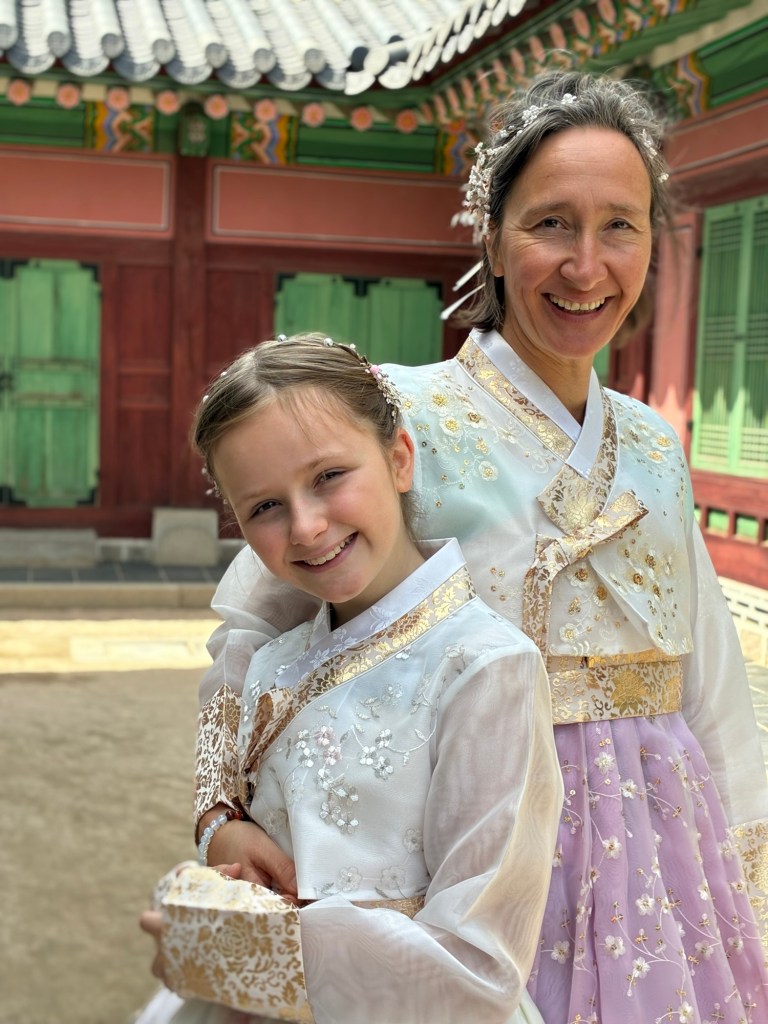
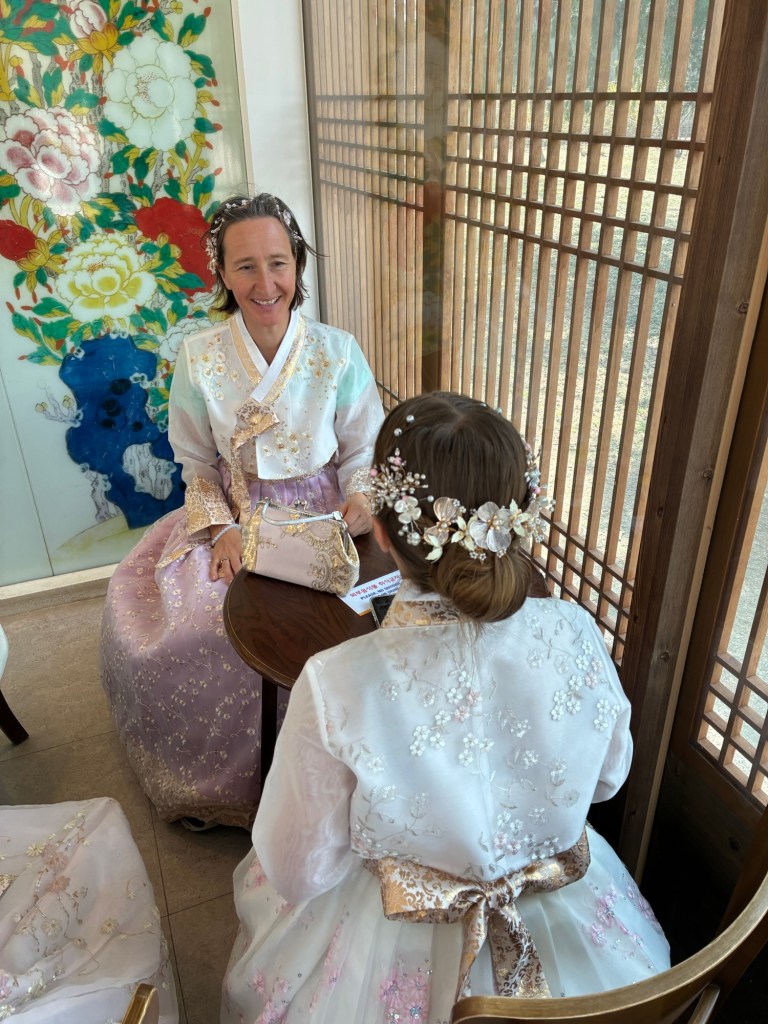
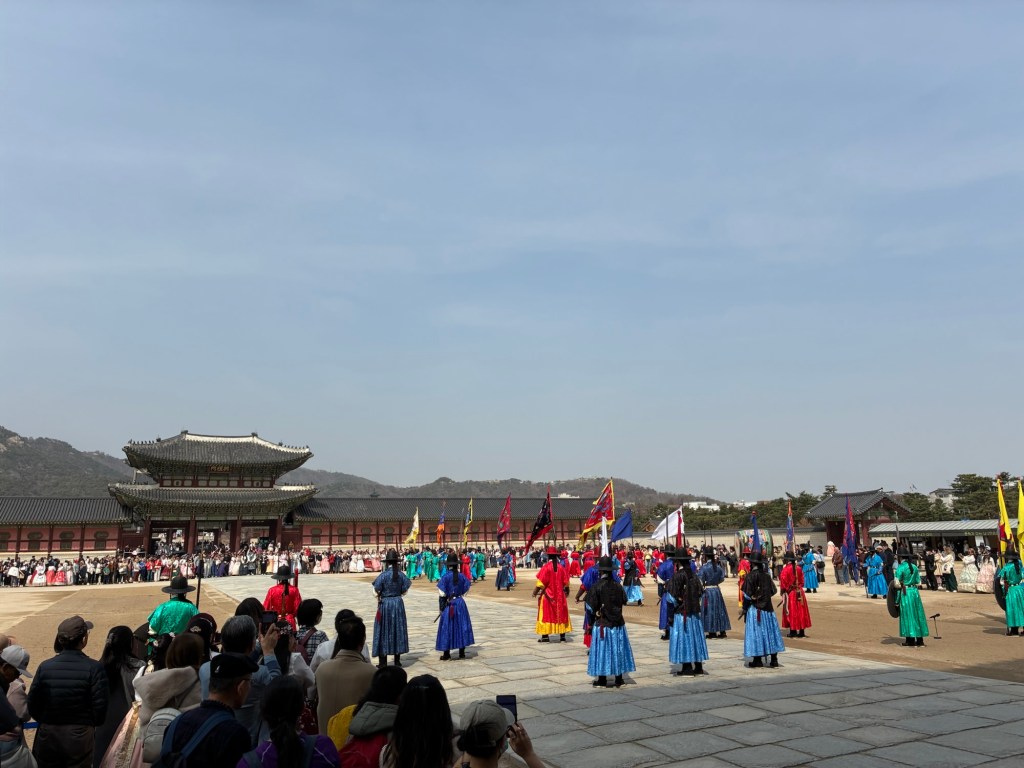
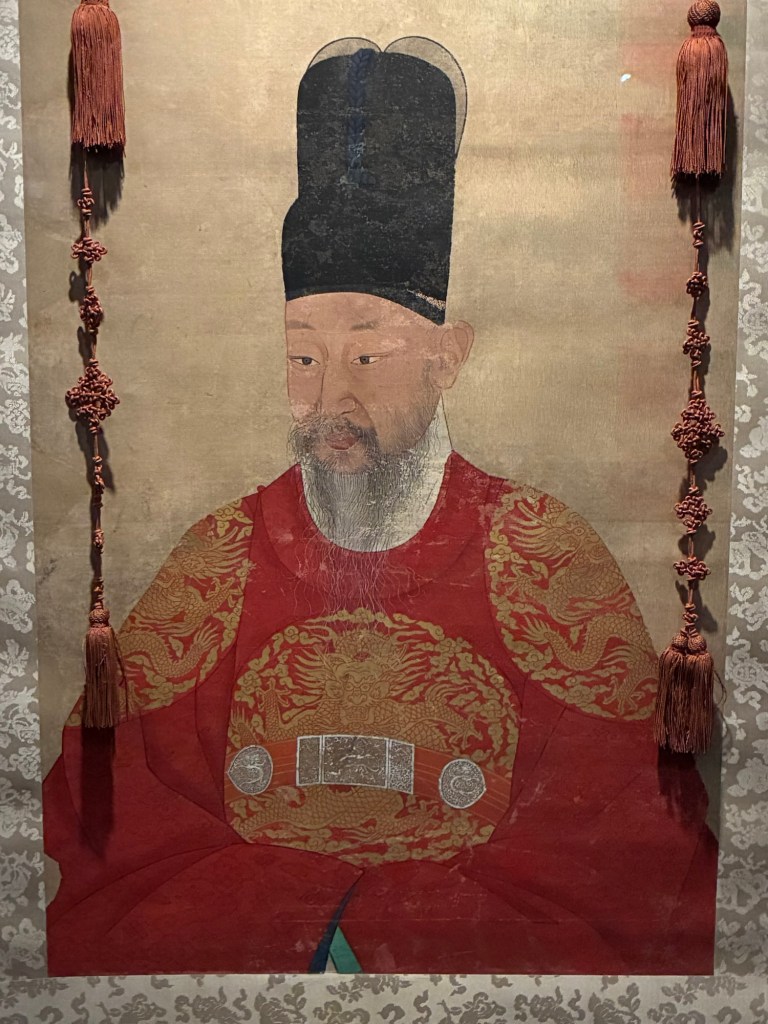
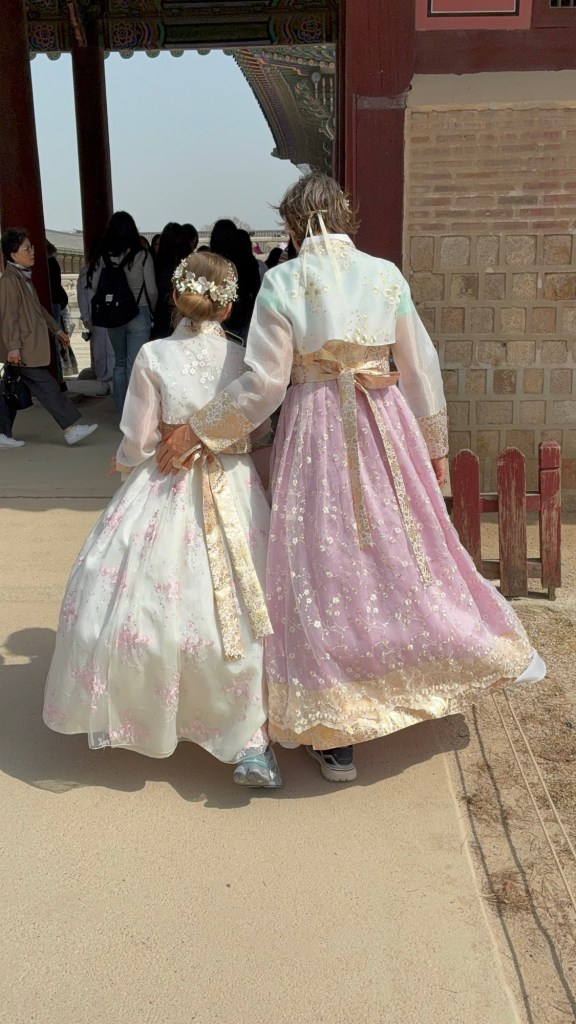
    Auf unseren Handys und auf meiner Apple Watch bekommen wir immer wieder Alert-Meldungen vor den Waldbränden in Korea. Wir bekommen davon aber nichts mit. In der Innenstadt gibt es aber Demonstrationen, mit lauten Ansprachen und viel Polizei, angesichts der Regierungskrise. Aber es ist auch National  Culture Day – alle Museen und der Königspalast können kostenlos besucht werden. Das führt zu einer großen Kostüm-Verkleidung- alle tragen tradtionelle Gewänder, auch viele Touristen. 

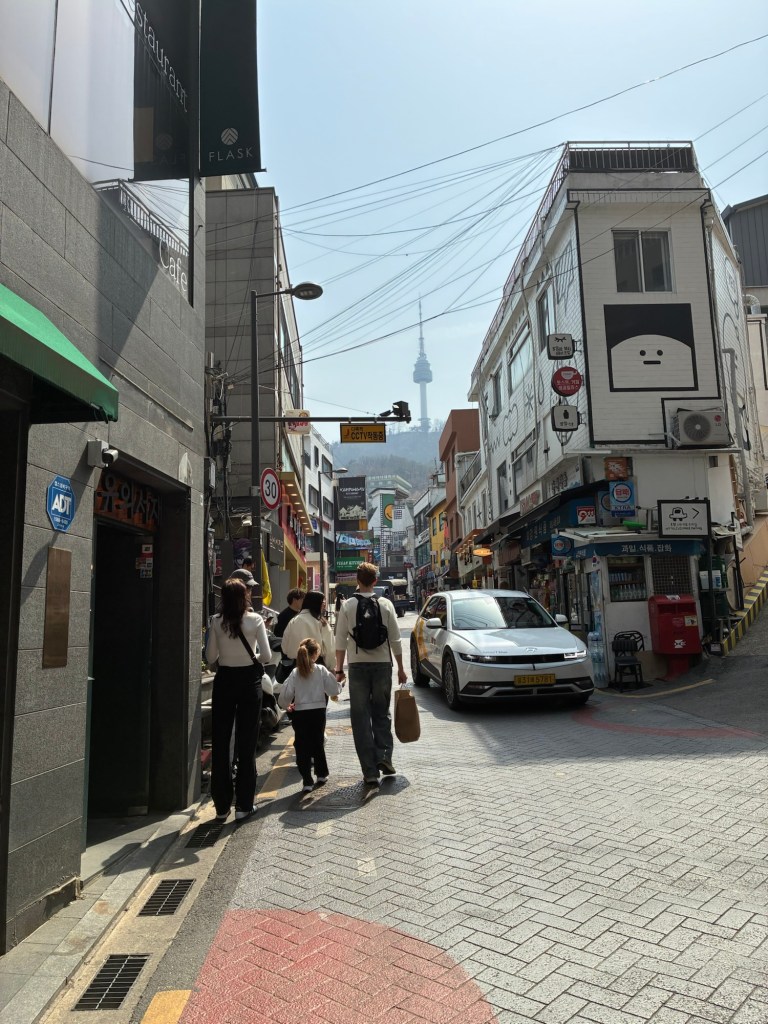
    Gut dass wir auf Andreas gehört haben, der für heute unseren Tag geplant hat. So sind wir nicht in die Berge gefahren sondern haben zum Abschied von Korea noch mal die historische Altstadt besucht.

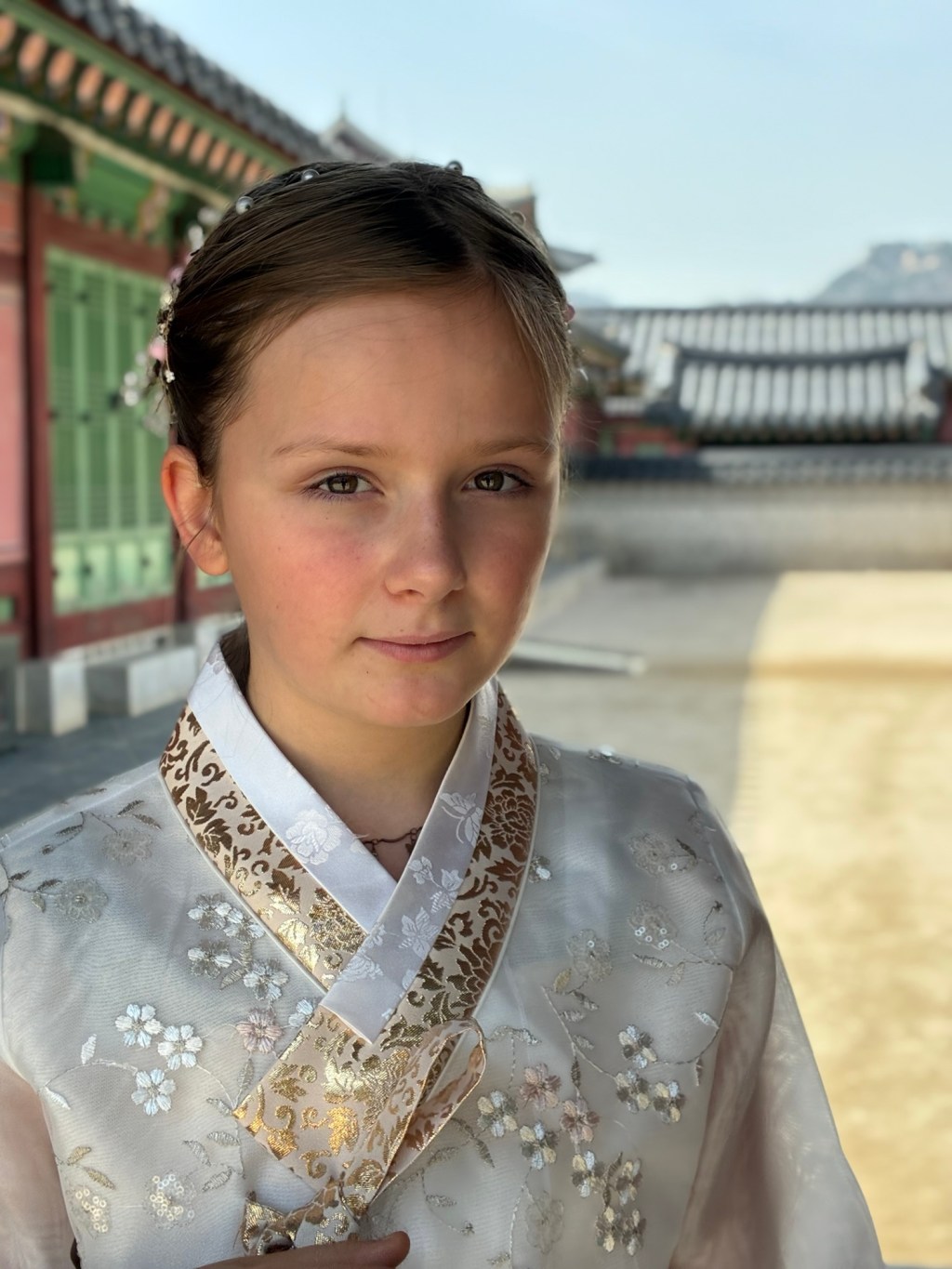
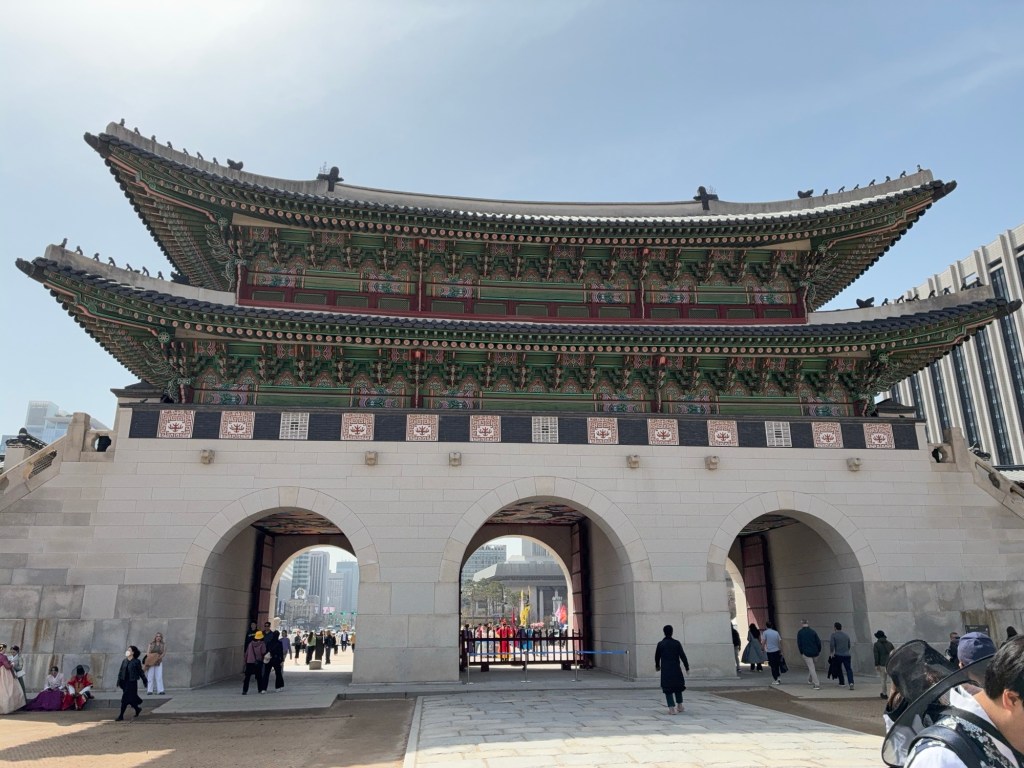
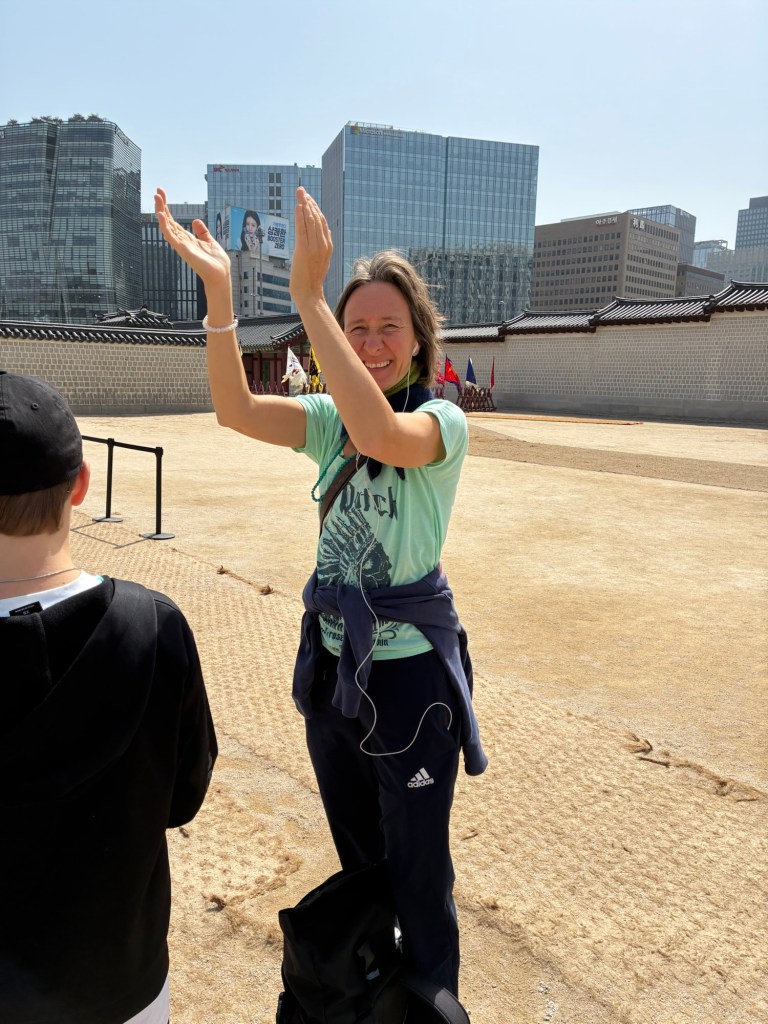
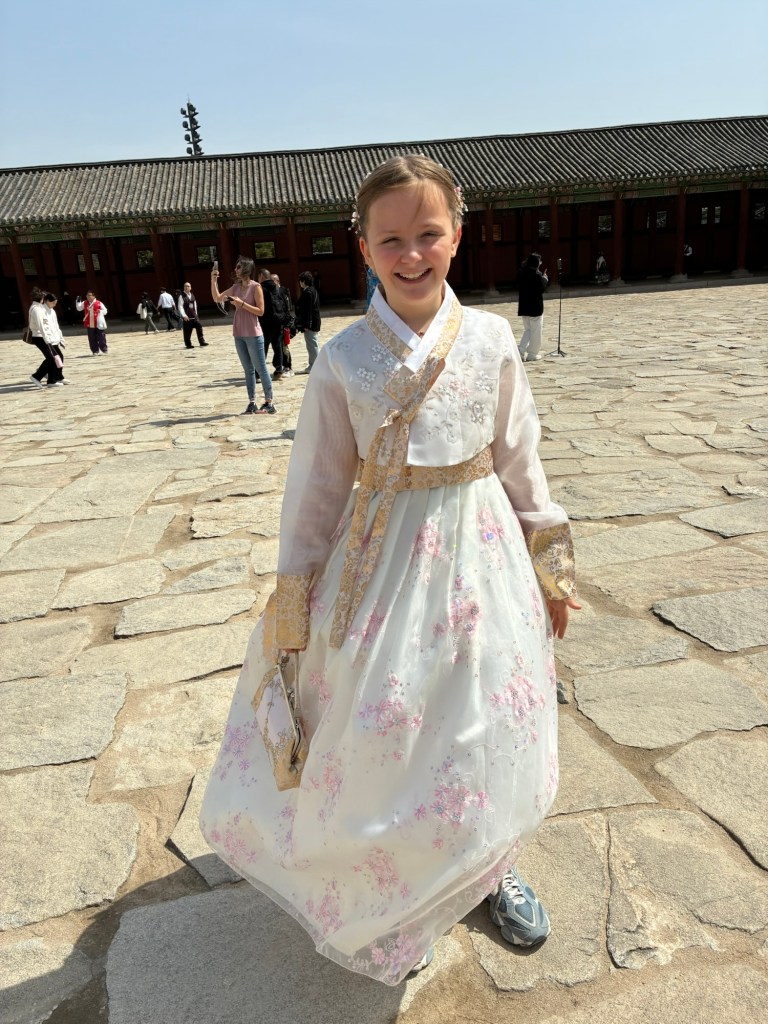
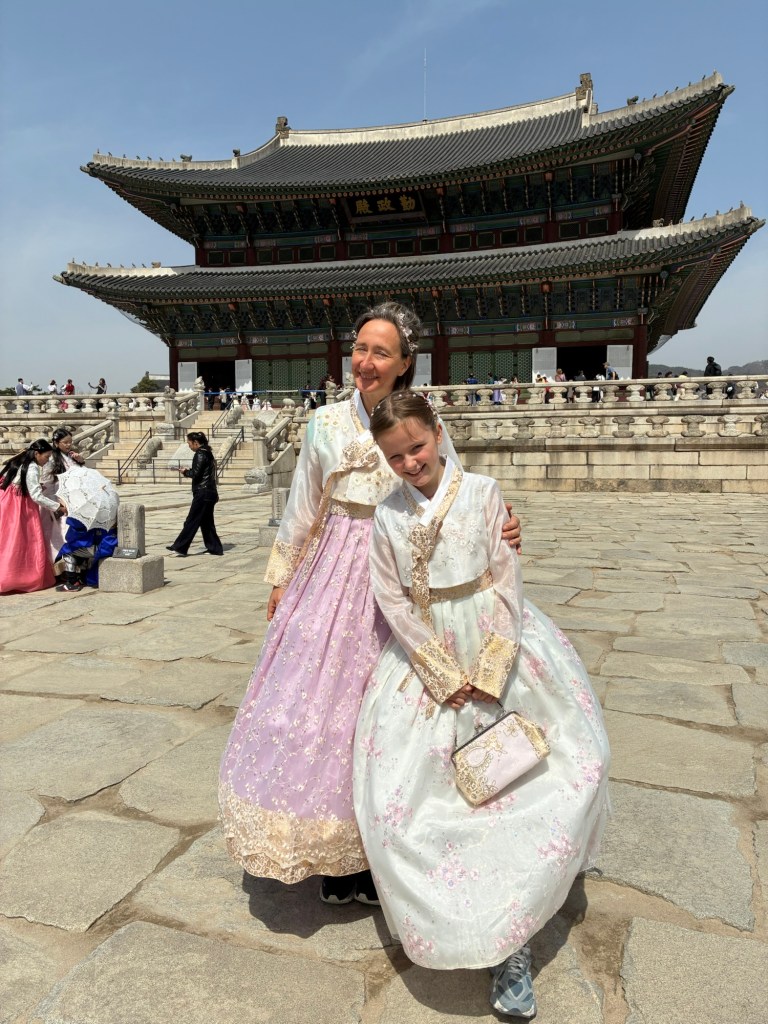
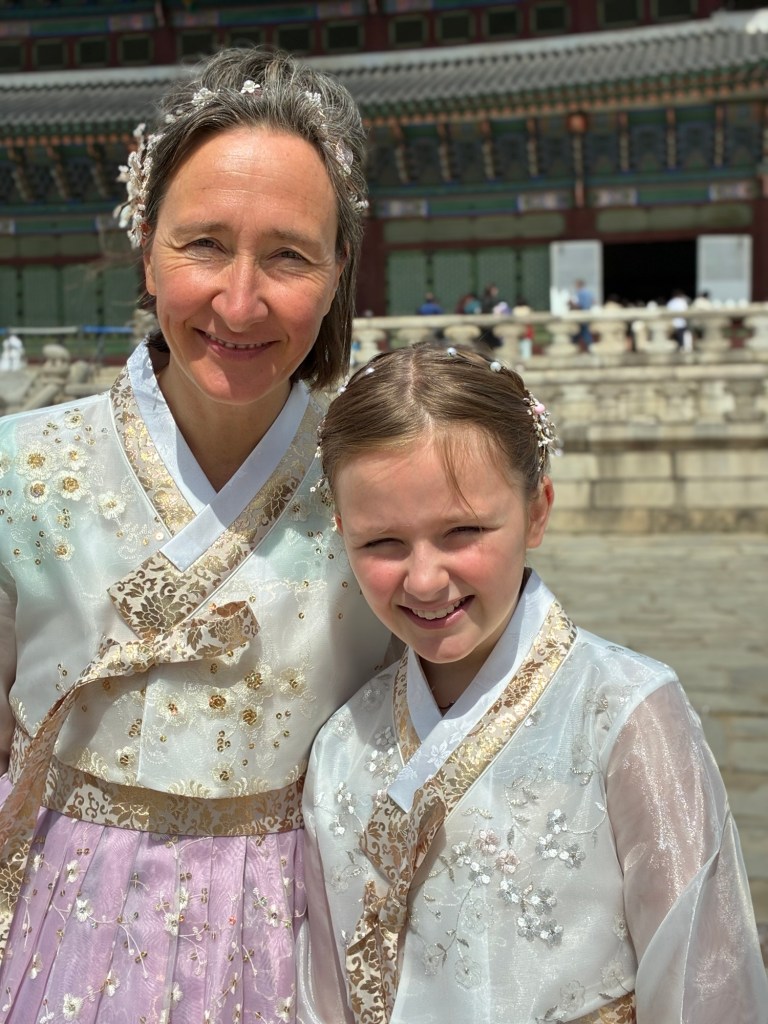
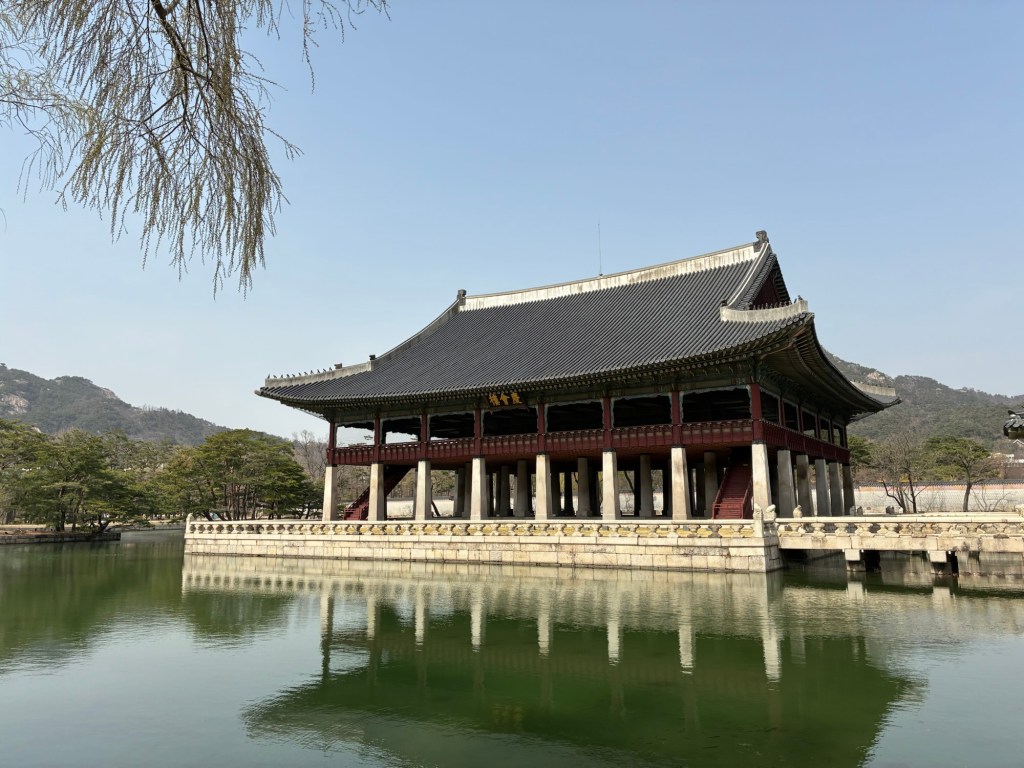
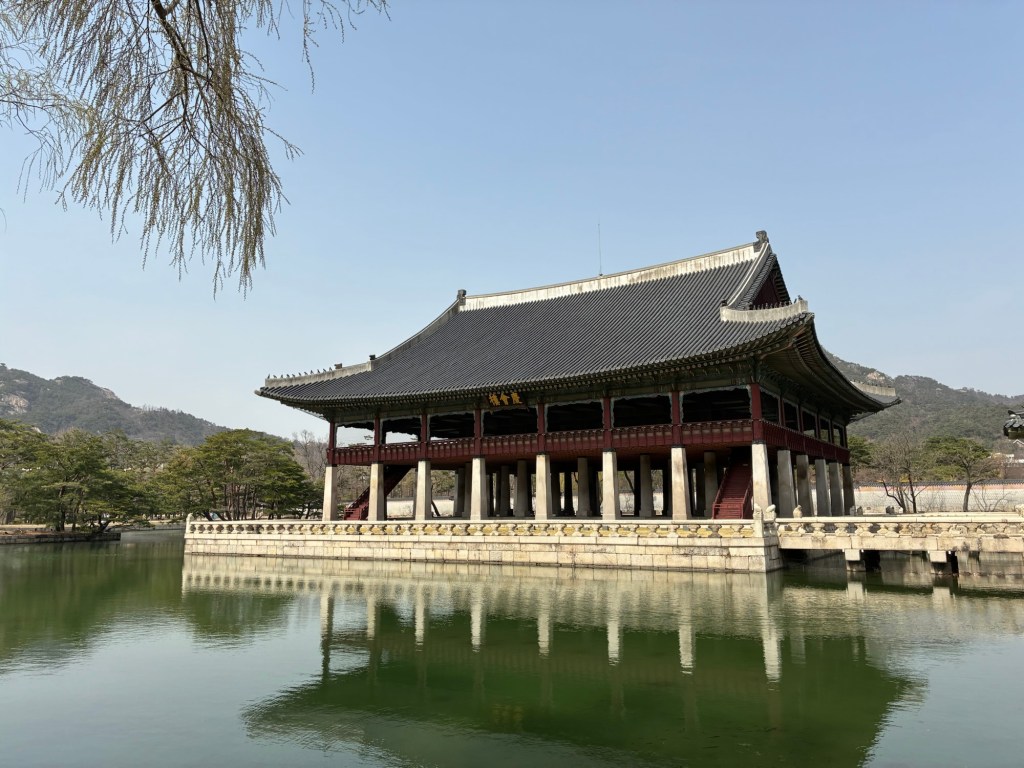
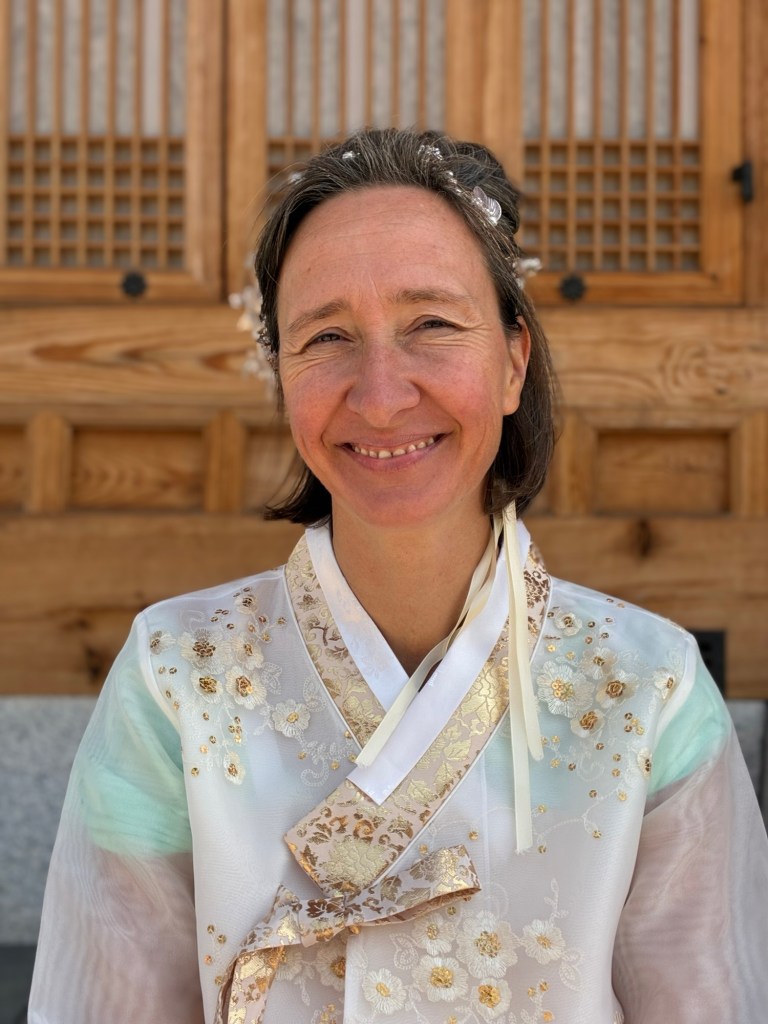
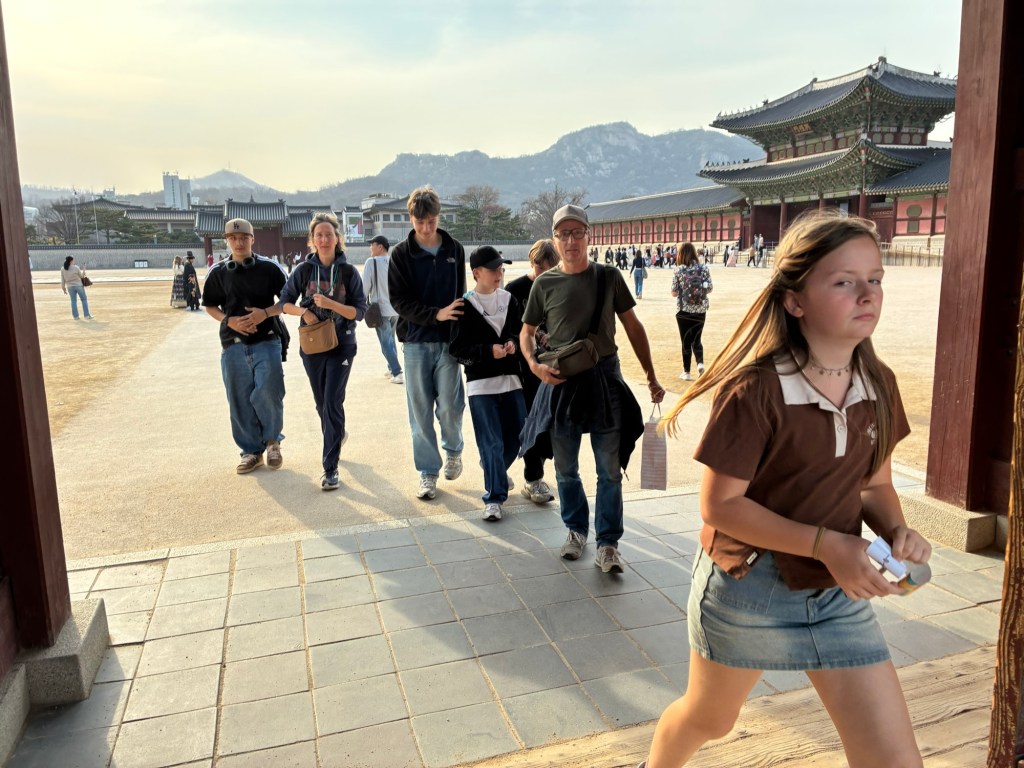
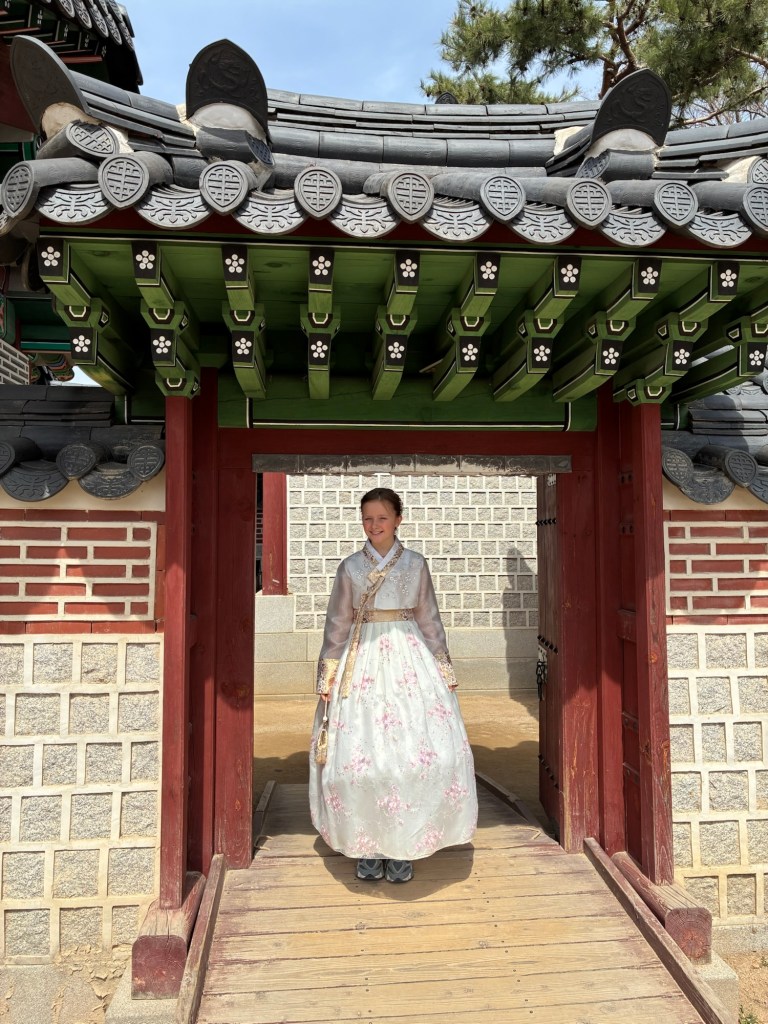
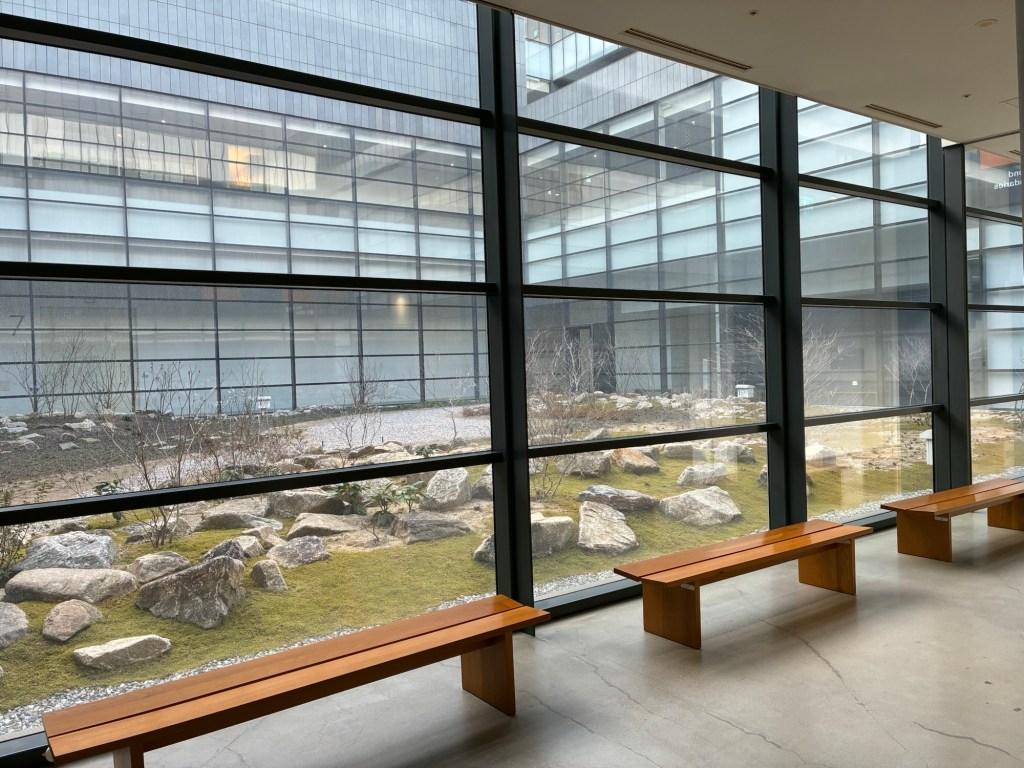
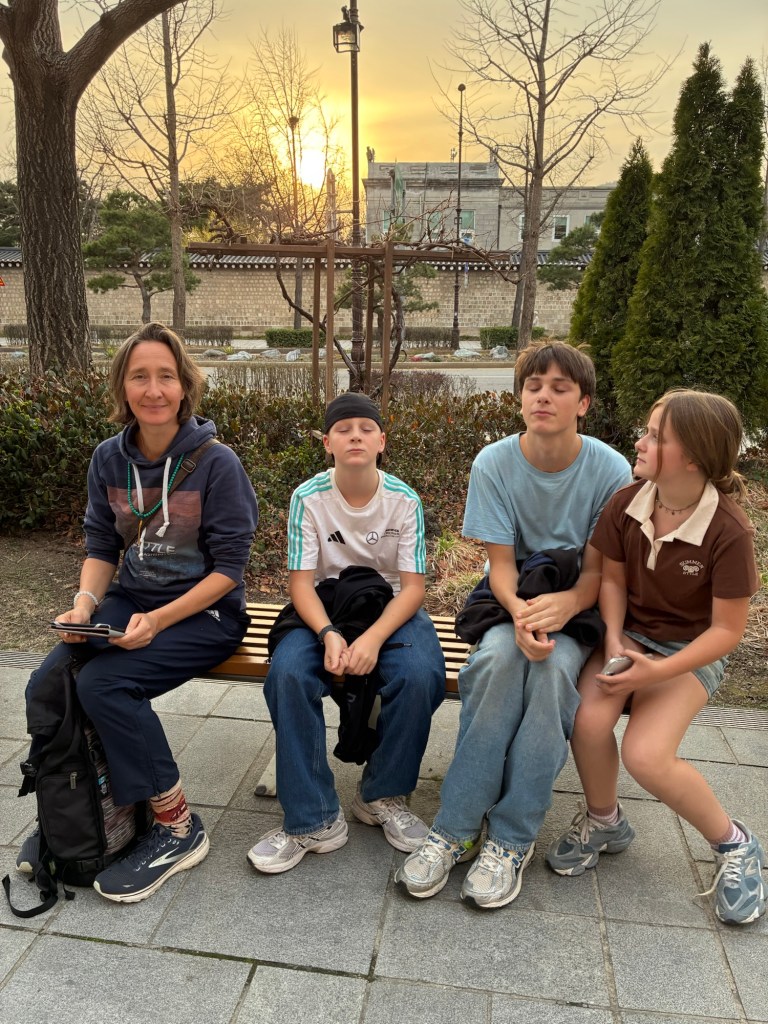
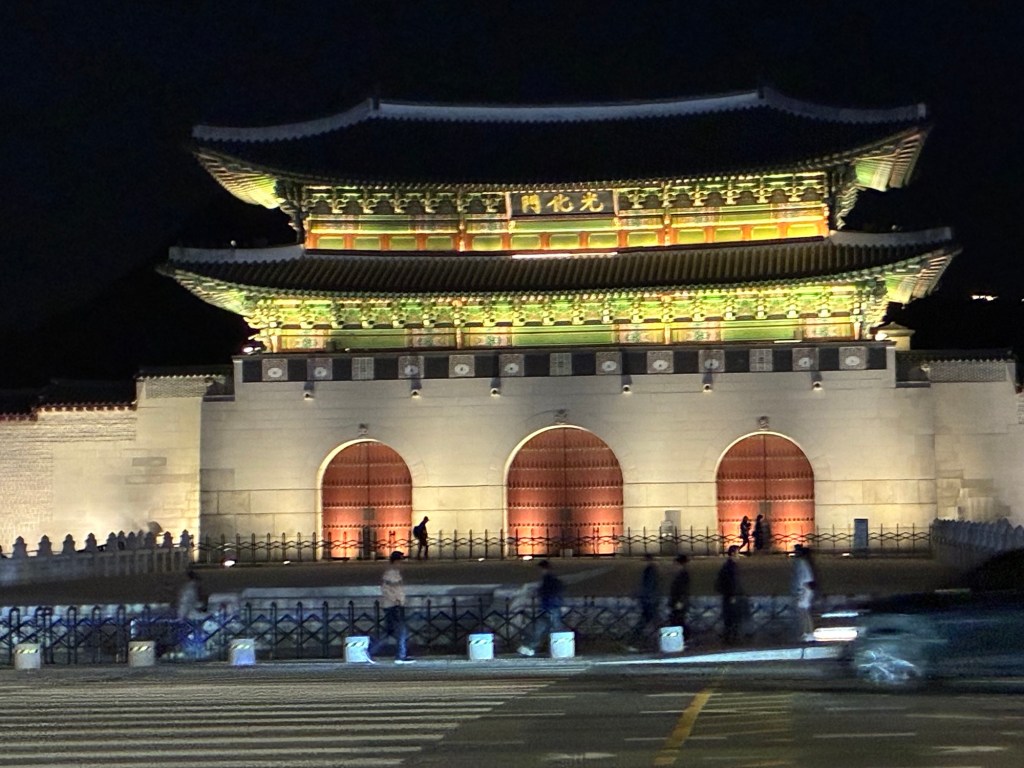
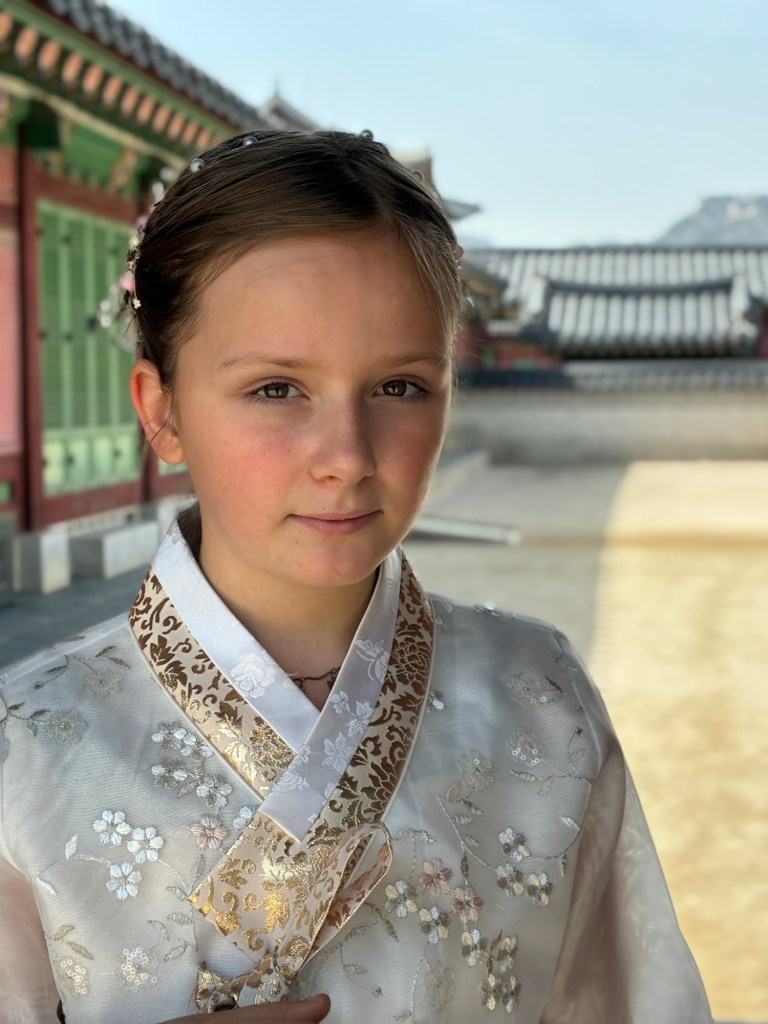
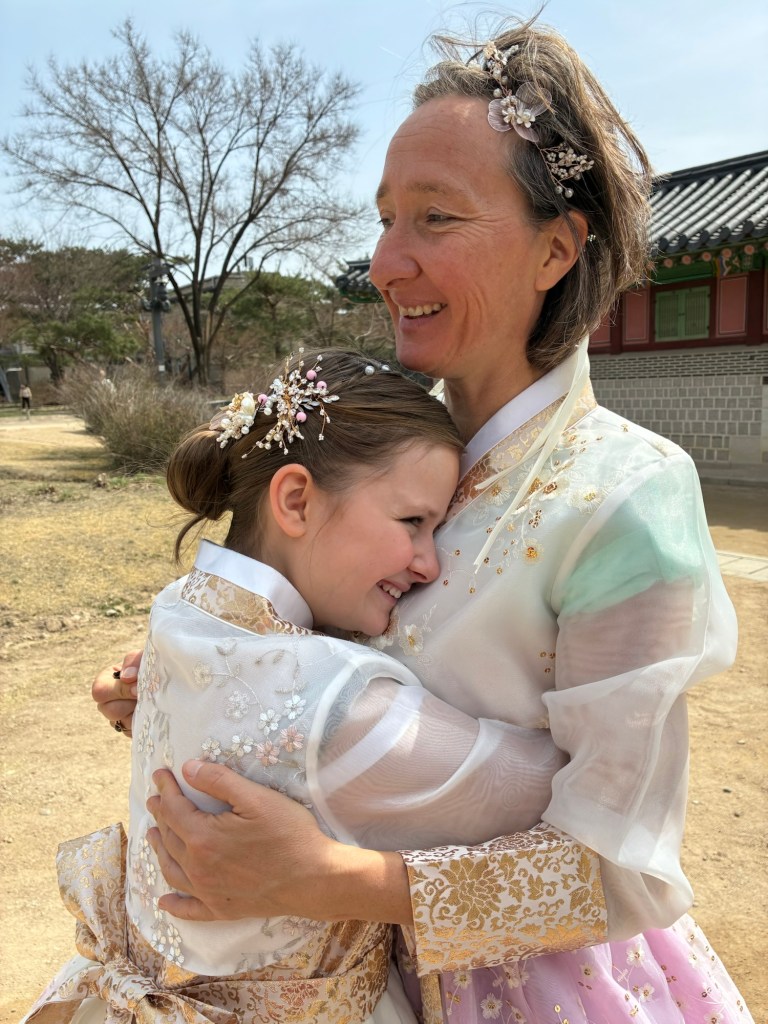
    Tara und Nadine sahen großartig in ihren Kleidern aus, und der Besuch der alten Palastanlagen, aufwändig renoviert oder wieder aufgebaut war ein echtes Highlight bei strahlendem Wetter. 

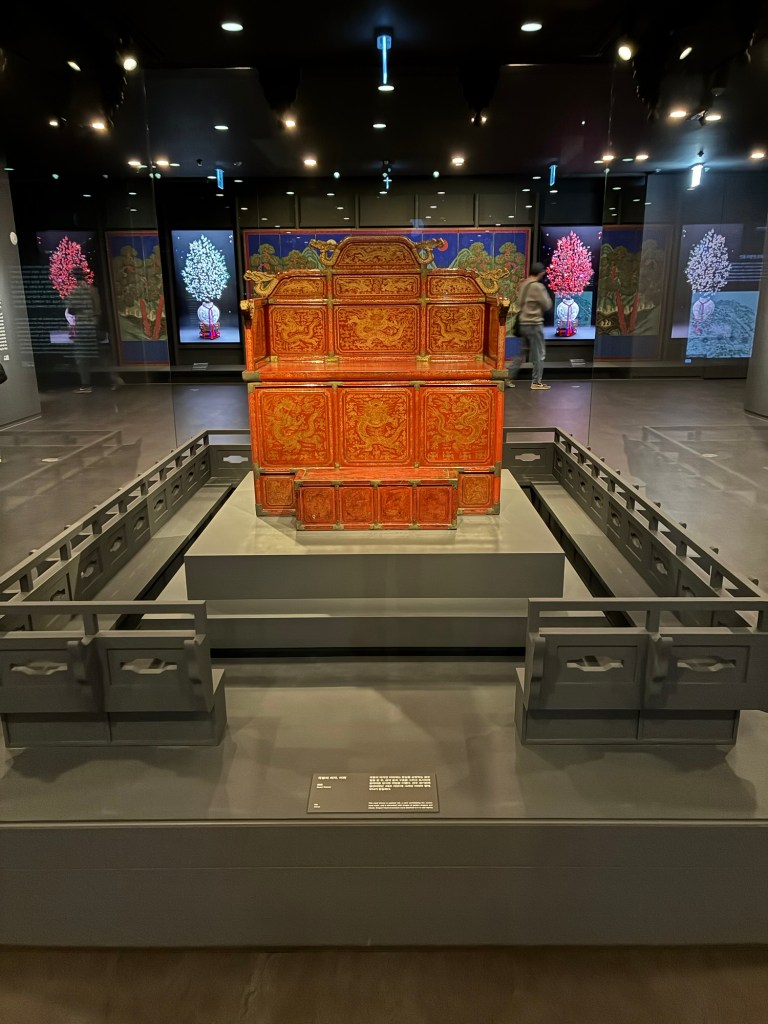
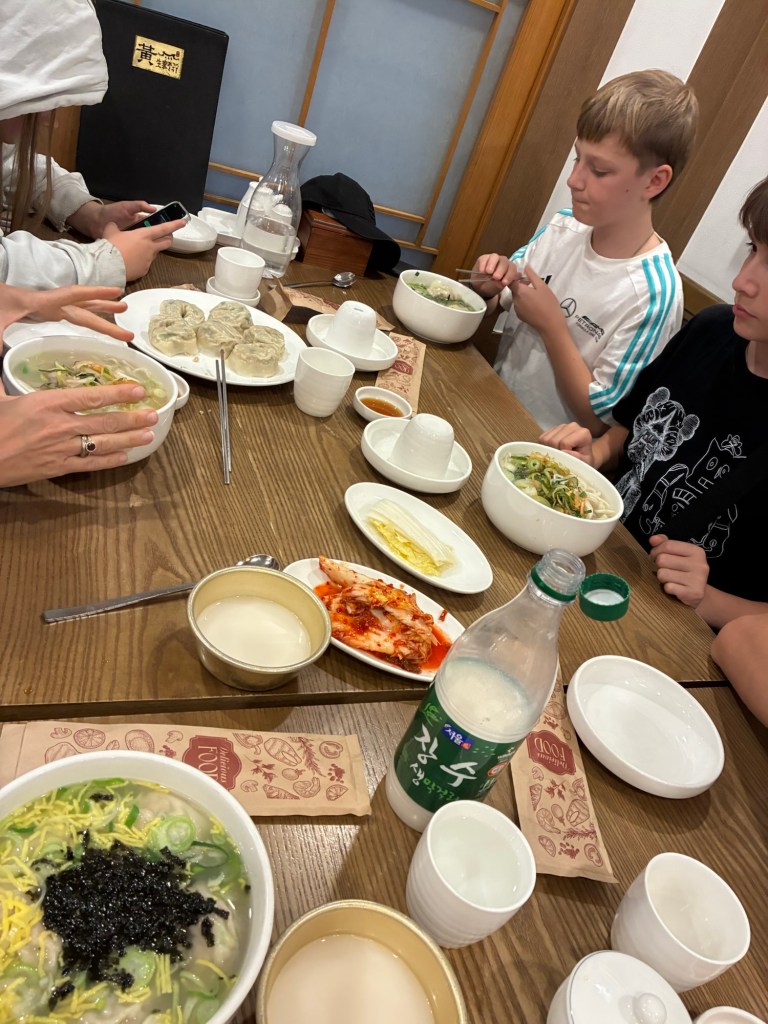
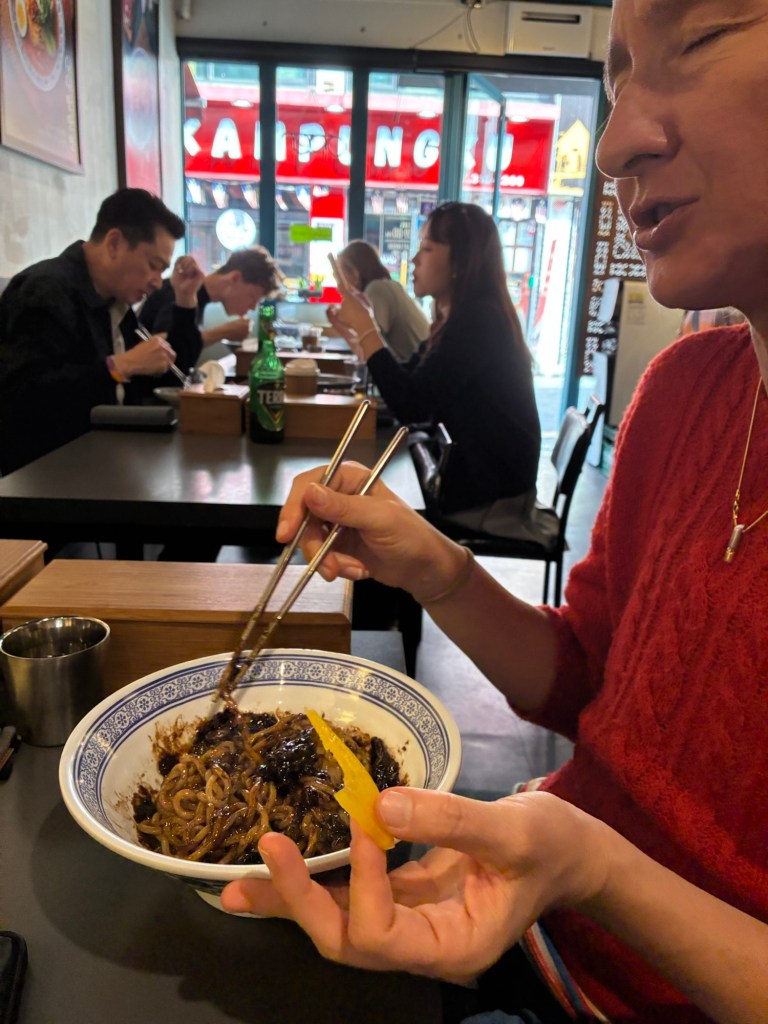
    Zum Abschluss nach Palastmuseum und dem modernen Museum of Contemporary Art waren wir noch mal traditionell koreanisch Dumplings essen. Tara fand, Korea war das bisher beste Land, und mit sechs Tagen hatten wir auch richtig Zeit. In der Innenstadt war es auch das modernste Land bisher.

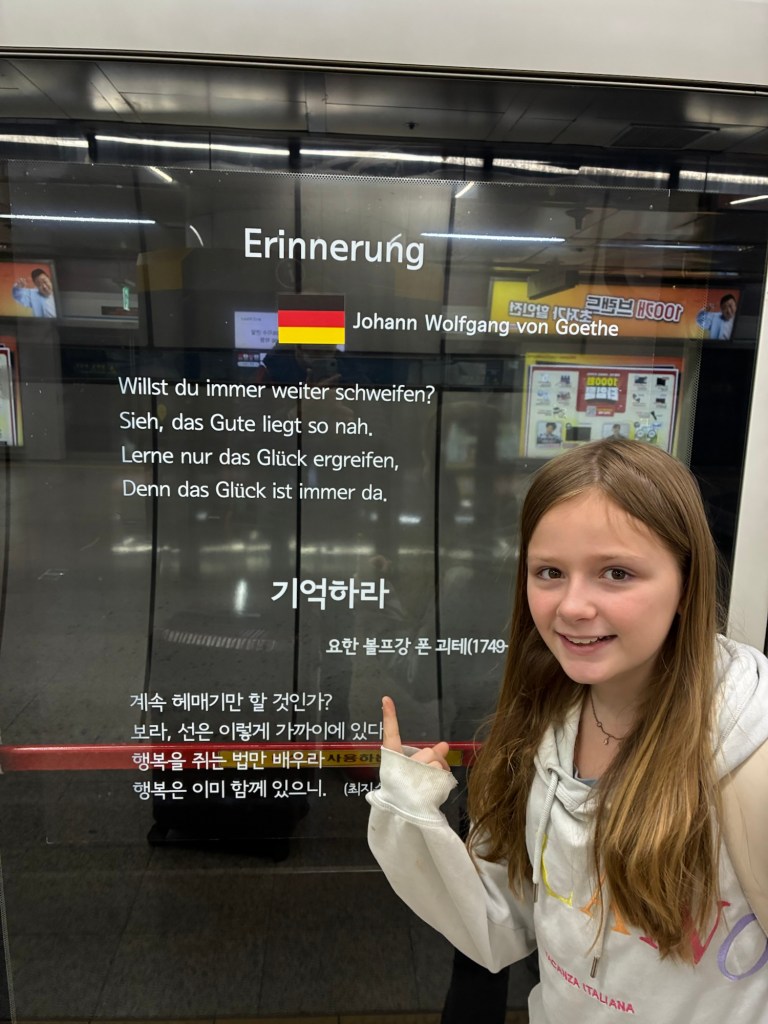
    Alle Kinder sind im Lese-Fieber, und Velis hat passend zum Lotte Fieber auch schon die Leiden des jungen Werther von Goethe gelesen – ein lustiger Zufall. Schließlich stehen in diesem Land auch an den U-Bahn Türen Goethe, Zitate. Tara und Morpheus haben jetzt die Kindle App auf dem Handy, und lesen eifrig die immer längeren Bände von Harry Potter. Nadine ist mit dem „Five a.m. Club“ unterwegs, und ich lese mein All Time Favorite Anthony Robbins mit „Awaken the Giant within“ noch einmal. Und unterwegs beim Laufen üben wir das große Einmaleins. Als Fun fact – Südkorea hier ist eines der wenigen Länder in Asien, das die deutsche Schutzkontakt -Steckdose übernommen hat.

    Die größte Herausforderung war gefühlt, als unser unser Profi ChatGPT Account nicht mehr funktionierte, weil ihn zu viele User auf der ganzen Welt nutzten. Velis meinte – es fühlt sich an, als hätte man ein wesentlichen Teil seiner Fähigkeiten verloren. Denn wir sind als Familie auf jeden Fall „power User“ und „early adopter“. Und wenn ich nur einen Tipp geben sollte, würde ich jeden empfehlen bei jeder Frage oder Tätigkeit zu lernen, zuerst einmal die künstliche Intelligenz zu befragen. Die Menschheit wird sich in zwei Gruppen aufteilen, die eine die damit früh umgehen lernen und die, die sich wundern, warum sie es schwerer haben. Gerade beim Reisen, beim Lernen und die Welt entdecken ist es einfach erstaunlich, wie viel ein dieser fast allwissende Begleiter helfen kann. Wir stellen sicher 30 Fragen am Tag. Und es grenzt wirklich an Magie, was für detaillierte Antworten es zu geben vermag.

    Um fünf klingelt der Wecker, und jetzt sind wir auf dem Weg zum Flughafen in der Bahn, wo es um 10.40 Uhr mit Korean Air nach Hongkong geht. Nadine freut sich besonders auf diese Stadt! Wir haben drei Nächte dort vor uns, und drei weitere im benachbarten Guangzhou, bevor es nach Neuseeland weiter geht.

    Day 112

    We keep getting alerts about the forest fires in Korea on our cell phones and on my Apple Watch. But we don’t notice anything. But there are demonstrations in the city center, with loud speeches and lots of police, in view of the government crisis. But it is also National Culture Day – all museums and the Royal Palace can be visited free of charge. This leads to a lot of dressing up – everyone wears traditional costumes, including many tourists. 

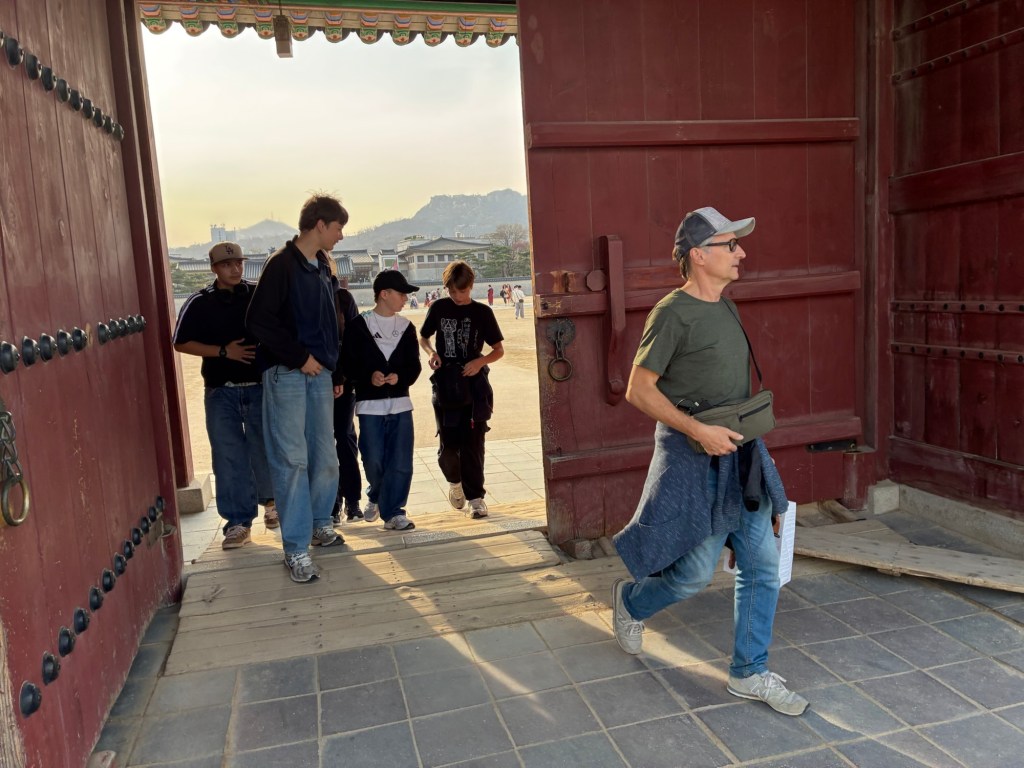
    It’s a good thing we listened to Andreas, who had planned our day for today. So we didn’t go to the mountains but visited the historic old town again to say goodbye to Korea.

    Tara and Nadine looked great in their dresses, and the visit to the old palace complexes, which had been lavishly renovated or rebuilt, was a real highlight in glorious weather. 

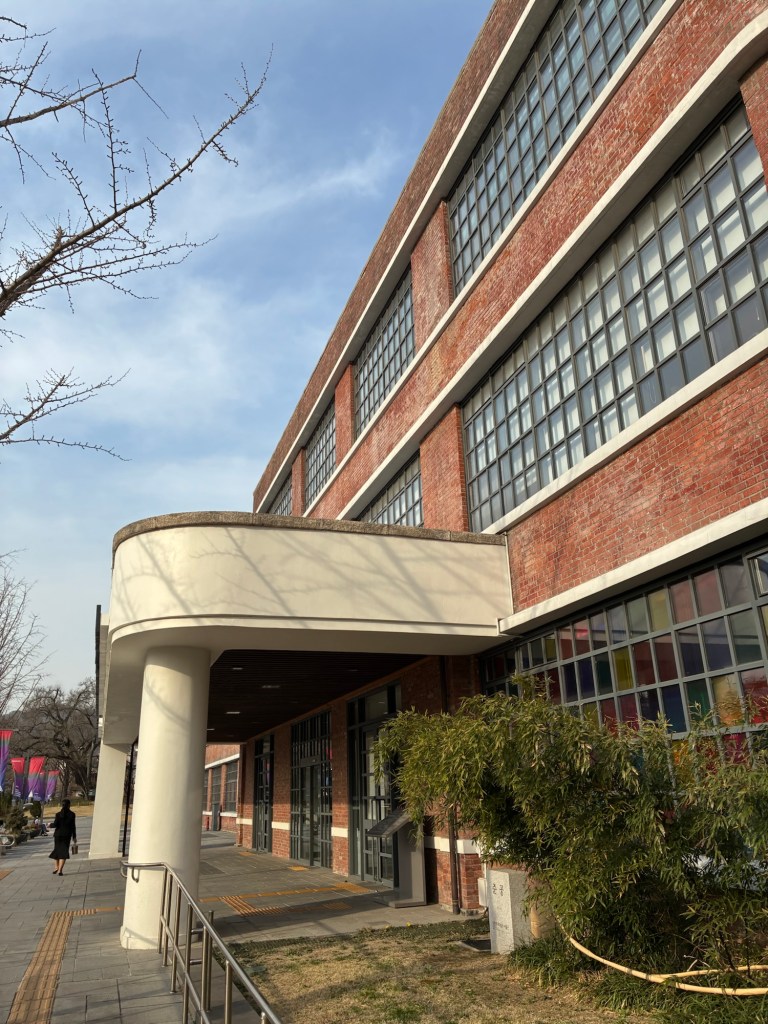
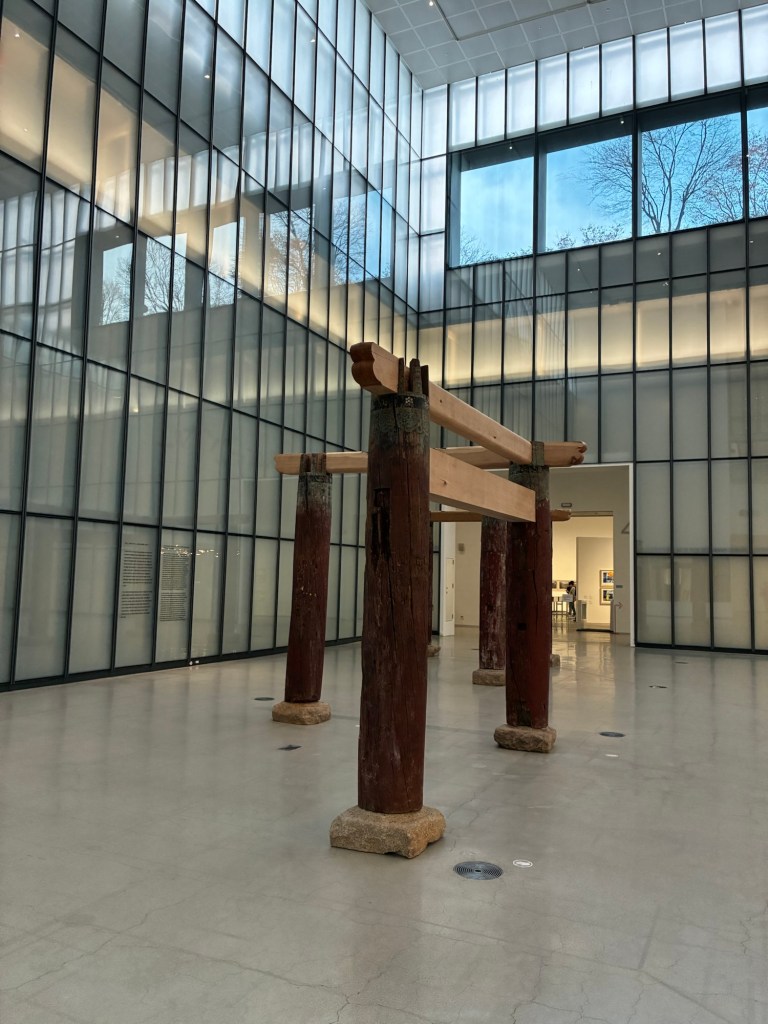
    After the palace museum and the modern Museum of Contemporary Art, we finished off with traditional Korean dumplings. Tara thought Korea was the best country so far, and with six days we had plenty of time. In the city center, it was also the most modern country so far.

    All the children are in reading fever, and Velis has already read Goethe’s The Sorrows of Young Werther to match the Lotte fever – a funny coincidence. After all, there are also Goethe quotes on the subway doors in this country. Tara and Morpheus now have the Kindle app on their cell phones and are eagerly reading the ever longer volumes of Harry Potter. Nadine is out and about with the Five a.m. Club, and I’m re-reading my all-time favorite Anthony Robbins with Awaken the Giant within. And we practise our multiplication tables on the run. Fun fact – South Korea is one of the few countries in Asia that has adopted the German Schutz Kontakt Steckdose.

    The biggest challenge we felt was when our professional ChatGPT account stopped working because too many users around the world were using it. Velis said – it feels like you’ve lost a significant part of your skills. Because as a family, we are definitely power users and early adopters. And if I had to give just one tip, I would recommend everyone to learn to consult artificial intelligence first for every question or activity. Humanity will be divided into two groups, those who learn to use it early on and those who wonder why they are having a harder time. Especially when traveling, learning and discovering the world, it is simply amazing how much this almost omniscient companion can help. We must ask 30 questions a day. And the detailed answers it is able to give are truly magical.

    The alarm clock rings at five, and now we are on our way to the airport by train, where we board the 10.40 a.m. Korean Air flight to Hong Kong. Nadine is particularly looking forward to this city! We have three nights ahead of us there, and three more in neighboring Guangzhou, before we are heading towards New Zealand.

  • Border to North Korea

    Tag 110 und 111 

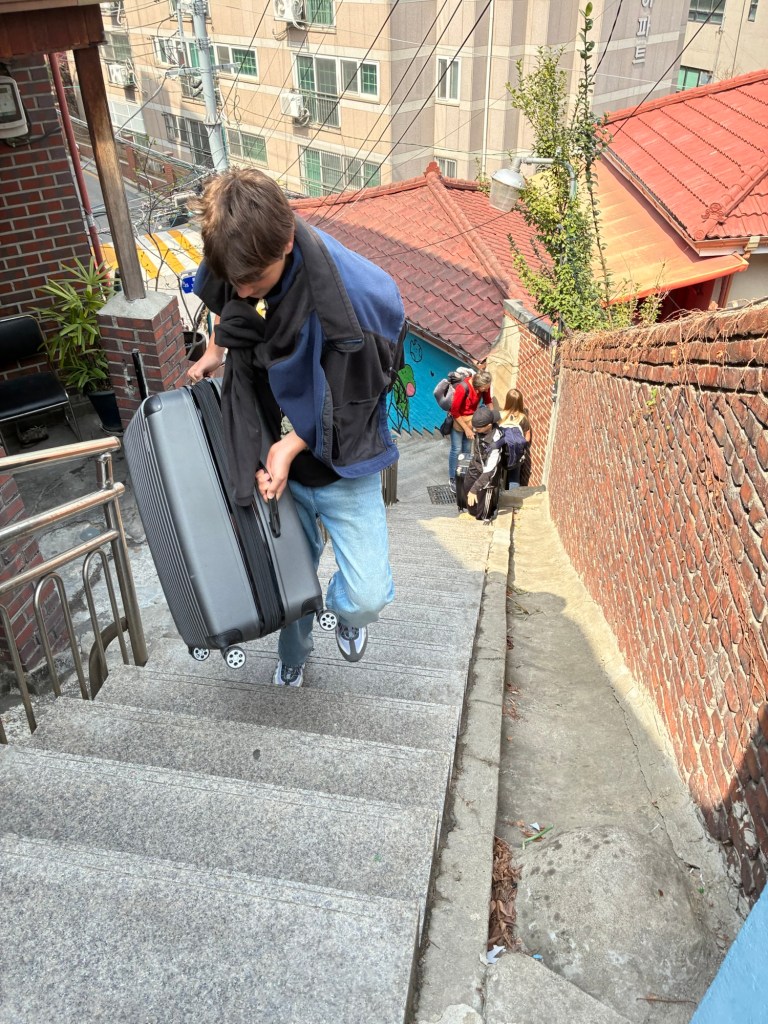
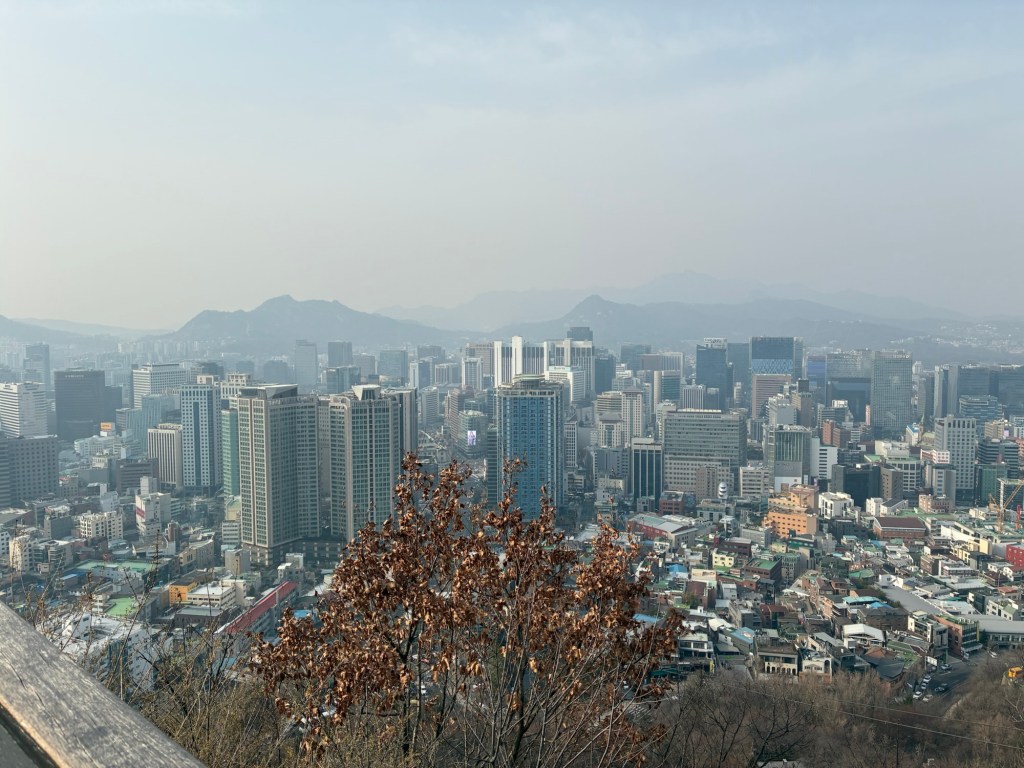
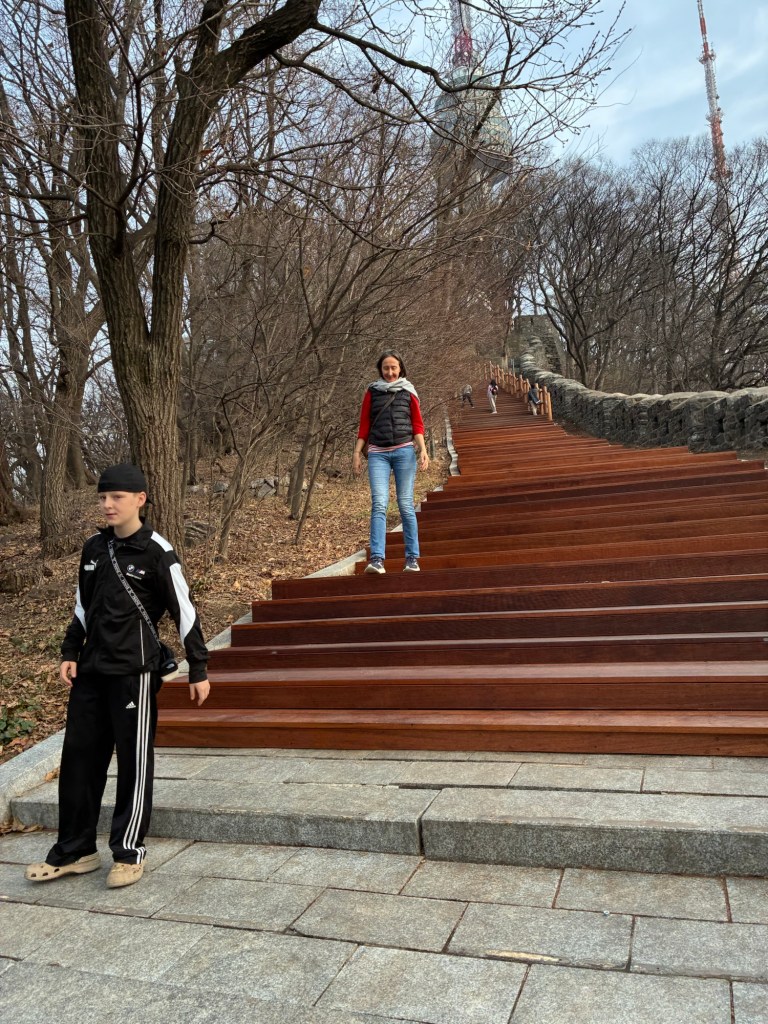
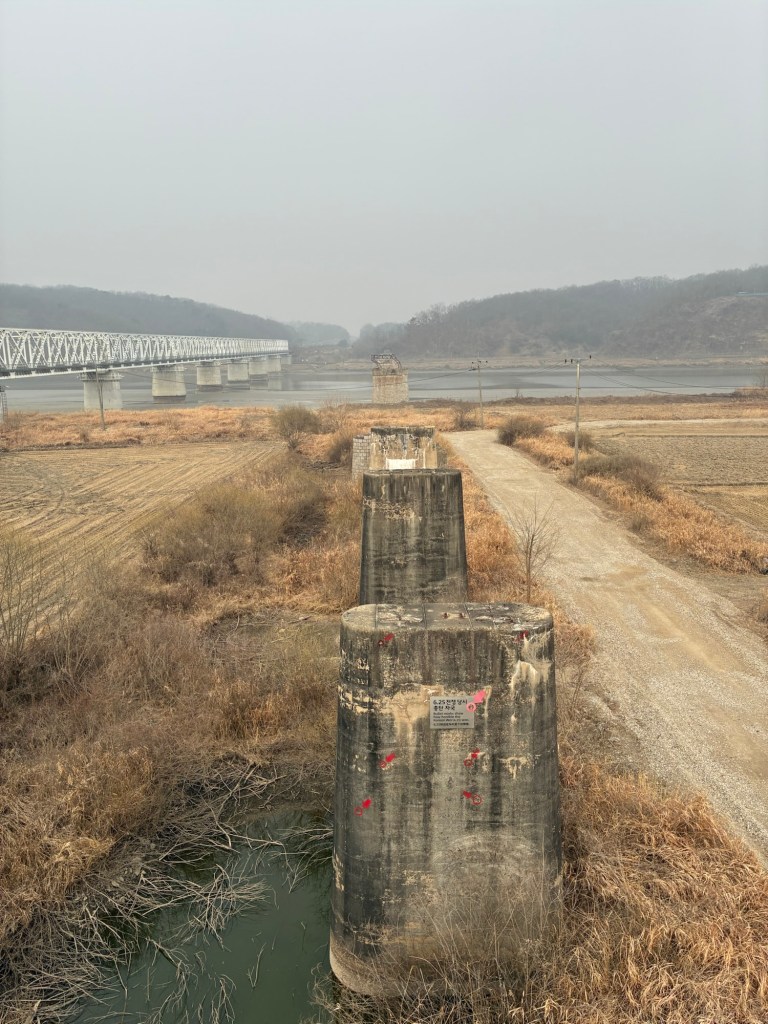
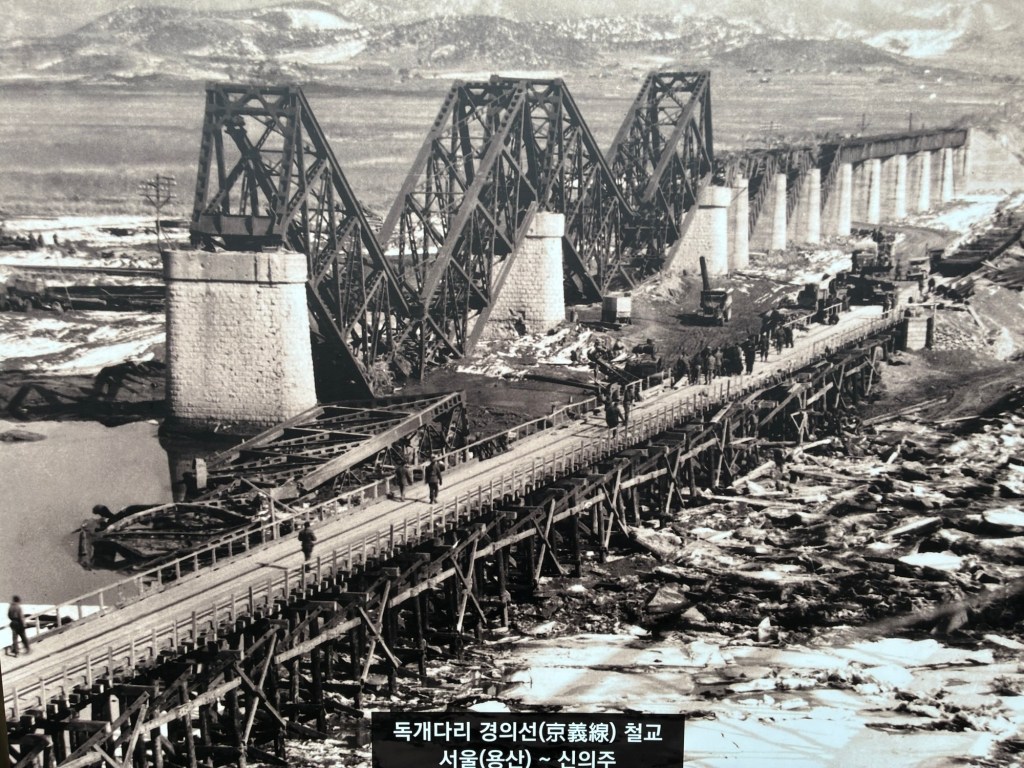
    Wir verlassen unser schönes Unicorn Apartment nach einer Joggingtour – diesmal flussabwärts, wo man noch ein Denkmal für die abgerissene Brücke sieht, nehmen den Bus  durch die Stadt und schleppen mal wieder echt traveller-Style unser Koffer eine steile Treppe hinauf. Da wir noch nicht einchecken können, laufen wir in den Park den Berg hinauf. Es ist frühlingshaft, aber noch blüht nichts, und es erinnert an daheim. Es geht den Berg hinauf, man überblickt die Stadt und wir sind stolz, nicht die Gondelbahn genommen zu haben. 

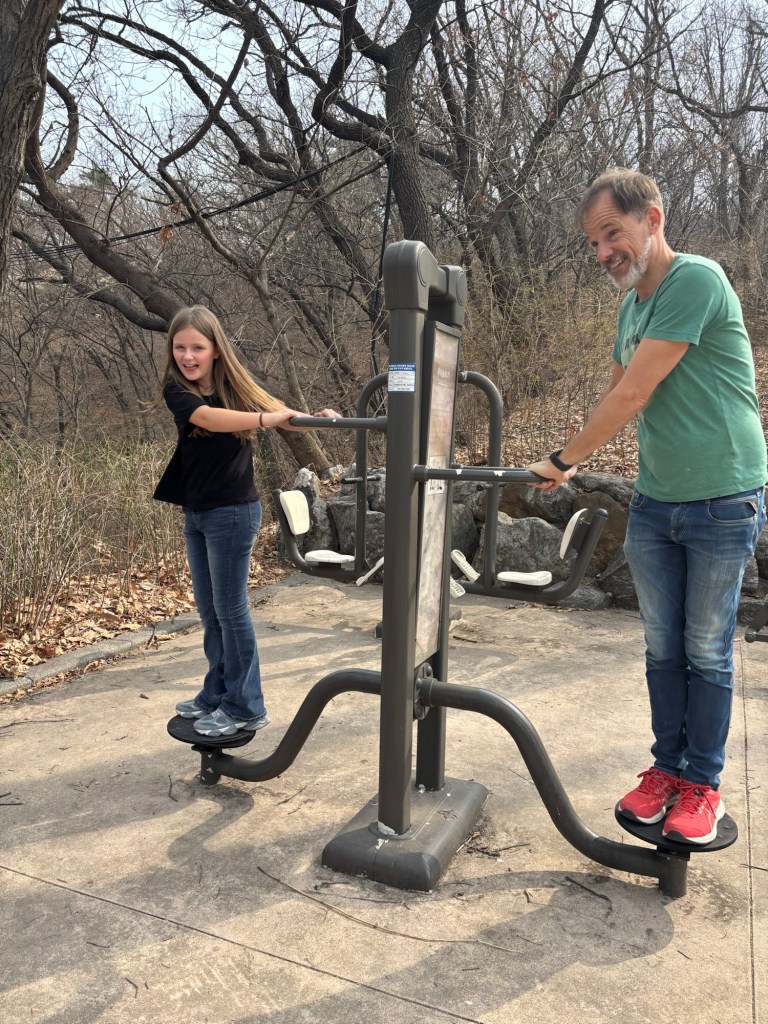
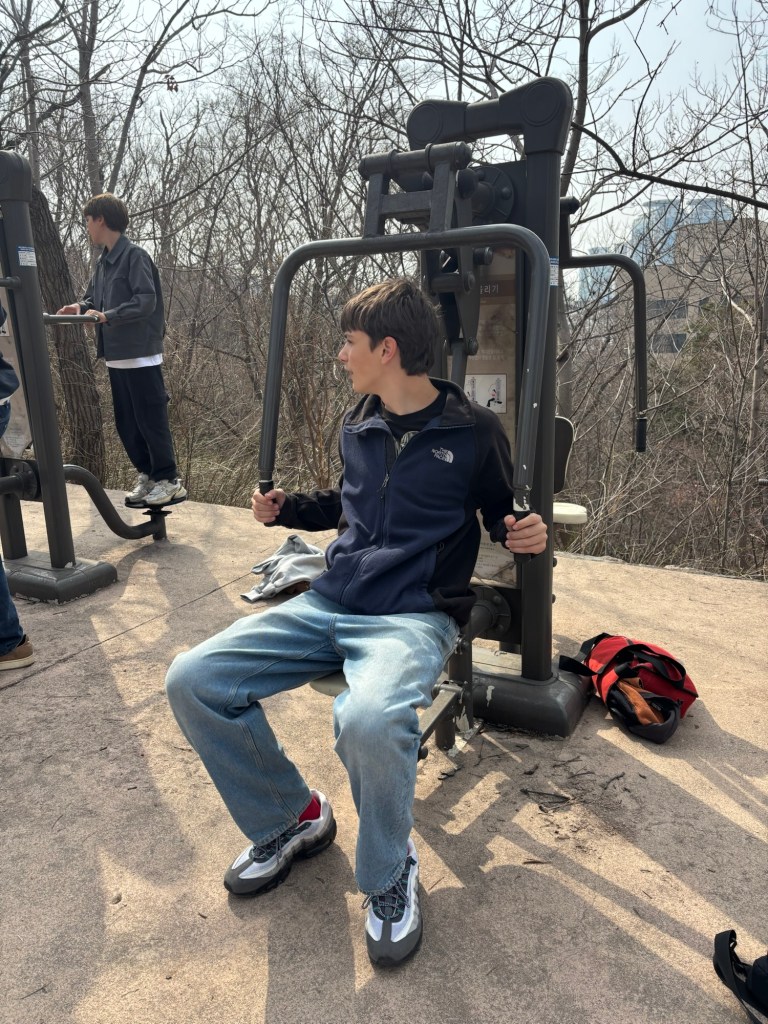
    Man sieht die Reste der Stadtmauer von 1500, ein Denkmal für die unter der japanischen Besatzung von 1914 bis 1945 vergewaltigten Frauen und es gibt Sportgeräte. 

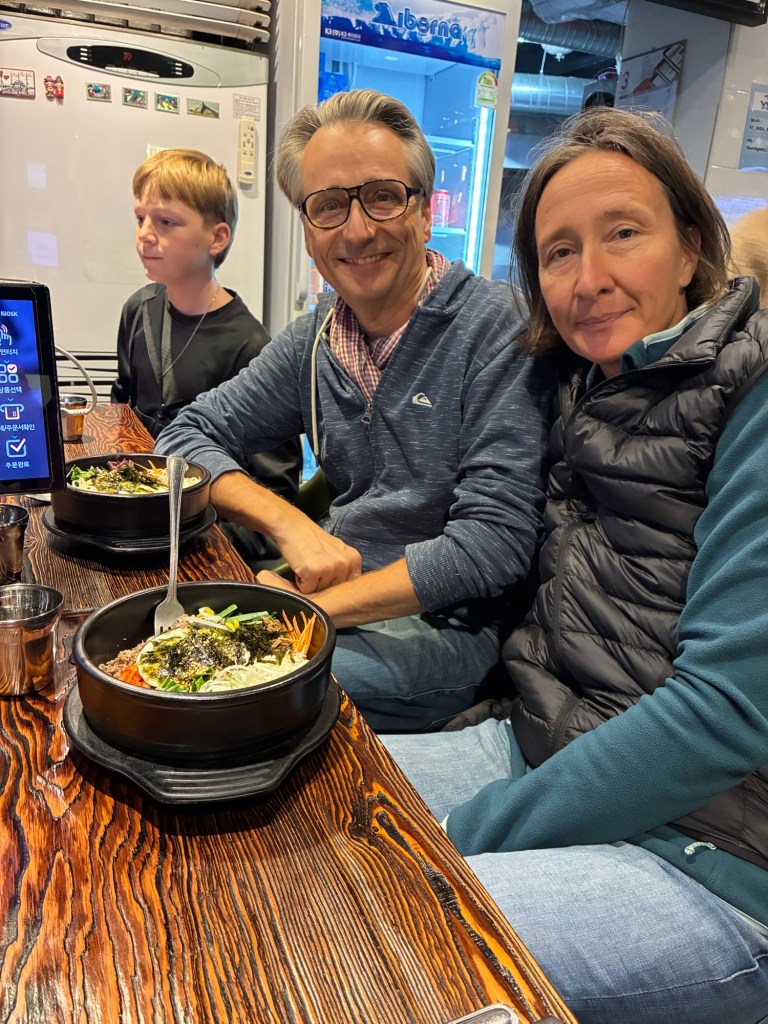
    Zum Abendessen gibt es Bimbimbap,ein typisches vegetarisches Gericht, sehr lecker. 

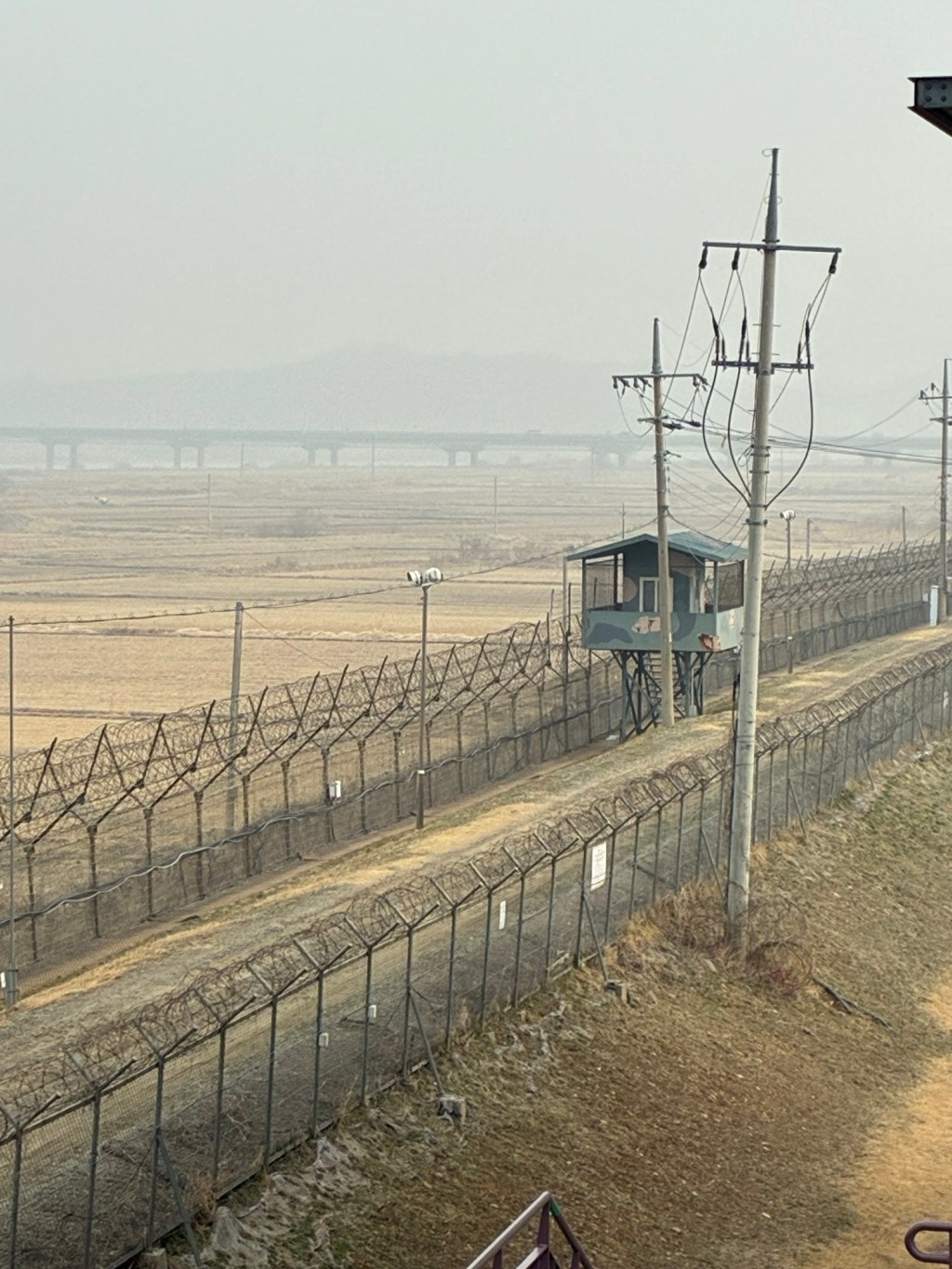
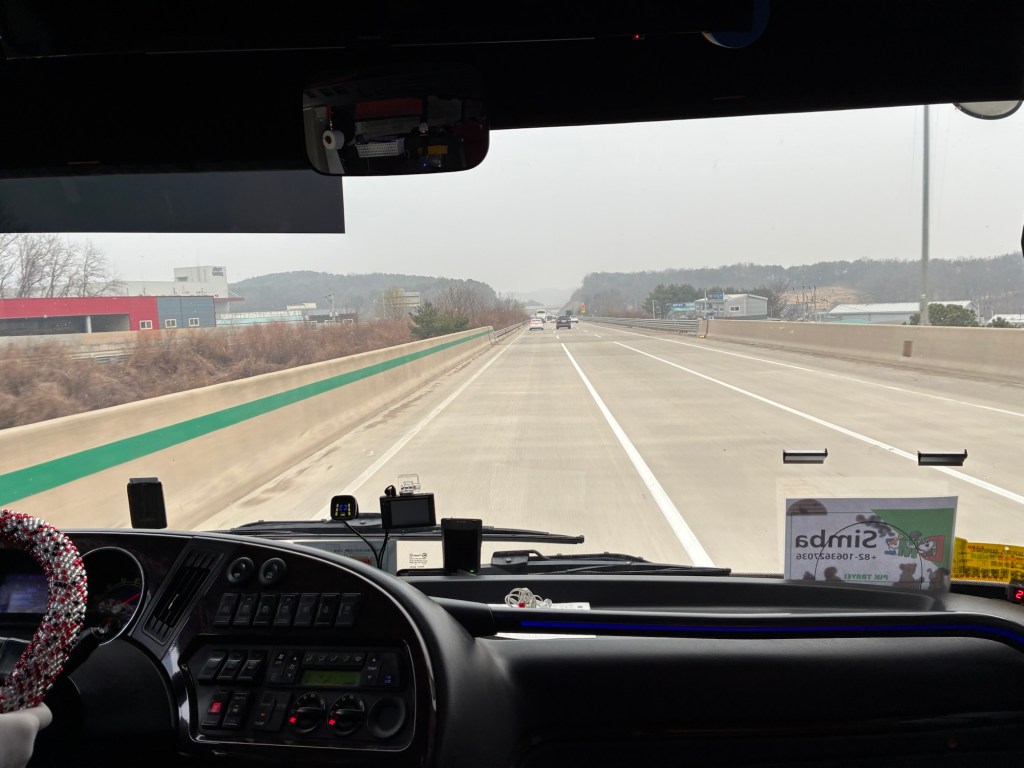
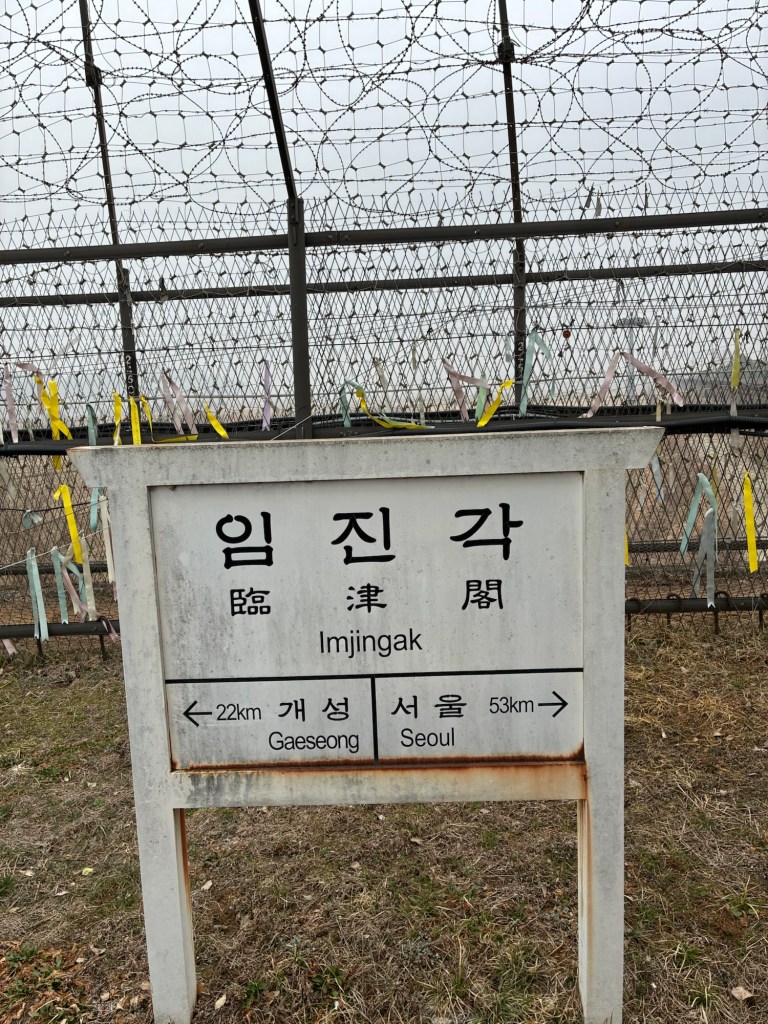
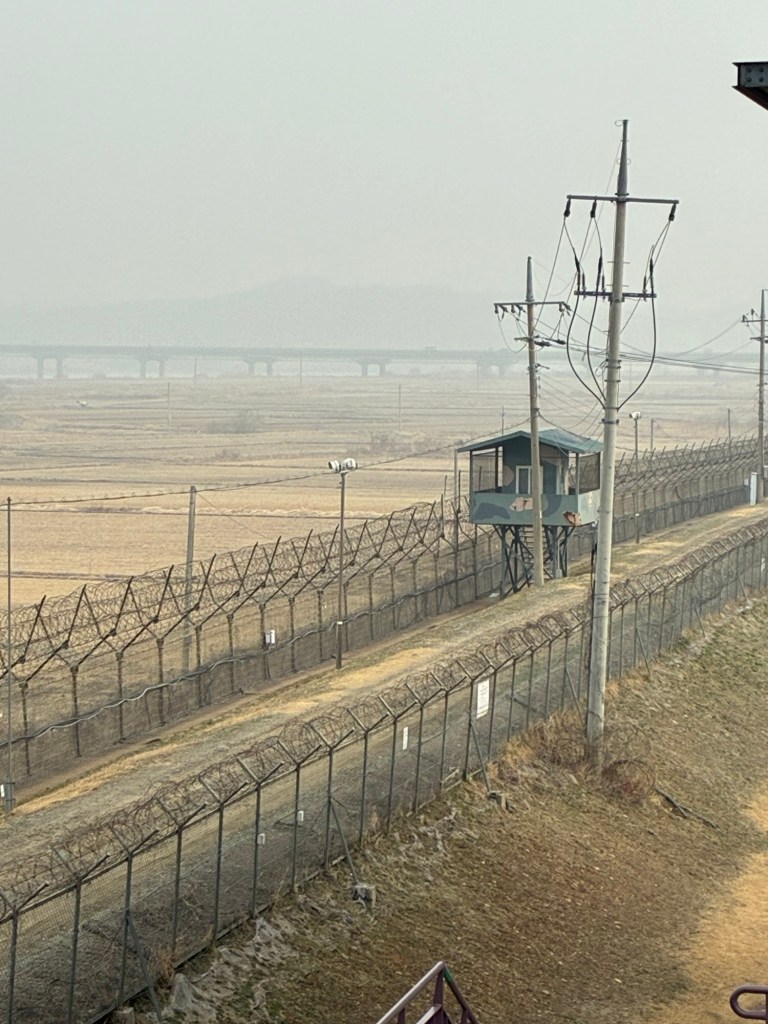
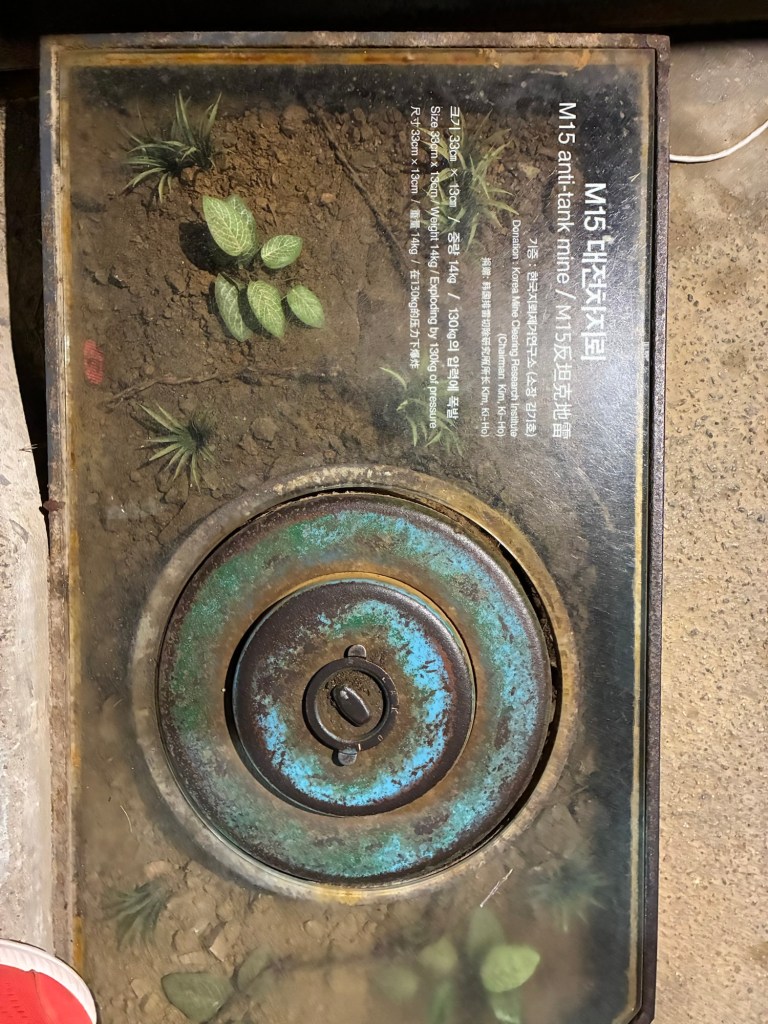
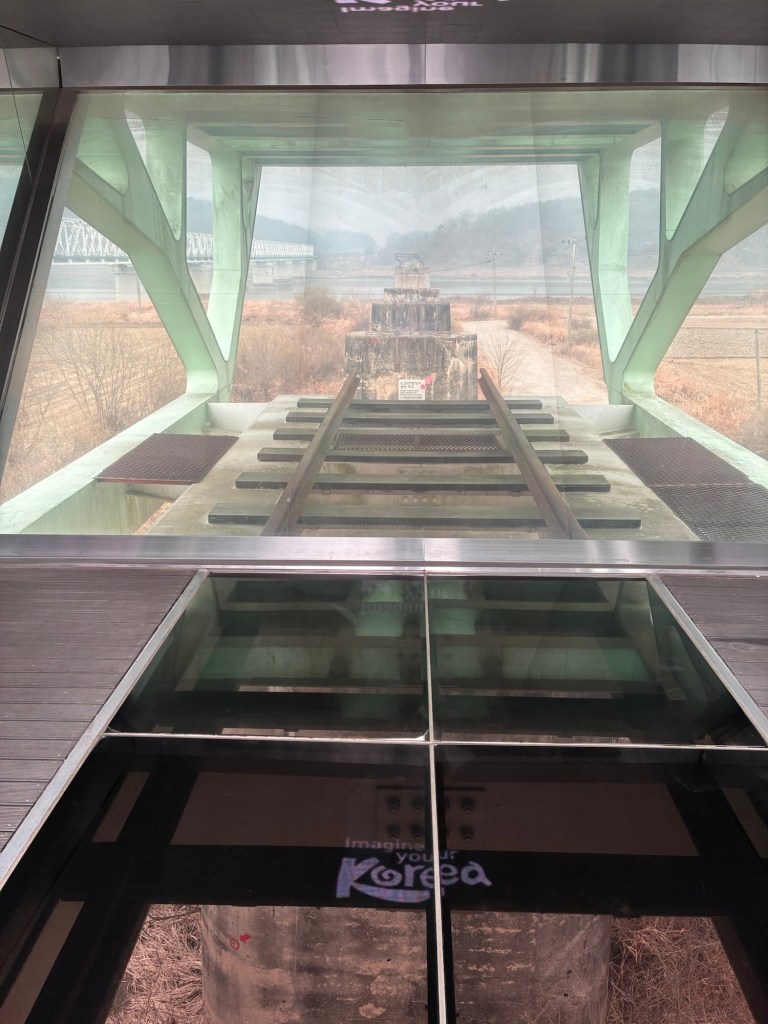
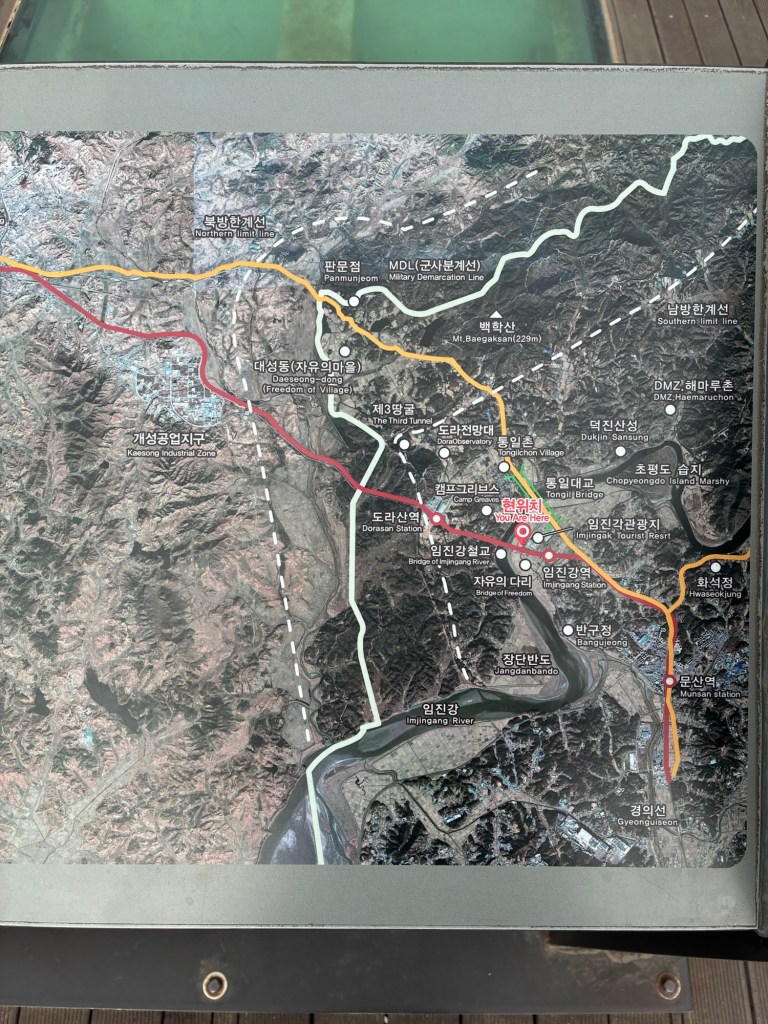
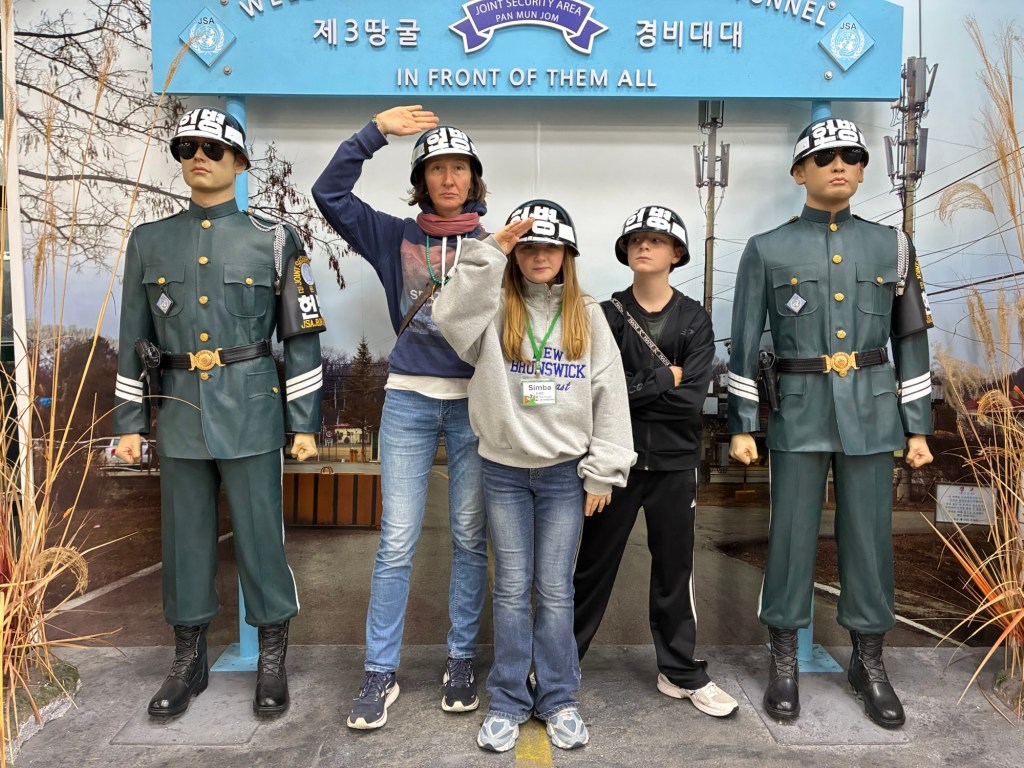
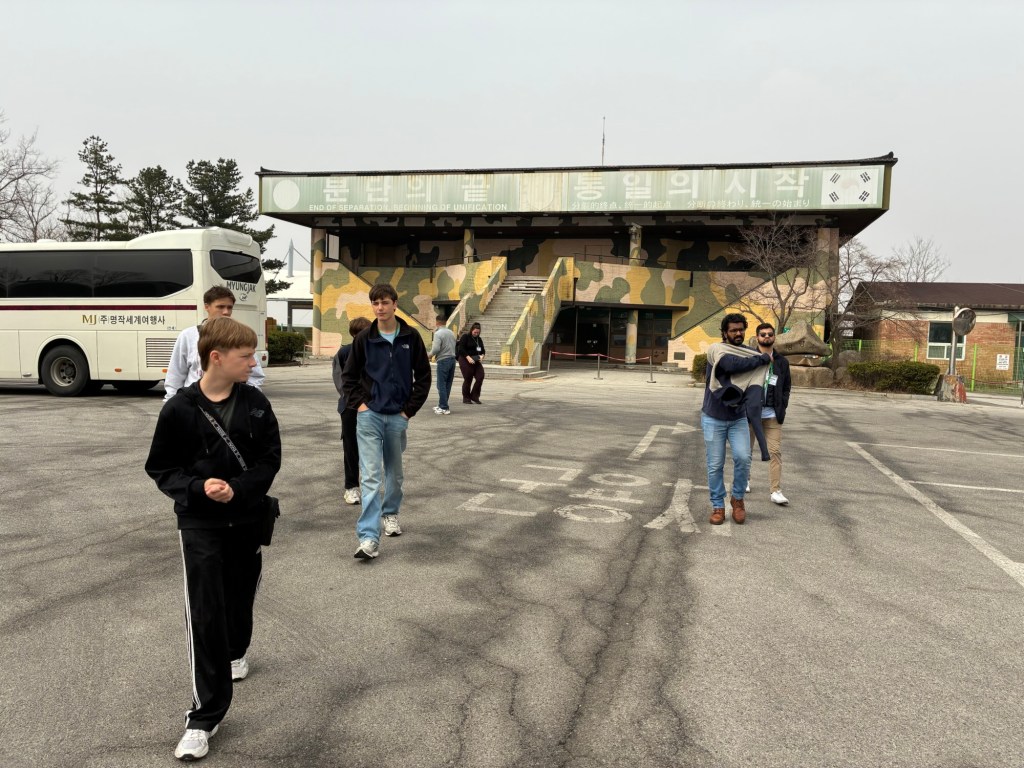
    Am nächsten Morgen stehen wir schon um 6:00 Uhr auf, um um sieben den Bus in das Grenzgebiet zu Nordkorea zu fahren. Die Autobahn Richtung Norden könnte in Deutschland sein, aber dann beeindruckt diese wohl am meisten bewaffnete Grenze mich doch sehr. Ich dachte erst, dass dies eher eine Touristen-Attraktion ist. Wenn dann aber die Soldaten durch den Bus gehen und die Pässe kontrollieren, und die Grenzanlagen schon bei der Einfahrt in die DMZ (Demilitarisierte Zone) so sehr an die DDR erinnern, dann wird mir klar- hier ist noch der kalte Krieg- und da drüben der Staat, dessen 25 Millionen Menschen in einem Gefängnis leben und dessen Herrscher immer weitere Atombomben zündet und Raketen startet. Es passt zum grauen Wetter heute, und ich lerne von unserem Guide Simba, dass Seoul zwei mal von Nordkorea eingenommen wurde, und nur die gewagte Landung der Amis verhindert haben, dass Korea vollständig kommunistisch wurde. 

    Der Krieg kostet über 4 Millionen Menschenleben, und endete mit der Teilung an der gleichen Linie, mit der das Land von der Sowjetunion und den USA 1945 nach der Kapitulation Japans geteilt wurde. Und von Russland unterstützt griff Nordkorea 1950 überraschend an, später unterstützt von China.

    Das pro Kopf-Einkommen im Süden ist 35 mal so hoch wie im Norden, wo  immer wieder Hungersnöte grassieren, und dessen Herrscher jetzt seine Bürger in die Ukraine schickt, um Russland bei seiner Invasion zu unterstützen.

    Die ganze Grenzanlage mit ihren touristischen Sehenswürdigkeiten ist immer noch geprägt von der Hoffnung auf Wiedervereinigung, doch derzeit ist dies ein Traum, der in weite Ferne gerückt zu sein scheint. Man hört aber die Propaganda-Beschallungen von beiden Seiten.

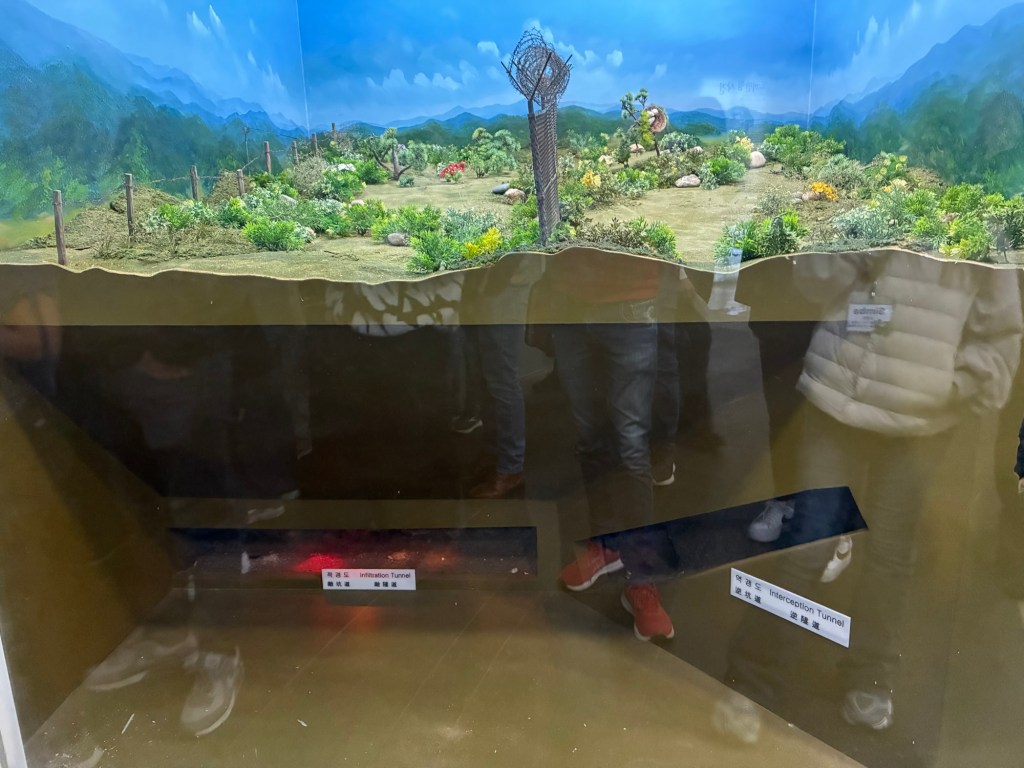
    Abenteuerlich ist noch der Marsch in einen der vielen unterirdischen Tunnel Anlagen, die von der nordkoreanischen Seite aus gebaut wurden, um einen Überraschungsangriff starten zu können. Vier wurden in den letzten Jahrzehnten entdeckt. Wir waren in Nummer drei, getarnt als Kohlestollen, und fast 2 km lang, aber nur 1,70 m hoch.

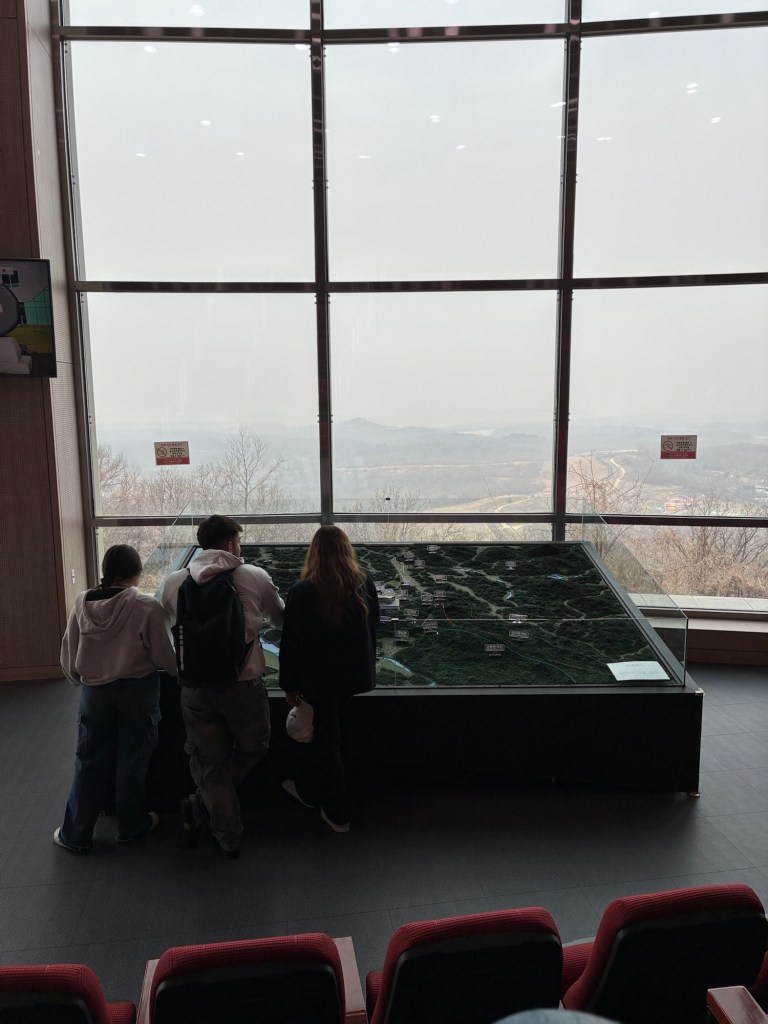
    Von Nordkorea ist bei schlechter Sicht nur wenig zu erkennen, und deutlichsten sieht man es daran, dass der Wald dort endet – weil jeder Baum abgeholzt wurde, um als Brennholz zu dienen.

    Was haben wir doch für ein Glück, dass wir im wieder vereinigten Deutschland leben !

    Morgen geht es noch einmal in die Stadt, um Kultur anzuschauen, und übermorgen fliegen wir dann schon nach Hongkong. Nadine freut sich sehr auf diese Metropole, und ich bin auch schon sehr gespannt.


    Day 110 and 111 

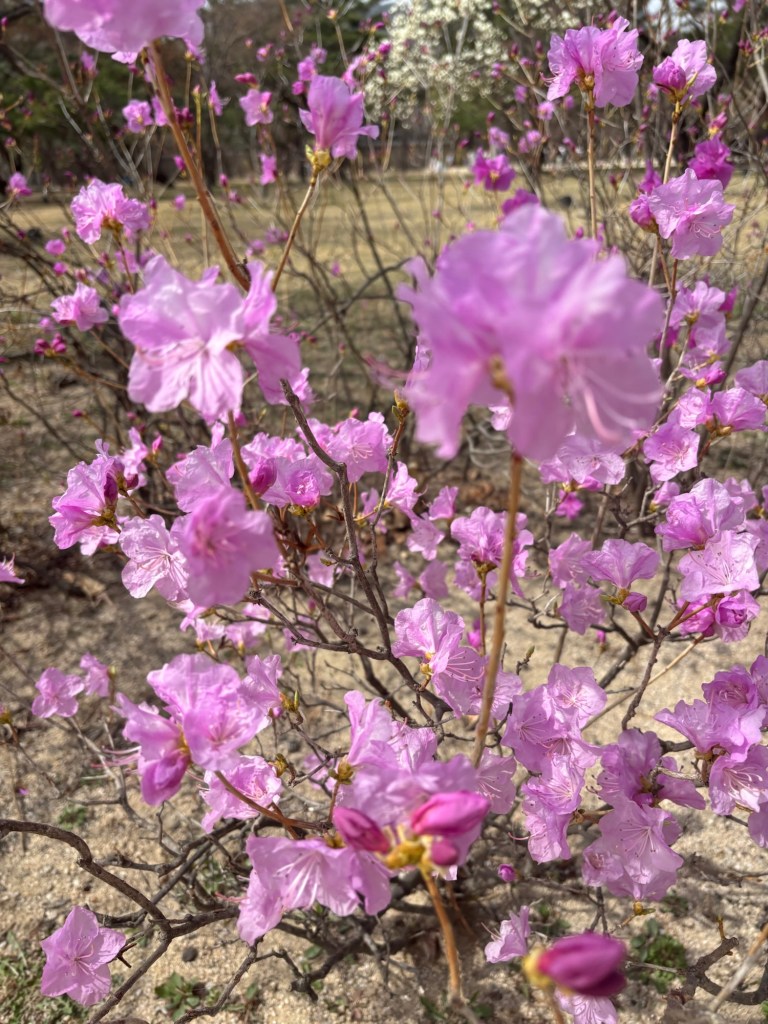
    We leave our beautiful Unicorn Apartment after a jog – this time downstream, where you can still see a memorial to the demolished bridge, take the bus through the city and once again lug our suitcase up a steep flight of stairs in true traveler style. As we can’t check in yet, we walk up the hill to the park. It’s spring-like, but nothing is in bloom yet and it reminds us of home. We walk up the hill overlooking the city and are proud not to have taken the cable car. 

    You can see the remains of the city wall from 1500, a memorial to the women raped under the Japanese occupation from 1914 to 1945 and there is sports equipment. 

    For dinner we have bimbimbap, a typical vegetarian dish, very tasty. 

    The next morning we get up at 6 a.m. to take the bus to the border area with North Korea at seven. The highway heading north could be in Germany, but then I am really impressed by what is probably the most heavily armed border. At first I thought it was more of a tourist attraction. But when the soldiers walk through the bus and check the passports, and the border facilities remind me so much of the GDR as soon as I enter the DMZ (Demilitarized Zone), then I realize – here is still the Cold War – and over there is the state whose 25 million people live in a prison and whose ruler is constantly detonating more nuclear bombs and launching missiles. It suits the gray weather today, and I learn from our guide Simba that Seoul was invaded twice by North Korea, and only the daring landing of the Americans prevented Korea from becoming completely communist. 

    The war cost over 4 million lives and ended with the division along the same line that the country was divided by the Soviet Union and the USA in 1945 after the surrender of Japan. And backed by Russia the North attacked unexpectedly in 1950, later supported by China.

    The per capita income in the south is 35 times higher than in the north, where famine is rampant and whose ruler is now sending his citizens to Ukraine to support Russia in its invasion.

    The entire border complex with its tourist attractions is still characterized by the hope of reunification, but at the moment this is a dream that seems to have receded into the distant future.

    The march into one of the many underground tunnels built by the North Korean side to launch a surprise attack is still an adventure. Four have been discovered in recent decades. We were in number three, disguised as a coal mine and almost 2 km long, but only 1.70 m high.

    There is little to see of North Korea in poor visibility, and the clearest way to tell is that the forest ends there – because every tree has been cut down to serve as firewood.

    How lucky we are to live in a reunified Germany!

    Tomorrow we’re going back to the city to see some culture, and the day after tomorrow we’ll be flying to Hong Kong. Nadine is really looking forward to this metropolis, and I’m also very excited.

  • Lotte in Seoul

    Tag 108 und 109

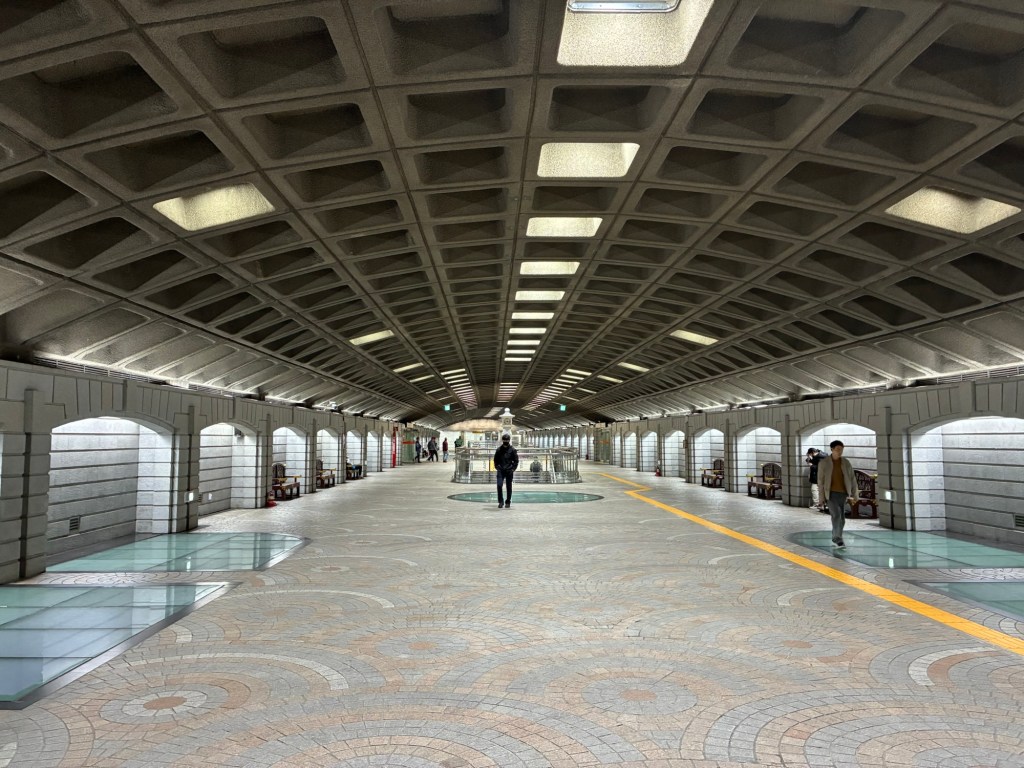
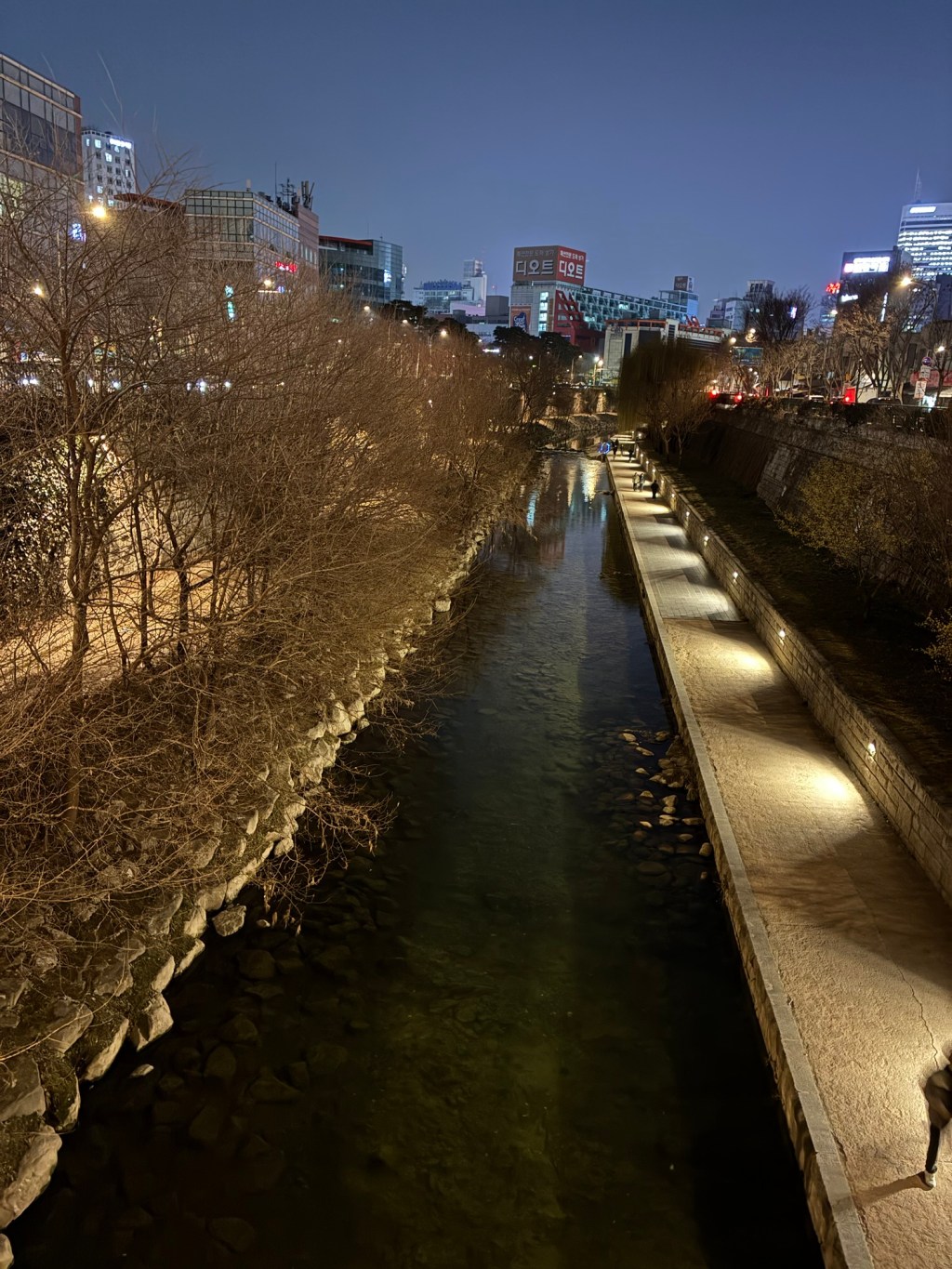
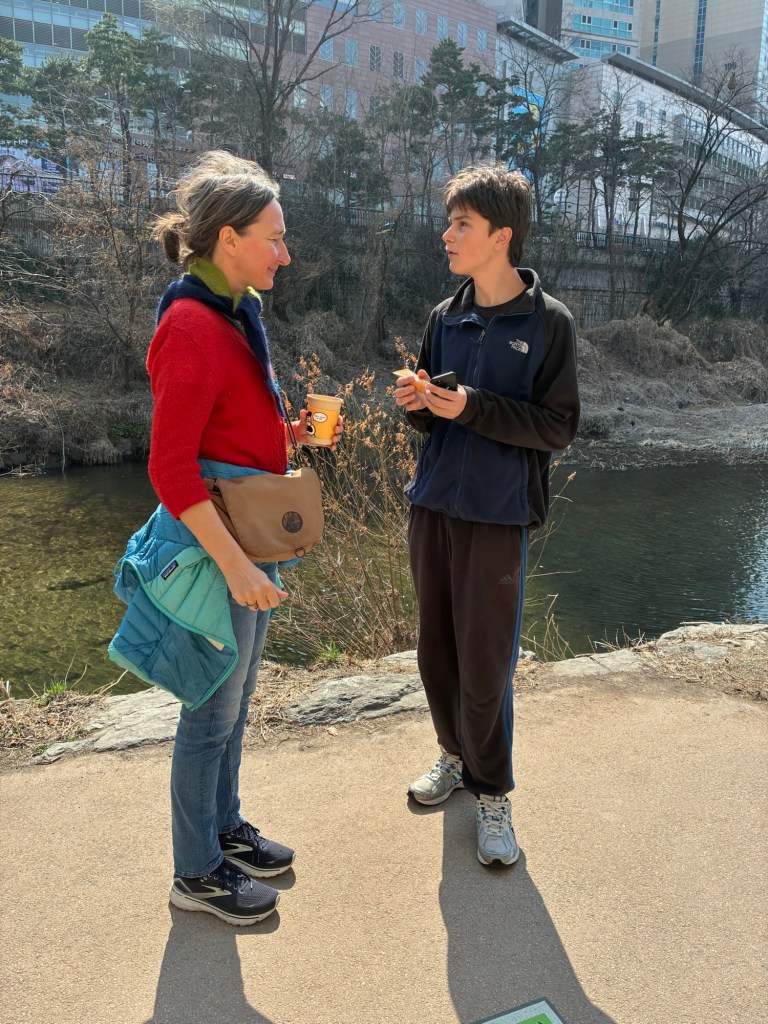
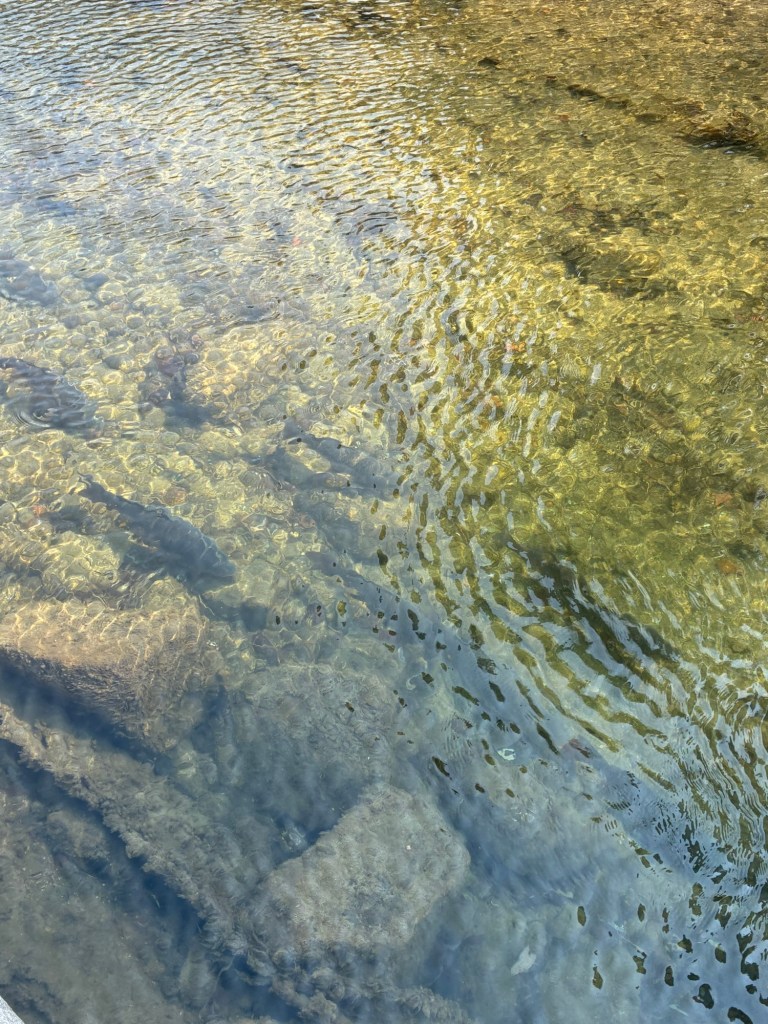
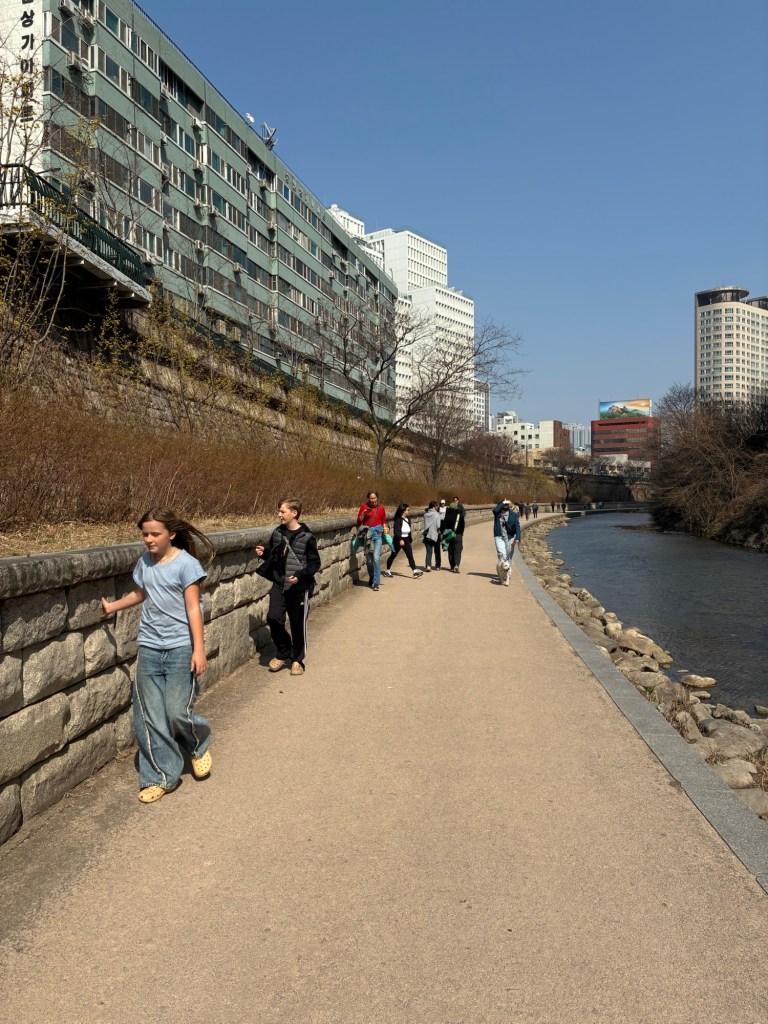
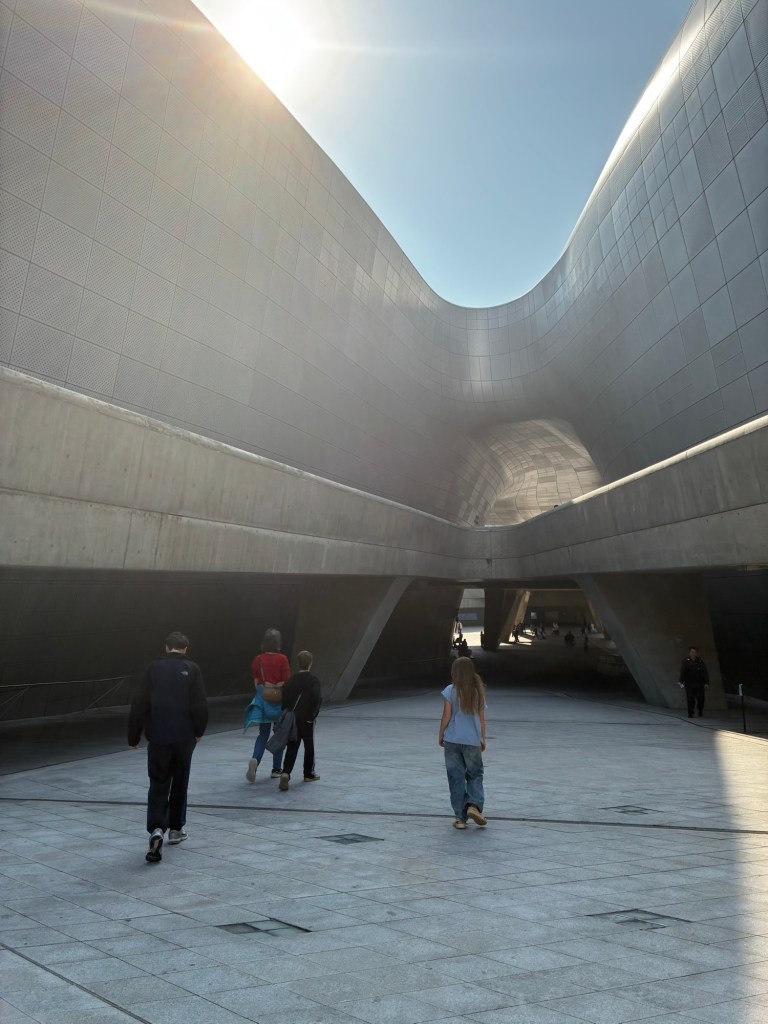
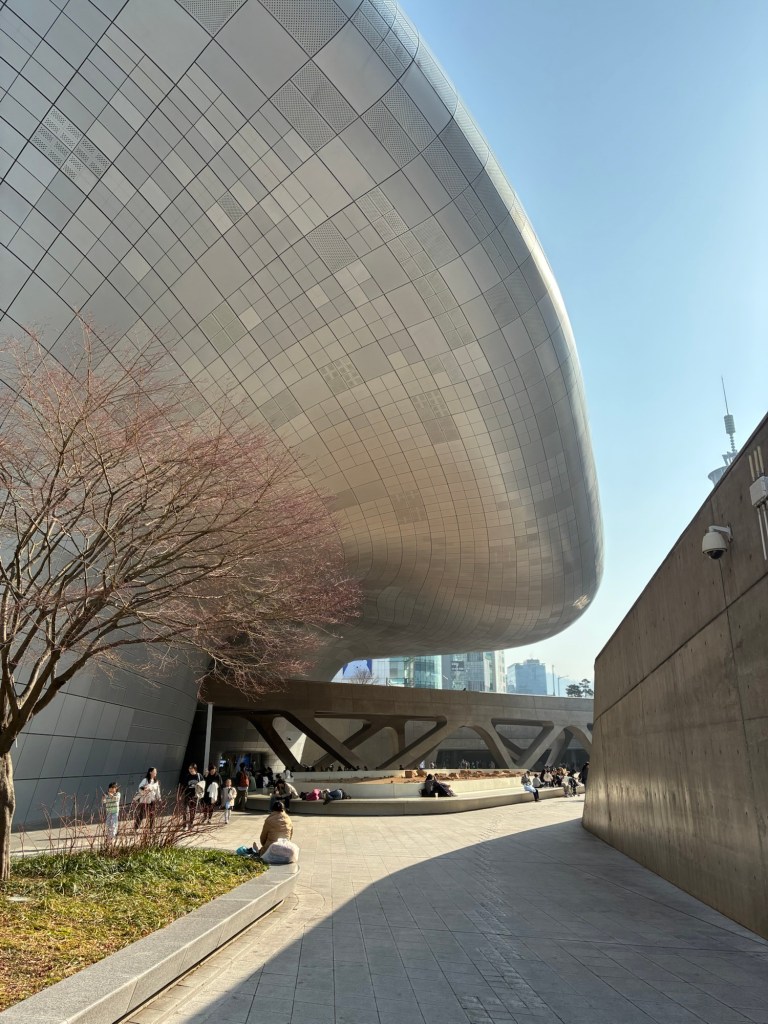
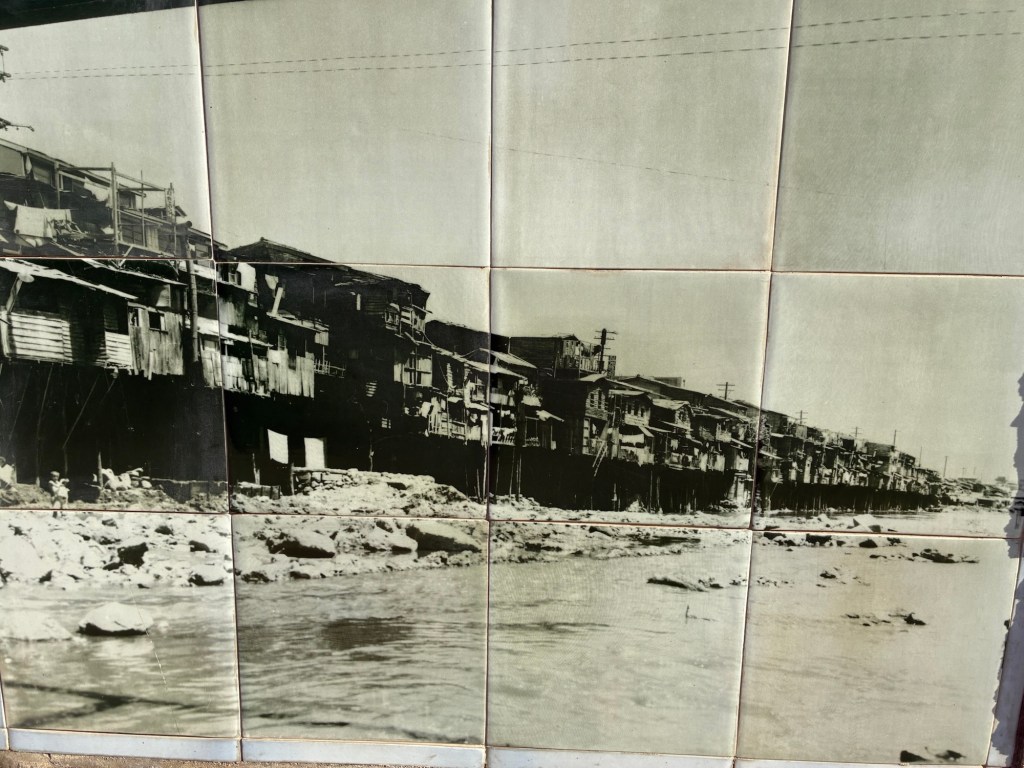
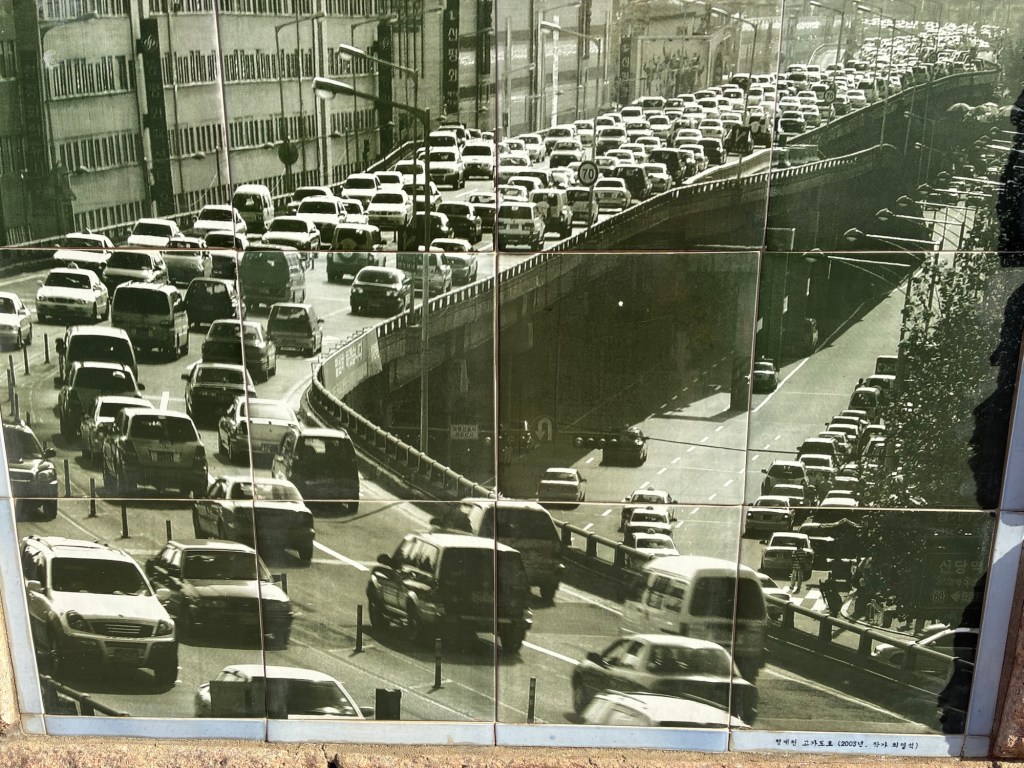
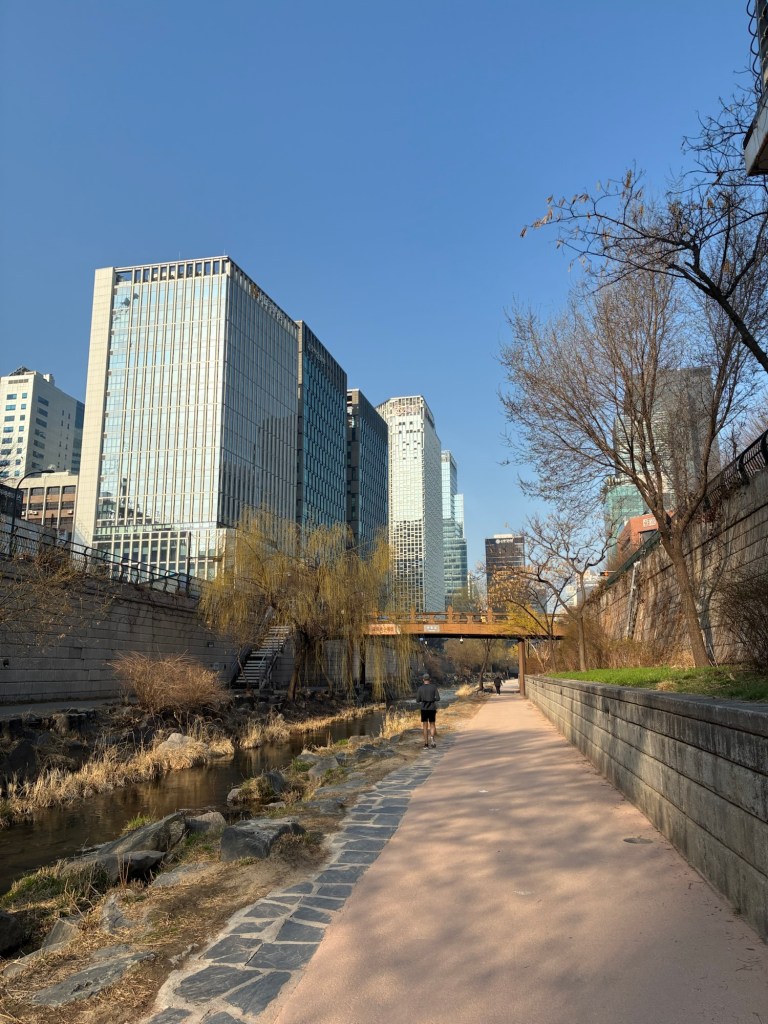
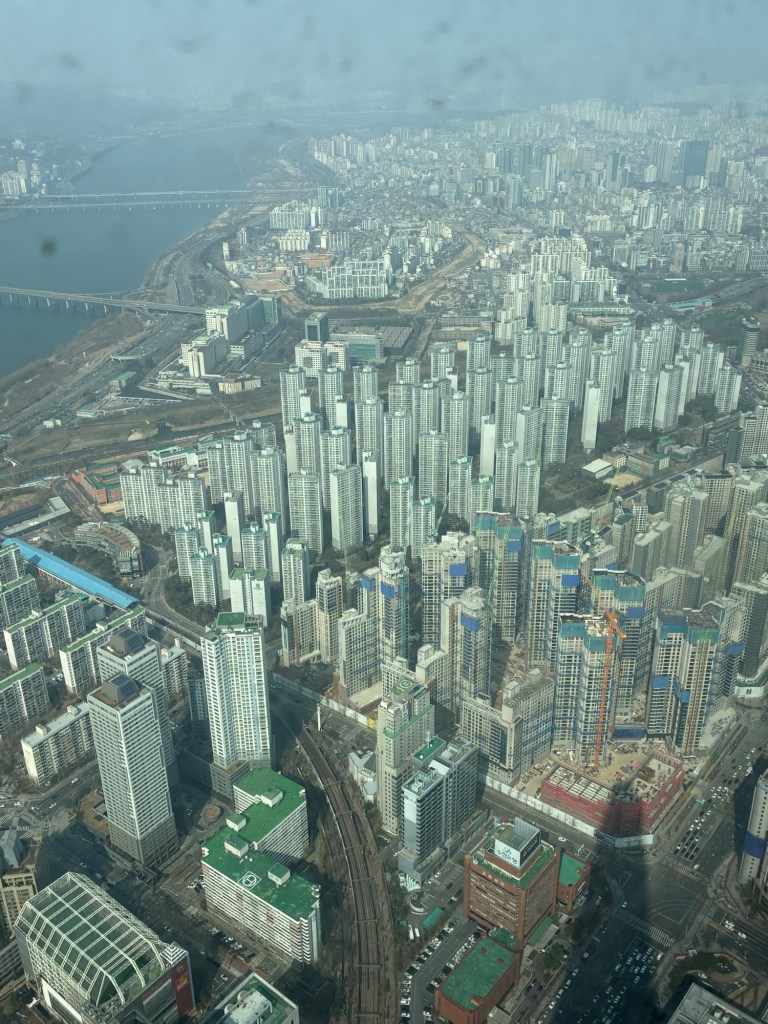
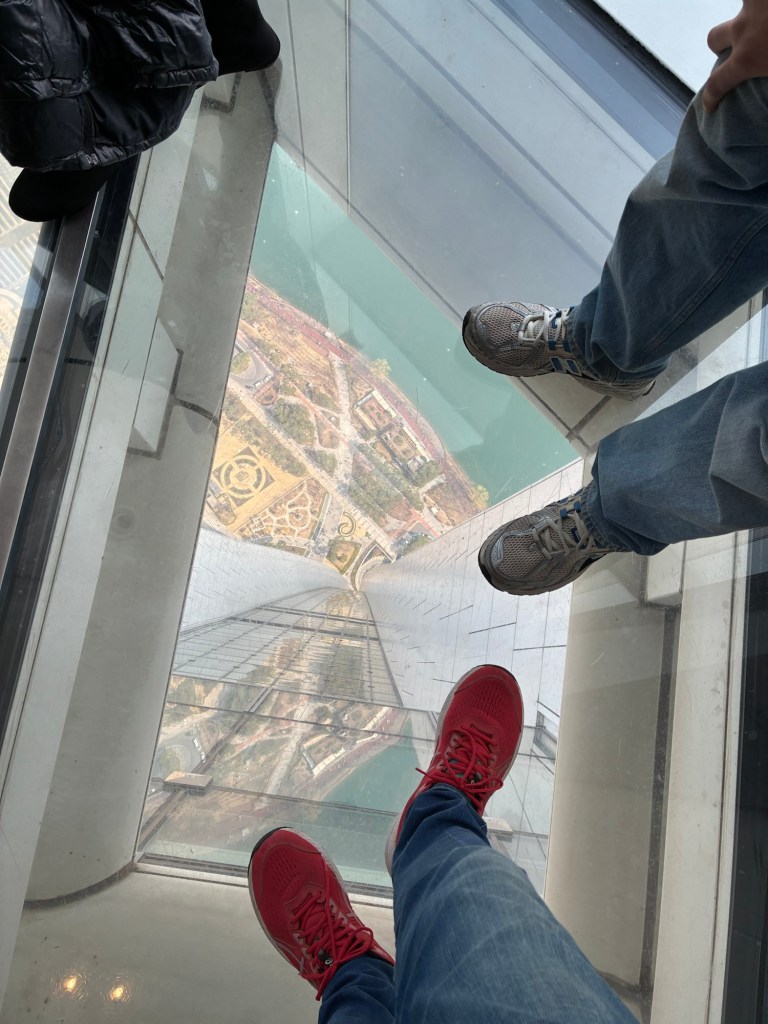
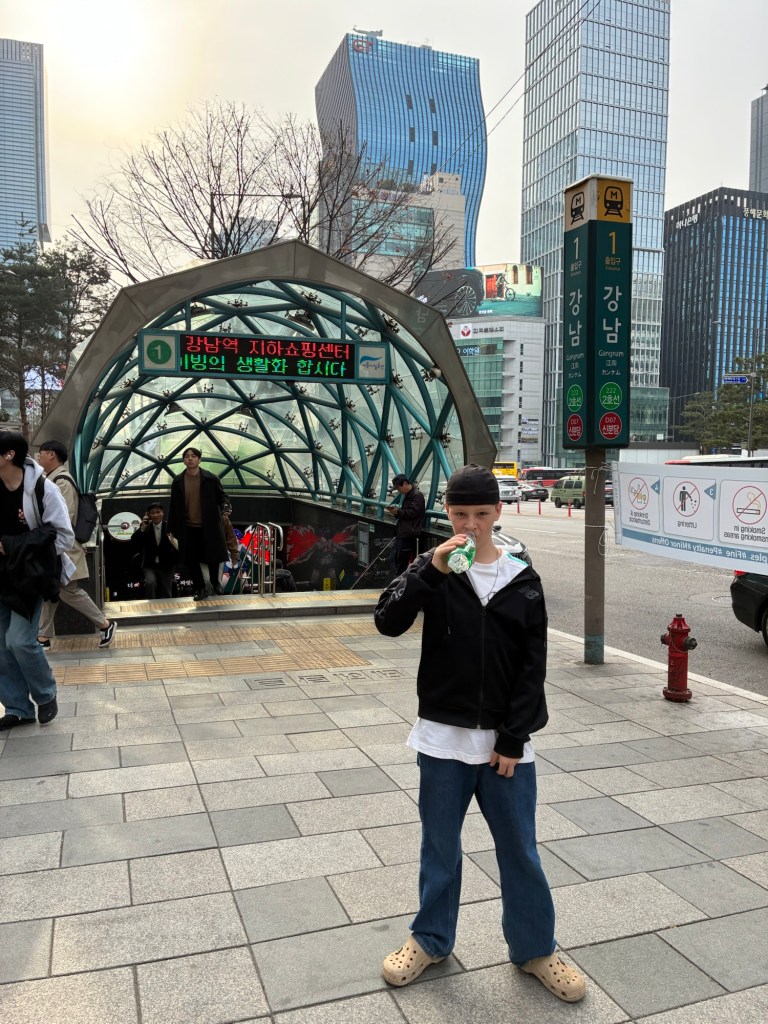
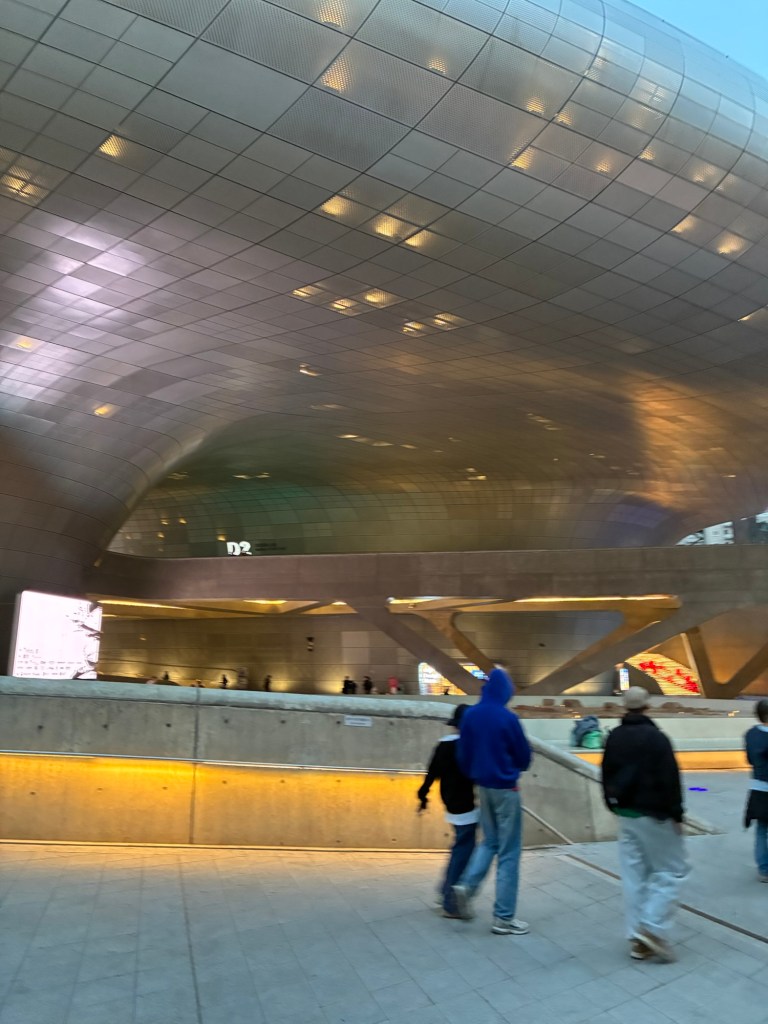
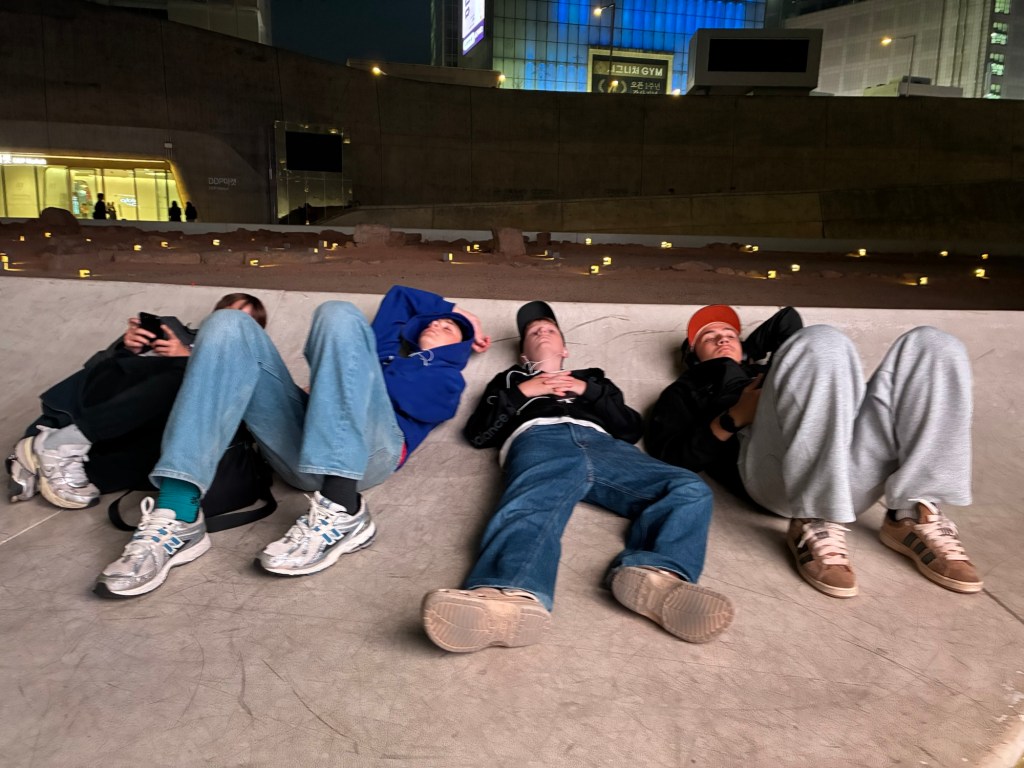
    Nadine und Tara hatten Girls Day, und kommen strahlend und mit neuer schicker Frisur und stylisher Jeans zurück in unsere Ferienwohnung am Fuß des Lotte Castle, das bis zu 265 m hoch aufragt und 4000 Wohnungen beherbergt. Wir sechs Jungs waren währenddessen beim strahlendem Wetter auf dem Lotte World Tower ( 555 m), 10 km entfernt,mit schicker Aussichtsplattform auf 480 m und schauten uns rundum die Hochhäuser dieser 25 Millionen Metropole an. Zurück über das Gangnam Viertel mit seinen krassen Häusern, Läden und Straßen, wo am Sonntagabend der Bär steppt. Bei Sonnenuntergang nehmen wir ausnahmsweise mal den Bus und steigen am  Dongdaemun Design Plaza (DDP) noch mal aus, und bewundern dieses architektonische Meisterwerk bei Nacht. Hier hat die iranische Architektin Zaha Hadid wirklich etwas geleistet. Das letzte Stück laufe ich mit Velis und Morpheus an dem schönen Fluss entlang, da auch noch nachts von Joggen bevölkert ist und elegant beleuchtet zum flanieren einlädt. Wir hören die Beatles- A day in Life und Something. Seoul und Korea sind  einfach erstaunlich. Am Fluss sieht man mit drei Fotos nebeneinander die Entwicklung – in den sechziger Jahren standen hier Holzhütten am Ufer, 2000 war eine sechsspurige Autobahn und Betonwüste und 2025 ist alles renaturiert und entlang des eleganten Pfads der die ganze Stadt durchdringt, sieht man im klaren Wasser große Fische schwimmen, hört aus den Lautsprechern klassische Musik und kann mit Aufzügen zum Straßenniveau zurückkehren und dort die Hochhäuser mit ihren Einkaufstempeln und riesen Wohnanlagen bestaunen. Ja, Lotte heißen diese Immobilienimperien tatsächlich nach Lotte aus dem Werther. 

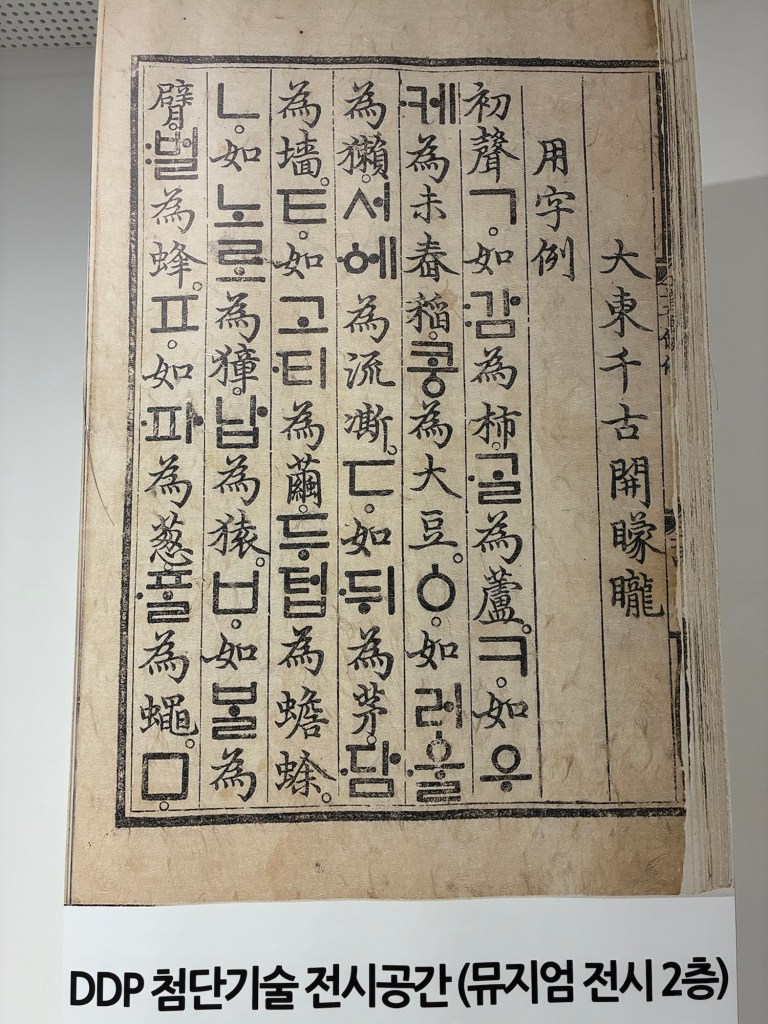
    Wir haben ein kleines süßes, ein-Zmmer Apartment mit drei Doppelstockbetten, mit Fußbodenheizung, bei der frühlingshaften nächtlichen Kühle, kamen nachts nach einem aufregenden Reisetag mit kleinener Hindernissen mit der U-Bahn vorgestern hier an. Bei 900 km U-Bahn Netz (das sechsfache von Berlin) waren wir immer wieder über ChatGPT froh, dass beim übersetzen aus dem koreanischen hilft. Dabei ist Koreanisch einfach, König Sejong der Große hat im Jahre 1446 beschlossen, dass das chinesische Schriftsystem zu kompliziert für das einfache Volk sei und hat  die koreanische Schrift, Hangeul, als Silbenschrift eingeführt.

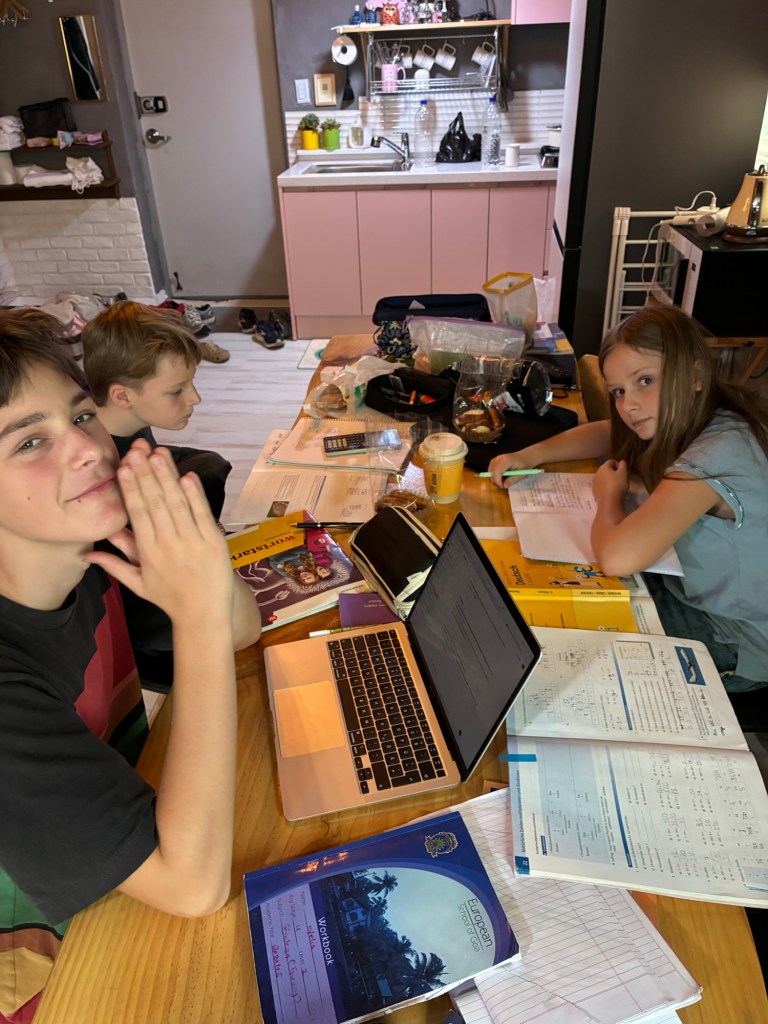
    An den riesigen OLED Bildschirm überall erkennt man, dass dies das Land von Samsung ist. An den Elektroautos, das Kia und Hyundai aus Korea kommen. Und an dem Wohlstand, dass das kleine Sd-Korea mit seinen 50 Millionen Einwohnern die 13 größte Wirtschafts Nation der Welt ist, mit einem Pro-Kopf-Einkommen von 35.000 $ im Jahr. Endlich kann man wieder joggen, die Luft ist relativ sauber, und wir sind heute alle 15 km gelaufen und nun reif fürs Bett. Nur mit dem Essen sind wir uns noch nicht einig, irgendwie fehlt noch der Zugang zu dieser Küche – aber die Garnelen in der Küche heute mit Knoblauch angebraten, waren sehr lecker. Und dazu als Nachtisch Lotte Schokolade . Morgen gibt es morgens noch mal Schule am großen Küchentisch , dann müssen wir umziehen, unser Apartment war leider ausgebucht, und so werden wir einen weiteren Teil dieser Riesenmetropole entdecken. Nadine meint: der größte Luxus ist es, einmal drei Nächte am selben Ort schlafen zu können – und heute ist unsere dritte Nacht! 

    Day 108 and 109

    Nadine and Tara had Girls‘ Day and came back to our vacation apartment at the foot of Lotte Castle, which towers up to 265 m high and is home to 4,000 apartments, beaming and with a new chic hairstyle and stylish jeans. Meanwhile, the six of us boys were enjoying the glorious weather on the Lotte World Tower (555 m), 10 km away, with its chic viewing platform at 480 m, and looked all around at the skyscrapers of this 25-million metropolis. Back via the Gangnam district, with its cool houses, stores and streets, where it’s all happening on a Sunday evening. At sunset, we take the bus for a change and get off at Dongdaemun Design Plaza (DDP) to admire this architectural masterpiece by night. The Iranian architect Zaha Hadid has really achieved something here. I walk the last stretch with Velis and Morpheus along the beautiful river, which is still full of joggers at night and elegantly lit up for a stroll. We listen to the Beatles – A day in Life and Something. Seoul and Korea are simply amazing. Along the river you can see the development in three photos side by side – in the sixties there were wooden huts on the banks, in 2000 there was a six-lane highway and concrete desert and in 2025 everything has been renaturalized and along the elegant path that runs through the whole city, you can see big fish swimming in the clear water, hear classical music from the loudspeakers and can return to street level in elevators and marvel at the high-rise buildings with their shopping temples and huge residential complexes. Yes, these real estate empires are actually called Lotte after Lotte from Werther. 

    We have a cute little one-room apartment with three double bunk beds, with underfloor heating, in the spring-like coolness of the night, arrived here the day before yesterday after an exciting day of traveling with minor obstacles on the subway. With 900 km of subway network (six times that of Berlin), we were always glad to have ChatGPT to help translate from Korean. Korean is simple, King Sejong the Great decided in 1446 that the Chinese writing system was too complicated for the common people and introduced the Korean script, Hangeul, as a syllabary.

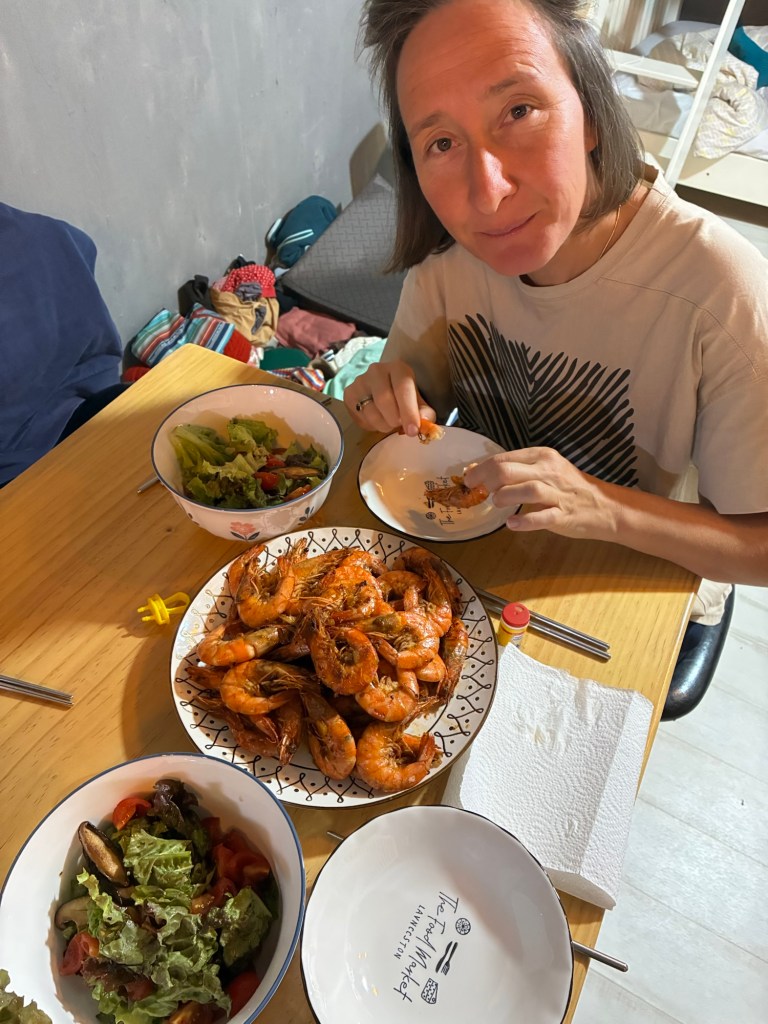
    You can tell from the huge OLED screens everywhere that this is the land of Samsung. You can tell from the electric cars that Kia and Hyundai come from Korea. And from the prosperity that little South-Korea, with its 50 million inhabitants, is the 13th largest economy in the world, with a per capita income of $35,000 a year. We can finally go jogging again, the air is relatively clean and we have all walked 15 km today and are now ready for bed. The only thing we can’t agree on yet is the food, somehow we still lack access to this kitchen – but the prawns fried with garlic in the kitchen today were very tasty. And Lotte chocolate for dessert. Tomorrow morning we’ll have school again at the big kitchen table, then we have to move, unfortunately our apartment was fully booked, so we’ll discover another part of this huge metropolis. Nadine says: the greatest luxury is to be able to sleep in the same place for three nights – and tonight is our third night! 

  • Island of long life

    Tag 106 und 107

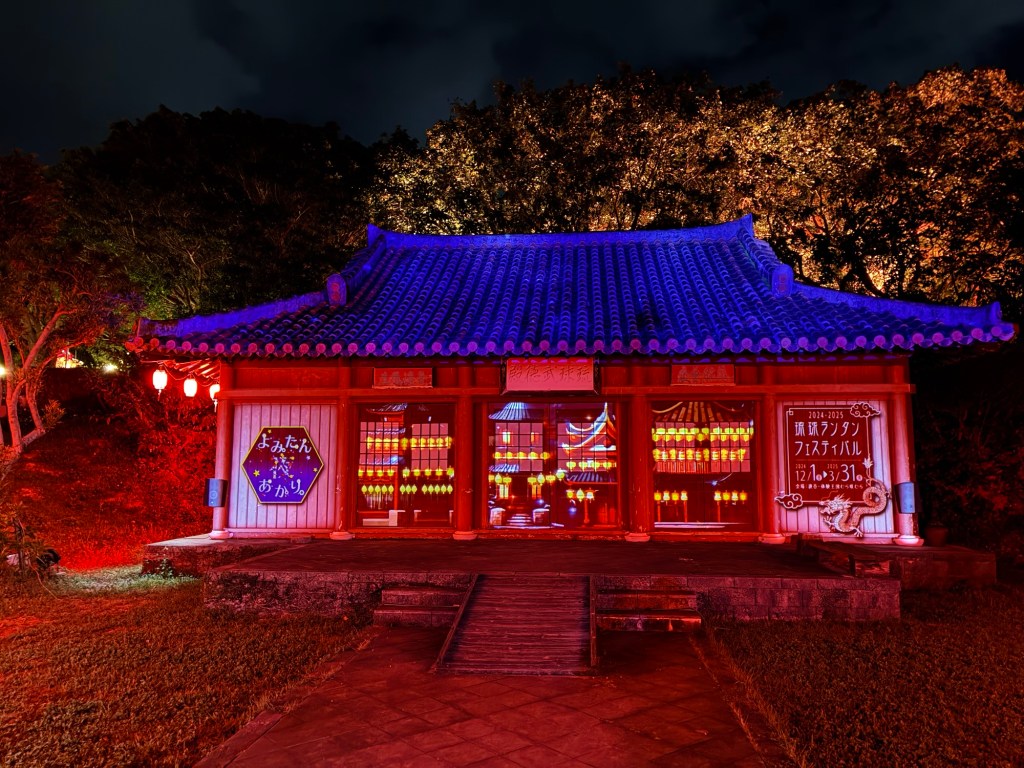
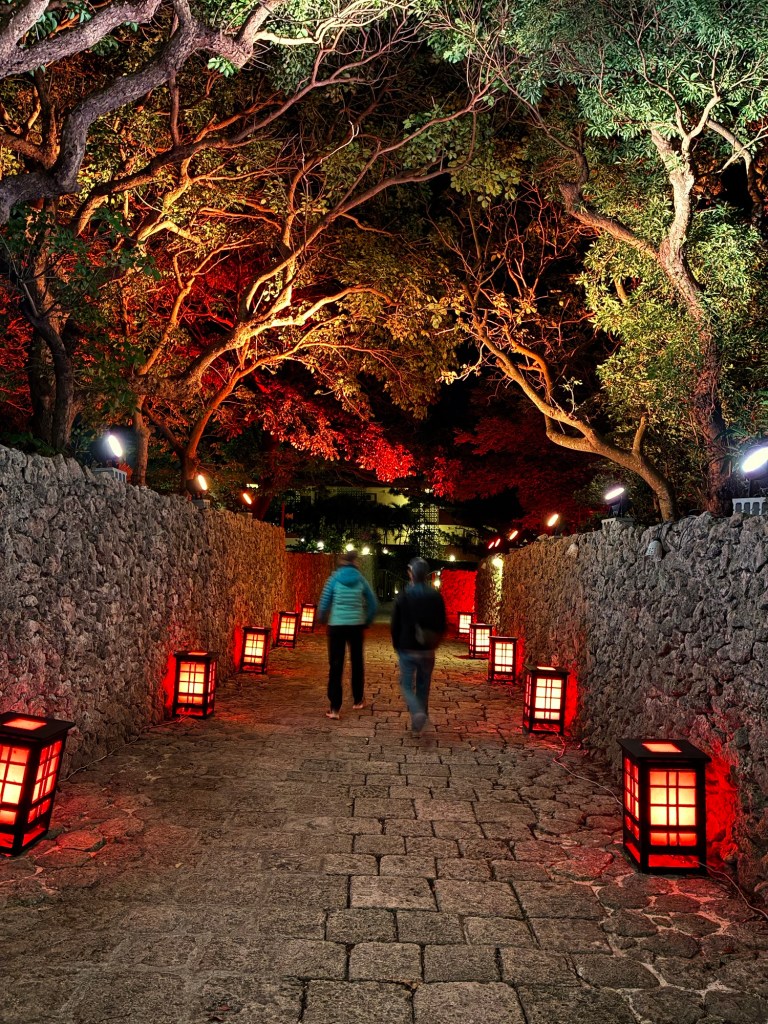
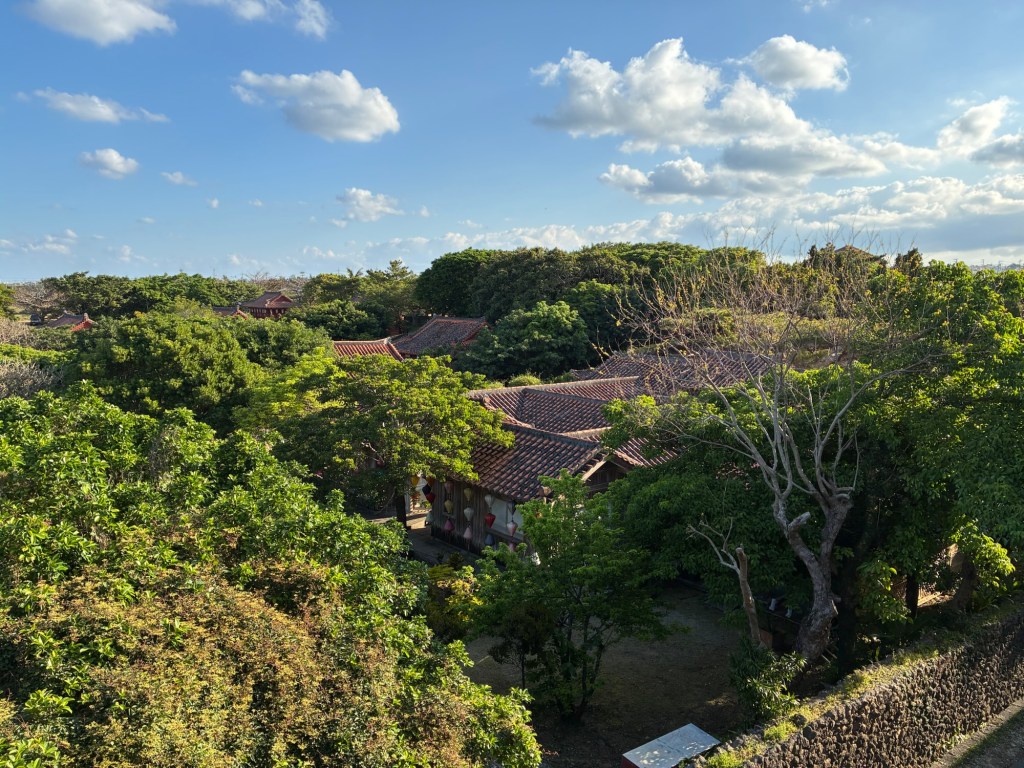
    Durch unsere Reiseroute haben wir nur wenig Zeitunterschied- meist nur eine Stunde. Das macht das Ankommen viel leichter, und es funktioniert erstaunlich gut, alle zwei bis drei Tage weiter zu reisen. An manchen Orten wie hier in Okinawa am Strand würden wir gerne länger bleiben- aber so genießen wir die Sonnenstrahlen am türkisblauen Meer mit seinen Stränden aus Korallen- und Muschelresten um so mehr. Es fühlt sich irgendwie auch amerikanisch an, erinnert an Hawaii, aber natürlich ist es vor allem Japan. Unser Hotel hat die alte Innenstadt von Naha nachgebaut, und in diesem Park mit alten Bäumen und schönen Pagoden gibt es gerade das Laternenfest- es ist eine wunderschöne Märchenwelt voller Lampions, Drachen und Pagoden in allen Farben beleuchtet. Wir machen nach unserer Ankunft noch eine kleine Runde, und schließen den Tag mit einem Besuch des Onsens ab, dem traditionellen japanischen Badehaus. Nackt und nach Geschlechtern getrennt gibt es eine Waschzeremonie in der Hocke und dann das super heiße Badewasser. Wunderbar. Großartig, wie Andreas meint. 

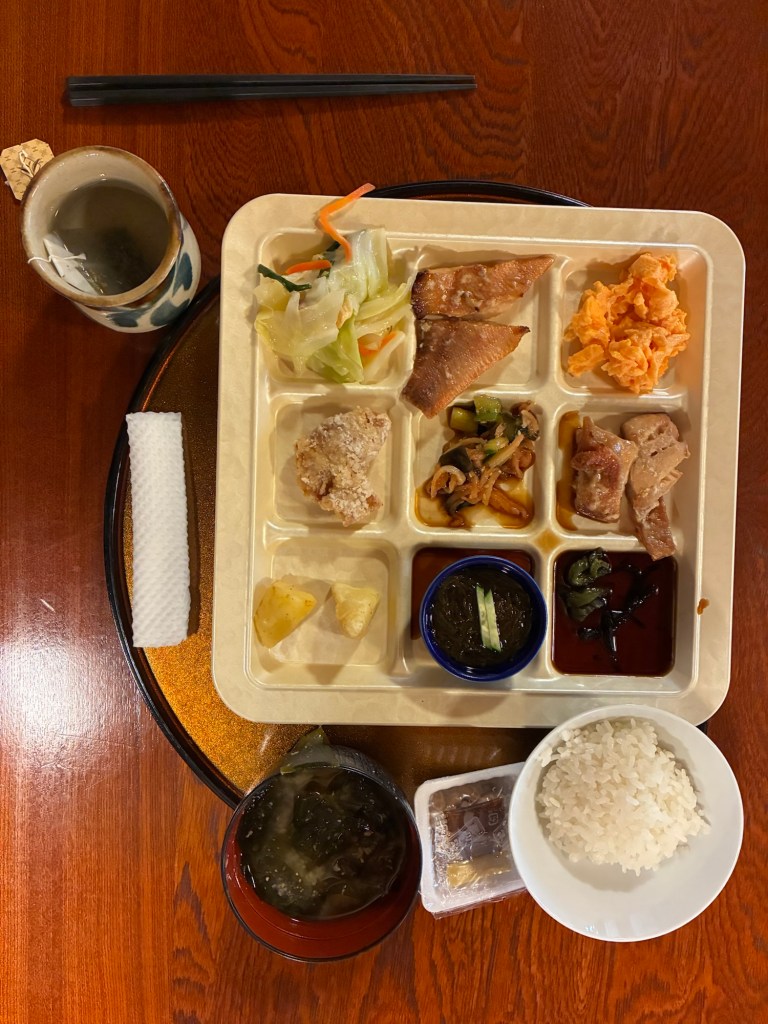
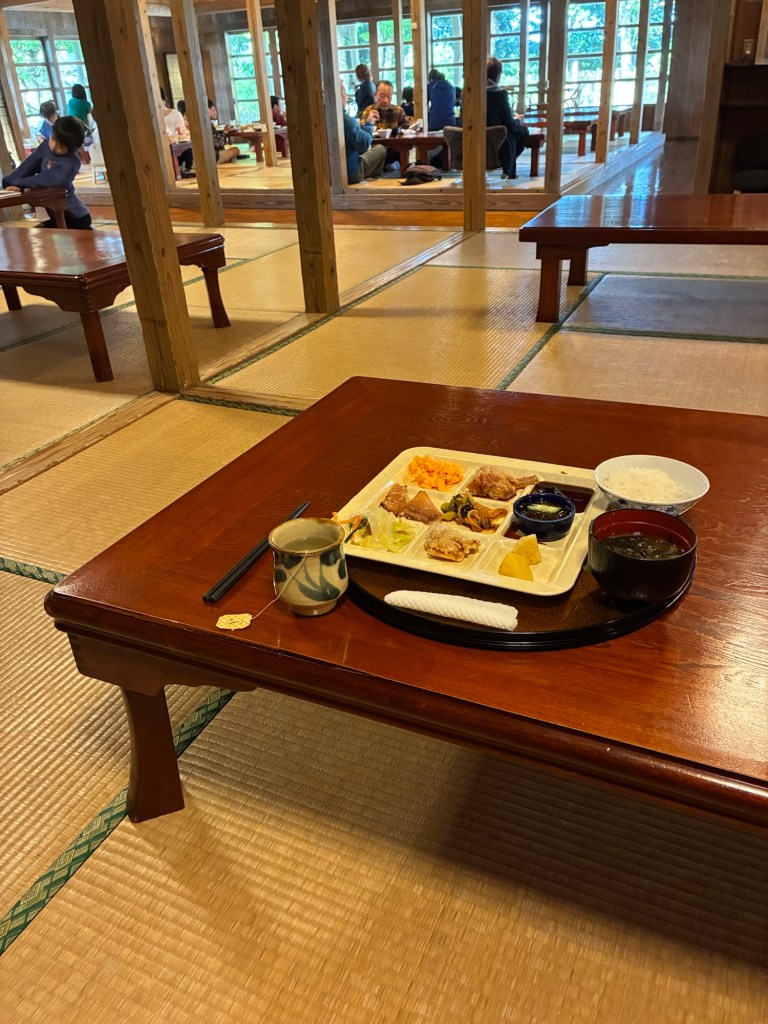
    Am Morgen ist schon ab 8 Uhr Frühstück, auch traditionell auf Tatami-Matten und mit einer super leckeren Auswahl an japanischen Gerichten, von der Miso-Suppe bis zum Natto, fermentierten Soya-Bohnen – Velis japanisches Lieblingsessen zum Frühstück. 

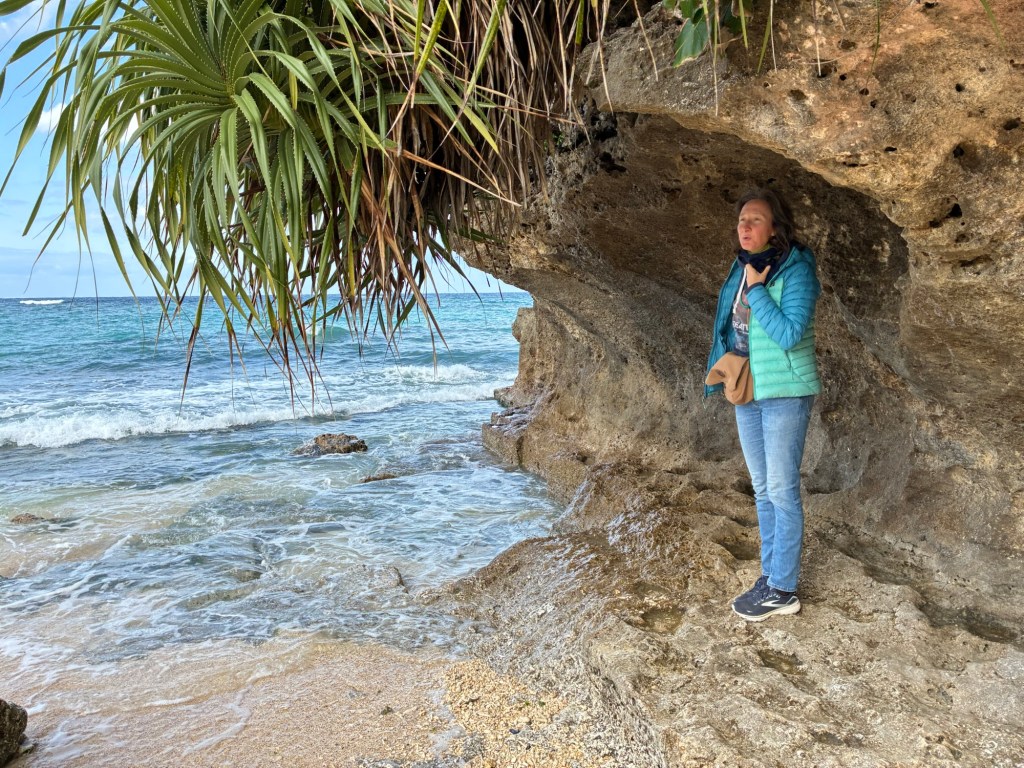
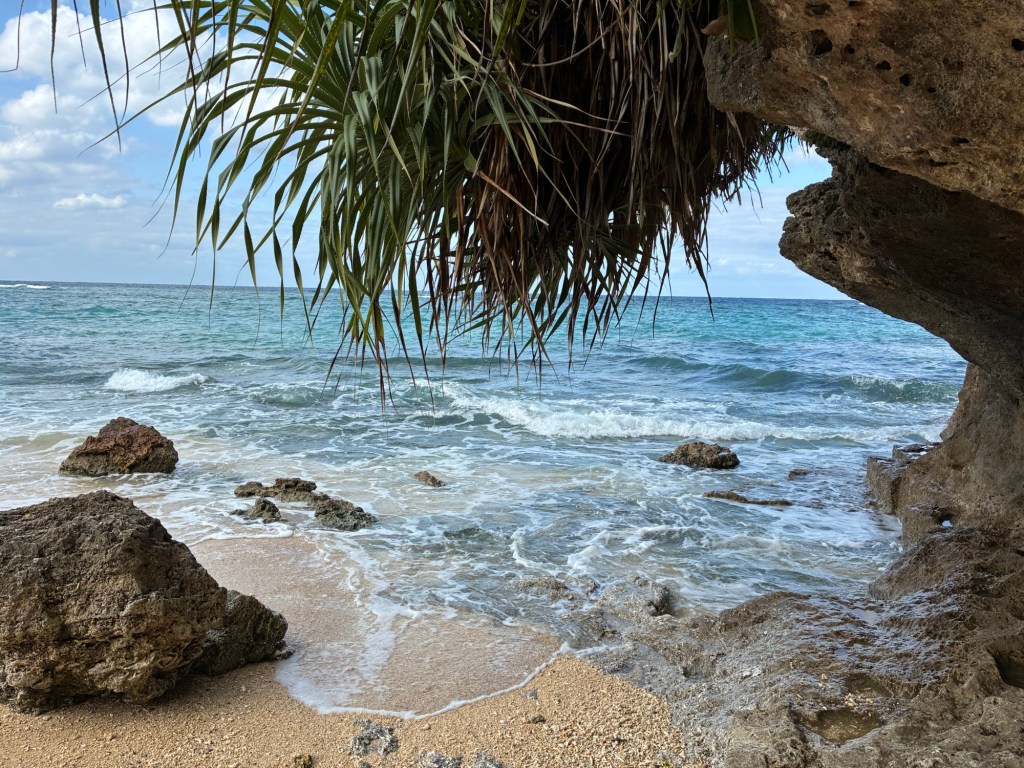
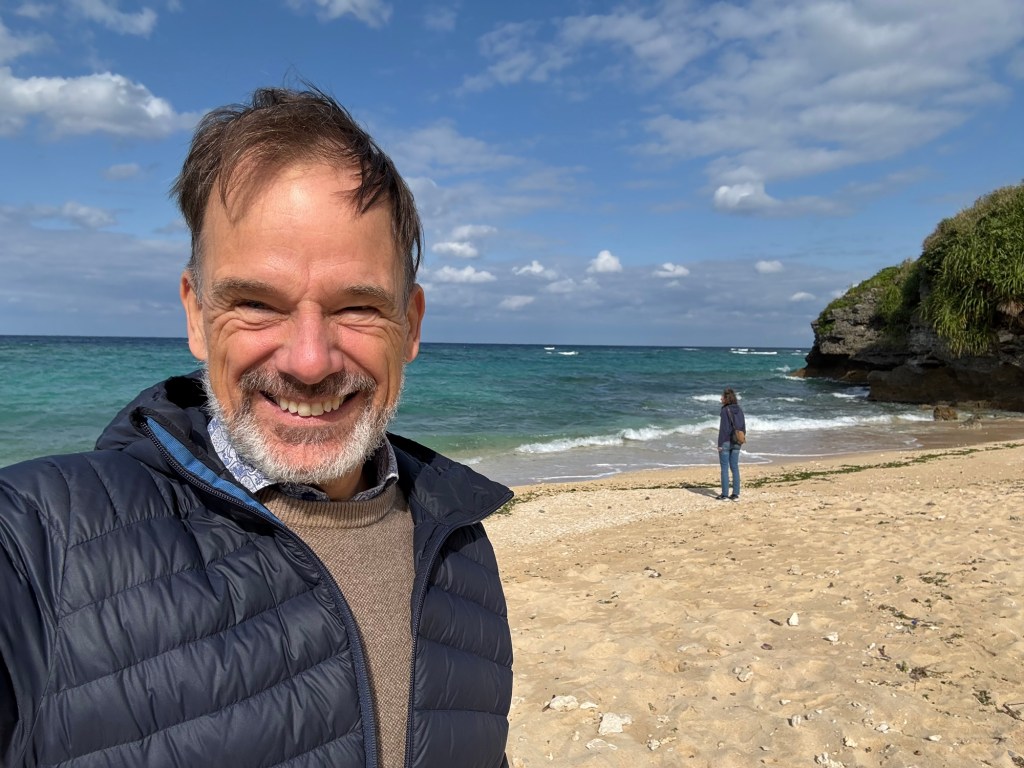
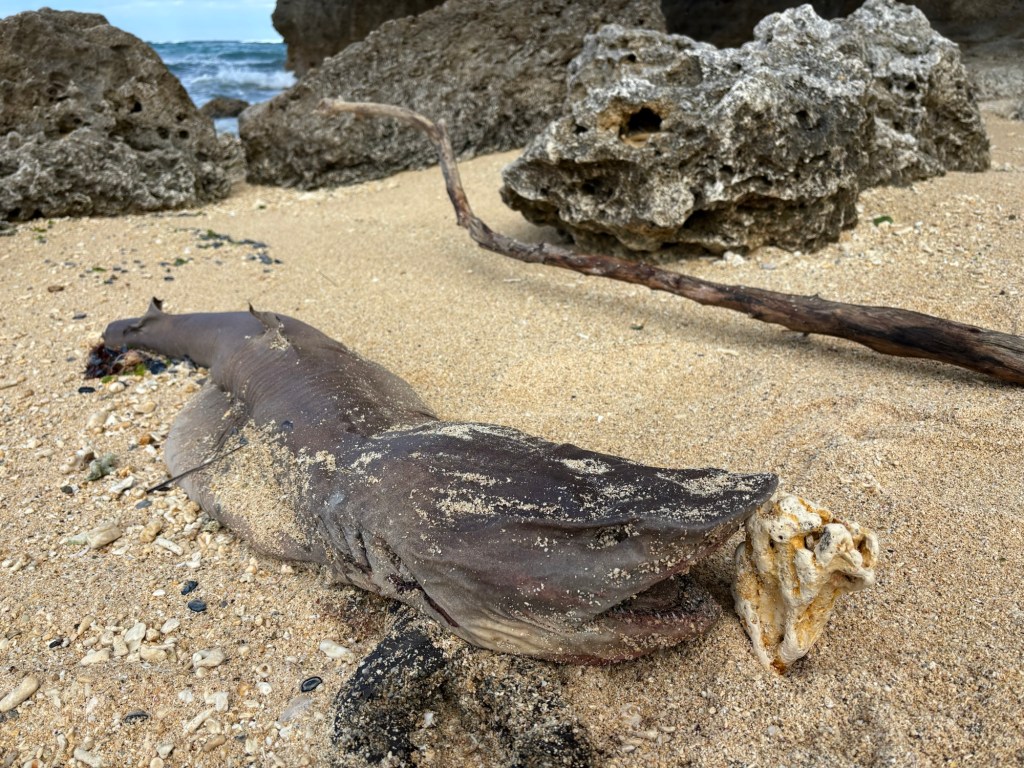
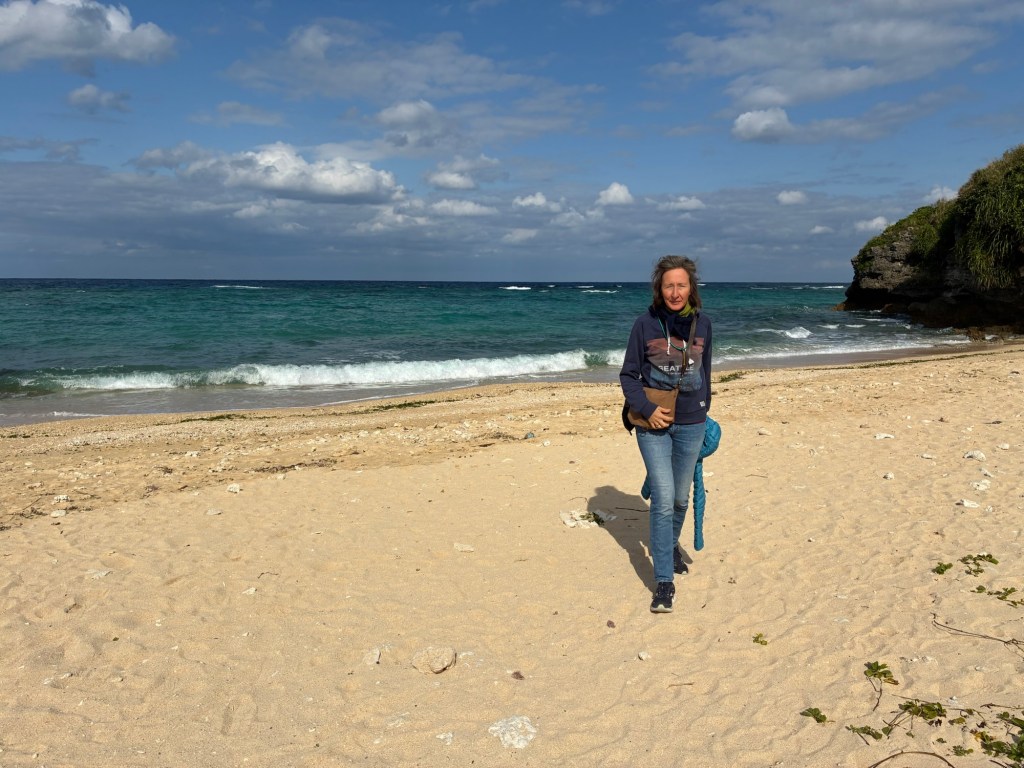
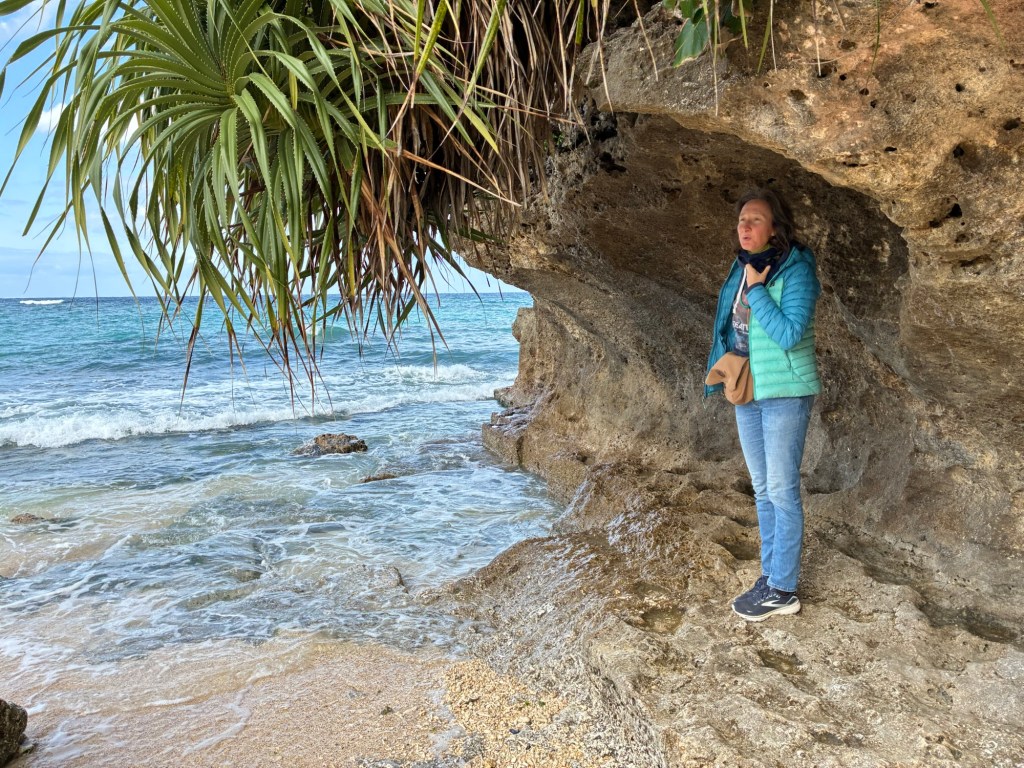
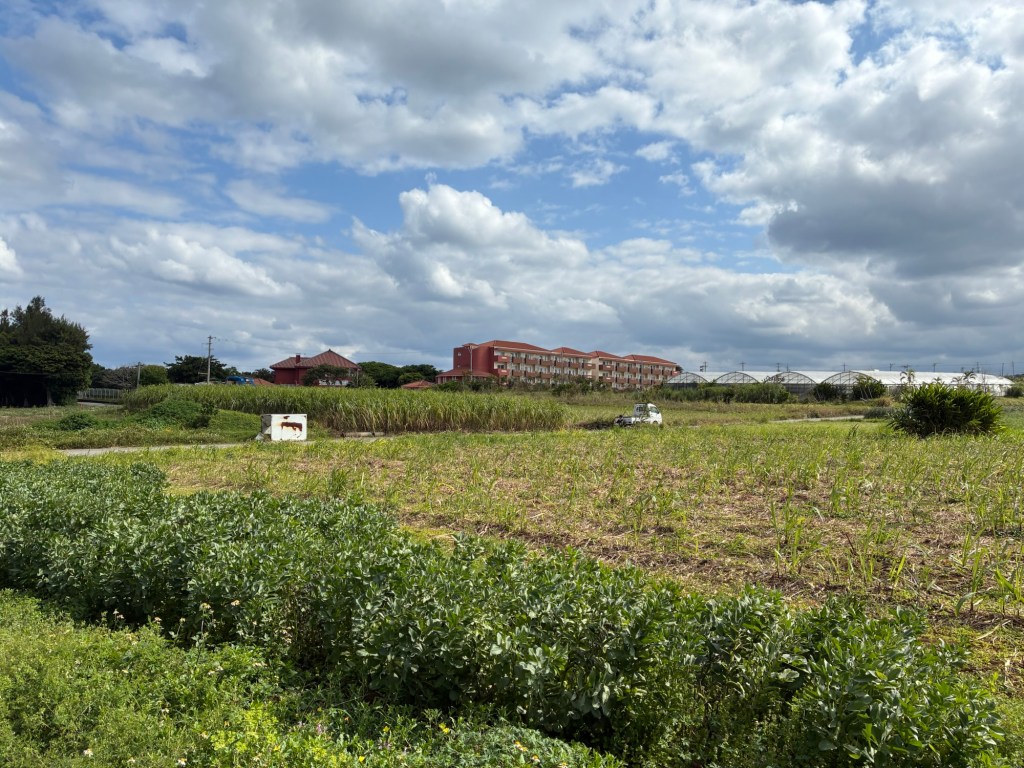
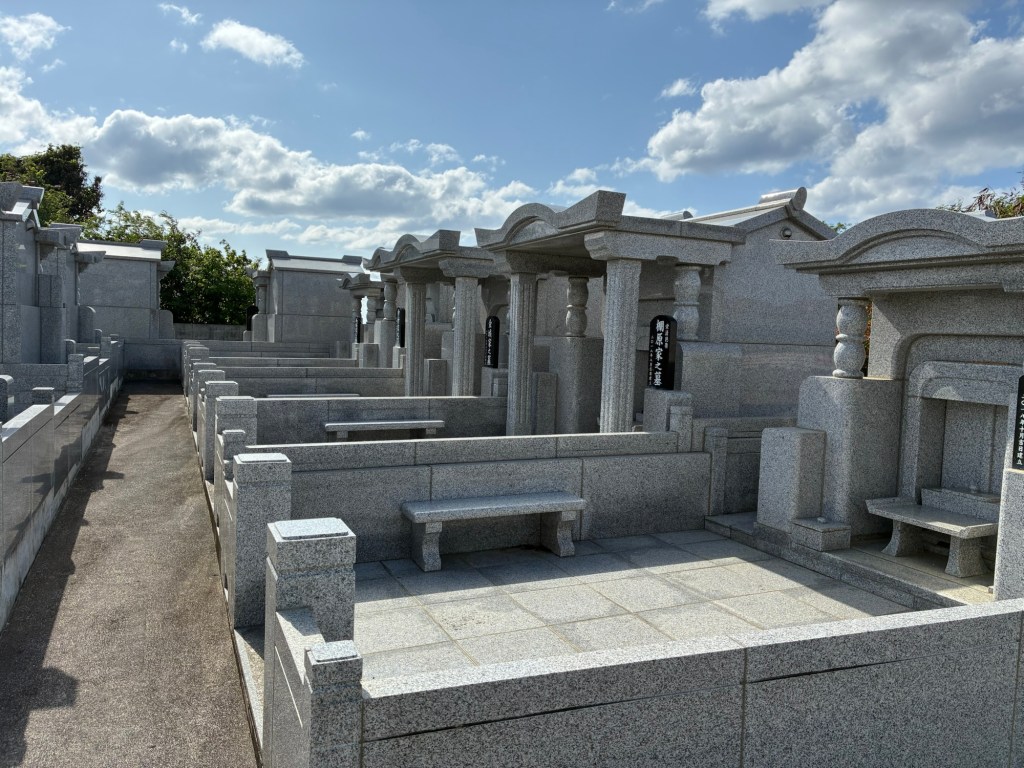
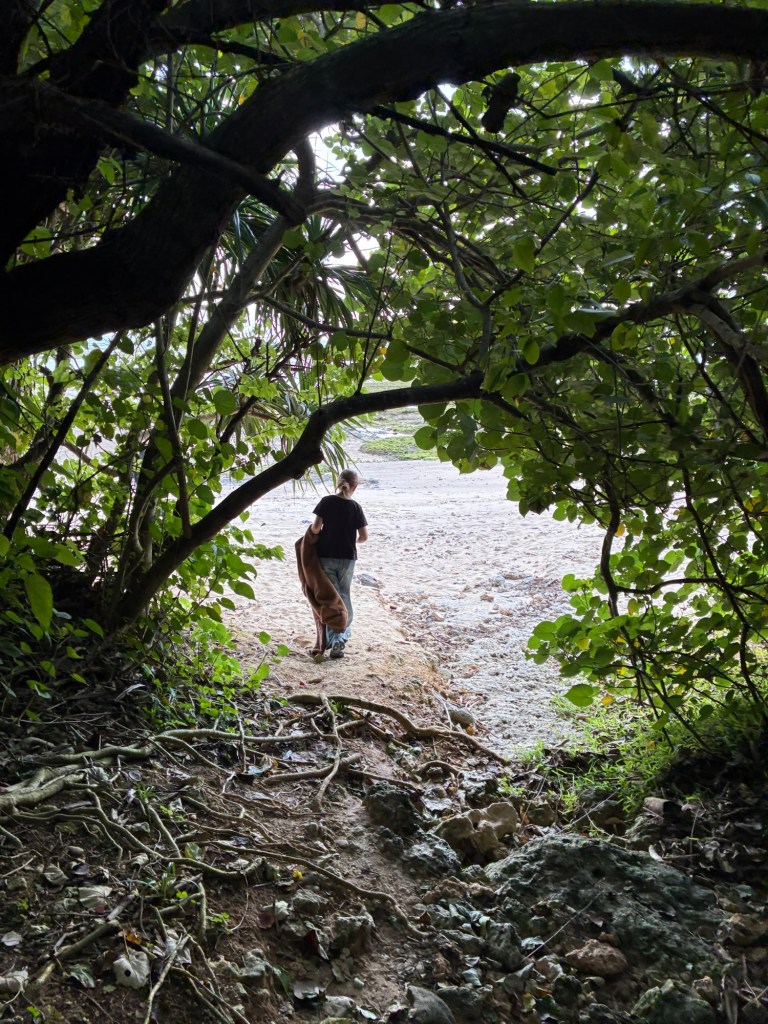
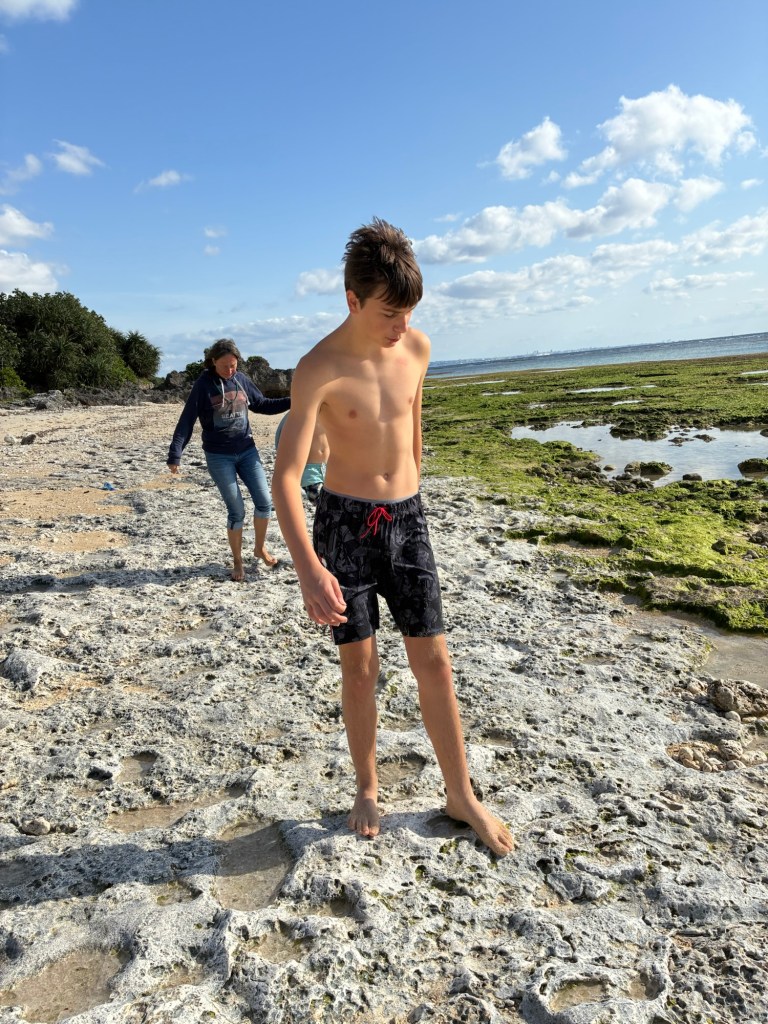
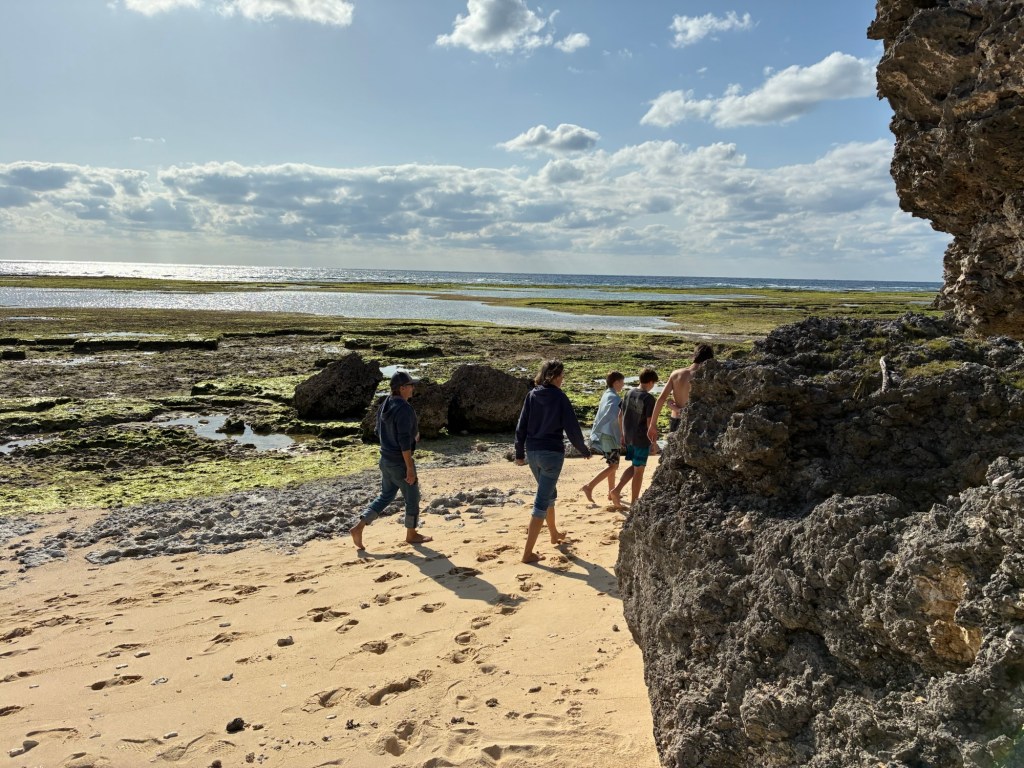
    Die Sonne scheint, es ist 15 Grad und wir erkunden den Strand- und finden einen toten Baby-Hai am Strand. Das Meer ist tief türkis und die Stille wird nur gelegentlich von den Militärflugzeugen und Helikoptern gestört. Rund um die kleinen Felder sind Friedhöfe abgelegt, die wie kleine Stein-Häuser mit Vorgärten aus Stein aussehen. 

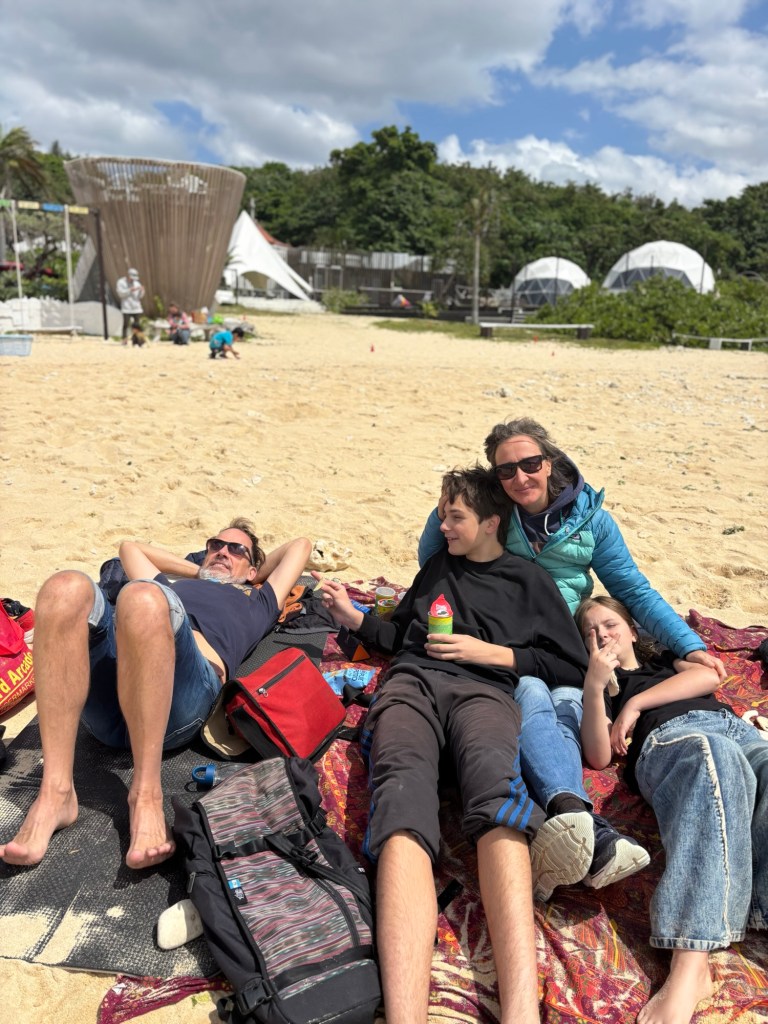
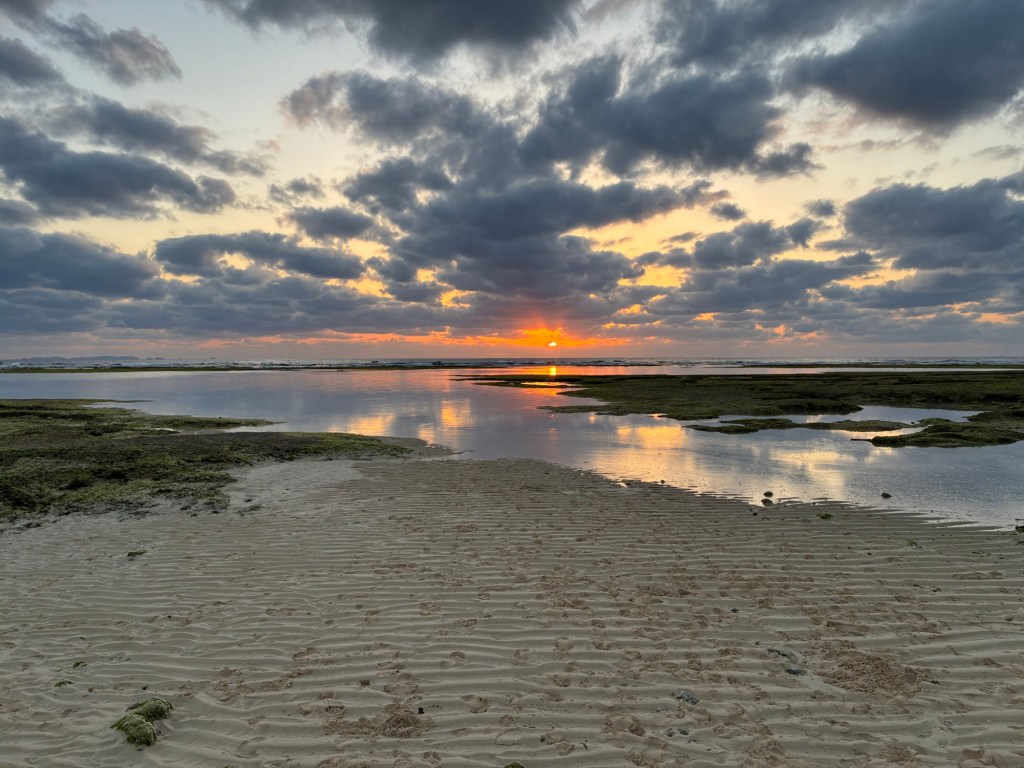
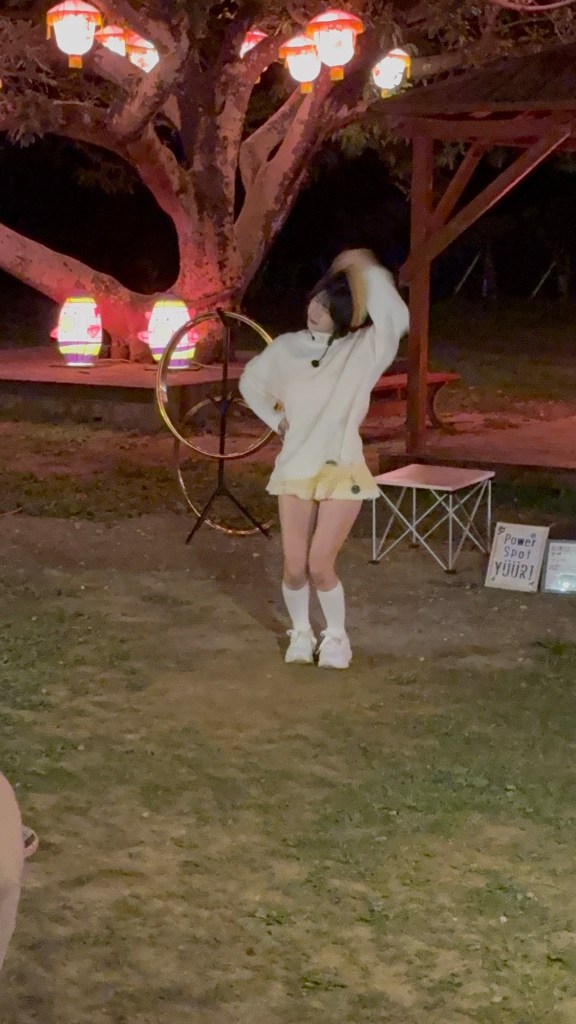
    Die Kinder spielen am Strand, abwechselnd friedlich und von großen Streits überschattet, bis wieder Versöhnung und Frieden einkehren. Beim Sonnenuntergang stellen wir fest, das wir alle ganz schön Sonne abbekommen haben. Abends gibt es auf den Tatami-Matten Fischsuppe, und wir machen noch eine Runde über das Laternenfest- eine Japanerin führt Kunststücke auf und tanzt dabei. Ich gehe noch mal in den Onsen und genieße das richtig heiße Wasser.

    Bei Sonnenschein verabschieden wir uns dankbar heute von Meer und Japan – jetzt geht es 2 Stunden weiter Richtung Osten nach Seoul, Korea. Die Kinder freuen sich schon sehr, und wir haben dort sechs Tage Zeit! 

    Day 106 and 107
    Our itinerary means we only have a small time difference – usually only an hour. This makes arriving much easier, and it works surprisingly well to continue traveling every two to three days. In some places, like here on the beach in Okinawa, we would like to stay longer – but this way we enjoy the sunshine on the turquoise blue sea with its beaches of coral and shells all the more. It also feels somehow American, reminiscent of Hawaii, but of course it is above all Japan. Our hotel has recreated the old city center of Naha, and in this park with old trees and beautiful pagodas there is the Lantern Festival – it is a beautiful fairytale world full of lanterns, dragons and pagodas illuminated in all colors. After our arrival, we go for a short walk and end the day with a visit to the onsen, the traditional Japanese bathhouse. Naked and separated by gender, we have a squatting washing ceremony and then enjoy the super-hot bath water. Wonderful. Great, as Andreas says.
    In the morning, breakfast is served from 8 a.m., also traditionally on tatami mats and with a delicious selection of Japanese dishes, from miso soup to natto, fermented soy beans – Veli’s favorite Japanese food for breakfast.
    The sun is shining, it’s 15 degrees and we explore the beach – and find a dead baby shark on the beach. The sea is deep turquoise and the silence is only occasionally disturbed by military planes and helicopters. Around the small fields are cemeteries that look like small stone houses with stone front gardens.
    Our children play on the beach, alternately peaceful and overshadowed by big fights, until reconciliation and peace return. As the sun goes down, we realize that we have all had quite a bit of sun. In the evening, we have fish soup on the tatami mats and go for a walk around the lantern festival – a Japanese woman performs tricks and dances. I go back to the onsen and enjoy the really hot water.

    There’s also a woman working at the bathhouse reception who is surely already of retirement age. We keep noticing how active people here remain well into old age. Okinawa is known for a study that found the highest number of people over 100 years old in relation to the population – especially women.
    In the sunshine, we gratefully say goodbye to the sea and Japan today – now we’re heading 2 hours further east to Seoul, Korea. The children are really looking forward to it, and we have six days there!

    (mehr …)
  • Okinawa is great!

    Tag 103 bis 106

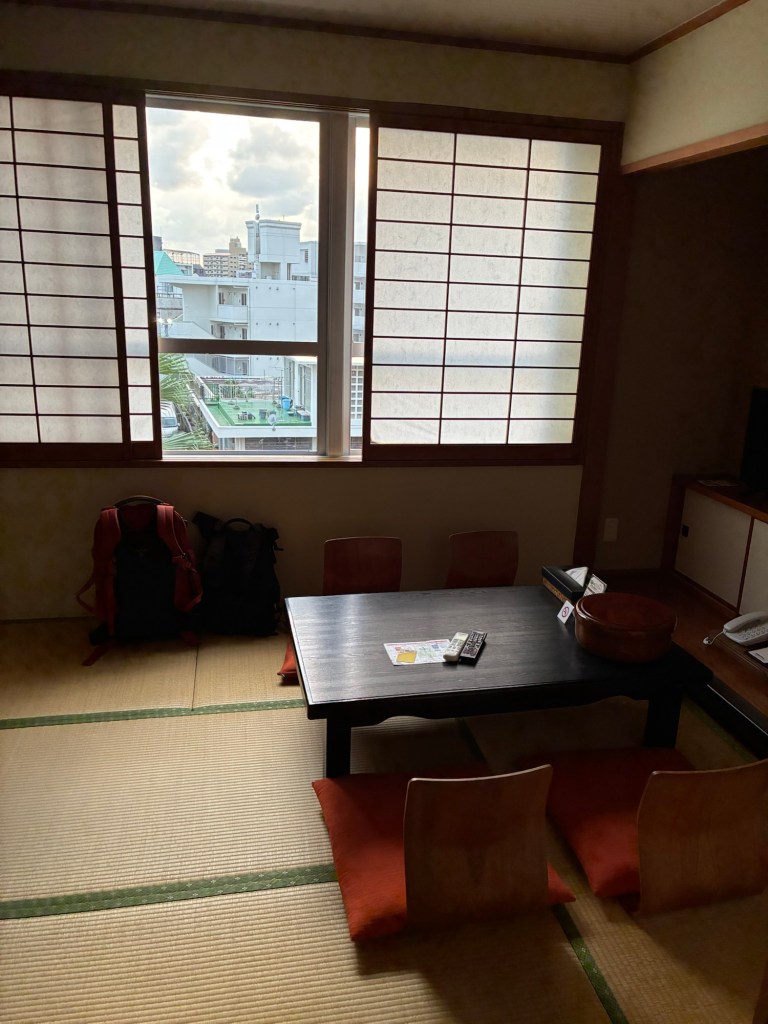
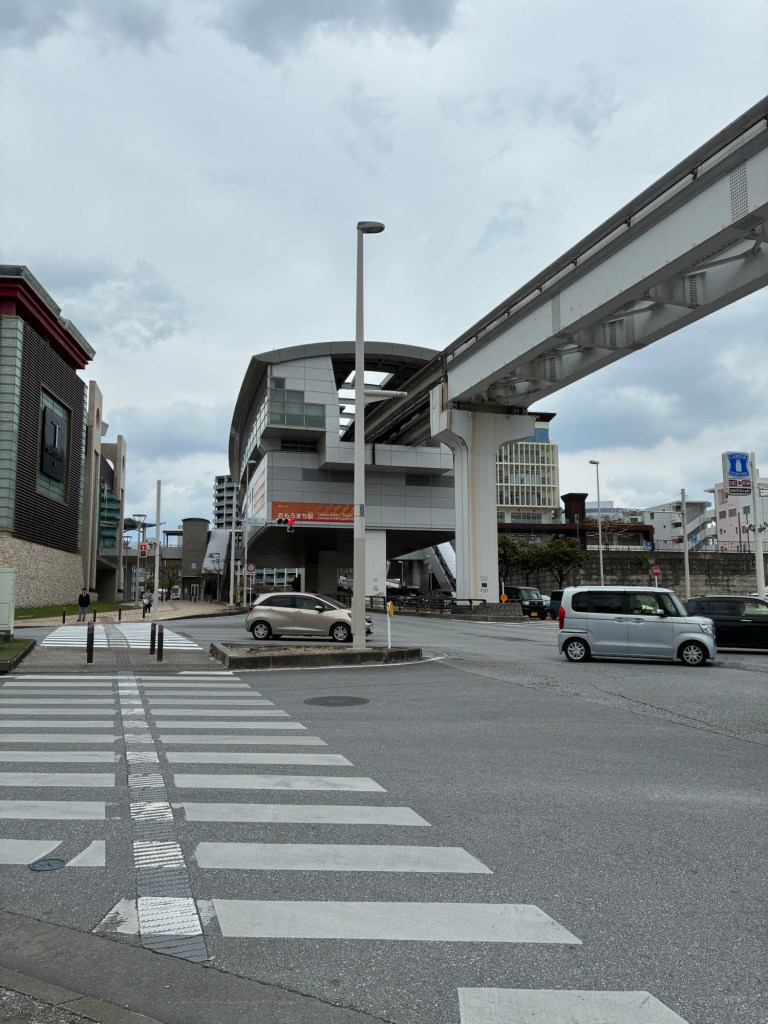
    Japan ist doch ganz anders als Taiwan. Zum Glück haben wir Velis dabei, der uns voller Begeisterung an jeder Ecke auf eine japanische Besonderheit aufmerksam macht. Der Flughafen ist klinisch sauber, die Einreise erinnert an eine Krankenhaus Aufnahme.. nach der Wärmebildkamera kommt Gesichtserkennung und Finger Abdrücke, Kontrolle des Gepäcks auf Fleisch, Pflanzenprodukte, dann die eigentliche Passkontrolle, dann noch einmal die Zollkontrolle. Wir fahren mit der Monorail in die Stadt, die sofort in allen Dimensionen an Japan erinnert. Unser Hotel ist etwas in die Jahre gekommen, aber original im japanischen Stil mit Tatami Wänden, Futonbetten und Sitzbadewanne eingerichtet. Eine große Auswahl an stilechten kleinen Restaurants sind in Fußnähe zu erreichen. Am wichtigsten ist aber den Kindern der Convenience Store. 

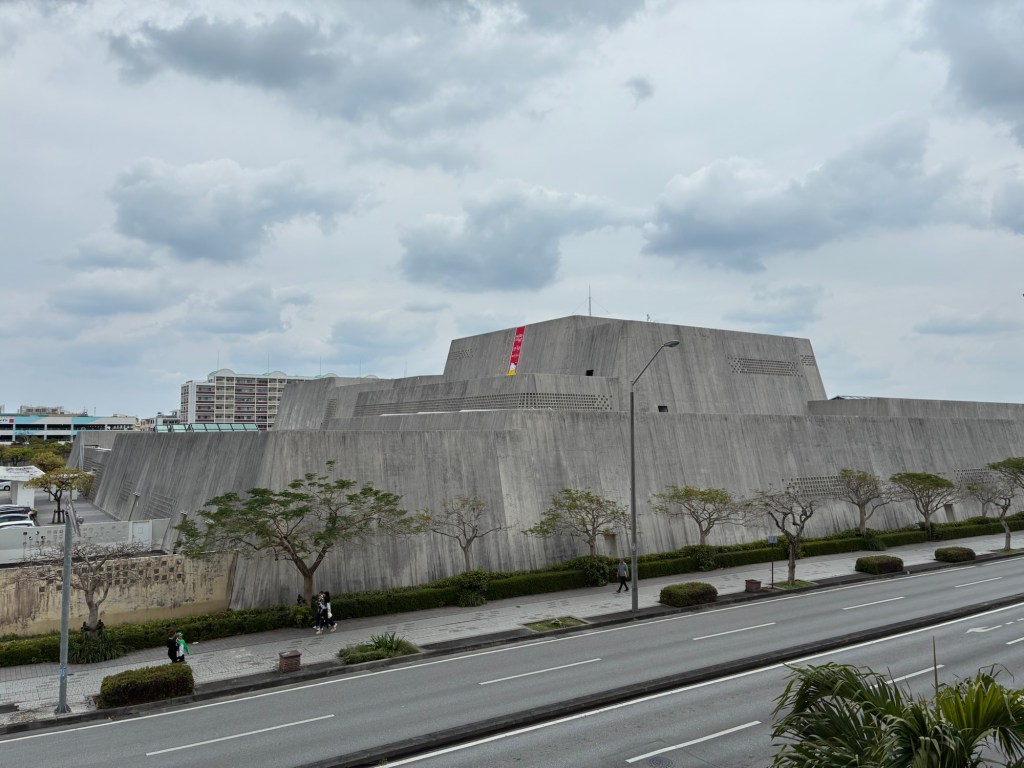
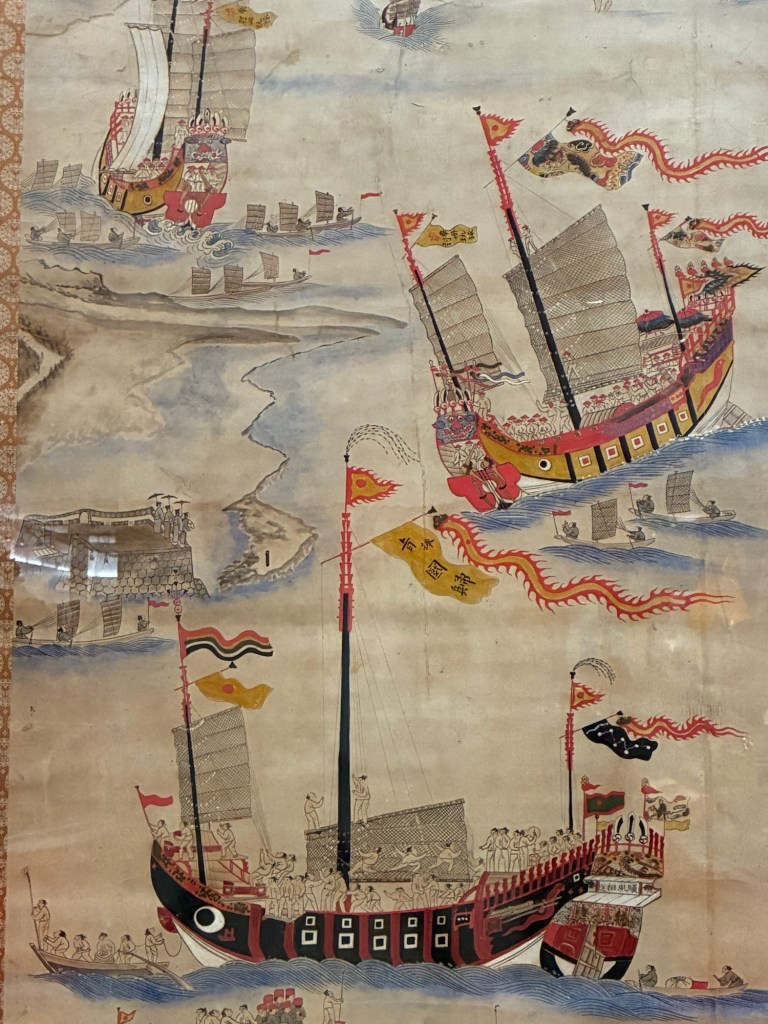
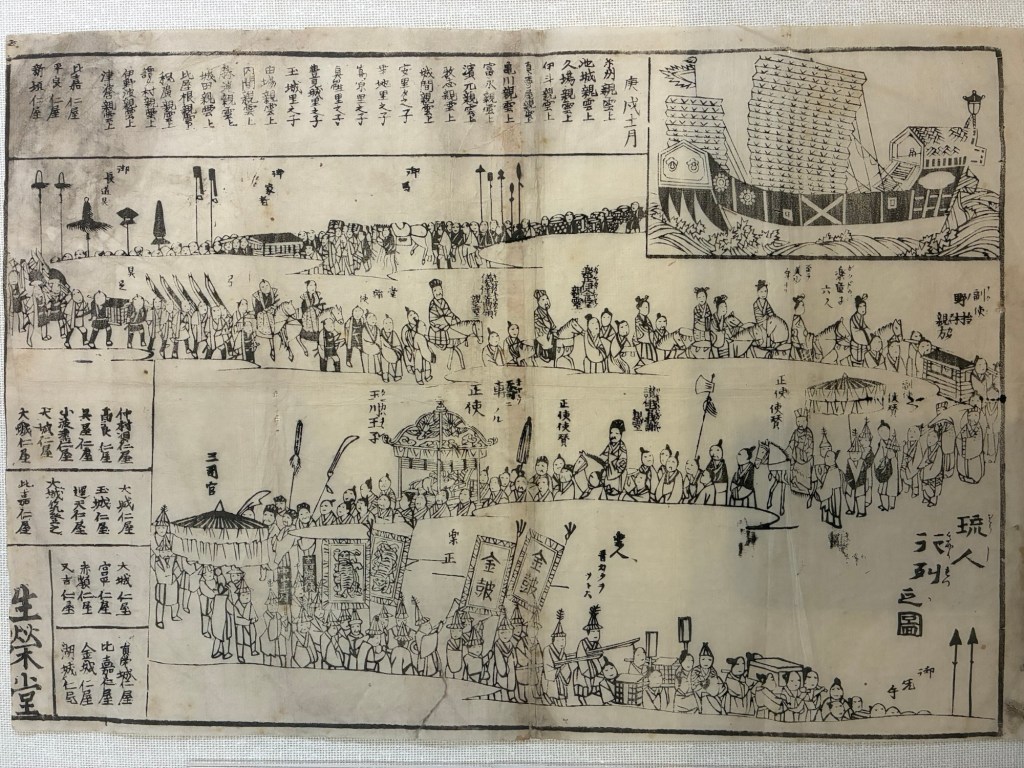
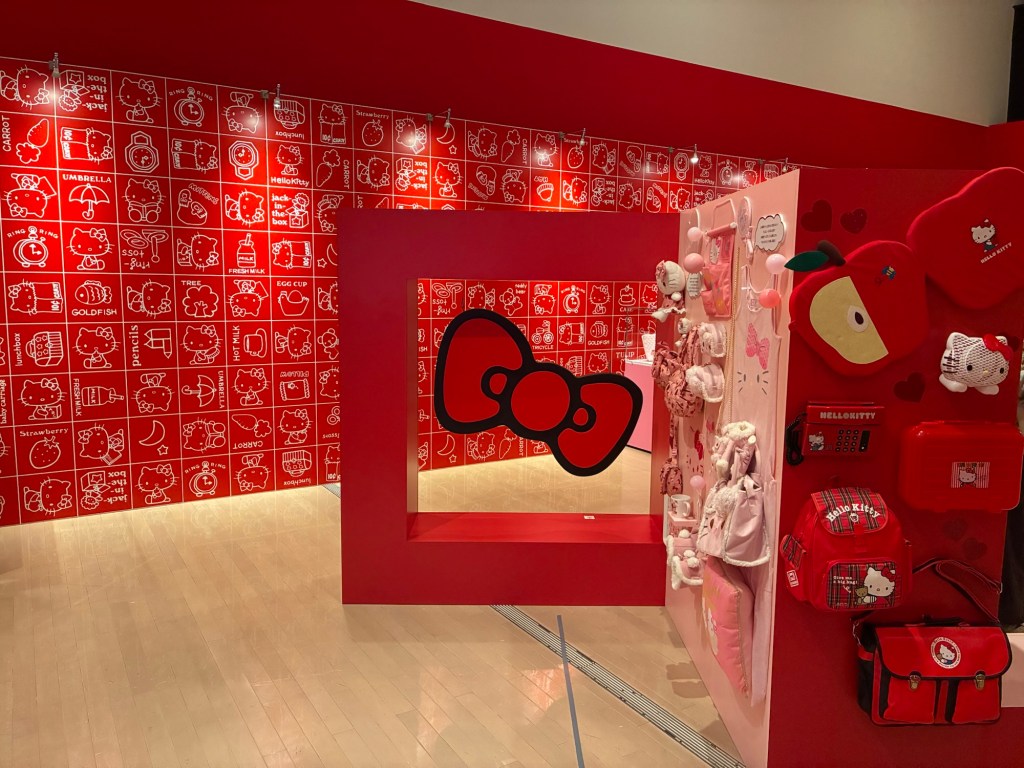
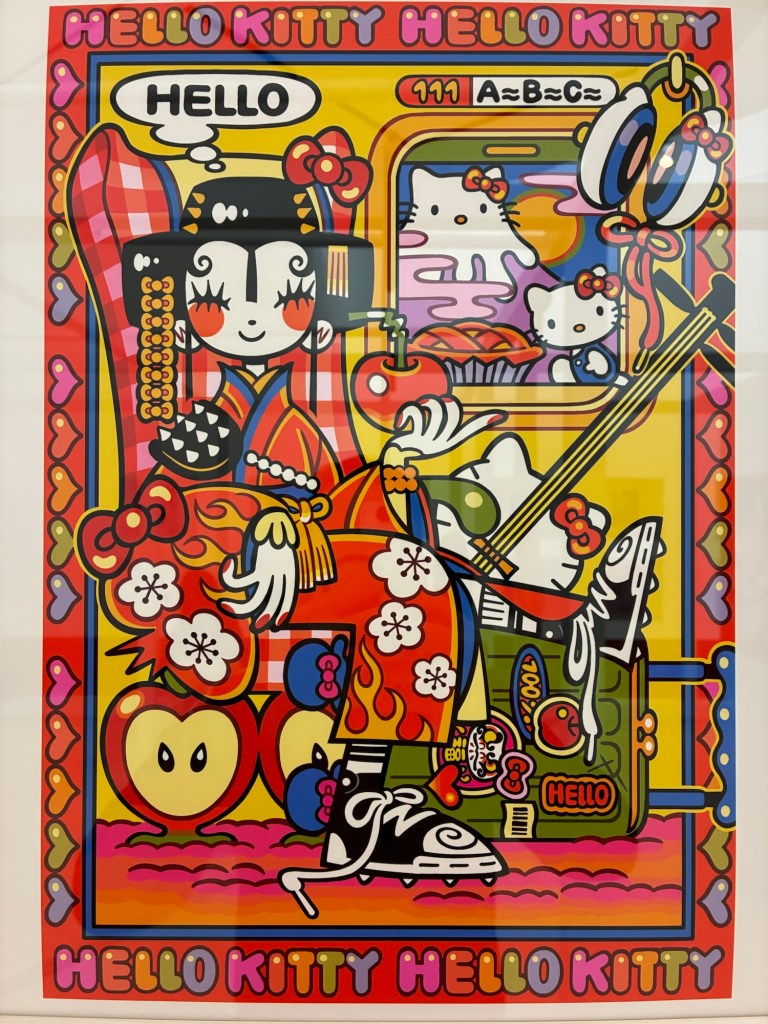
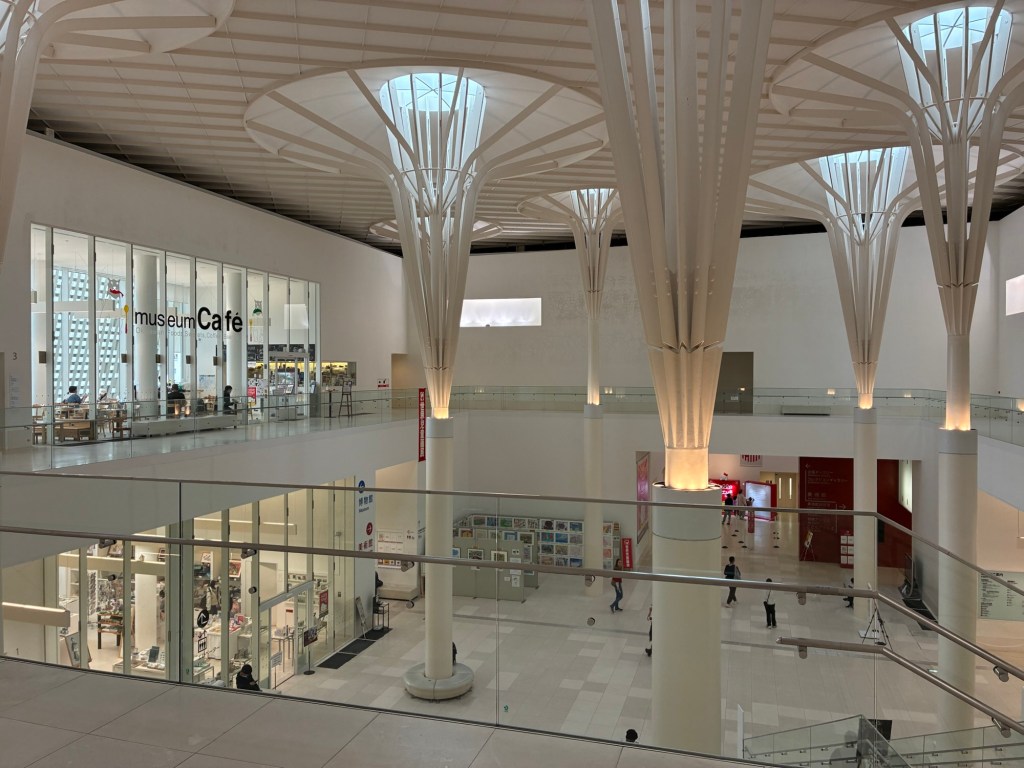
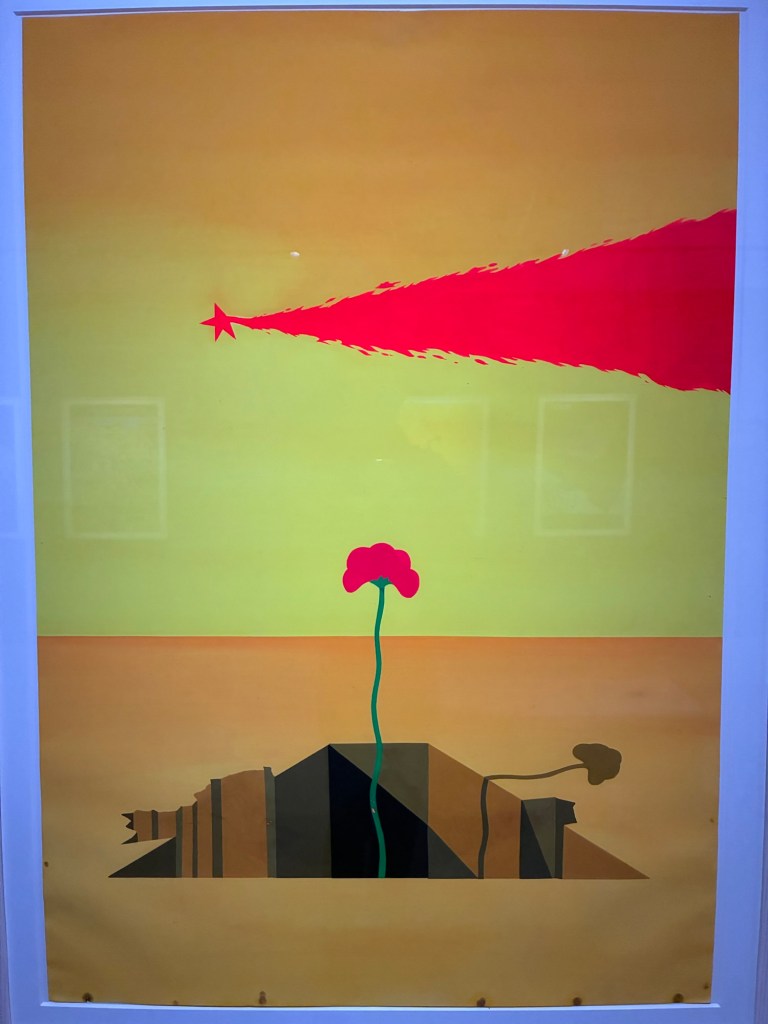
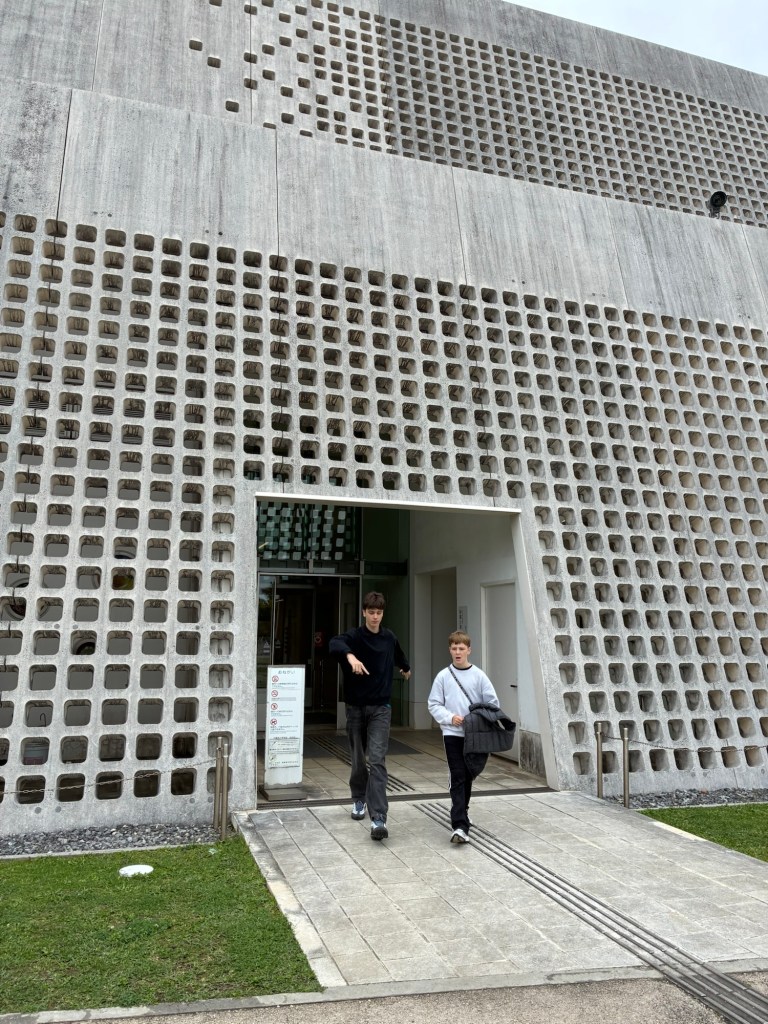
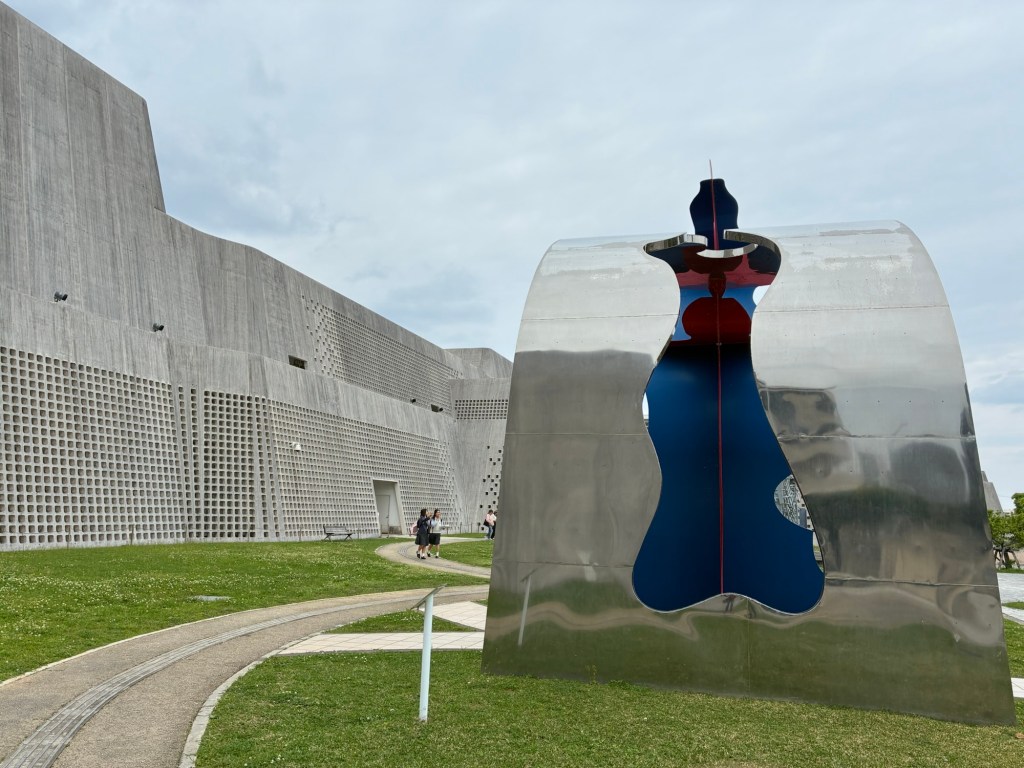
    Am nächsten Morgen geht es in das Museum , ein futuristischer Bau im Brutalismus Stil, von außen wie ein Bunker, von innen, aber herrlich weiß und hell mit einer Hello, Kitty Sonderausstellung und eine faszinierende Ausstellung über die Geschichte Okinawas. 

    Dies hier ist ja der Keystone of the Pacific  für die US Armee, der wichtigste Standort neben Guam im Südpazifik. Bei der verheerenden Schlacht um Okinawa zum Ende des Zweiten Weltkrieges starben 90.000 Menschen. Die Insel wurde in einer Flächen Bombardierung praktisch vollständig dem Erdboden gleich gemacht. Bis 1972 war sie unter amerikanische Verwaltung, heute sind über 30.000 Soldaten hier stationiert.

    Aber heute 80 Jahre später, ist diese Insel typisch japanisch hoch entwickelt und hat für Japan die touristische Rolle von Hawaii. Beton dominiert, und alle Autos sind diese kleinen Minibusse, die man nirgendwo auf der Welt sonst fährt. 

    So durch kreuzen wir hoch moderne Shopping Malls mit der faszinierenden Vielfalt der japanischen Produktwelt, aber auch kleine Secondhand-Läden.

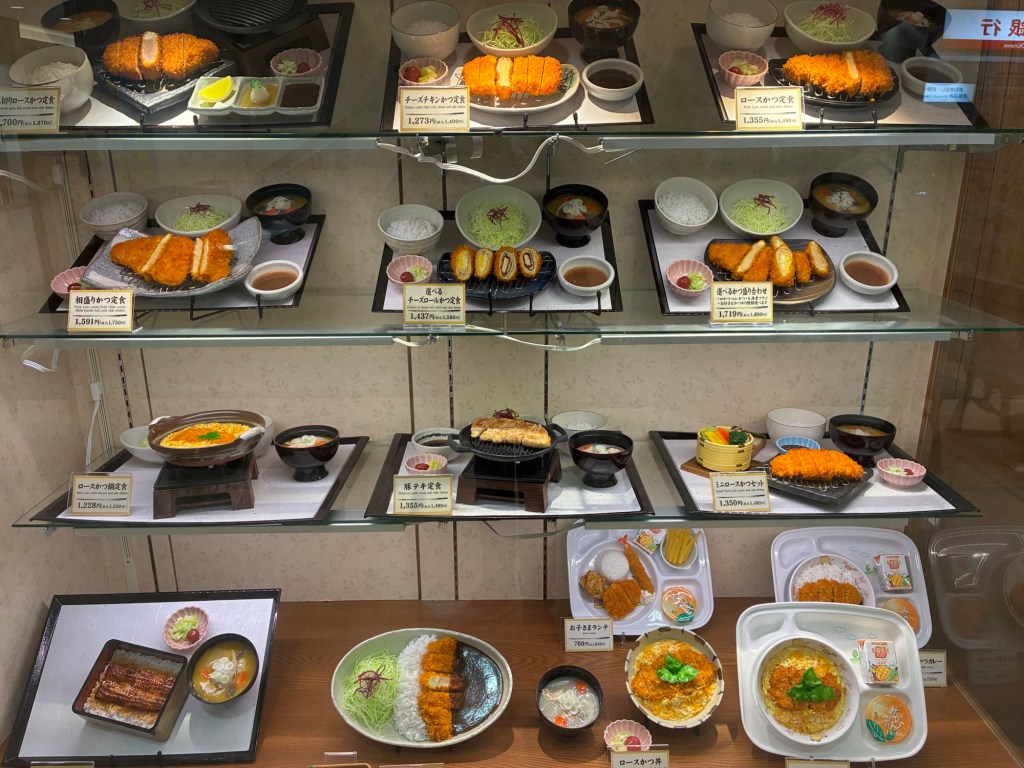
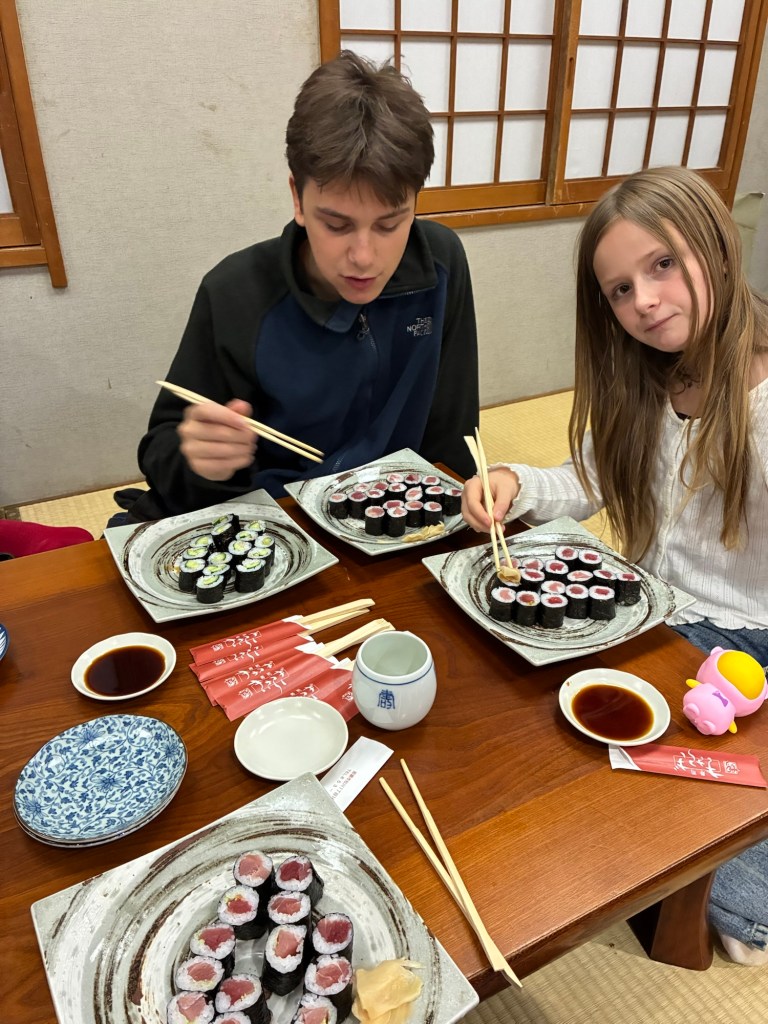
    Höhepunkte sind immer das Essen  – gestern in einem winzigen Sushi-Restaurant , Ehepaar geführt mit dem besten Sushi mit super viel rohem Thunfisch. Hier war Velis unsere große Hilfe, da er als einziger die Speisekarte lesen konnte – und sie freuen sich riesig, als sie hörten dass er in Japan gelebt hatte, und das Yuki und Inyans Großmutter aus Tokio kommt. Als Andreas seine Geldbeutel vergessen hatte, fuhr die Chefin mit dem Auto hinter uns her, um uns die Börse zurück zu geben. So herzlich!

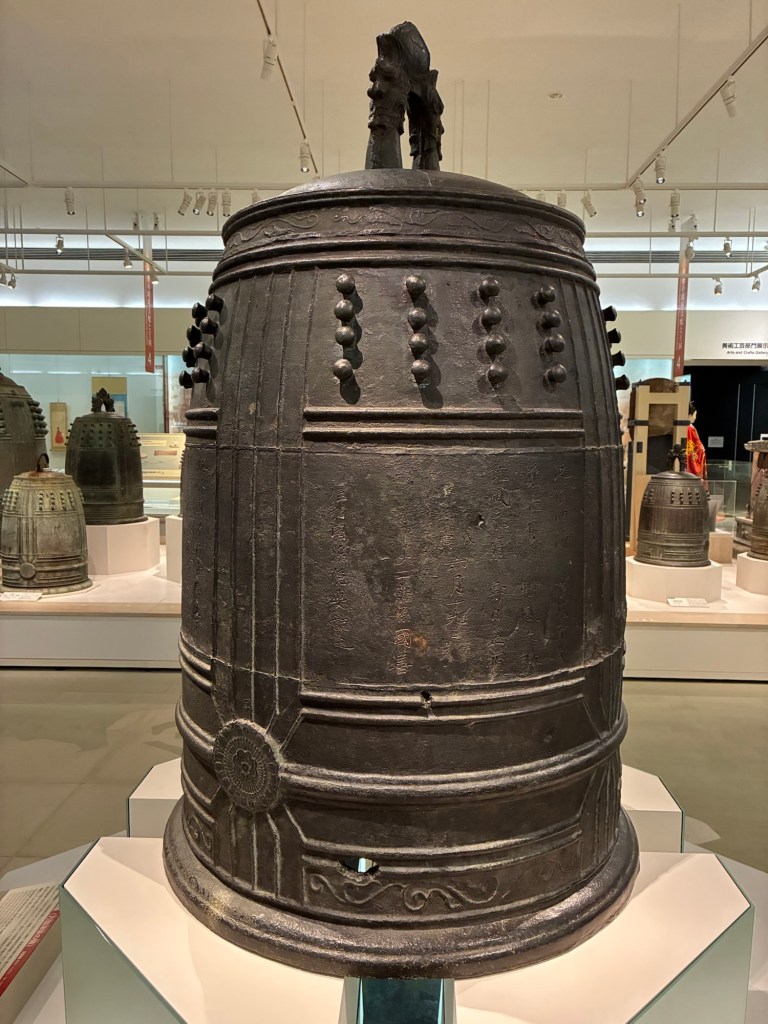
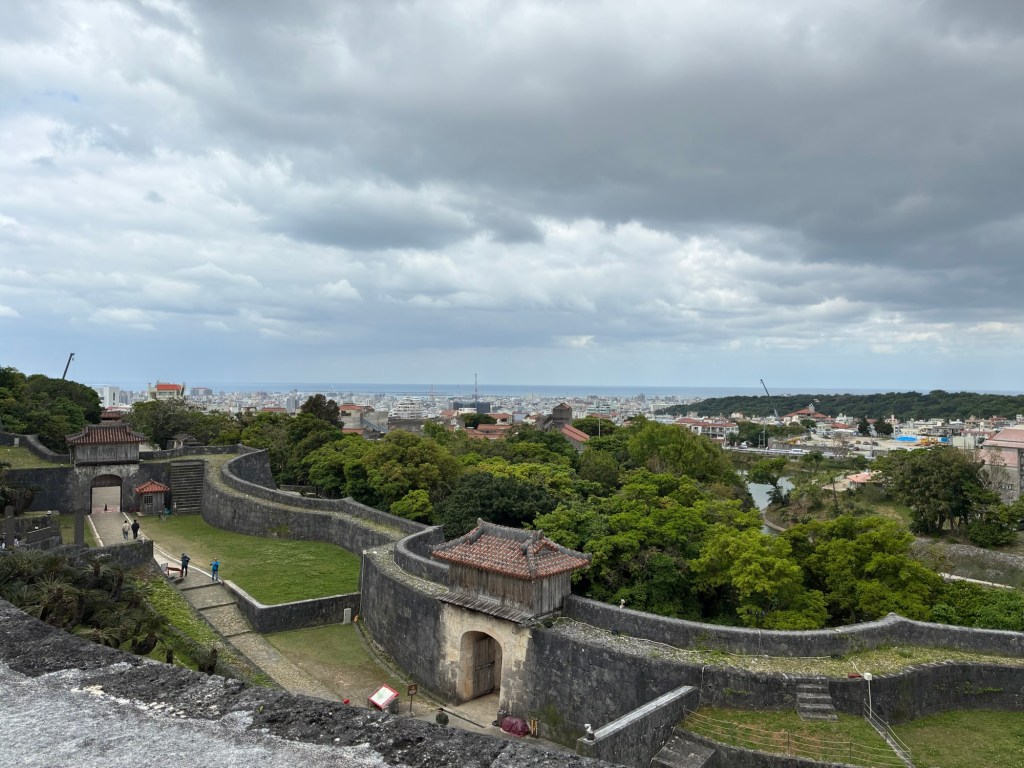
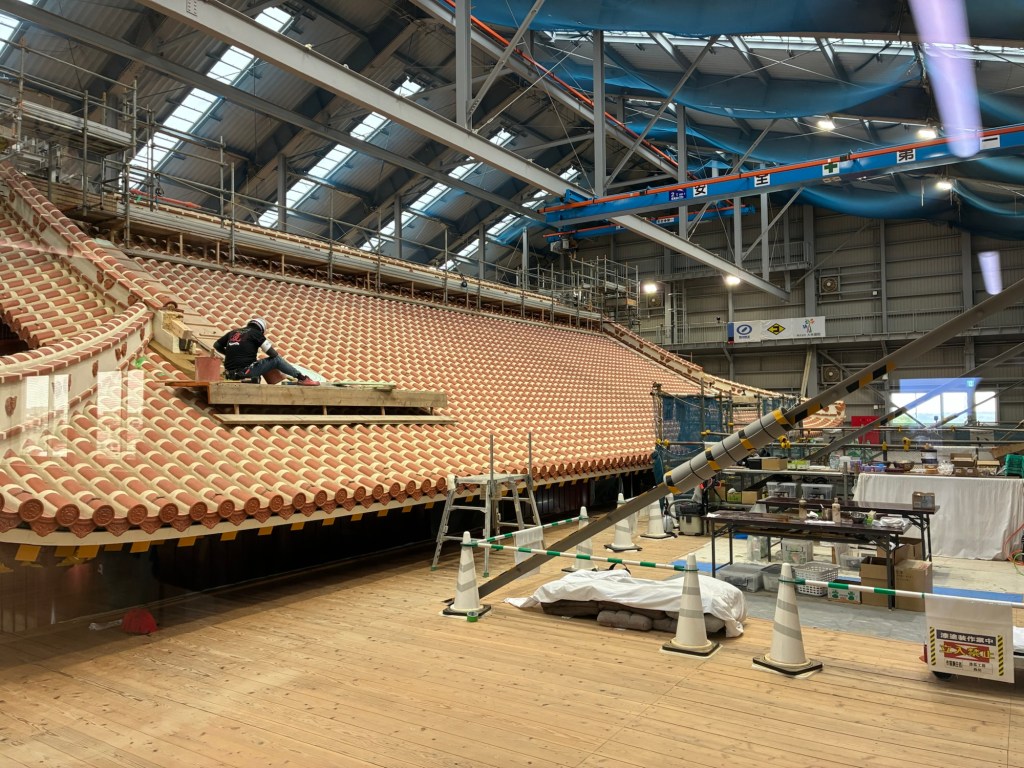
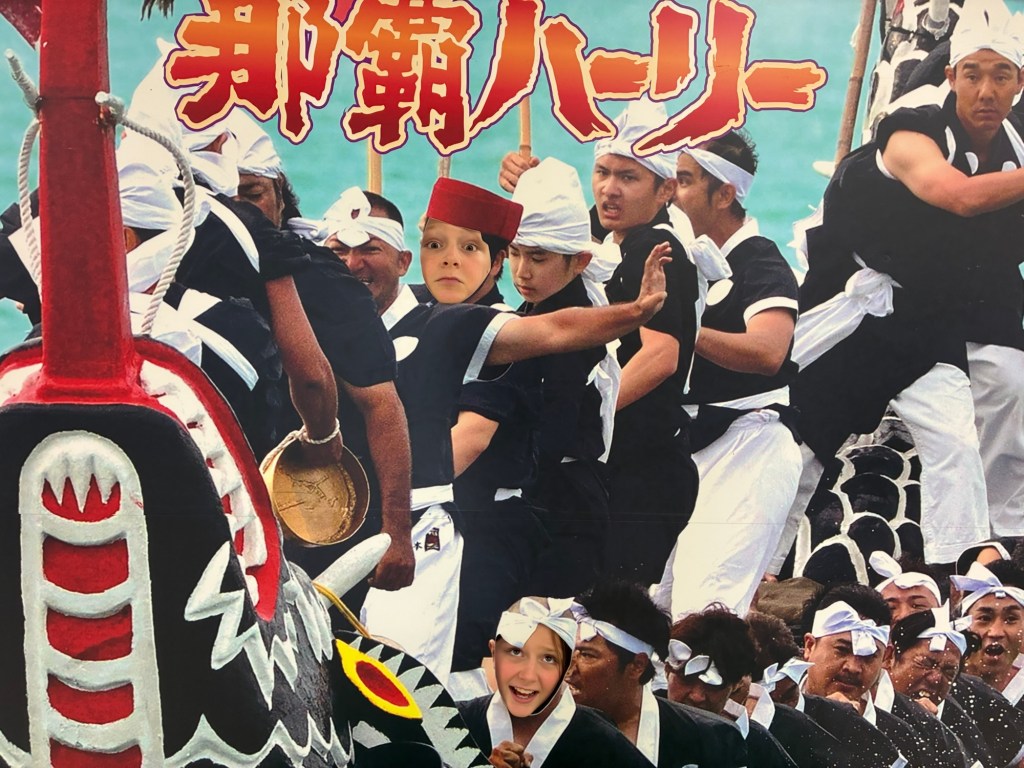
    Heute, dann liefen wir zur Alten Burg, Shuri, die vor fünf Jahren leider abgebrannt ist und nun in einer Halle authentisch nachgebaut wird. Dort hing auch die Glocke der Verständigung der Völker, die seit 500 Jahren die Rolle von Okinawa als wichtigen Handelsplatz betont, und nun im Museum steht.

    Merkwürdig, aber, das es typisch japanisch verboten ist, die Zeugnisse der Kriegs- oder Besatzungszeit zu fotografieren. 

    Wir sind jetzt echt im Reisemodus, mit einem Ortswechsel des Hotels alle zwei Tage.  Es ist intensiv, für alle fordernd, aber auch eine wunderbare Erfahrung zusammen. Am meisten ist Nadine gefordert, die leider beim Fliegen immer im Kiefer Zahnschmerzen bekommt. Aber wir sind alle Japan Fans, und es ist großartig mehr auch von Velis Alltag sich vorstellen zu können. Er ist ja bald ein Jahr von daheim weg, und freut sich sehr wieder auf daheim. Japan ist einfach in vieler Hinsicht speziell, die weißen Handschuhe des Busfahrers sind nur ein Beispiel. Aber alle Kinder sind besonders gut gelaunt, und Tara ist ein echter Japan Fan! Morpheus ist ja schon das dritte Mal hier, Velis das vierte Mal und auch ich erinnere mich an meine erste Reise nach Japan im Jahr 2021 und an Nadine Mariko, meiner Deutsch- Japanischen Freundin vor Nadine. 
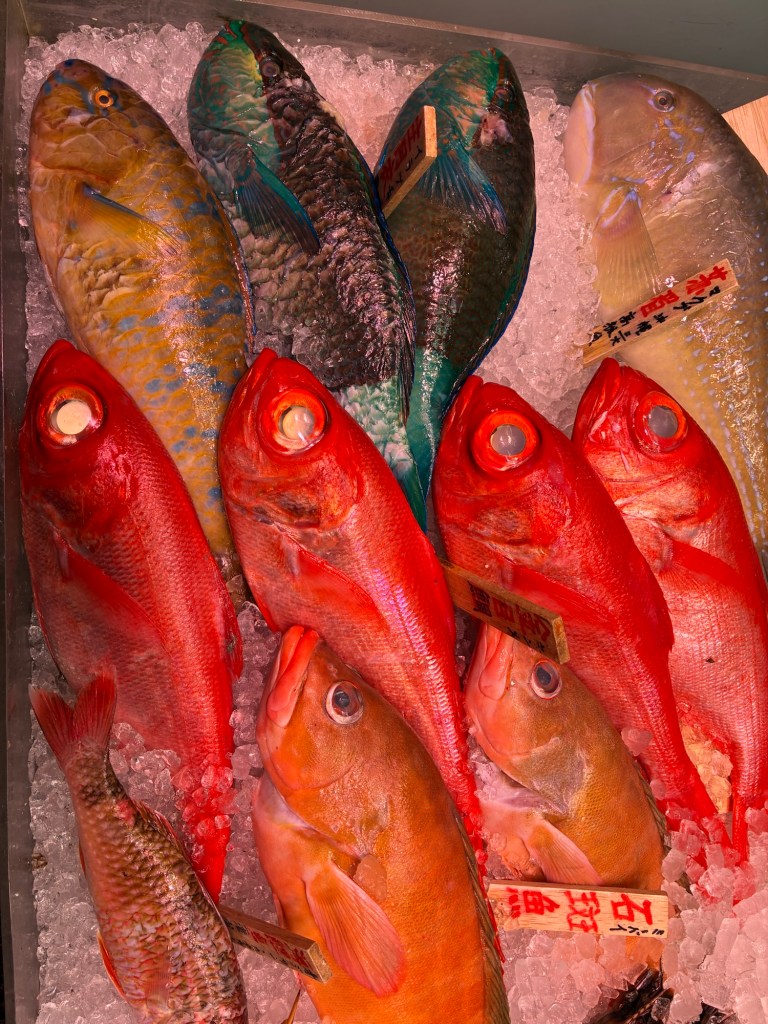
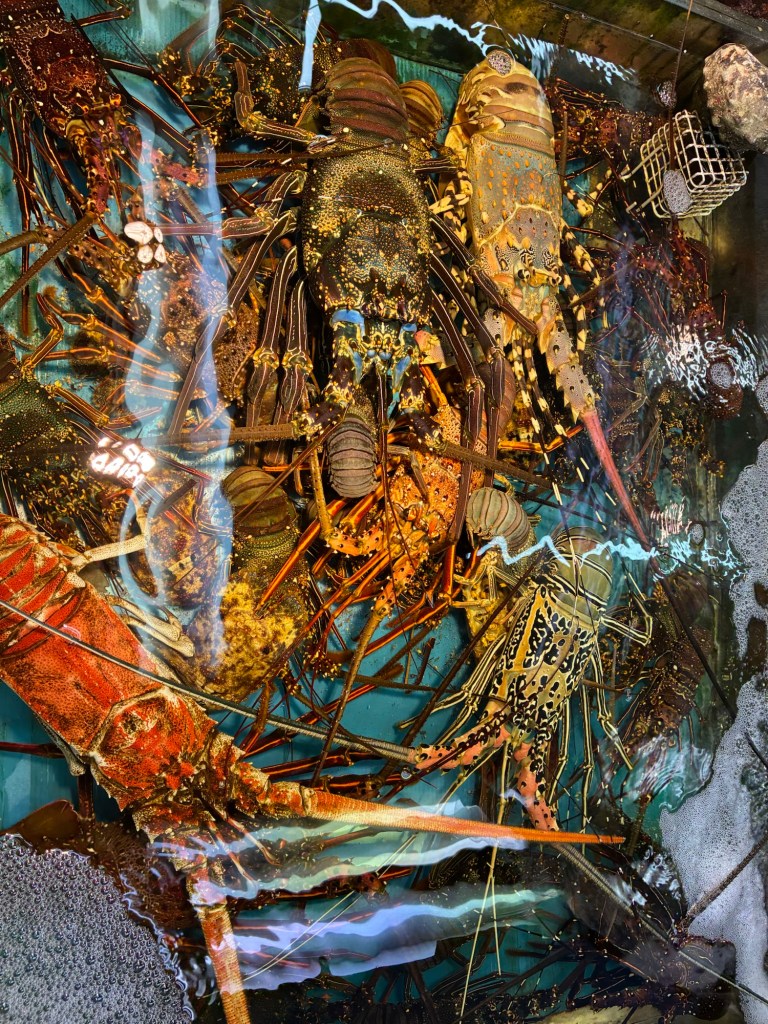
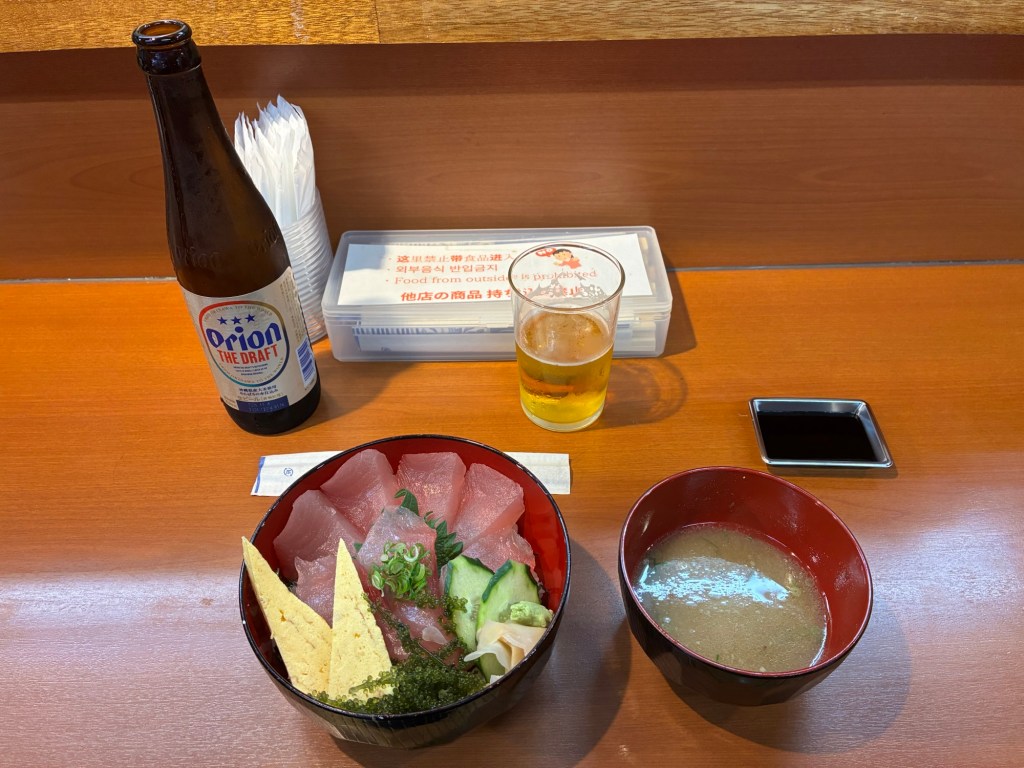
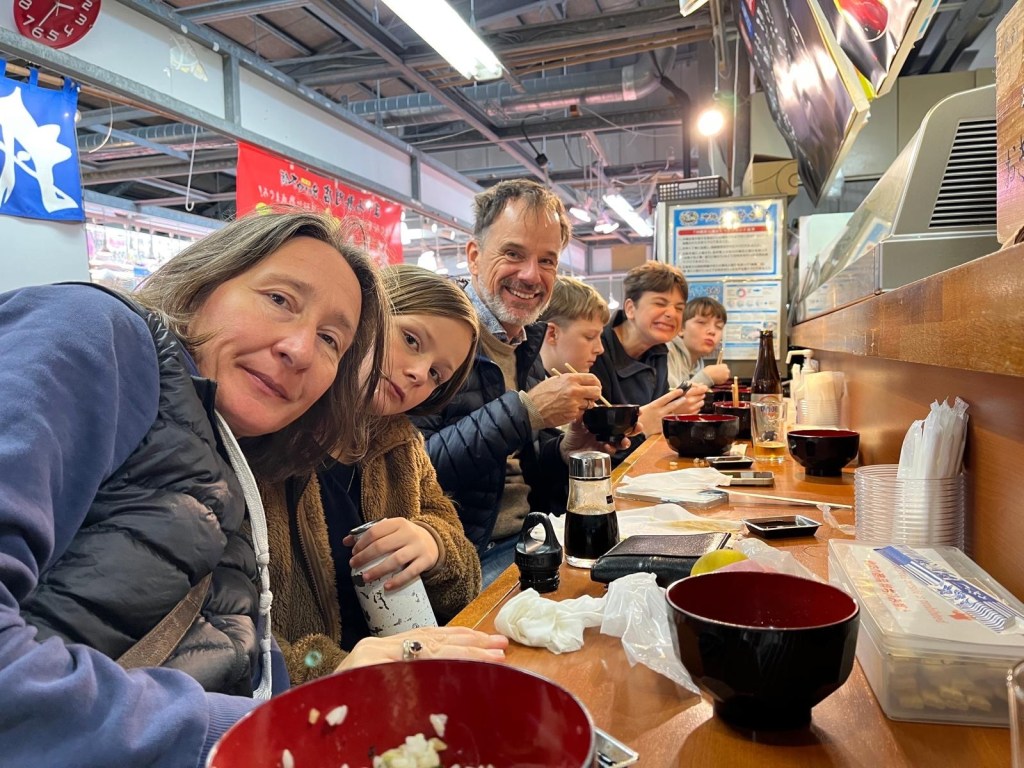
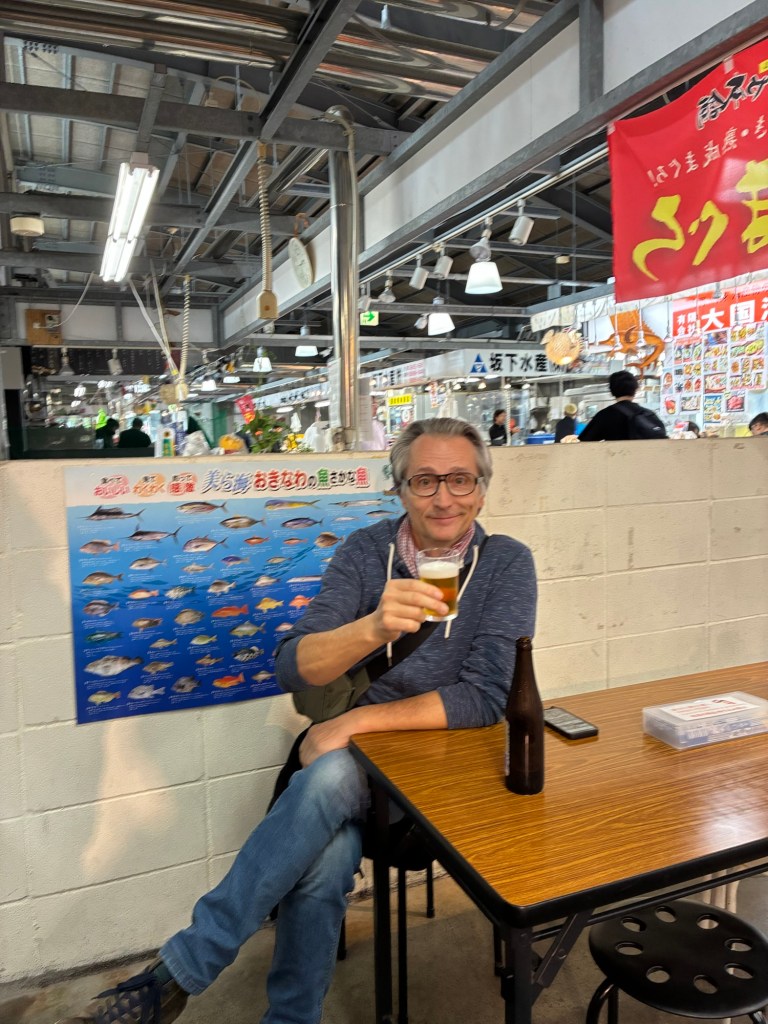
    Zum Mittag laufen wir bis in den Hafen, um im Fischmarkt, wie die einheimischen frischen Thunfisch mit Reis und Algen zusammen mit einer Fischsuppe zu essen. Alle acht sind von diesem Essen begeistert- für 6 Euro!

    Mit Bus und längeren Laufstrecken geht es zurück zum ersten Hotel, wo wir unser Gepäck abholen und dann in einer bald dreistündigen Marsch und Bus Marathon erschöpft, glücklich, aber glücklich in unserem Hotel 30 km nördlich am Meer angekommen sind. 

    Day 103 to 106

    Japan is very different from Taiwan. Luckily we have Velis with us, who enthusiastically points out a Japanese peculiarity at every turn. The airport is clinically clean, immigration is reminiscent of a hospital admission… after the thermal imaging camera comes facial recognition and fingerprints, checking the luggage for meat and plant products, then the actual passport control, then another customs check. We take the monorail into the city, which immediately reminds us of Japan in all its dimensions. Our hotel is a little outdated, but originally furnished in Japanese style with tatami walls, futon beds and a sitting bathtub. A large selection of stylish little restaurants are within walking distance. But the most important thing for the children is the convenience store. 
    The next morning we head to the museum, a futuristic Brutalist-style building that looks like a bunker from the outside but is wonderfully white and bright on the inside, with a special Hello, Kitty exhibition and a fascinating exhibition on the history of Okinawa. 

    This is the Keystone of the Pacific for the US Army, the most important location next to Guam in the South Pacific. In the devastating battle for Okinawa at the end of the Second World War, 90,000 people died. The island was practically completely razed to the ground in an extensive bombardment. It was under American administration until 1972, and today over 30,000 soldiers are stationed here.

    But today, 80 years later, this island is typically highly developed in Japan and has the tourist role of Hawaii for Japan. Concrete dominates, and all the cars are these little minibuses that you don’t drive anywhere else in the world. 

    We pass through ultra-modern shopping malls with the fascinating variety of Japanese products, as well as small second-hand stores.

    The highlights are always the meals – yesterday in a tiny sushi restaurant run by a couple with the best sushi with lots of raw tuna. Here Velis was our big help as he was the only one who could read the menu – and they were delighted to hear that he had lived in Japan and that Yuki and Inyan’s grandmother is from Tokyo. When Andreas forgot his wallet, the boss drove after us in her car to give it back to us. So cordial!

    Today, we walked to the old castle, Shuri, which unfortunately burnt down five years ago and is now being authentically reconstructed in a hall. There was also the Bell of Understanding of Peoples, which has emphasized Okinawa’s role as an important trading center for 500 years and is now in the museum.

    Strangely, however, in typical Japanese fashion, it is forbidden to photograph the evidence of the war or occupation period. 

    We are now really in travel mode, with a change of hotel every two days.  It’s intense, challenging for everyone, but also a wonderful experience together. Nadine, who unfortunately always gets a toothache in her jaw when flying, is the one who is most challenged. But we are all Japan fans, and it’s great to be able to imagine more of Veli’s everyday life. He will soon be away from home for a year and is really looking forward to being back. Japan is simply special in many ways, the bus driver’s white gloves are just one example. But all the children are in a particularly good mood, and Tara is a real Japan fan! Morpheus is here for the third time, Velis for the fourth time and I also remember my first trip to Japan in 2021 and Nadine Mariko, my German-Japanese friend before Nadine. 
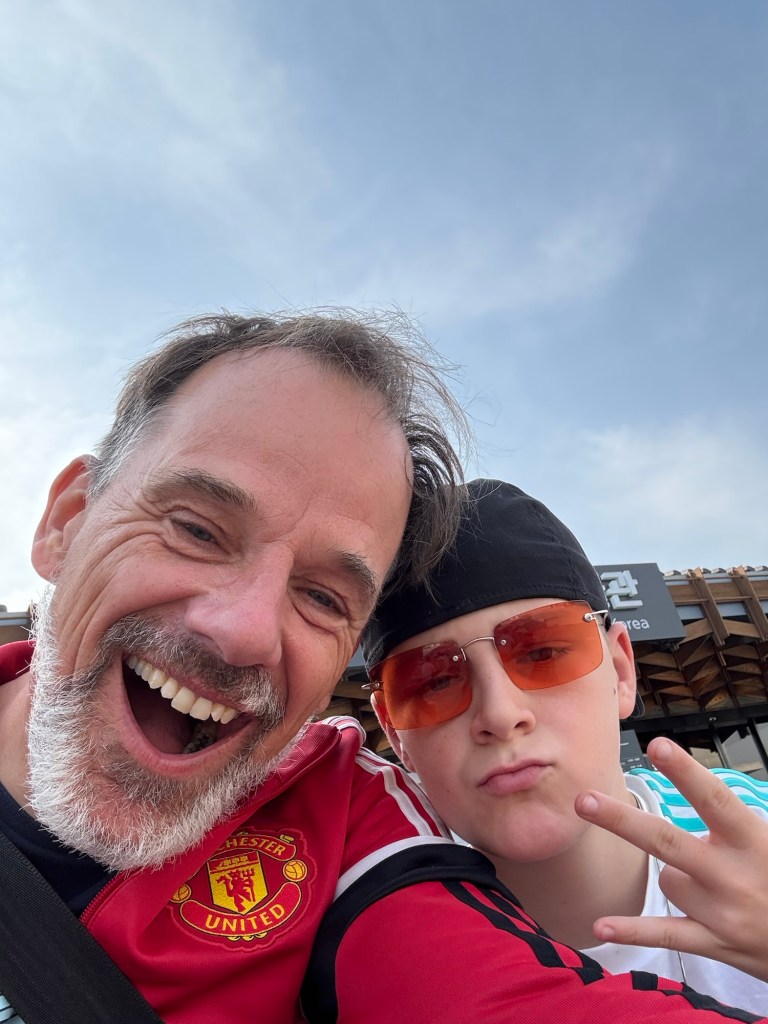
    For lunch, we walk to the harbor to eat fresh tuna with rice and seaweed together with a fish soup in the fish market, just like the locals. All eight of us are delighted with this meal for 6 Euros.

    We return to the first hotel by bus and longer walking routes, where we collect our luggage and then arrive at our hotel 30 km north by the sea, exhausted but happy after a marathon three-hour walk and bus ride. 
  • Bathing and Buddhism in Beitou

    Tag 101 und 102

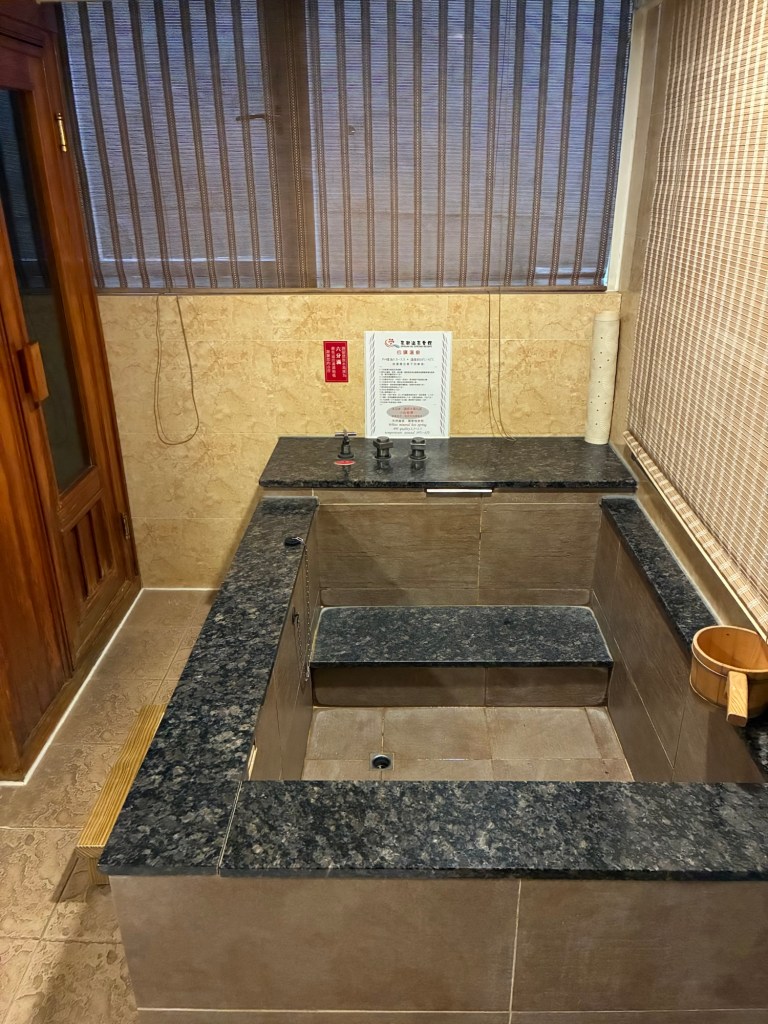
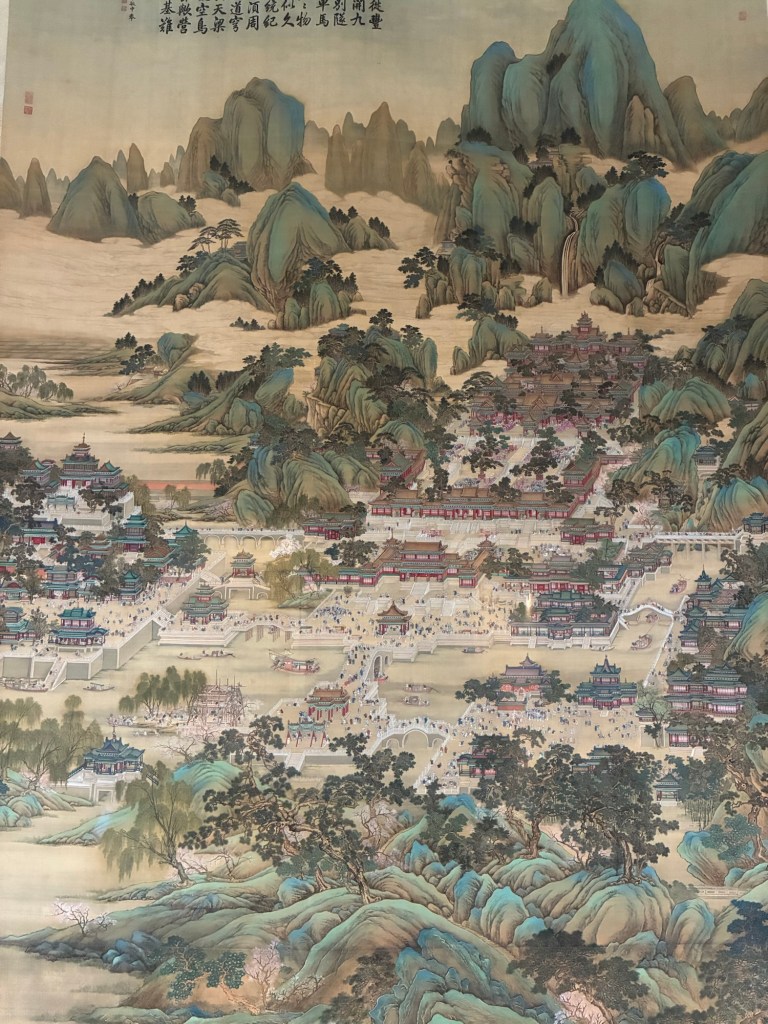
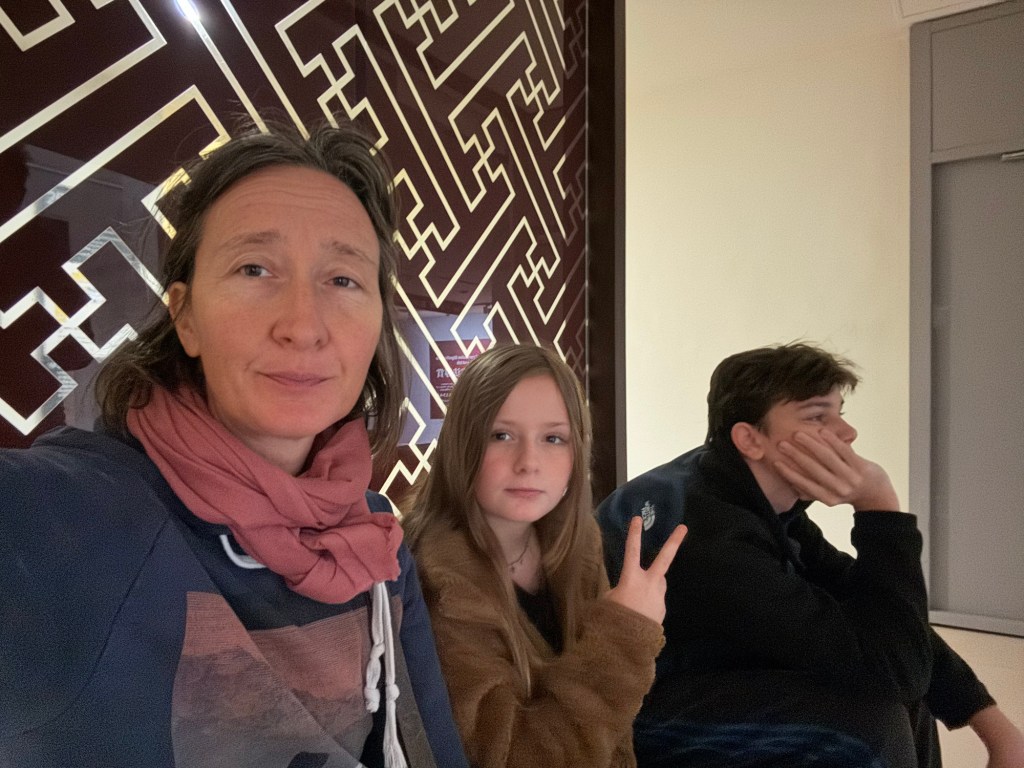
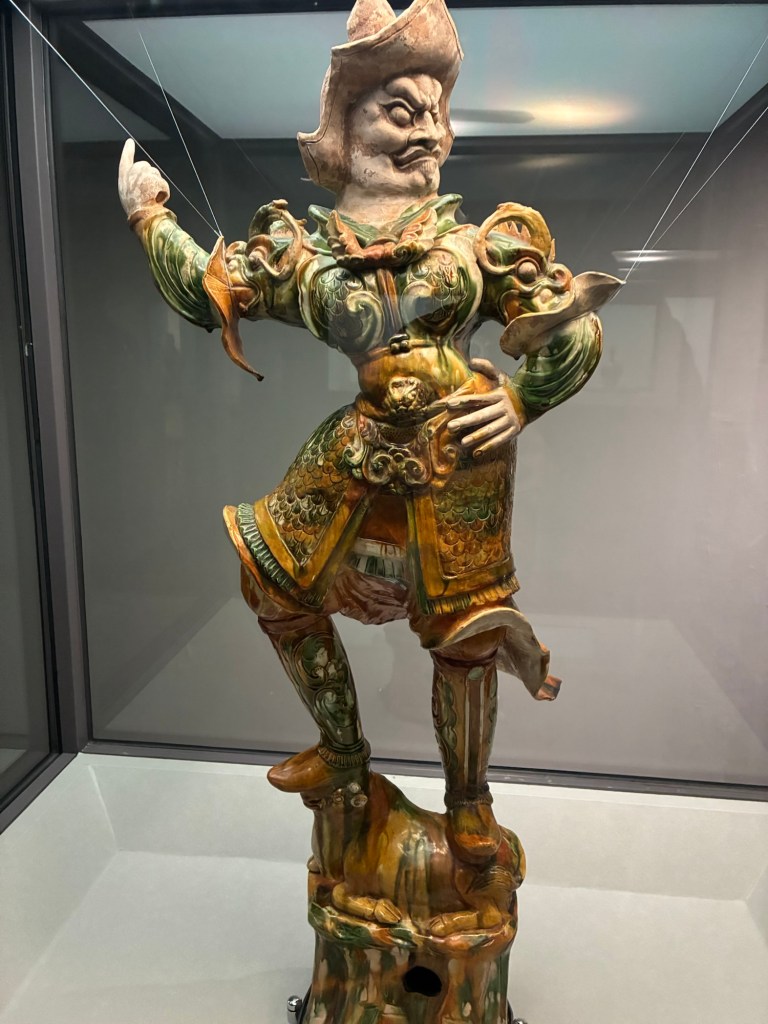
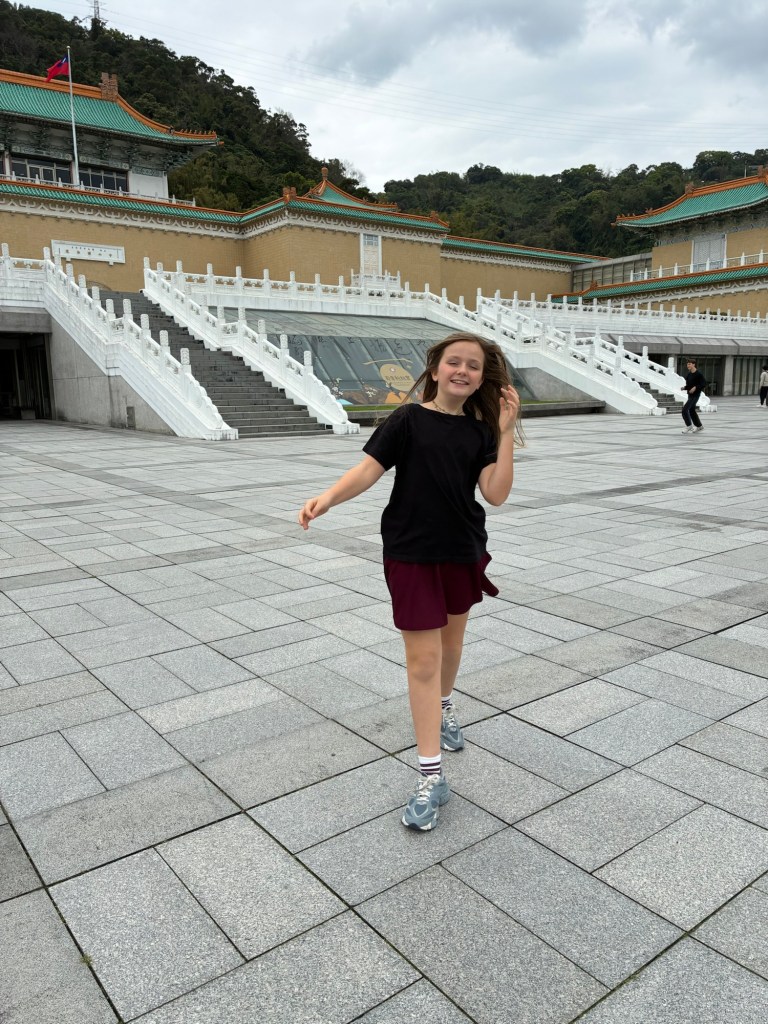
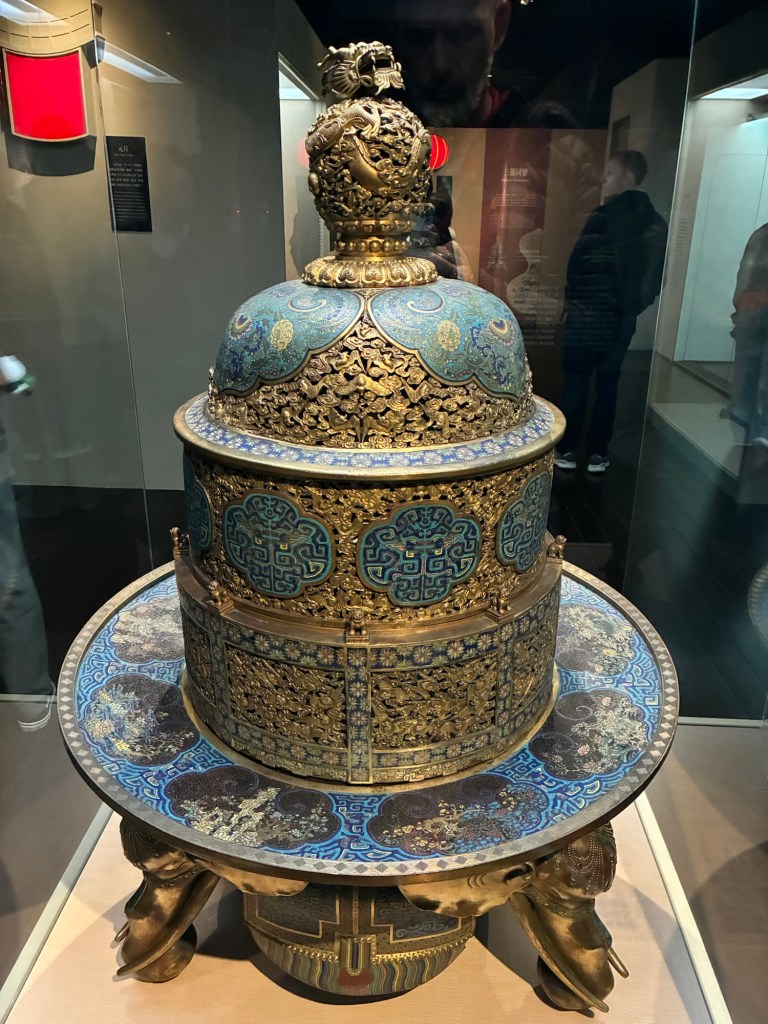
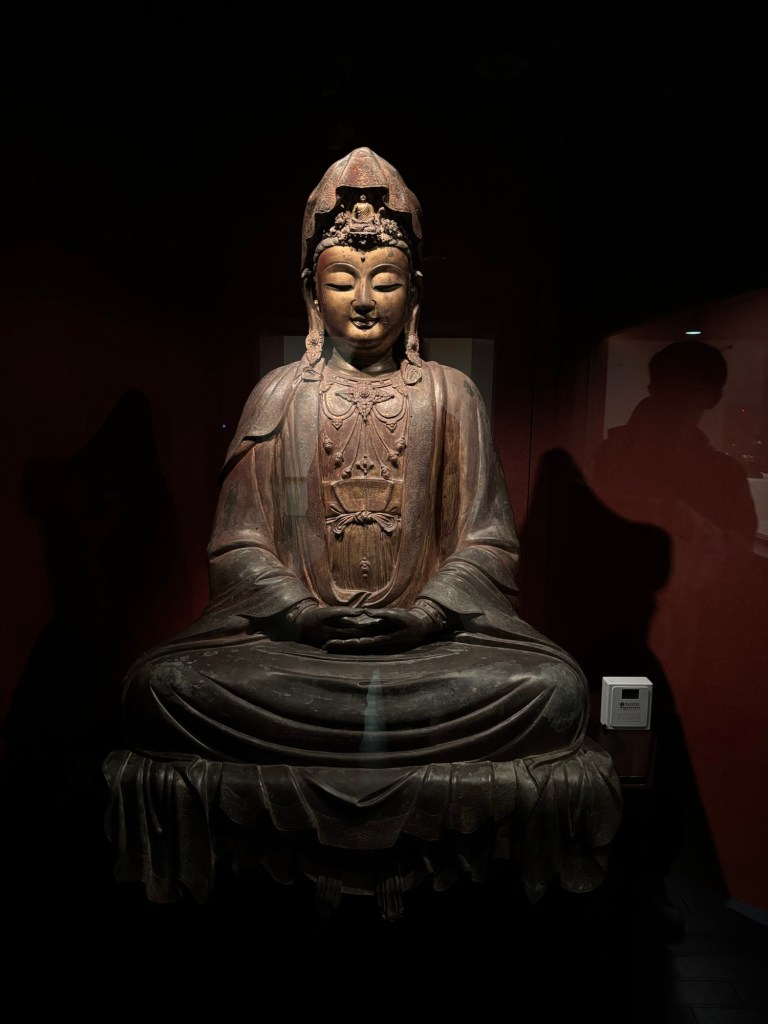
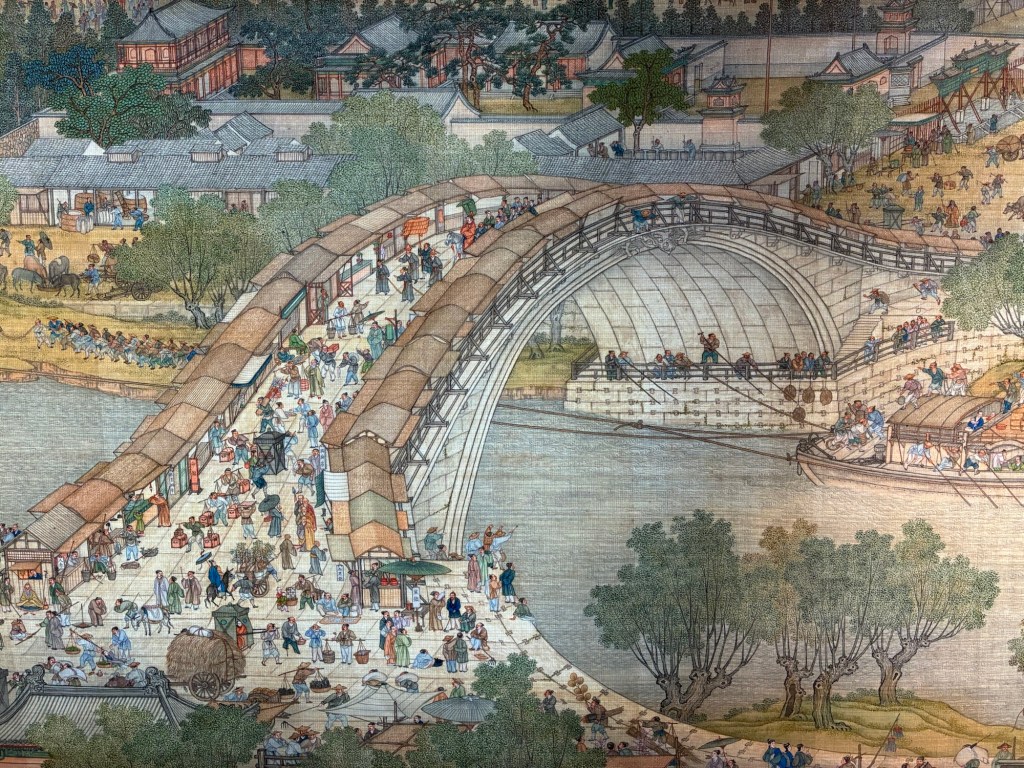
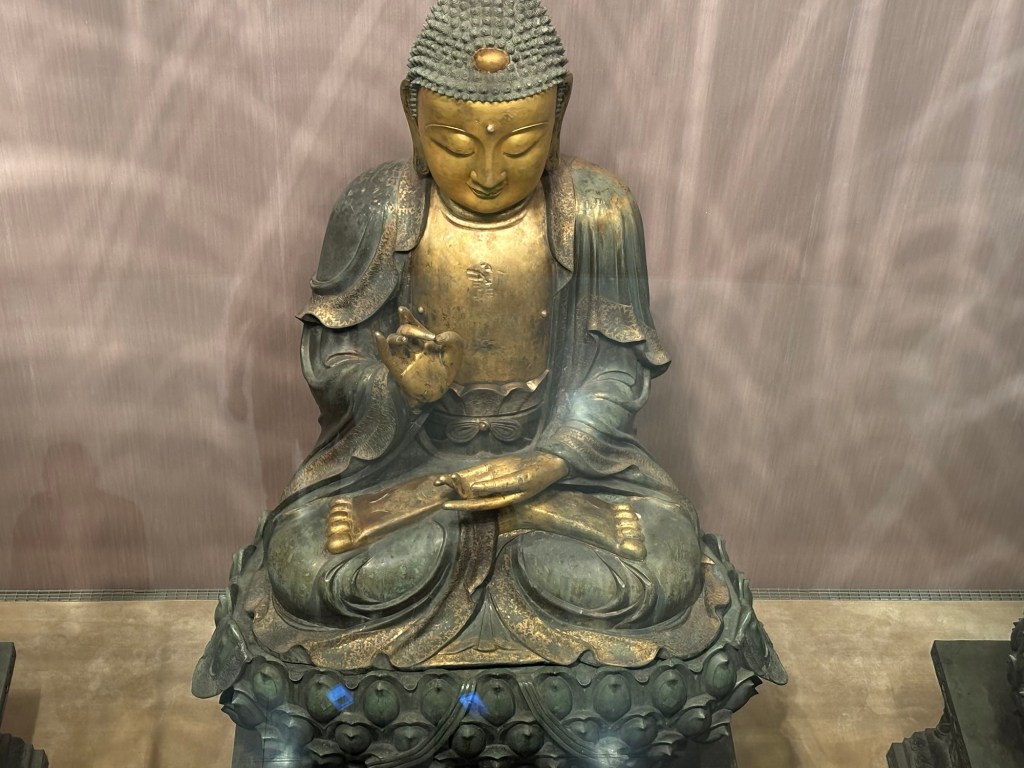
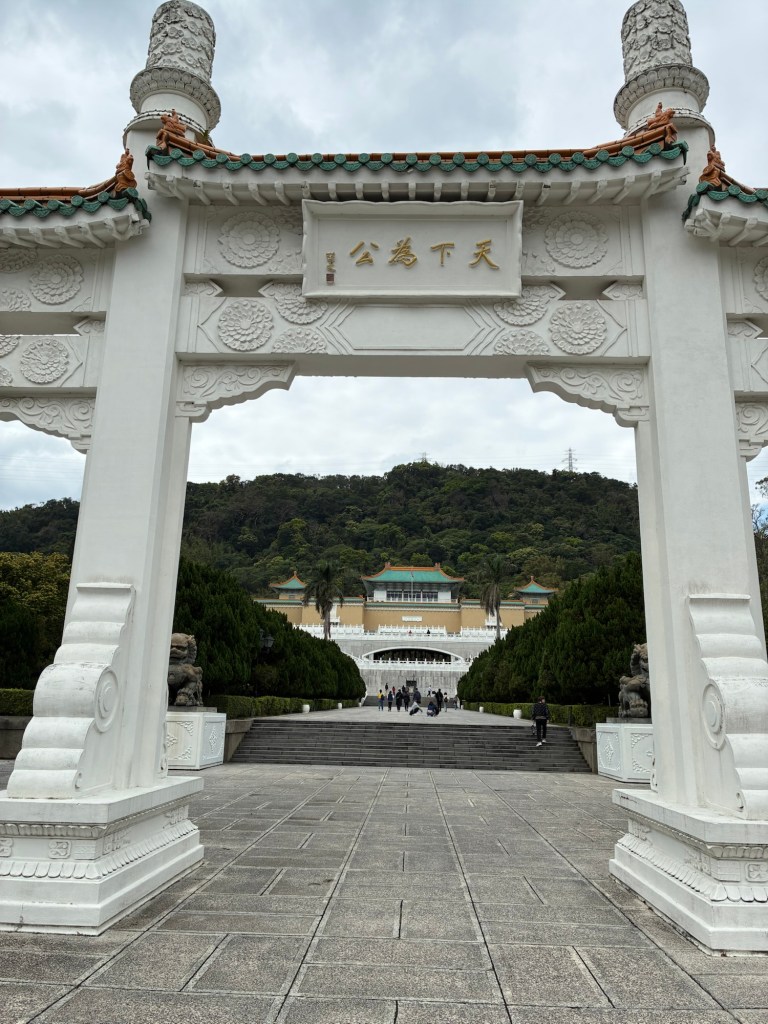
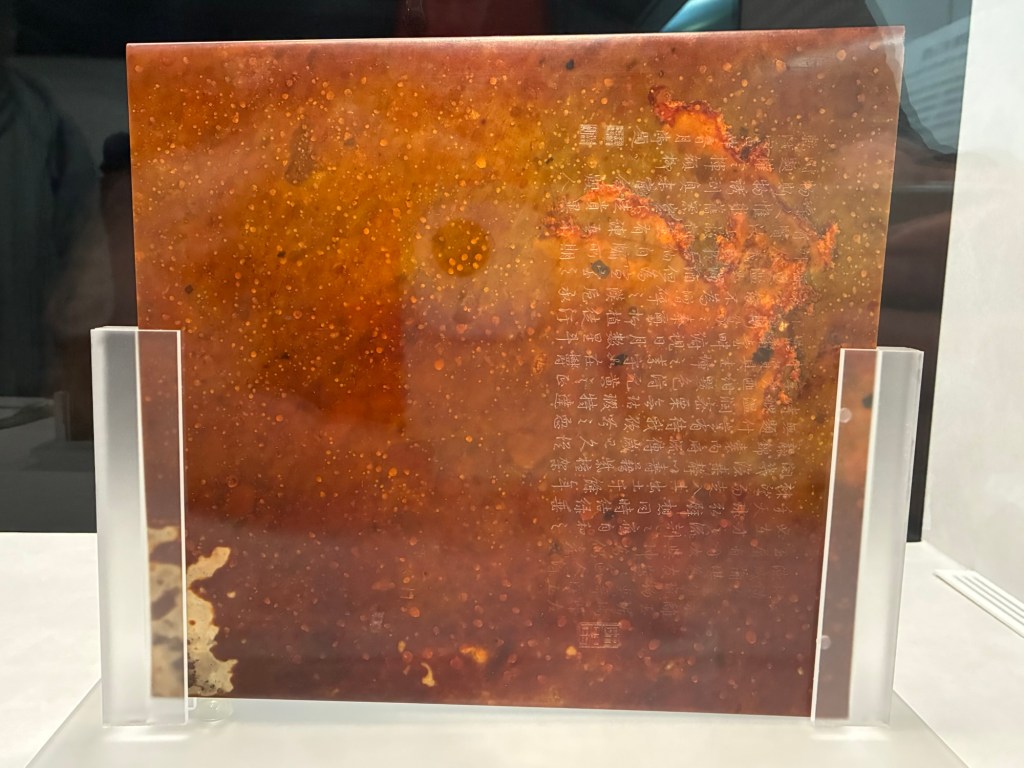
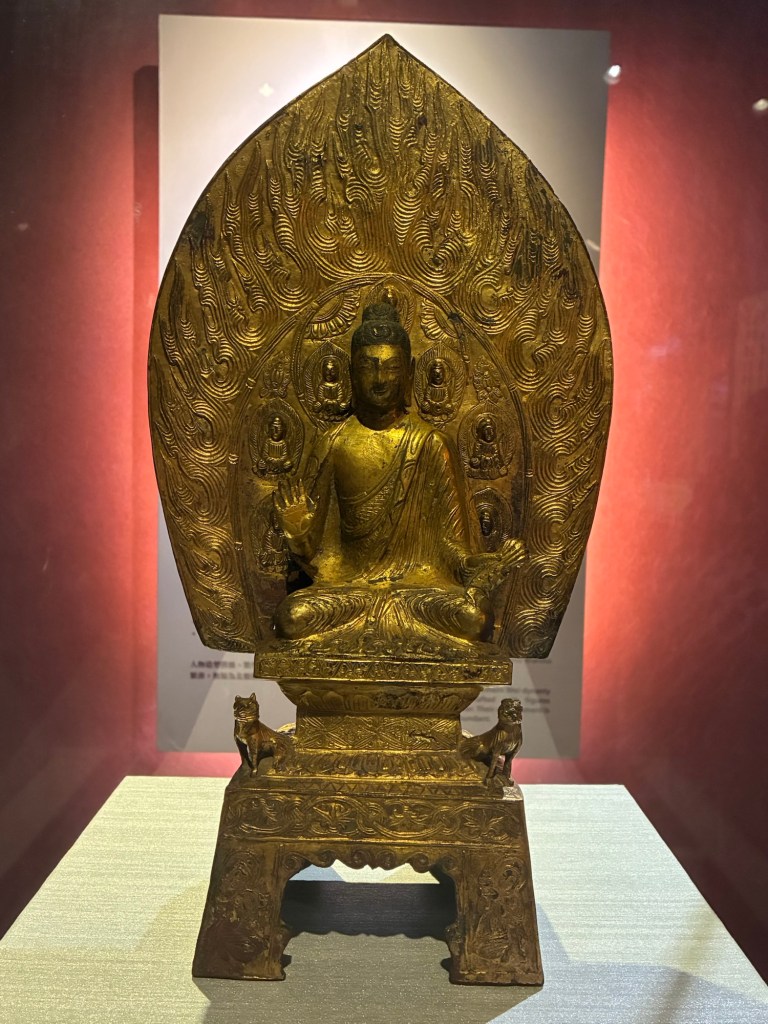
    Mit den heißen Quellen von Xinbeitou  wurde während der japanischen Kolonialzeit (1895–1945) eine Thermalbad-Region entwickelt. Wir haben ein Zimmer mit Sauna, mit eigenem Thermalbad-Wasser. Es riecht nach Schwefel, hat einen PH von 3,5, und ist ein herrlicher Genuss. Dazu liegt im Zimmer ein Geschenk für die Gäste zur Kontemplation aus, 108 Adages of Wisdom. Der Autor, Master Shen Yen hat eine führende Rolle bei der Wiederbelebung des chinesischen Buddhismus, wie der Klappentext schreibt. In fünf Sprachen gehalten, spricht es Reisende an. Auch im Nationalen Palast Museum wird die zentrale Rolle des Buddhismus in der chinesischen Geschichte betont. Dieses Museum enthält die Kunstwerke der kaiserlichen Sammlung Chinas, die aus Angst vor den Maoisten 1945 von Peking nach Taiwan gebracht wurden. 
    Die Kinder und wir lernen viel über die chinesische Geschichte, vor allem die Ming-Dynastie (1368–1644) und die Qing-Dynastie (1644–1912). Danach beginnt die Republic of China, wie Taiwan heute noch heißt. 

    Taiwan zeigt sich uns freundlich, ordentlich und genau- wir werden mehrfach ermahnt, dass Essen und trinken im gesamten  Metrobereich verboten ist.

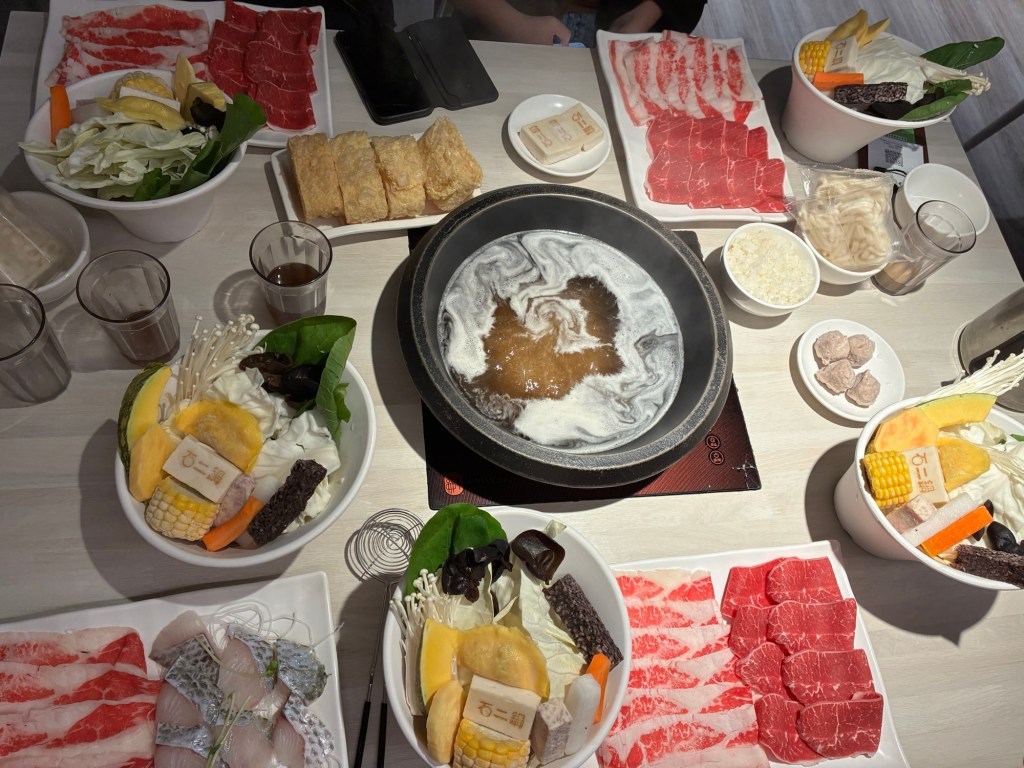
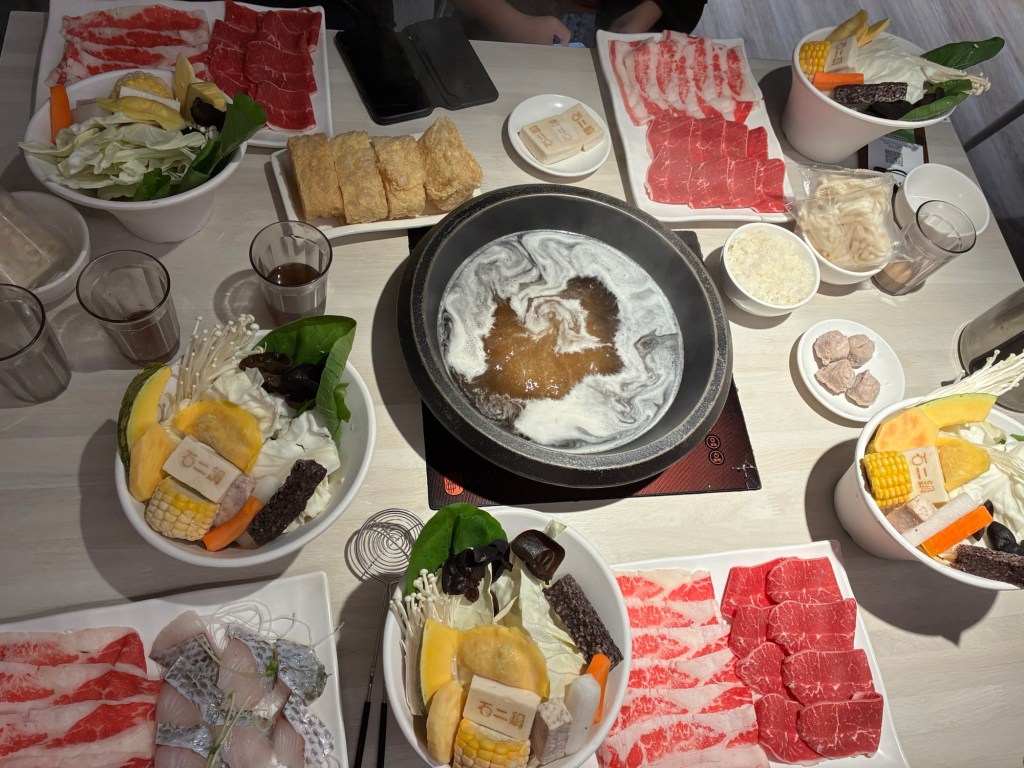
    Dafür schmeckt das Essen sonst umso besser. Abends gibt es zum Beispiel Hot Pot, eine Art Fondue mit einem Topf heißer Brühe und dazu Fleisch und Gemüse- ein traditionelles Familiengericht.

    Aber gelegentlich gönnen sich die Kinder auch den günstigsten Big Mac der Welt für umgerechnet 2,15€. 

    Wir haben viel gesehen, aber natürlich nur einen Kurzbesuch von 4 Tagen gemacht . Es lohnt sich auf jeden Fall wieder zu kommen – das steht fest! Nun sind wir auf dem Weg zum Flughafen, nächste Destination ist Naha, Okinawa, etwa 1 Stunde 30 entfernt.

    Alle sind schon sehr gespannt auf Japan in seiner Südsee-Variante!

    Day 101 and 102

    The hot springs of Xinbeitou were developed as a hot spring region during the Japanese colonial period (1895-1945). We have a room with a sauna, with its own hot spring water. It smells of sulphur, has a pH of 3.5 and is a wonderful treat. There is also a gift in the room for guests to contemplate, 108 Adages of Wisdom. The author, Master Shen Yen, has played a leading role in the revival of Chinese Buddhism, as the blurb says. Written in five languages, it appeals to travelers. The National Palace Museum also emphasizes the central role of Buddhism in Chinese history. This museum contains the artworks of China’s imperial collection, which were brought from Beijing to Taiwan in 1945 out of fear of the Maoists. 

    The children and we learn a lot about Chinese history, especially the Ming Dynasty (1368-1644) and the Qing Dynasty (1644-1912). Then the Republic of China, as Taiwan is still called today, begins. 

    Taiwan is friendly, orderly and precise – we are reminded several times that eating and drinking is prohibited in the entire metro area.

    But otherwise the food tastes all the better. In the evening, for example, we have hot pot, a kind of fondue with a pot of hot broth and meat and vegetables – a traditional family dish.

    But occasionally the children also treat themselves to the world’s cheapest Big Mac for the equivalent of €2.15. 

    We saw a lot, but with 4 days of course we were only able to make a short visit to Taiwan. It’s definitely worth coming back – that’s for sure! Now we are on our way to the airport, our next destination is Naha, Okinawa, about 1 hour 30 minutes away.

    Everyone is already very excited about Japan in its South Sea version!